


|
Author
|
Mustafa Aslan
|
|
University
|
University of Applied Sciences Darmstadt, Germany |
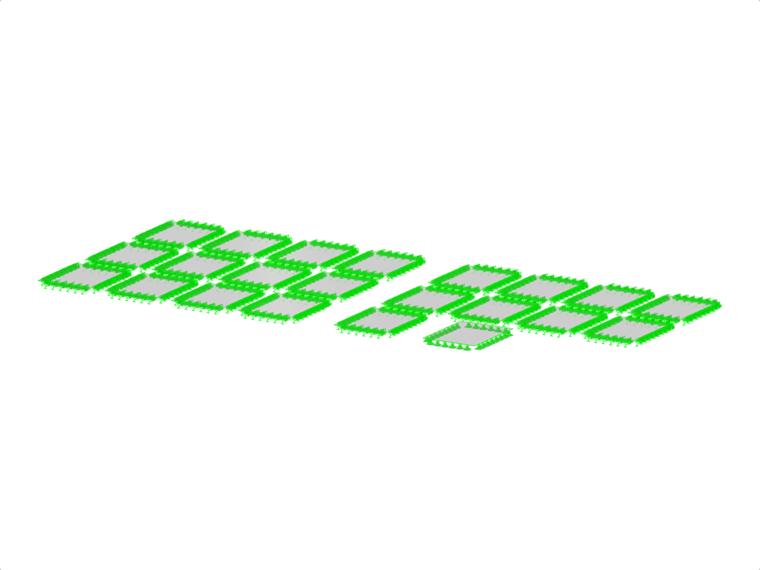
The theoretical background focuses on the modulus of elasticity, time-dependent effects, such as creep and shrinkage, as well as cracking. Standard-compliant differences and their underlying reasons are explained in detail to provide a better understanding of the different standard specifications and their impact on deformations. Both simplified design methods, such as the design using bending slenderness and factorization of linear-elastic calculation results, and direct deformation calculations using numerical integration of the moment-curvature relationship are analyzed. Additionally, the approaches implemented in FE software products, such as RFEM, are examined and compared.
In the experimental part of the thesis, tests were conducted on reinforced concrete beams that were produced under realistic conditions. Test specimens were also prepared to determine the material properties of the concrete. The deformations of the reinforced concrete beams, which developed over time, were measured and compared with the results from different calculation methods. One calculation method showed particularly good agreement with the measured deformations. Based on these comparisons and results, a recommendation for practical application in construction was derived.