


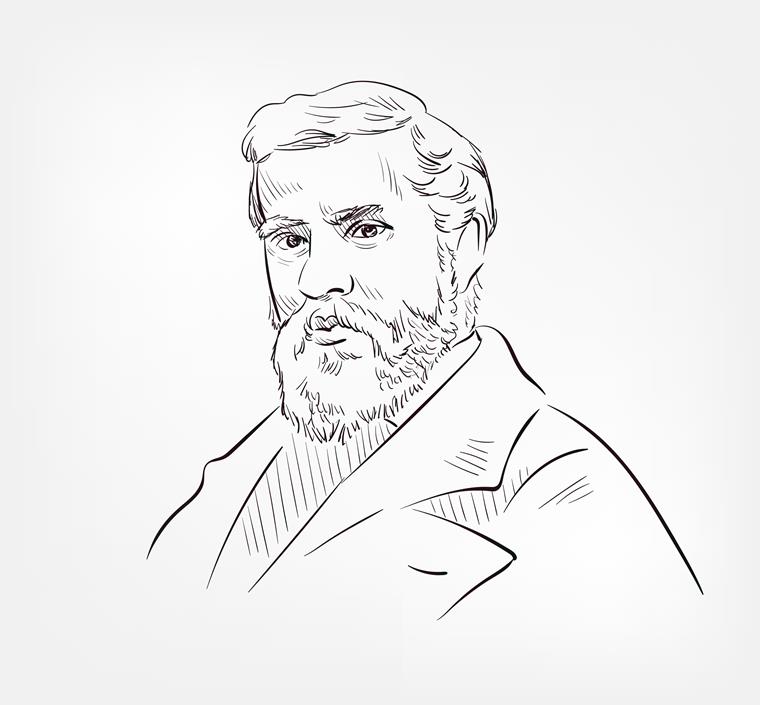
Nature as Great Teacher of Antoni Gaudí
Gaudí was born on June 25, 1852, the son of a boilermaker in Reus, a transportation hub in southern Catalonia and one of the region's most culturally significant cities. From an early age, he was fascinated by the forms and structures of nature, which later became a central source of inspiration for his work. After graduating from the Barcelona School of Architecture in 1878, Gaudí began to question traditional architectural styles. He turned away from straight lines and right angles and instead embraced curved, organic forms – a tribute to nature and a return to his origins.
The style that Gaudí helped create is known as Catalan Art Nouveau, or Modernisme. Its defining characteristics include curved lines, floral ornamentation, irregular layouts, rough-hewn stone, colorful ceramic tiles, and, of course, soft, organic shapes.
Antoni Gaudí: Masterpieces of Engineering
For Gaudí, structural analysis and construction were not just technical necessities, but also creative tools. His buildings are not only aesthetically groundbreaking, but also brilliantly engineered, making optimal use of natural forces. Steel girders provide the necessary stability without compromising the dynamic and playful shapes.
His style stands in stark contrast to conventional construction methods. Gaudí realized countless projects, but some of them only existed as sketches. Here are three of his most important works:
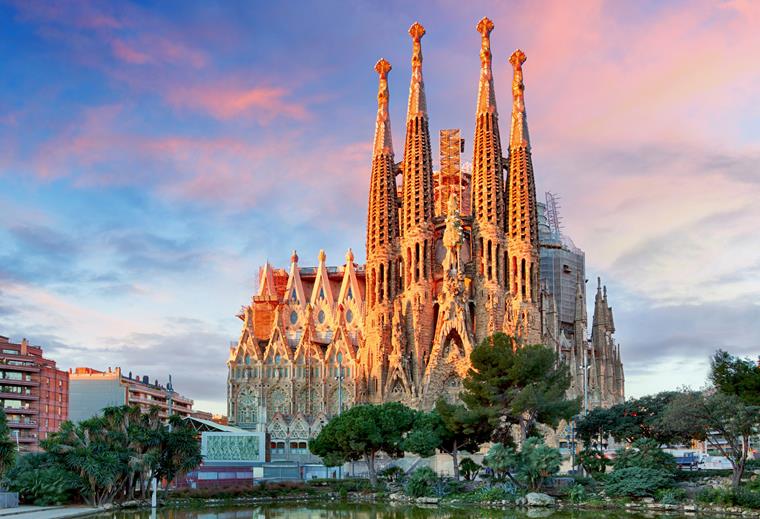
Sagrada Familia: Eternal Construction Site and Structural Marvel
The Sagrada Familia is probably Gaudí's most famous work – and one of the greatest architectural challenges of all time. The construction of the basilica began in 1882 and is still unfinished. No other building better embodies Gaudí's vision. He described the church as a forest full of birds' nests.
Gaudí spent 42 years of his life working on the building, and later even lived in his studio so that he could devote himself entirely to his sketches, drawings, and models. The inclined columns of the church are a prime example of innovative structural analysis: they transfer loads in a way inspired by trees. To calculate the perfect balance between compressive and tensile forces, Gaudí used a hanging chain model.
The church's hyperbolic vaults not only provide stability, but also create an impressive play of light inside. Today, modern technologies, such as 3D scanning and finite element methods (FEM), are helping to complete Gaudí's vision.
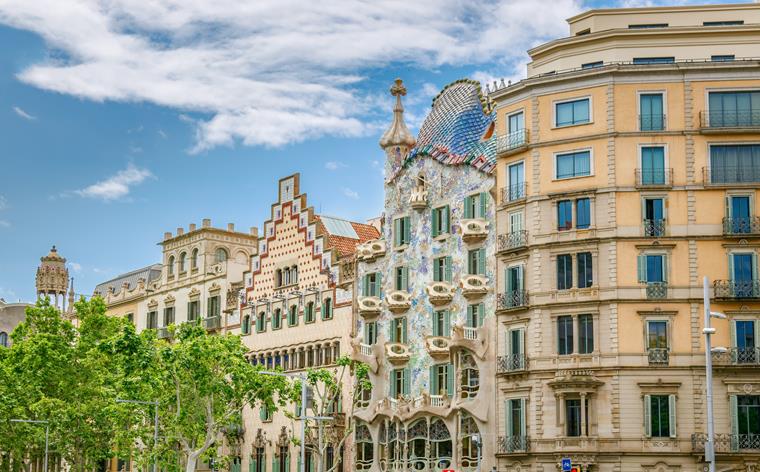
Casa Batlló: Nature in All Its Glory
Casa Batlló is one of the most famous buildings in Barcelona and a masterpiece of modernism. Gaudí Gaudí completely redesigned the existing building between 1904 and 1906.
In typical modernist style, the forms are reminiscent of sea creatures and plants – the balconies look like waves. The facade is covered with flowers. Light floods the building, making it seem even more colorful to visitors. Gaudí's signature can be seen in every corner of the house.
Gaudí also drew heavily from nature for the design. He also incorporated the legend of Saint George (Sant Jordi), the patron saint of Catalonia, into his design. The roof looks like the back of a dragon – covered with shiny scales of tiles.
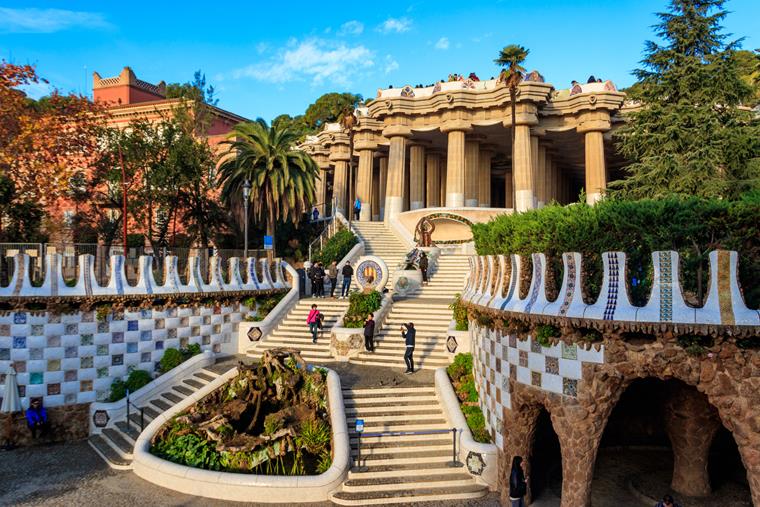
Park Güell: Merge of Nature and Architecture
Park Güell, one of Barcelona's most famous attractions, showcases Gaudí's talent for blending architecture with the landscape. Curved paths, arches and columns of natural stone combine architecture, art, and nature in a unique way.
Of particular note is the Hypostyle Hall, with 86 columns that not only support the square roof but also drain rainwater, an early example of sustainable construction. The leaning columns evoke a forest and the mosaic panels evoke the sun. There is a sense of a sacred place.
Gaudí's Influence on Modern Architecture and Later Architects
Antoni Gaudí's visionary designs revolutionized architecture and had a lasting influence on generations of architects. His organic shapes, experimental construction methods, and fusion of nature and architecture continue to inspire today. In particular, the work of architects such as Frank Gehry and Zaha Hadid incorporates elements of his style-curved lines, unconventional structures, and the courage to rethink architecture.
Gaudí's innovative use of materials, structures, and space pushed the boundaries of what was possible. His techniques, such as the use of parabolic arches and self-supporting facades, as in the case of Casa Milà, were later adopted by modern architecture, including Le Corbusier. Today, his influence is particularly evident in organic architecture and in concepts that harmoniously combine nature and technology.
A striking example of this is the Torre Agbar in Barcelona, built by Jean Nouvel in 2005. With its parabolic shape and extraordinary facade, the tower is reminiscent of Gaudí's pioneering designs. However, Gaudí's legacy extends far beyond individual buildings – he had a lasting influence on architectural thinking and showed that architecture is more than just a function: it can unite art, nature, and society in a unique way.
Gaudí's Last Moments
Antoni Gaudí died on June 10, 1926, before many of his works had been completed. On June 7, he was hit by a tram on his way to the church of Sant Felip Neri. Since he was unkempt and without papers, passersby took him for a beggar and hardly offered any help. His identity was later discovered, but Gaudí refused to be treated in a private hospital. He died of his injuries three days later.
A huge crowd gathered to pay their respects at his funeral service in the Sagrada Familia. He was buried in the crypt of the church.
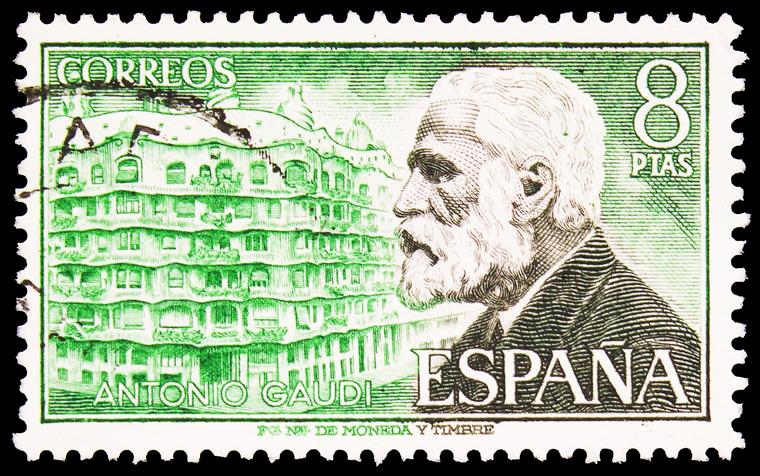
What can we learn from Antoni Gaudí?
Antoni Gaudí was not just an architect, but a visionary who combined engineering, art, and nature in a way that continues to fascinate us today. His buildings are not only masterpieces of structural engineering, but also a tribute to the beauty of organic forms. With a relentless curiosity about nature, he studied its structures and brought them to life in his buildings, always in harmony with their surroundings.
Gaudí went far beyond the standards of his time, prioritizing sustainability, material efficiency, and innovative load-bearing structures long before these issues became central to architecture. He proved that technical precision and artistic freedom are not mutually exclusive, but rather give rise to a new form of innovation.
His legacy reminds us that architecture is more than just building: it can evoke emotions, tell stories, and connect us to nature. Gaudí's vision lives on – a living example of how big dreams can indeed be carved in stone.