


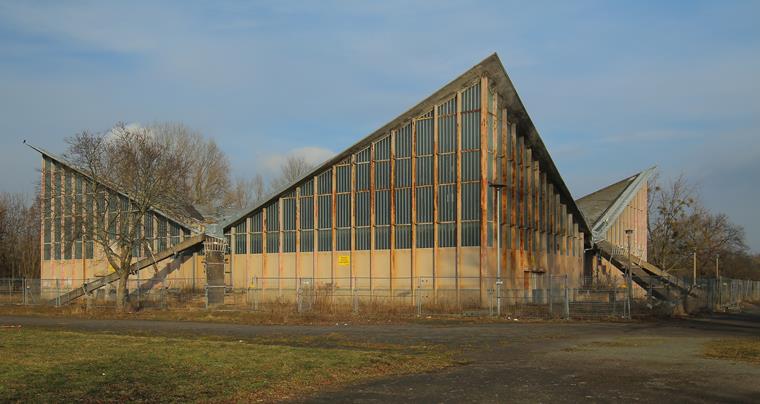
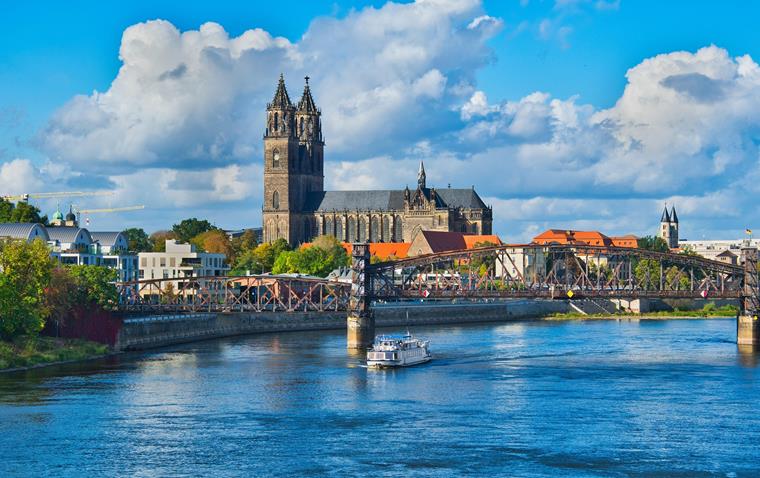
When the Hyparschale was completed in 1969, it was the pride of the city of Magdeburg. A multi-purpose hall with such a futuristic roof structure was something you didn't see every day. It provided space for trade fairs, congresses, sporting events, and even television broadcasts. The hall was a popular meeting place for culture and events, especially in the 1970s and 1980s.
But then came the fall of the Berlin Wall – and with it the fate of many GDR buildings: negligence. There was no state funding for its upkeep, and in the turbulent 1990s, the Hyparschale was eventually reduced to a shadow of its former self. In 1997, the hall was finally closed by the building authorities, as its dilapidated condition made it impossible to use. For a while, it served as a photo opportunity for fans of “lost place” charm, but otherwise not much happened. It was on the verge of demolition several times. It was only through the commitment of a few citizens that it was listed as a historic monument in 1998 – a first step towards its rescue.
Ulrich Müther – Man Behind Hyparschale
When it comes to spectacular shell roof structures, Ulrich Müther is a name that cannot be ignored. The structural engineer from Binz on the island of Rügen was a true pioneer in the field of thin-shell concrete structures and created around 74 such buildings in the GDR. His trademark: hyperbolic paraboloid shells – the very structure that makes the Hyparschale in Magdeburg so special. Müther succeeded in spanning huge areas with extremely thin shotcrete, giving his buildings an almost weightless appearance.
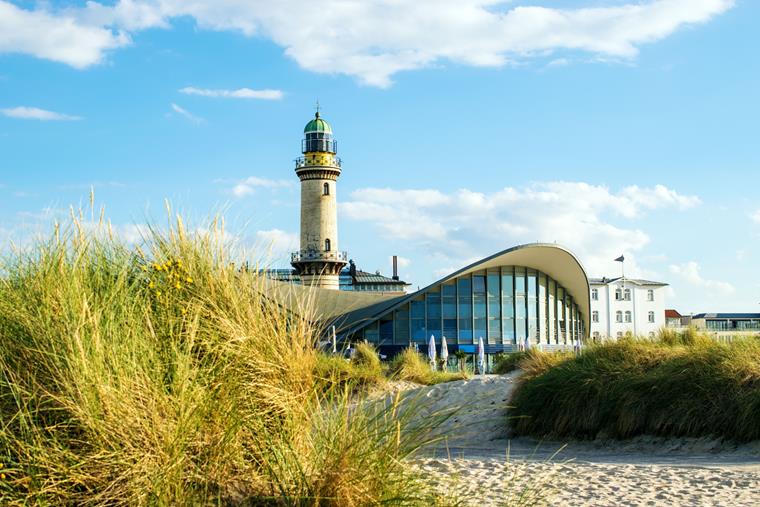
But Müther was not only a gifted engineer, he was also a visionary. He drew inspiration from international role models, in particular the work of Mexican architect Félix Candela. While others in the GDR focused on conventional, functional buildings, he developed filigree, almost poetic shell structures. His most famous building is probably the “Teepott in Warnemünde”, but the Hyparschale is also one of his masterpieces. While many of his buildings were demolished after reunification, the Hyparschale was saved by its listed status and renovation – a real stroke of luck for all fans of unusual architecture!
Hyparschale Magdeburg as Delicate Structure
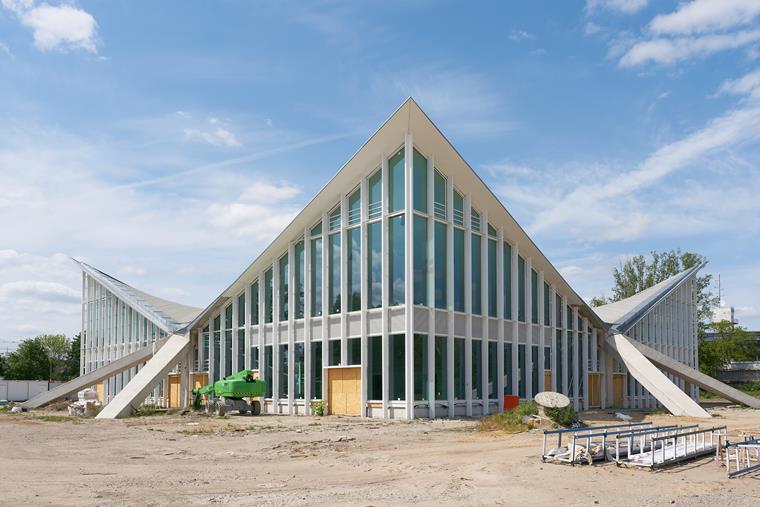
What makes the Hyparschale so special? It's the roof. Sounds trivial, but it's not! The roof consists of four hyperbolic paraboloids – these are double-curved surfaces, which are incredibly stable yet appear light. The shell is only 7 cm thick and covers a square base area of 48 x 48 m, which corresponds to a total area of 2,304 m². The structure is so ingenious that it does not require any additional supports. It almost sounds like magic, but it is simply brilliant engineering.
The whole structure is based on a technique that Müther perfected: shotcrete. The concrete was applied layer by layer to create a delicate but extremely resistant structure. Thanks to this technique, there was no need for solid walls – instead, glass dominates, making the interior appear bright and open. In the past, skylights provided additional light, but these were eventually sealed shut for fear of leaks. Cosmetic surgery on buildings can sometimes go wrong!
Another highlight of the structure is the almost complete absence of supporting columns in the interior. A sophisticated structural system of edge beams and tension anchors in the floor distributes the load of the roof shells so that hardly any supporting elements are needed in the room itself. This creates an incomparable sense of openness that gives the building an almost floating appearance.
Hyparschale in Context of Müther's Work
Ulrich Müther's Hyparschale in Magdeburg is an outstanding example of his innovative architecture. But it stands alone: Müther has realized numerous other impressive shell structures in the GDR and beyond. The “Teepott” in Warnemünde and the Stadthalle in Neubrandenburg are just two examples of his creative structures. What all these buildings have in common is the use of thin concrete shells, which are surprisingly stable despite their elegance. However, the Hyparschale in Magdeburg stands out due to its size and particularly distinctive column-free structure, making it a highlight of Müther's work.
Long Journey to Salvation – Thriller in Concrete
Although the Hyparschale was a listed building, this did not mean that it would be saved. In the 2000s, various concepts were discussed, but none of them led to success. In 2012, a cross-party association was finally founded to campaign for the preservation of the hall. However, it took until 2017 before the city of Magdeburg finally decided on a comprehensive renovation – with the support of federal funds.
Renovation of Hyparschale Magdeburg – High-Tech Makes it Possible
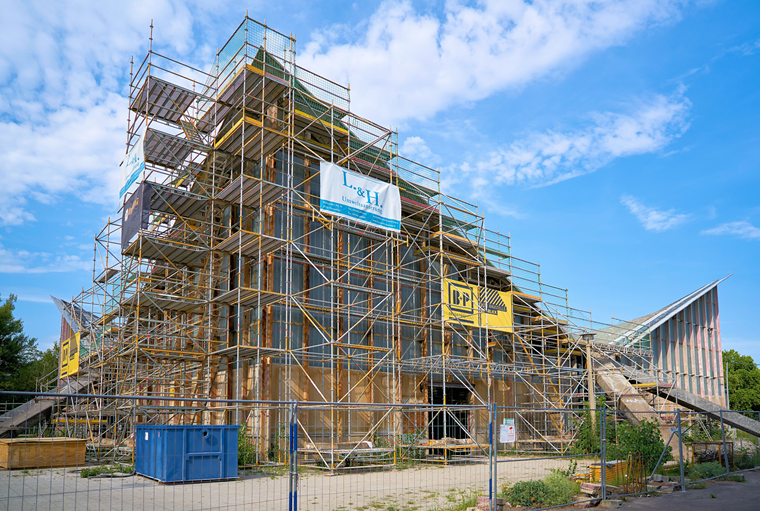
2019 saw the start of the renovation work – and it was a major undertaking! The biggest problem was the roof: how do you renovate a 7 cm thin concrete shell without destroying it? The solution: carbon concrete. This material is extremely light yet more stable than conventional reinforced concrete. This meant that the original roof thickness could be retained – a major benefit for the preservation of this historic building!
The old skylights were also uncovered so that daylight can now flood into the interior again. The glass facade was modernized to restore the transparency and openness of the original structure. In addition, the hall was given a new spatial structure that allows for flexible use. The installation of modern technology, improved acoustics, and smart lighting control finally brought the Hyparschale into the present day.
New Life for Hyparschale – What's Happening Here Now?
The Hyparschale reopened its doors in June 2024 with a varied program of events. In the first few months, various exhibitions, conferences, and cultural events took place here. Sounds cool? It is!
But it's not just art that has a place here: the hall is now a multi-purpose venue for conferences, congresses, exhibitions, and cultural events. It can accommodate 200 to 500 guests and, thanks to its smart room layout, offers many different possibilities for use. Four cubes in the corners of the hall serve as seminar rooms, while the central area is available for larger events. A gallery level with bridges also opens up new perspectives on the impressive roof.
Conclusion – Architecture can be so cool!
The Hyparschale is more than just a piece of concrete – it is a symbol of visionary engineering and the value of historic preservation. Thanks to a combination of state-of-the-art technology and respect for the original, this structure has not only been preserved, but also made fit for the future.
So, next time you're in Magdeburg, take a look at the Hyparschale! Whether you're an architecture fan, an event visitor, or just want to soak up a bit of architectural history, it's well worth it!