


Architects of famous buildings are remembered. The engineers behind them, however—the people who turned their designs into reality—are often overlooked. Yet they deserve at least as much recognition as the creative architects of well-known structures. Today, we’d like to introduce you to one such engineer: Fazlur Rahman Khan.
Skyscrapers: Not Without Fazlur Rahman Khan
Most of you have already been to a big city. Maybe you even live in one. Then you’re surely familiar with them: modern glass facades that seem to stretch endlessly upward. As if these ‘’'giants of steel and glass'‘’ were growing endlessly into the sky.
Skyscrapers have long been part of the cityscape; they are taken for granted. They were made possible by a man you may never have heard of: Fazlur Rahman Khan. As one of the most important structural engineers of the 20th century, he revolutionized high-rise construction and made famous buildings like the Burj Khalifa possible in the first place.
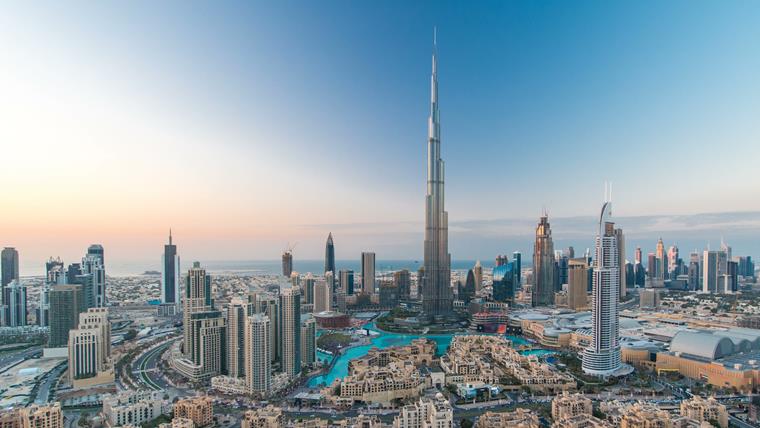
Fazlur Rahman Khan: When Skyscrapers Reached Their Limits
In the 1950s and 1960s, the construction of skyscrapers was more than just the creation of living space. A particularly tall structure was, above all, a symbol of prestige: for its creators and for the city in question. Every metropolis worth its salt wanted to call at least one particularly tall building its own.
However, the construction methods of the time were not sufficient for this. Material costs were too high, and the self-weight seemed too great. Added to this were stresses from wind and seismic conditions, which were not only difficult to balance but also required highly complex calculations. Let us remember: structural analysis software capable of calculating such things did not yet exist at that time. The standard steel-frame construction method was becoming increasingly inefficient.
So there were problems in high-rise construction, and they were anything but minor. In particular, wind loads showed the limitations of high-rise buildings. The taller a building, the stronger the wind forces, which act horizontally and laterally on the structure. One skyscraper where crosswinds in particular became a problem was, for example, the Citigroup Center in New York. If you want to read more about it, you can find the article here: Citigroup Center: Panic, Cover-up, and Hurricane .
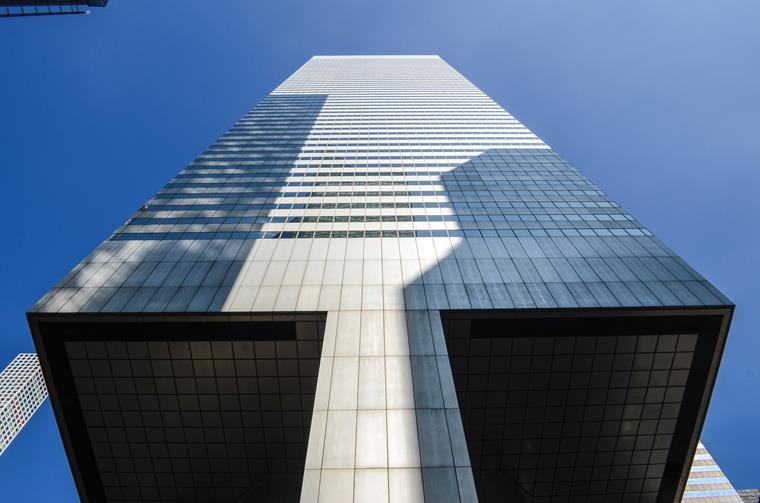
Fazlur Rahman Khan: Skyscraper Innovation
Fazlur Rahman Khan was born in what is now Bangladesh and studied structural engineering at the Indian Institute of Engineering Science and Technology in Shibpur. He then earned his bachelor's degree in structural engineering from the Bangladesh University of Engineering and Technology.
Thanks to the support of two scholarships, Fazlur Rahman Khan was able to travel to the United States in 1952. There, he studied at the University of Illinois and earned two master’s degrees within three years—one in structural engineering and one in theoretical and applied mechanics. This was followed by a doctorate in structural engineering. Pretty impressive, isn’t it?
A little fun fact on the side: Fazlur Rahman Khan didn’t see his first skyscraper until he was 21 years old. That’s because in his hometown, no building was taller than three stories. It was necessary for him to have found entering buildings in the U.S. that were—from today’s perspective—of medium height exciting: not only something completely new, but also a huge source of inspiration.

Fazlur Rahman Khan and Tube System
After graduating, Fazlur Rahman Khan began working at the architectural office Skidmore, Owings & Merrill (SOM) in Chicago. Eleven years later, he even became a partner there. While the architects at his firm, such as Bruce Graham, were designing buildings, he was pondering how to solve the problem of modern high-rise construction.
The main problem was the material and its self-weight. Building tall was absolutely inefficient and expensive. To illustrate this clearly, let’s take a quick look at how buildings were constructed up to that point when it came to making them as tall as possible.
Classic: Steel Frame (“Skeleton Construction”)
Until then, the standard method had been steel-frame construction, also known as skeleton construction. The name already says a lot: this involved creating a skeleton for the future building—a dense network of steel columns and beams.
Loads acting on the structure are absorbed internally by this very skeleton. The facade is merely a shell, which is attached afterward. The problem: Above a certain height, wind becomes a major risk. This is because it causes vibrations and bending, making the entire building act like a giant lever.
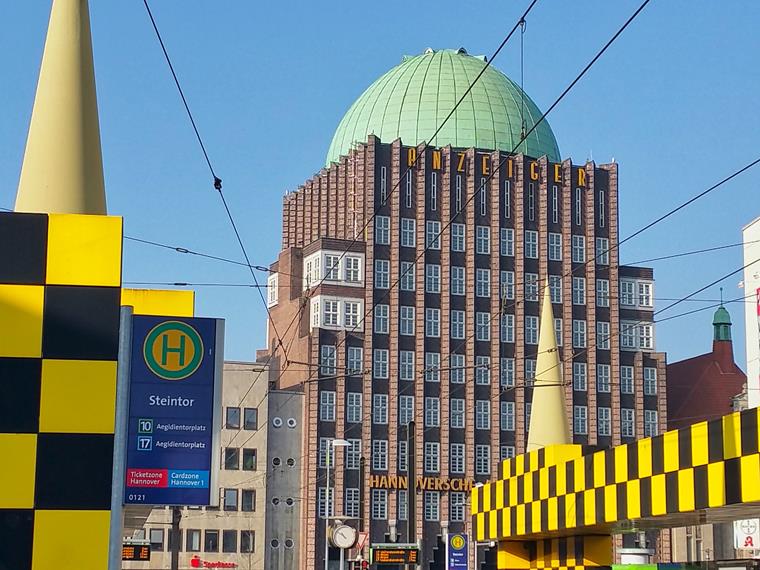
The only solution was to install thicker steel beams, more columns, and a tighter grid for the steel mesh. But this led to the main problem with skyscrapers of that era: they became too heavy and too expensive. Higher material costs, impractical interiors due to too many columns, and consequently inflexible, poorly usable floor plans.
In short: The structural system was simply not efficient enough for great heights and quickly reached its limits. Fazlur Rahman Khan asked himself a crucial question: Why is the supporting structure located on the inside, when it would be much more useful on the outside? Let’s explore this further!
Innovation by Fazlur Rahman Khan: Tube System
Fazlur Rahman Khan designed a completely new concept: the building itself becomes the supporting structure. Well, it wasn't entirely new, because he drew his inspiration directly from the nature of his homeland. One of the most common plant species there is bamboo. And it grows in hollow tubes, which are nested inside one another.
The entire load-bearing structure here is the shell itself! And Fazlur Rahman Khan applied this principle to high-rise buildings. His approach was based on closely spaced vertical columns, which were connected by horizontal beams. This resulted in a stiffener outer shell that absorbs the majority of the load and transfers it downward.
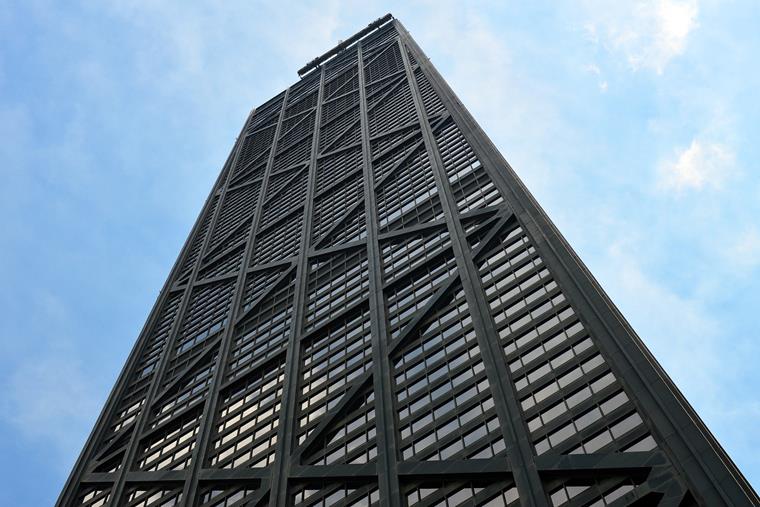
Thanks to this innovation by Fazlur Rahman Khan, high-rise buildings required significantly fewer supporting elements inside. This gave rise to the large open surfaces that we recognize, for example, as the typical open-plan offices found in city centers.
Fazlur Rahman Khan’s supporting system no longer focused inward but outward. This provided a great deal of stability, as the buildings became significantly more resistant to vibrations and bending. And it didn’t take long before he was able to put his theory into practice.
Fazlur Rahman Khan: His Most Famous Buildings
His first building with a tubular structure was the Chestnut DeWitt Apartment Building. He also contributed to the design of the 100-story John Hancock Center. His reputation among experts soon earned him the nicknames “Einstein of structural engineering” and “the greatest structural engineer of the 20th century.”

His masterpiece, however, was the 110-story Sears Tower in Chicago. It was later renamed the Willis Tower and was the tallest building in the world from 1973 to 1998. Without Fazlur Rahman Khan’s innovative tube system, these structures could never have been built.
Thanks to the tube structural system, buildings could reach enormous heights without sacrificing structural stability. Added to this was the efficient construction method, which showed itself above all in lower construction costs and reduced material usage. In doing so, Fazlur Rahman Khan set new standards in high-rise construction worldwide.
Fazlur Rahman Khan: CAD Pioneer
Fazlur Rahman Khan was a true pioneer not only in the field of building systems, constantly seeking ways to design buildings more efficiently. In the 1970s, the first serious computer-aided structural analyses appeared on the market: the birth of structural analysis software.
SOM, the architectural office where Fazlur Rahman Khan was a partner, became one of the first to actively engage with this technology. It was Graham and Khan who convinced their partners to purchase a mainframe computer. Already back then, the construction industry tended to be skeptical of new technologies. But their partners agreed, and Khan began programming the structural system to perform calculations for structural design. In doing so, he performed true pioneering work for the entire industry.

Conclusion: Legacy of Fazlur Rahman Khan
Fazlur Rahman Khan died at the age of 52 from a heart attack. Yet his innovative method of constructing high-rise buildings continues to have a major influence on how we build today. Skyscrapers such as the Burj Khalifa and the One World Trade Center are based on his work.
Without the tube system by Fazlur Rahman Khan, such structures would hardly have been possible in this form. Although he enjoyed great recognition among experts—and continues to do so today—his name is hardly known to the general public. Engineers, after all, tend to work behind the scenes.
One thing is certain: Fazlur Rahman Khan brought about lasting change in the construction industry. He gave us a building system that made modern skylines—as seen in countless photos—possible in the first place. Perhaps you’ll think of this the next time you look up in a big city and admire how the clear blue sky is reflected in the facade of a skyscraper. It is precisely this facade that supports the entire building.
