


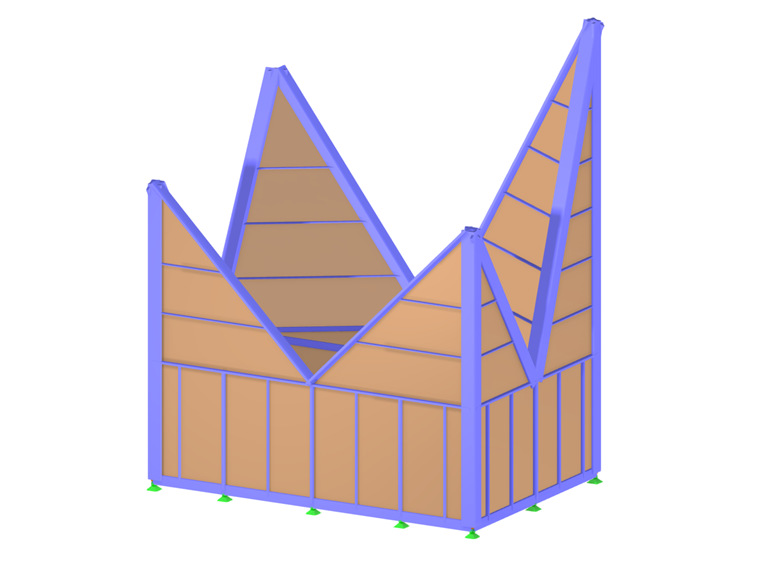
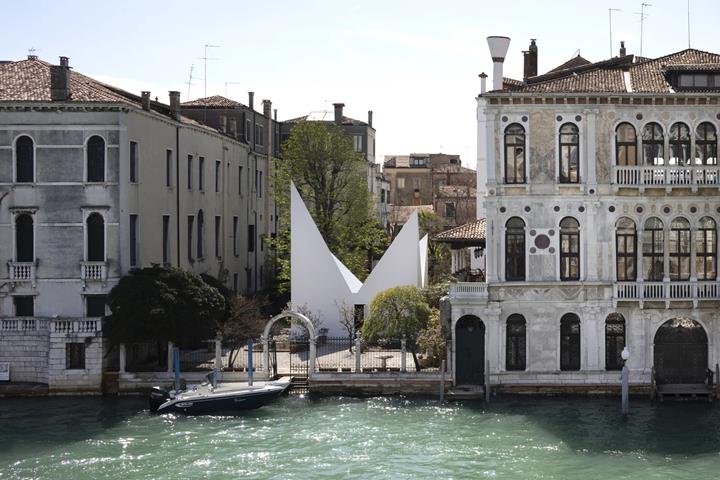
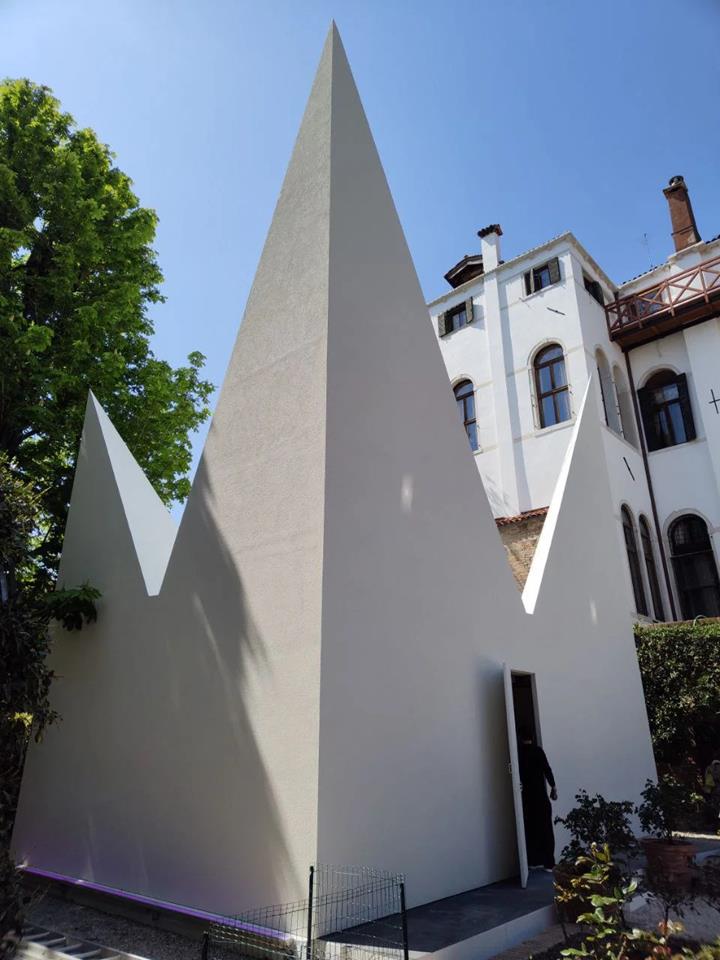
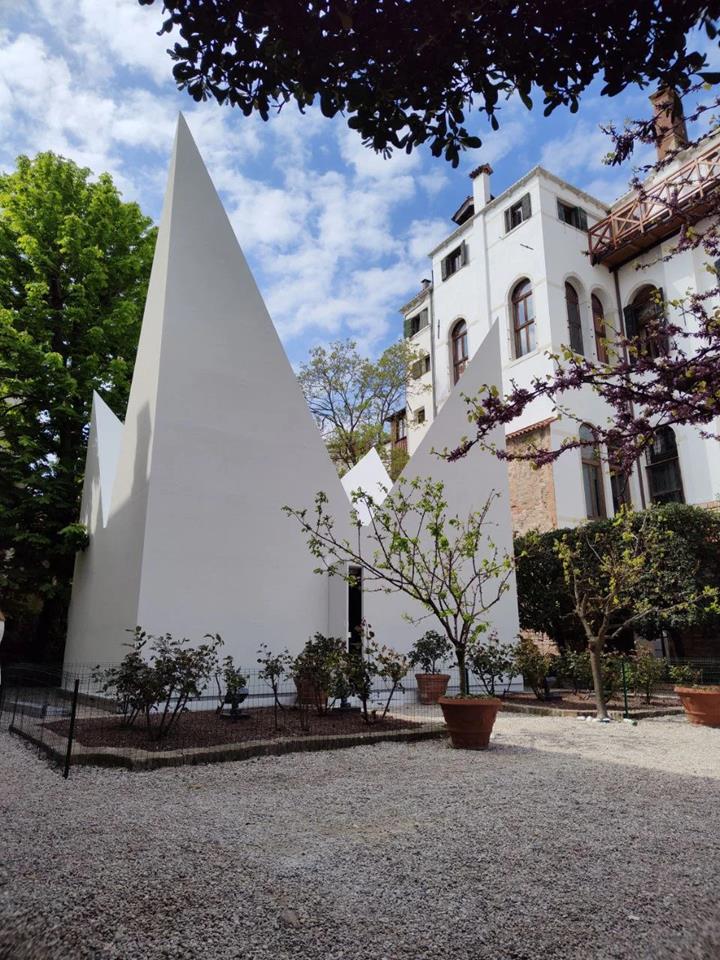
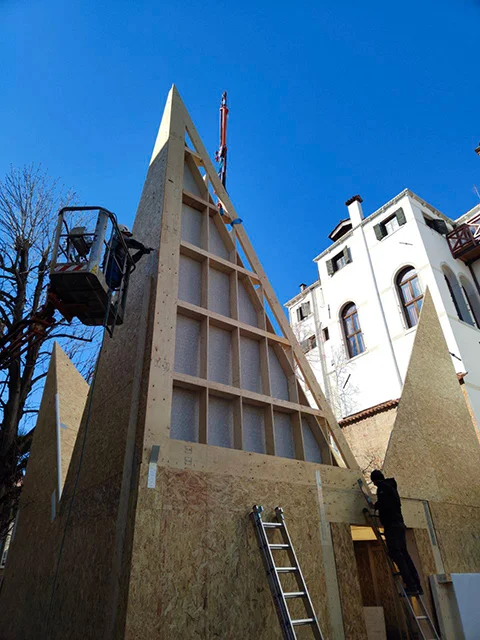
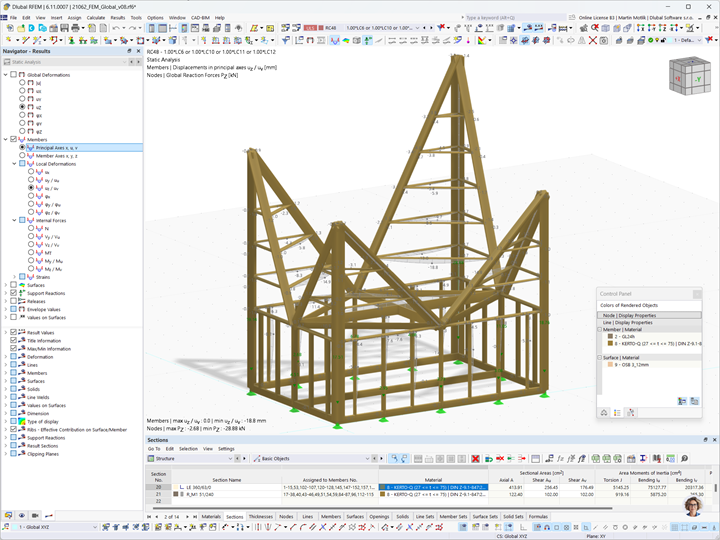
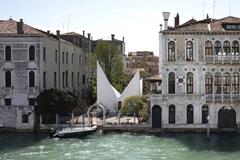
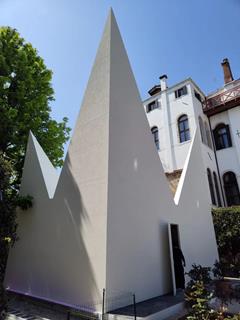
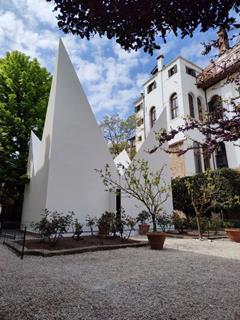
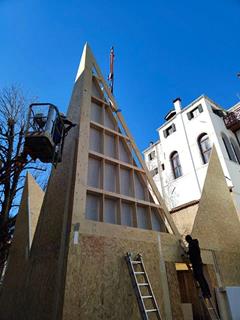
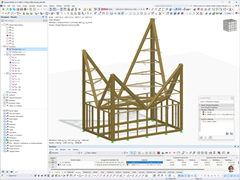
The pavilion is inspired by the art of origami and the work of Chun Kwang Young. The structure consists of four pyramids (with a height between 5 m / 16.4 ft and 12 m / 39.8 ft) built in LVL with OSB stiffening panels.
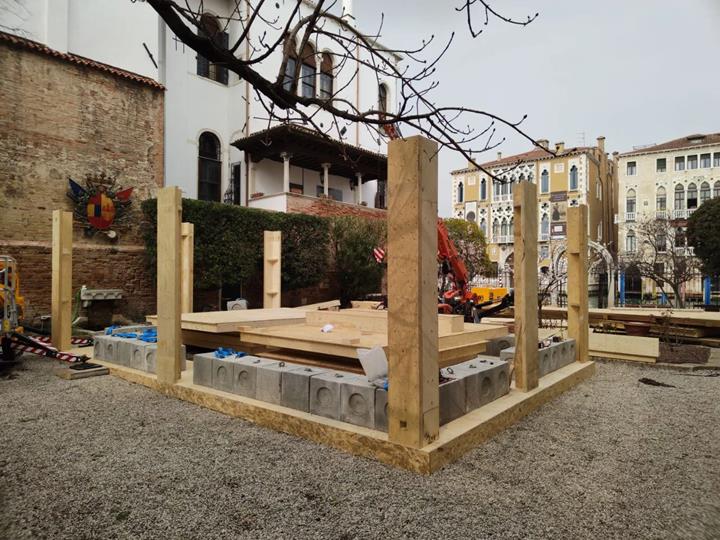
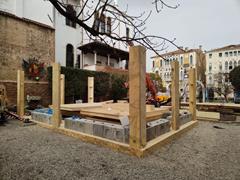
To respect the integrity of the historic garden that houses it, no traditional foundations were used: the pavilion was anchored with concrete weights. The installation was designed to blend into the environment, also avoiding contact with tree branches.
One of the main challenges was the location of the garden, overlooking the Grand Canal, which is subject to strong gusts of wind. To address this complex context, CFD (Computational Fluid Dynamics) simulations were carried out, which made it possible to determine the exact dimensions of the weights needed to ensure the stability of the structure.
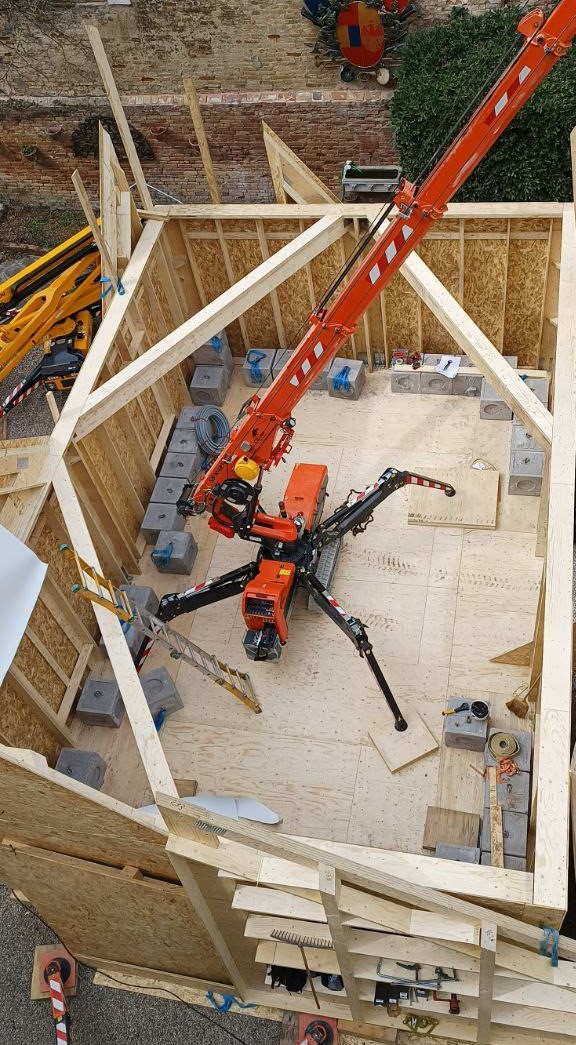
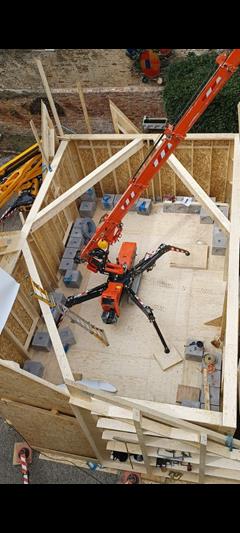
The assembly required a high level of precision, using a compact crane that was small enough to move around the restricted site but powerful enough to lift the structural elements.
At the end of the exhibition, the pavilion was completely dismantled, as planned from the outset.
| Location | Venice, Italy |
| Architect | Stefano Boeri Architetti, Via Abramo Lincoln 24/b 20129, Milan, Italy |
| Structural Design | Ergodomus di Franco Piva Località Fratte, 18/4 38057 Pergine Valsugana, Italy www.ergodomus.it |

.png?mw=720&hash=f7903b7a37503e21d4e471e01ef4a094339e667e)

.png?mw=240&hash=590bae8d3fb72d417697590adf4de6691c1441ba)