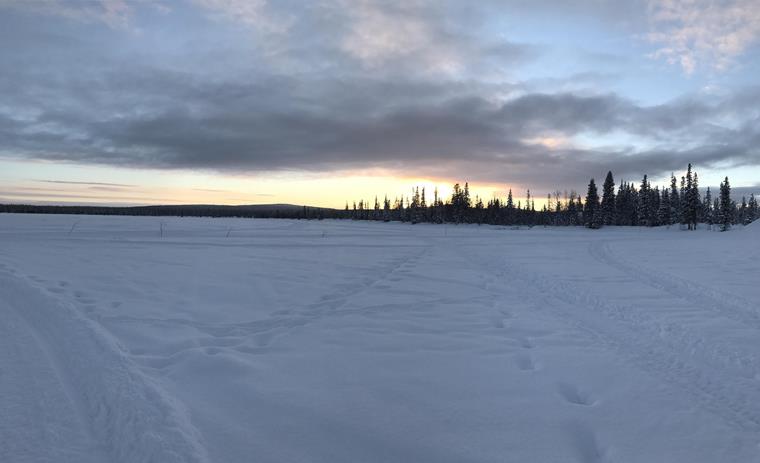
Vacation means something different for everyone. Some want action and to experience as much as possible. For others, however, a vacation means a period of ‘’'complete relaxation'‘’. Far away from the hustle and bustle of everyday life. A cup of warm cocoa in your hand, your list of favorite Christmas carols set to play, snuggled up under a thick blanket. Peace and quiet, seclusion. Anyone who finds themselves in this picture would definitely be in good hands at Icehotel Jukkasjärvi.
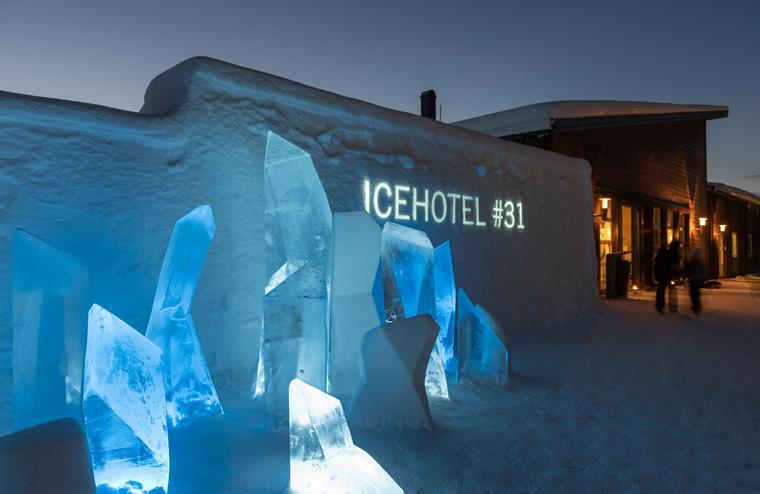
Icehotel Jukkasjärvi: Magic of Ice and Snow
Especially in the winter months, many people long to slow down. And where better to do that than in your own little cave of thick ice? Wrapped up warm in thermal sleeping bags on soft reindeer skins. An atmospheric ambience, maybe even a glimpse of the Northern Lights – sounds more like a magical dream? The Icehotel in Jukkasjärvi is already a little magical. No wonder the hotel in Lapland is no longer an insider tip. What's more, it is even the oldest and therefore first ice hotel in the world.
It is rebuilt every year, created by numerous artists, architects and engineers. And every spring, it melts to return to its source. It couldn't be more circular economy, the epitome of cradle to cradle. But how does it all work? And how did the idea for the Icehotel Jukkasjärvi come about in the first place? This time, we are taking you on a journey to the cold north of Europe. To a place where there is always a spark of magic in the air, especially in winter: Swedish Lapland.
History and Idea of Icehotel Jukkasjärvi
The Icehotel in Jukkasjärvi is perhaps Sweden's most famous hotel. And probably one of the most unusual hotel complexes in the world. It is not for nothing that numerous TV stations have included the Icehotel on their list of reports. But how do you get to build hotel rooms made of ice – year after year?
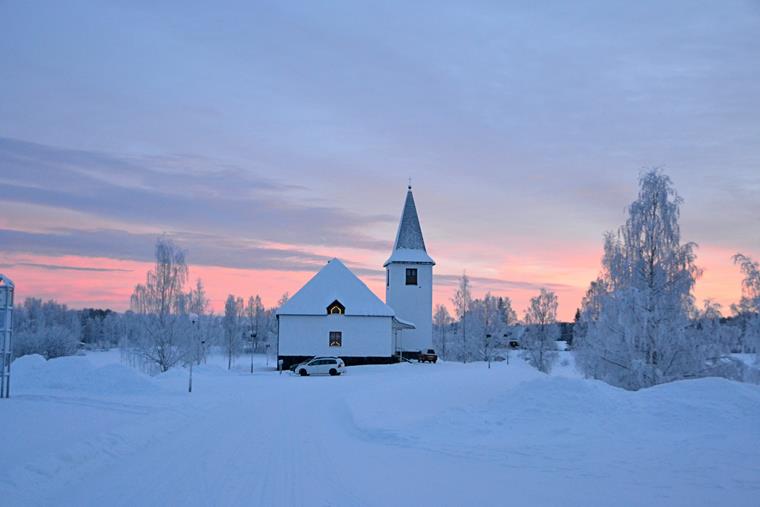
Our journey begins where unusual ideas are at home: in the 1980s. Art, peaceful coexistence and individualism are at the top of the agenda. In Swedish Lapland, near the village of Jukkasjärvi with its 900 inhabitants, the first ice sculpture exhibition is opened. And with great success. No wonder, the location of the village, around 200 km north of the Arctic Circle, is virtually predestined for structures made of ice.
In 1989, a group of Japanese ice artists traveled to Jukkasjärvi. They had heard about this extraordinary place. The name of the village translates roughly as “meeting place by the water”. Its proximity to the River Torne, the lifeline of the region, makes it something very special.
In winter, a vast, white landscape under sparkling and shimmering northern lights. And in summer, a raging river that meanders through the forests and awakens nature from its deep slumber. The landscape is simply breathtaking – perfect for creating true works of art from ice.
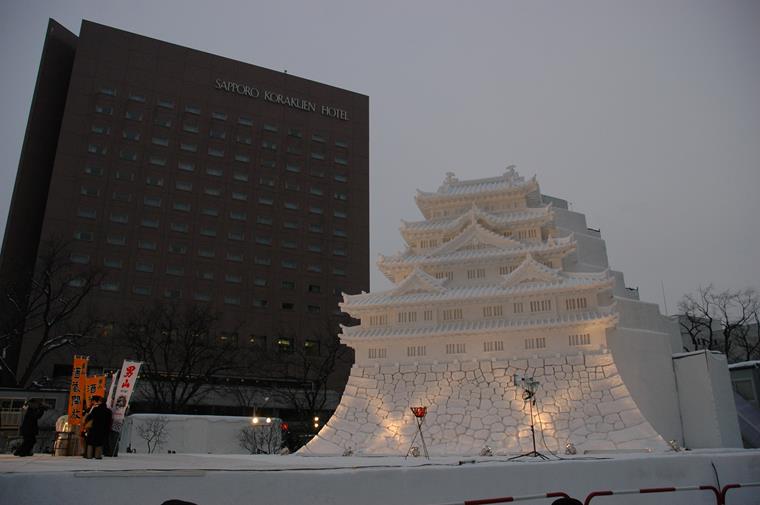
The group's aim was to create a small version of the “Yuki Matsuri” from their homeland in Jukkasjärvi. Translated, this is a snow festival. The most famous festival of its kind is the Sapporo Snow Festival on the island of Hokkaido. Every February since 1950, artists have presented their impressive snow and ice sculptures there. And the whole thing made an impression in Sweden.
The local entrepreneur Yngve Bergqvist was inspired by it. In the 1970s, he had worked to revitalize the local village museum and now saw ice art as another way to make the village ‘'attractive to tourists’' outside of the summer rafting season.
His idea: a small art exhibition made of ice. And the highlight: a 60 m² igloo. He called it the ARTic Hall, a truly fitting name. The exhibition was a complete success and laid the foundation for what would later become the Icehotel Jukkasjärvi.
A tour group that had come to the village for the art exhibition was unable to find accommodation. All the cabins were fully booked. Yngve Bergqvist offered them the chance to spend a night in the igloo. Equipped with warm sleeping bags and reindeer skins, they received a short briefing from him on how to sleep well and safely in such cold weather.
Then they were the first tourists to spend the night in a room made of ice. And as we can see from the success of the Icehotel in Jukkasjärvi: It was a complete success. The group was completely enthusiastic about this unique experience. For the entrepreneur, this was the inspiration for a new idea to make his village even more attractive for tourism: The Icehotel Jukkasjärvi was born.
Now we know how the Icehotel came about in the first place. But you don't have to be a structural engineer to wonder: How can a whole hotel made of ice hold up? Is it really safe and how exactly do you build something like that? Questions upon questions: let's take a direct look at the answers.
Icehotel: Engineering Art of Ice
How do you build an igloo? We all know snowmen from our childhood or our children's childhood. Balls of snow compacted by rolling, which we stack on top of each other and hope they stay standing when we lovingly ram twigs into their sides and a carrot into their heads. But can you build whole rooms out of something like that without the ceiling falling on your head at night?
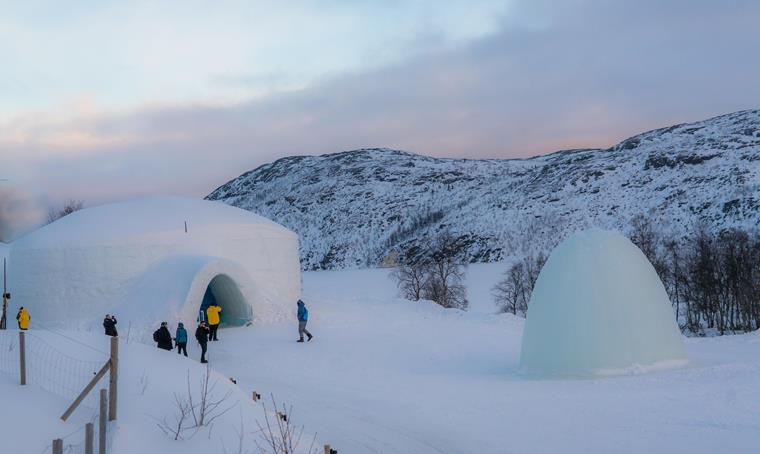
Of course you can! The Inuit have mastered this craft in thousands of years of experience. With their knowledge, even entire living spaces including furnishings made of ice are no problem at all. Igloos are built from compacted snow. Sawed from the ground of even snow surfaces, over which the ice-cold wind whistles. This quickly turns the actually fluffy white snow into a hard block. And these blocks can be stacked on top of each other in a spiral. Then seal the remaining cracks with snow to ensure good insulation: done!
Staying at Icehotel Jukkasjärvi
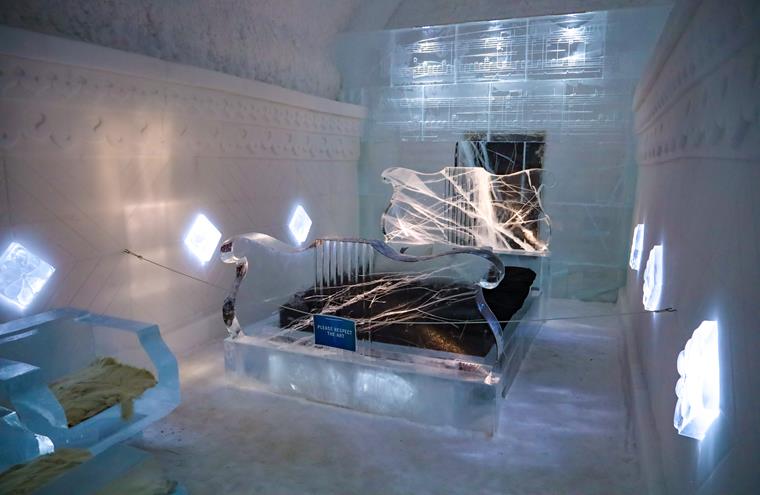
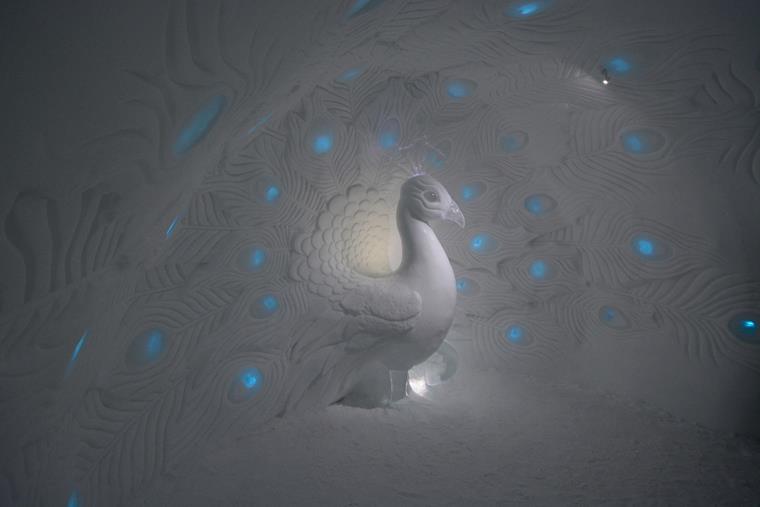
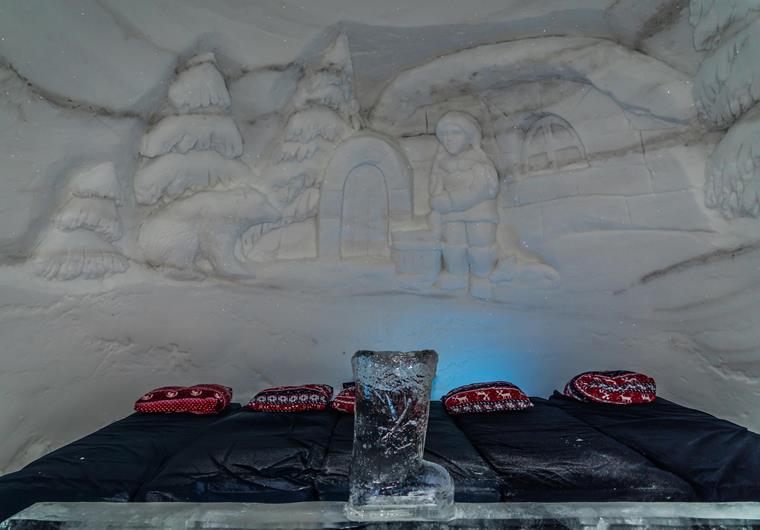
Staying at the Icehotel Jukkasjärvi is a unique experience. The rooms are only available for a few months. And their design is unique every time. Every single room is individually designed by artists. Over 500 artists have already contributed to the various editions of the Icehotel. Construction, interior design, decoration – all made of ice. Everything is absolutely beautiful.
And how does it feel to sleep in the Icehotel Jukkasjärvi? It's cold. What a surprise, isn't it? But yes, the frosty nights are not without them. Staying at the Icehotel Jukkasjärvi is not for everyone. Although the reindeer skins and thermal sleeping bags keep you nice and warm, theoretically even down to -25 °C, some people prefer a little more comfort.
Since 2016, there has been the Icehotel 365, a part of the hotel that offers warmth-loving guests all the usual amenities. Heated rooms are available all year round. In addition to warm rooms, the Icehotel 365 also offers permanent ice suites. Guests can stay here all year round in icy temperatures.
And it's worth it! Because the unique nature of the region is a real magnet for people who want to spend a relaxing vacation, even in the summer months. Or perhaps extensive hiking tours and the famous adventure rafting on the Torne River? There is something for everyone!
Icehotel Sweden: Long Live Structural Analysis
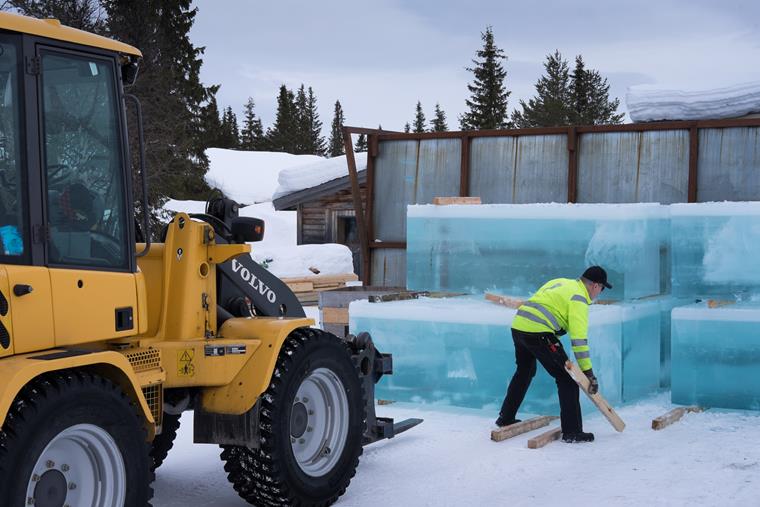
Back to the ice rooms: how does the whole thing hold up? A hotel with several rooms is not an igloo. And solid snow may not be enough to keep different rooms stable for months on end. The material of choice here is Snice. What is it supposed to be? A mixture of snow and ice, straight from the frozen bed of the Torne River next door.
A block of snice weighs about 2 tons. Quite a lot, but also very stable. To ensure that the rooms in the Icehotel Jukkasjärvi hold up reliably, the blocks are stacked on top of each other in domes and barrel vaults. The tensile strength may be low here, but the natural stability of these structures is particularly important. Long live structural analysis!
Every year in November, the construction of the Icehotel Jukkasjärvi begins. The process takes around four to six weeks until the numerous works of art are in their final stages. The icy rooms are traditionally opened in mid-December. But how do you deal with temperature fluctuations there? When it suddenly gets colder or warmer? How safe is it to stay at the Icehotel?
Safety and Comfort at Icehotel Jukkasjärvi
The building remains stable at -8°C to -5°C indoor temperature. This is due to its location above the Arctic Circle. It simply doesn't get any warmer there in the winter months. But even if it did: The ice rooms are constantly monitored for their load-bearing capacity and safety.
As soon as there is even the slightest sign of cracking or thawing, that part of the hotel is closed. However, according to hotel staff, this has never happened before. When it gets warmer from April onwards, the icy part of the Icehotel closes its doors anyway so that the ice used can flow back into the river.
Speaking of water: where do you shower and what are the general sanitary facilities like? And what if something should happen during the night? There are no doors in the seasonal ice rooms, if only for safety reasons. Instead, curtains separate the individual rooms. Of course, there are no hot water or sewage pipes of any kind in the Icehotel, otherwise the ice would melt.
But that doesn't mean that guests have to discover ice baths and icy porta-potties for themselves. Sanitary facilities, showers, a sauna and warm lounges can be found in a separate heated building called “Riverside”. Changing rooms and a change of clothes, secure storage rooms for luggage and a first aid station provide reliable 24/7 support so that no one is left wanting at the Icehotel.
Icehotel Jukkasjärvi: Sustainability and Innovation
Let's move on from all the amazement about the Icehotel to the green facts: What about sustainability? Tourism always brings with it a certain amount of problems, and nature often has to take a back seat. What about the Icehotel in Jukkasjärvi?
At the Icehotel Jukkasjärvi, sustainable tourism is a top priority. The ice rooms are made exclusively from natural resources. Ice, snow and ultimately the river water are transformed into habitable works of art using engineering skills and artistic talent. And when it gets warmer? Then the Icehotel simply flows back into the river. More circular economy is not possible.
What about the permanent part of the hotel? Here, too, attention is paid to sustainability. The ice rooms in the Icehotel 365 are cooled by solar energy. The solar panels on the roof provide more than enough energy for cooling and building services in the summer months. In the meantime, the hotel management has even set itself the goal of becoming completely climate-neutral by 2035.
Conclusion on Icehotel Jukkasjärvi: Transience and Permanence All in One
We can all agree that the Icehotel is absolutely unique. In every respect. What can engineers and architects learn from the Icehotel? That traditional construction methods are not a relic of times gone by. They can be developed into something great.
At the same time, nature and tourism do not have to be mutually exclusive when it comes to tourist attractions nature and tourism need not be mutually exclusive. It doesn't always have to be a beach vacation in one of 40 almost identical giant hotels. It doesn't always have to be an expensive cruise or a safari in the African steppe. Why not take a time-out with deceleration while appreciating nature?
Vacations can be relaxed and yet unique. A real experience that you will never forget. The beauty of temporary structures, a unique atmosphere. The Icehotel in Jukkasjärvi is simply a lesson in how sustainable building and living tourism can work even in such an extreme climate.