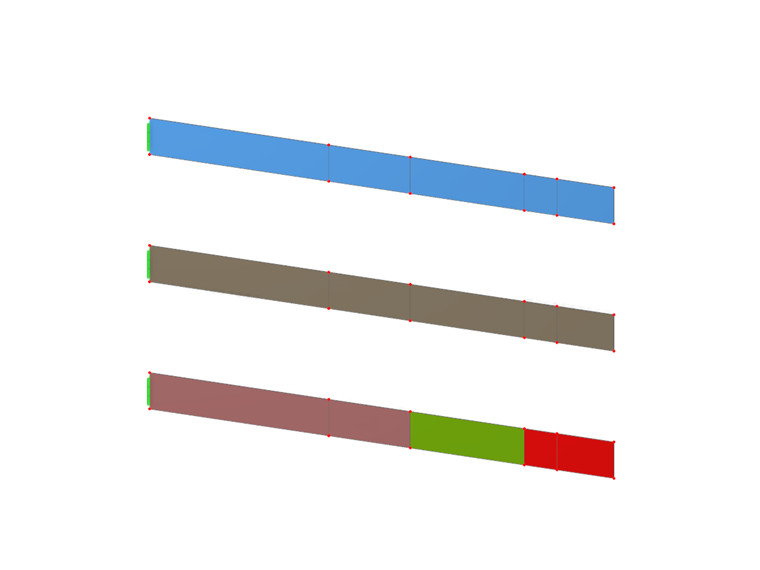
Table 7 of the material standard EN 10025-2 specifies yield strengths fy for the respective steel grades depending on the product thickness. Similarly, DIN EN 1993-1, Table 3.1 specifies thickness-dependent yield strengths.
The different yield strengths fy are taken into account at different points in RFEM 6. On the one hand, in the structural analysis, where the set material model is taken into account, and on the other hand, in the stress design (for example, with the Stress-Strain Analysis add-on), where the specified values for the yield strengths fy are compared with the values of the occurring stresses depending on the set material standard.
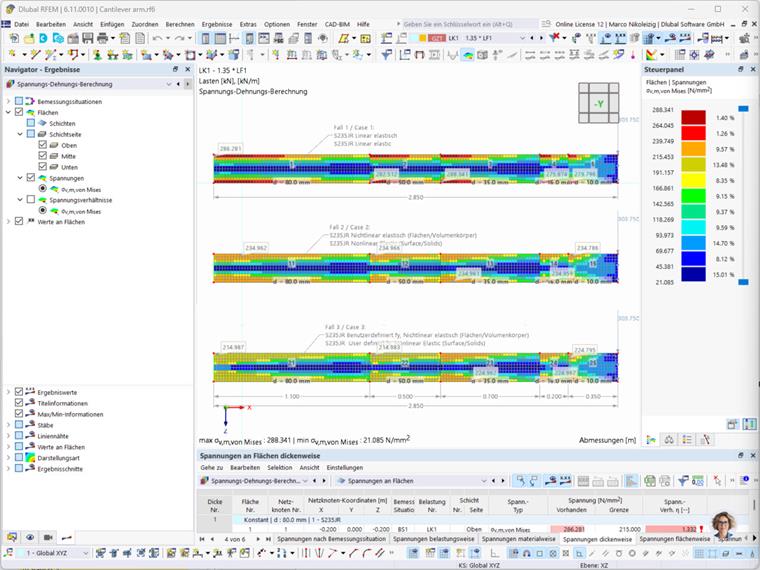
An RFEM 6 model is provided to illustrate the three cases displayed below. For each case, a cantilever arm consisting of surfaces with different plate thicknesses was modeled with a concentrated load at the free end.
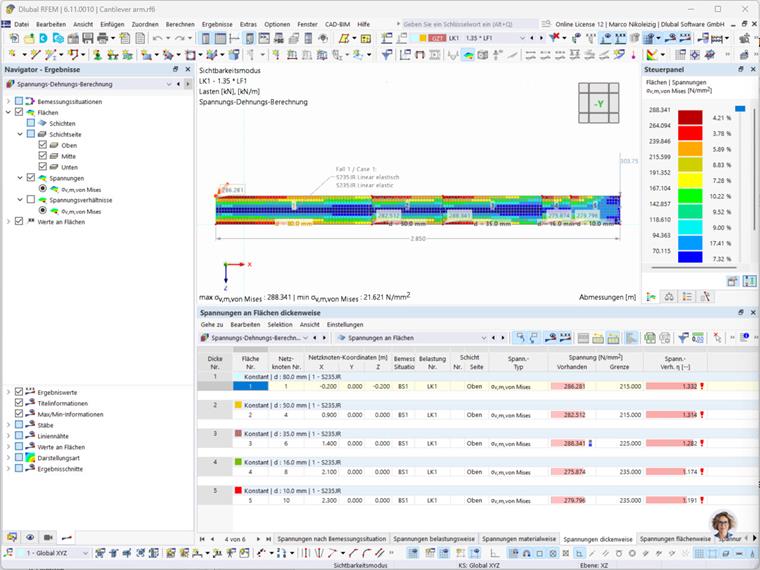
Case 1: Linear Elastic Material Model
This material assumes a linear (proportional) increase in stresses depending on the distortions. As a result, values for the stresses in the material can occur far above the yield strength.
In the RFEM model, this case is represented by the cantilever with Surfaces 1 through 5.
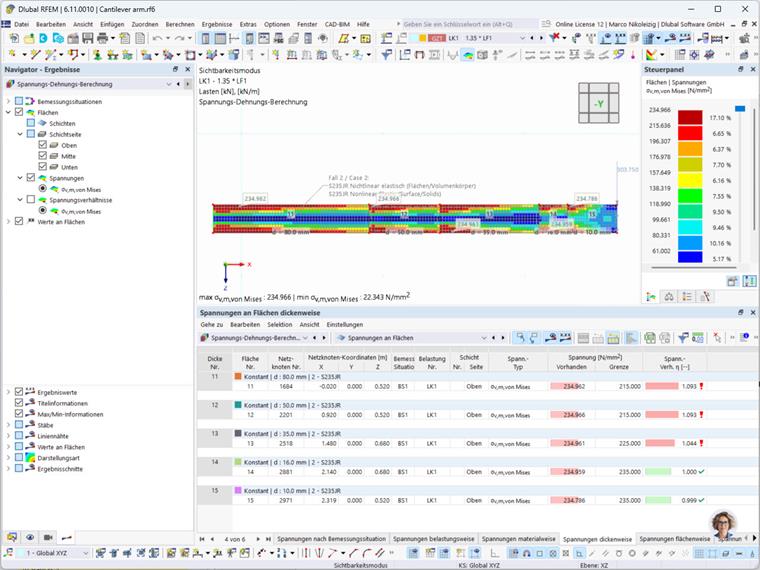
Case 2: Nonlinear Elastic Material Model with Generally Applied Yield Strength
This material assumes a linear (proportional) increase in stresses up to the yield strength fy>. Above this value, a small modulus of elasticity of, for example, 2.1 N/mm² is applied. The material can absorb stresses above the yield strength, but this is associated with a large increase in strain. Individual FE elements can avoid the increase in stress by redistribution to neighboring elements.
In the RFEM model, this case is represented by the cantilever with Surfaces 11 through 15.
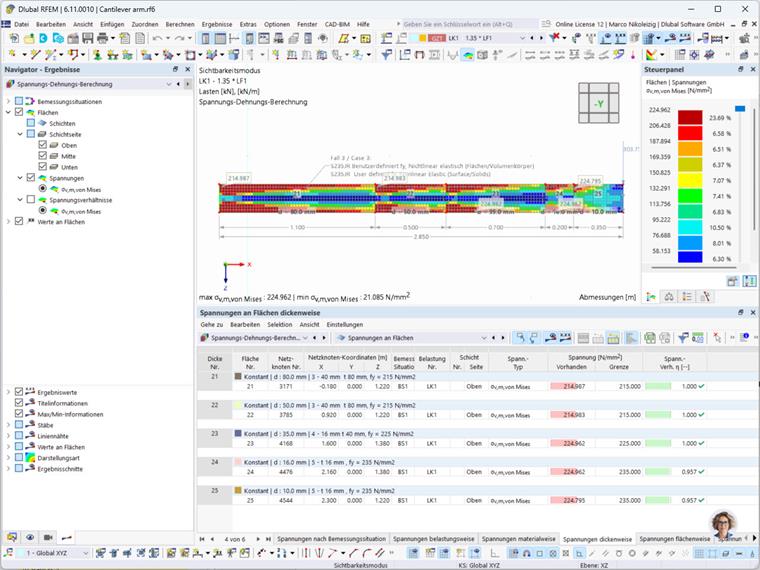
Case 3: Nonlinear Elastic Material Model with Thickness-Dependent Yield Strength
The material behavior corresponds to Case 2, but in this case, the yield strength fy is set manually in the material model definition in accordance with the specifications of the above-mentioned material standards. As a result, the redistributions in the FE elements are now controlled, depending on the plate thickness. Based on the reduced yield strength fy, the stress redistribution in thicker metal sheets already starts at lower stresses.
In the RFEM model, this case is represented by the cantilever with Surfaces 21 through 25.
Note:
If stresses above the yield strength fy occur when using the “Nonlinear Elastic” material model, this can lead to instabilities. To find the cause of this instability, you can switch to the linear elastic material model and then search for stress peaks. For more information on instabilities, see the following FAQ:
Summary:
The nonlinear elastic material model, regardless of whether it includes a plate thickness-dependent definition of the yield strength, is suitable for defining the material behavior for stress determination. However, there is no connection between the definition of the yield strength in the material model and the plate thickness-dependent stress verifications in the Stress-Strain Analysis add-on, as the thickness-dependent yield strengths are taken from the selected material standard.
To download the model used, see “Models to Download” at the bottom of the website or click the following image.