


The future of the solar energy industry is expanding rapidly, with photovoltaic systems—a technology that converts sunlight directly into electricity using solar panels composed of many solar cells—playing a crucial role in this transformation. As the demand for solar energy continues to rise, engineers are increasingly tasked with designing robust systems that are not only efficient but also safe and reliable. These challenges are even more pronounced for solar panels for industrial buildings and industrial solar energy systems. Engineers must carefully account for a variety of structural and environmental factors to ensure the success of these large-scale installations.
This article explores seven of these key challenges and demonstrates how Dlubal’s software solutions can help overcome them, ensuring safe, efficient, and reliable solar energy system designs.
1. Consideration of External Loads (Wind, Snow, Seismic Forces)
Solar energy system design must account for external loads such as wind, snow, and seismic forces, which can significantly impact the stability and safety of structures. These loads are highly variable and depend on geographic location, elevation, and other environmental factors. For instance, snow can accumulate unevenly on panels, leading to localized pressure, while wind forces vary in direction and intensity, affecting the structure’s orientation. Similarly, seismic forces must be considered for their impact on the entire system, adding complexity to the design process. Engineers need to carefully model and analyze all these factors to ensure the structure’s stability and safety under a wide range of conditions.
Dlubal’s Solution:
Dlubal’s software offers advanced tools to address these challenges, including the Geo-Zone tool, an interactive map providing key load parameters globally. Engineers can quickly determine values for snow load, wind velocity, seismic zones, and more, tailored to a specific location. By integrating local data, Dlubal’s software ensures that solar structures and mounting systems are designed to withstand regional conditions, enhancing safety and reliability.

2. Assessing Foundations and Support Systems for Solar Installations
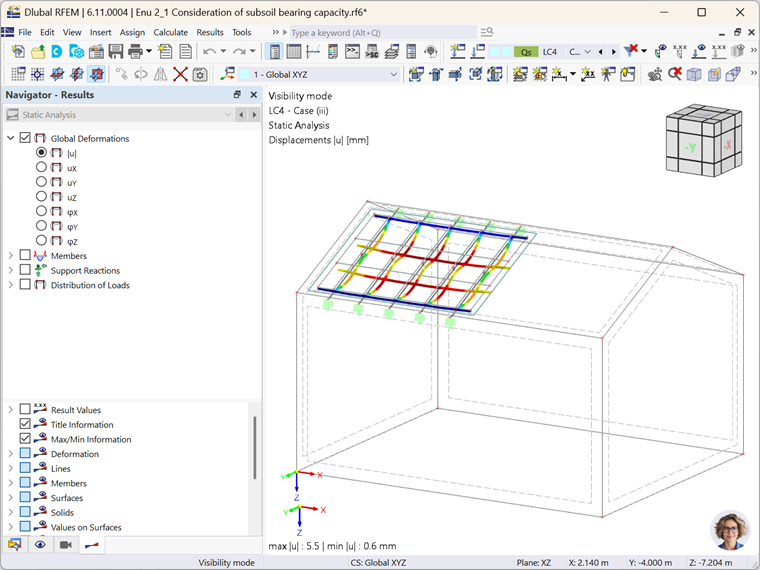
The design of solar installations must also account for the support system and foundations, which are crucial to the system’s stability. For rooftop photovoltaic systems, the building’s structure must support the additional load, while for ground-mounted systems, soil conditions and appropriate foundation types must be considered. Accurately assessing the suitability of the support system is essential in preventing structural failure and ensuring the longevity of the installation.
Dlubal’s Solution:
RFEM 6 (and RSTAB 9) offers a free and versatile modeling environment, allowing engineers to design the primary solar structure as well as to simulate and assess the underlying support system. This includes modeling/simulating the roof structure for rooftop installations and designing foundations for ground-mounted systems. Dlubal’s software also offers tools to optimize foundation performance based on site-specific conditions, ensuring that both the primary structure and the support system are properly designed for safety and stability.
3. Optimizing Load Transfer Systems for Solar Structures
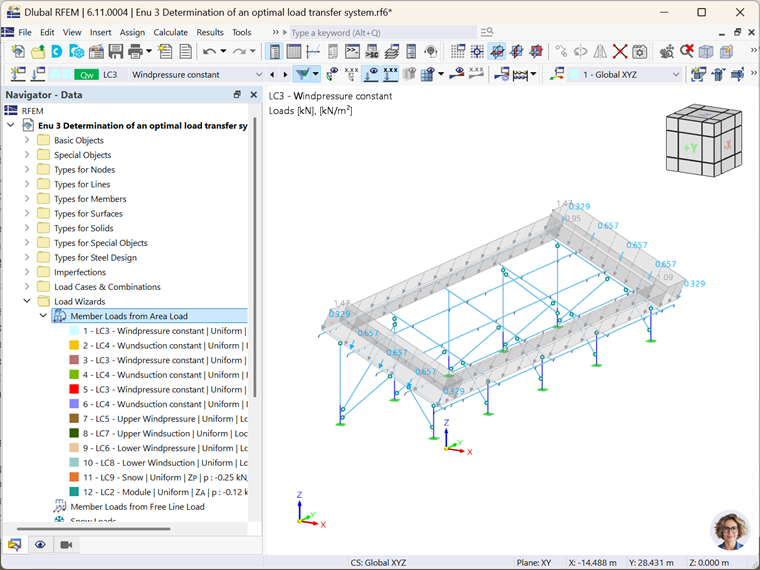
A critical aspect of solar energy system design is determining the optimal load transfer system, which distributes loads from the solar modules, mounting systems, and other components to the foundation. Engineers must ensure that all components are properly supported and minimize stress or strain concentrations to maintain structural integrity.
Dlubal’s Solution:
With tools such as RFEM 6 and RSTAB 9, engineers can model different load scenarios and design configurations in a single platform. This capability allows engineers to test various scenarios and configurations, optimizing the load transfer system for maximum efficiency—ensuring that the system is both structurally sound and cost-effective, ultimately enhancing the overall performance of the solar installation.
4. Consideration of Cold-Formed Steel Sections
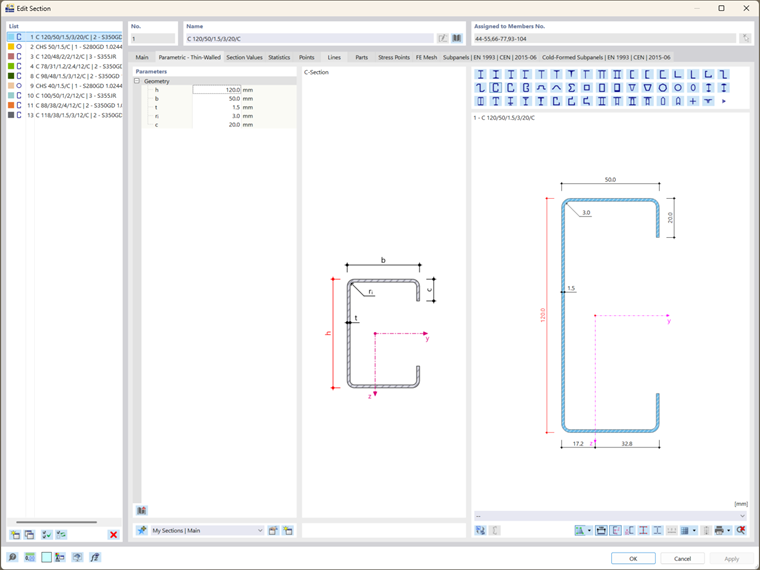
Cold-formed steel sections are used widely in solar structures due to their cost-effectiveness and ease of fabrication. However, these sections require careful analysis due to their susceptibility to buckling and other forms of failure under certain load conditions, especially in larger industrial solar energy systems. Engineers must account for these characteristics to prevent structural failure.
Dlubal’s Solution:
RFEM 6 includes specific tools for analyzing cold-formed steel sections, allowing engineers to assess buckling, stability, and other failure modes in accordance with relevant design codes. Additionally, Dlubal’s stand-alone program RSECTION supports the modeling of various sections, including those of extruded aluminum, allowing for detailed analysis and optimization before exporting to RFEM 6 for further design. This integrated approach allows for comprehensive and precise evaluation of all types of sections and ensures that they meet the necessary structural and performance standards.
5. Assessment of Unique Module Designs and Load Scenarios
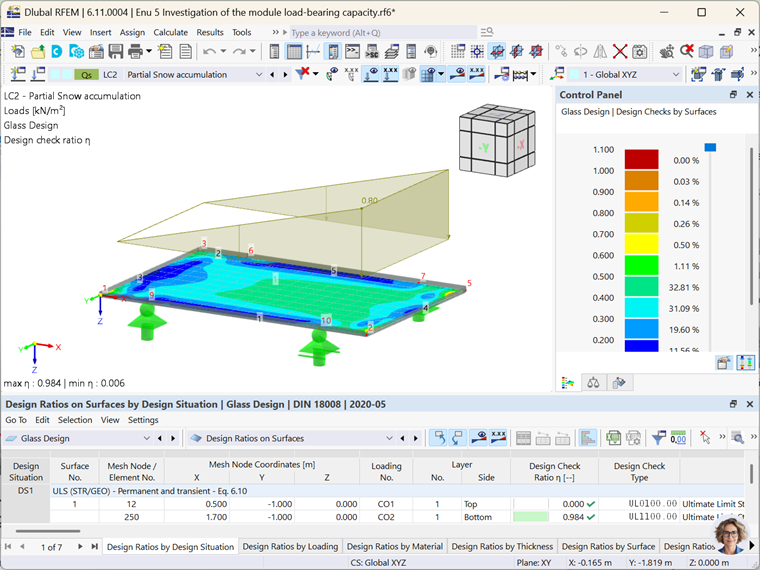
Solar modules come in various types, including specialized designs such as glass panels, each requiring tailored assessments of load-bearing capacity. Engineers must account for the unique material properties of these modules as well as consider special load scenarios that may arise, such as uneven snow accumulation or additional forces from maintenance activities. These unique design features and load conditions require careful evaluation to ensure the system's overall structural integrity and performance under varying circumstances.
Dlubal’s Solution:
Dlubal’s software offers a range of design add-ons, such as the Glass Design add-on, to assist engineers in designing unique solar modules. The software provides advanced load analysis capabilities, enabling users to simulate various load scenarios, all in a single platform. This integrated approach ensures that both the distinctive characteristics of unique module designs and the special load conditions are effectively addressed, optimizing the system’s safety and performance.
6. Efficient Management and Reuse of Design Models
In large-scale solar installations, such as industrial solar energy systems, engineers must manage multiple similar models efficiently. The same applies to projects that feature designs similar to those from previous work. Without the right tools, storing, adapting, and reusing models can become cumbersome, leading to inconsistencies, inefficiency, and time-consuming tasks.
Dlubal’s Solution:
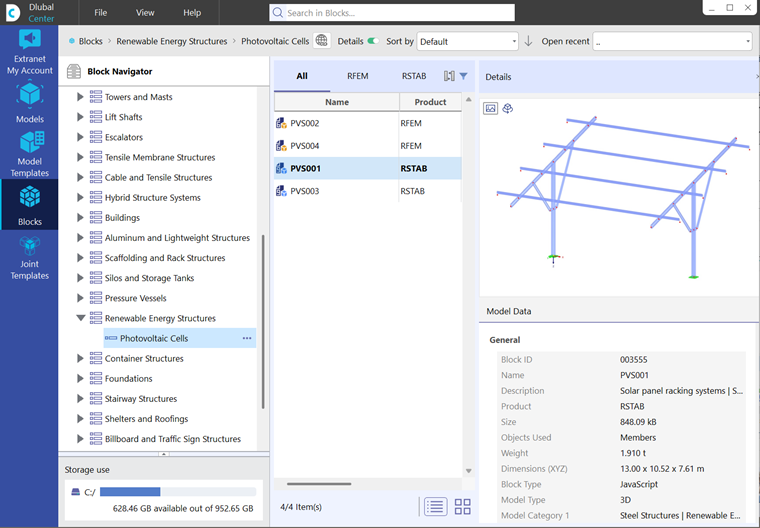
Dlubal’s programs provide powerful tools to manage multiple models efficiently, enabling engineers to create templates for similar structures. This allows for quick replication and easy adjustments without starting from scratch. The software also supports batch processing, streamlining large-scale projects and facilitating the adaptation of models to site-specific conditions, load changes, or design variations. Hence, by efficiently storing and managing projects, engineers can save time and reduce redundant efforts, ensuring consistency across designs and improving overall project efficiency, accuracy, and timely delivery.
7. Ensuring Code Compliance and Efficient Documentation for Photovoltaic Systems
Ensuring code compliance and proper documentation is a critical yet challenging aspect of solar installation design. This involves generating detailed reports, calculations, and supporting materials that must be accurate, well-organized, and easily accessible for future reference or audits. The repetitive nature of these tasks, combined with the need for meticulous attention to detail, can be time-consuming and difficult to manage efficiently without the right tools.
Dlubal’s Solution:
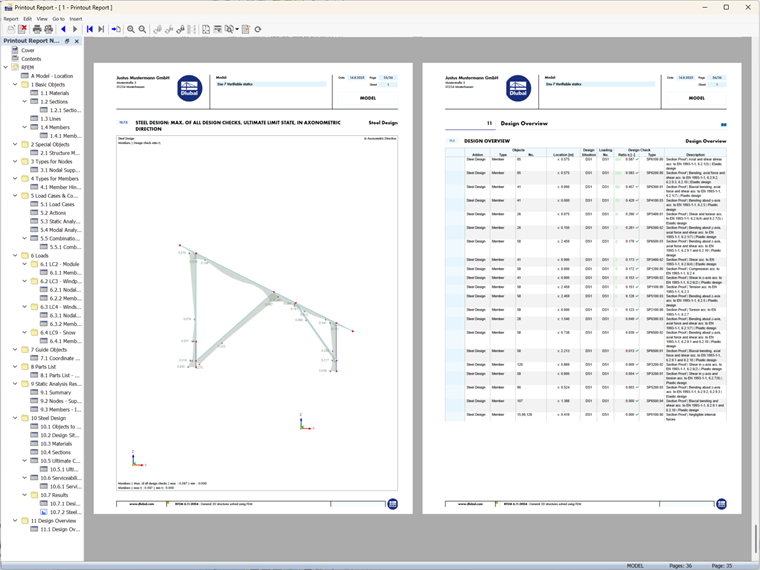
Dlubal’s software supports compliance with numerous international design codes, including Eurocodes, ANSI, and more. The programs automatically generate detailed reports in multiple languages, ensuring that designs meet local regulations. RFEM 6’s printout report works in parallel with the main program, allowing engineers to make interactive modifications and quickly generate reports. This significantly reduces manual documentation time, ensuring full compliance and improving overall efficiency.
Conclusion
In conclusion, the structural design of solar installations presents a range of challenges, from addressing varying external loads to ensuring code compliance and managing complex designs. Dlubal’s software solutions offer powerful tools that streamline these processes, providing engineers with the ability to efficiently model, analyze, and optimize designs for maximum safety and performance. By integrating design and load analysis, managing models effectively, and ensuring compliance with international codes, Dlubal helps engineers deliver solar installations that are not only reliable and safe, but also cost-effective and efficient.