|
Author
|
Jacopo Zaggia
|
|
University
|
University of Padua, Italy
|
Project Description
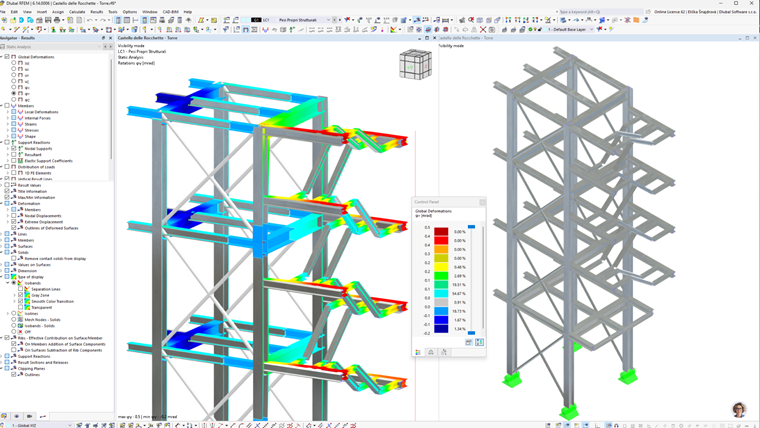
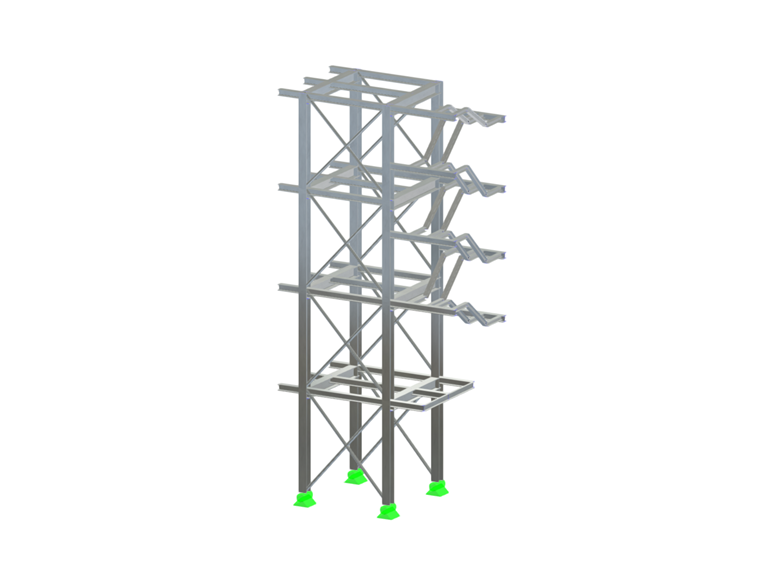
This thesis project addressed the redevelopment of the Rocchette Castle through an integrated process involving surveying, historical analysis, structural design checks, and an architectural redesign, with particular attention to balancing the preservation of the existing heritage with the incorporation of new contemporary elements. In this context, one of the central themes of the project was the design of the new tower, developed in part using RFEM 6 for structural analysis and modeling.
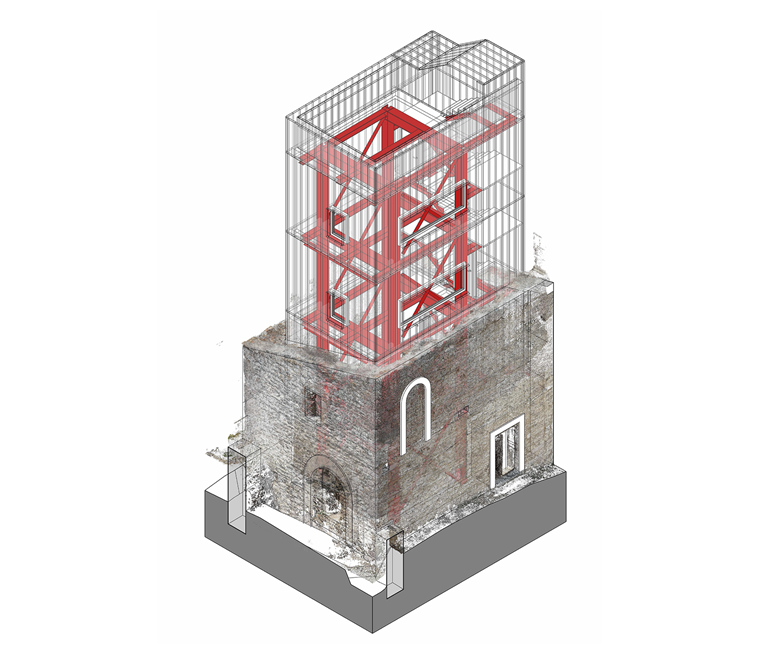
The new tower represents the defining element of the Rocchette Castle restoration project and arose from the desire to reinterpret the original medieval tower—now in ruins—without reconstructing it in a mimetic manner. The intervention is based on the principles of critical-conservative restoration, maintaining a clear distinction between old and new and highlighting the existing masonry structures. From an architectural point of view, the tower is integrated into the surviving walls of the old structure, preserving its historical memory and its relationship with the surrounding landscape. The new structure is conceived as a contemporary, light, and recognizable element, capable of engaging with the historic structure without altering its character. The tower houses four guest rooms of the new lodging facility and becomes a focal point—both compositionally and functionally—of the entire complex.
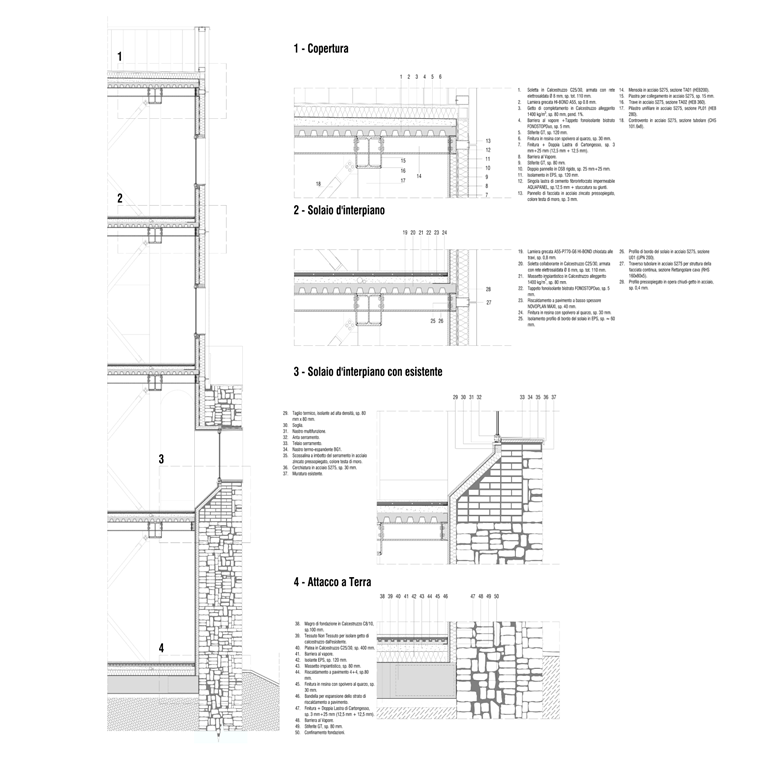
From a structural point of view, the new building is constructed using an independent steel frame, designed not to place a load on the existing historic masonry. This choice minimizes interference with the ancient ruins and ensures better structural and seismic performance. Structural analyses have shown that the new structure behaves as expected, with good stiffness and safety values against horizontal loads. The use of steel also allows for slender cross-sections, fast construction, and the reversibility of the intervention, in line with contemporary restoration principles.