


|
Author
|
Begoña Luna García
|
|
University
|
Superior Technical School of Engineering, Loyola University Andalusia, Spain
|
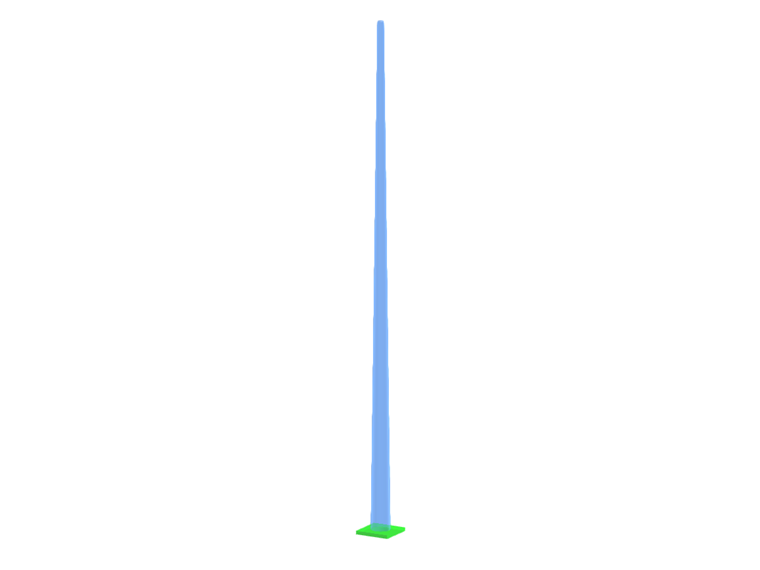
In structures exposed to variable loads (such as wind, traffic, or ambient vibrations) fatigue represents a degradation mechanism that may develop even when stress levels remain below the material’s elastic limit. The repeated application of such loads can initiate microcracks, which propagate over time and significantly reduce the structural capacity. As a slow and initially silent process, fatigue is difficult to detect in early stages and is often underestimated.
The interaction between airflow and structural elements with simple geometries, such as vertical circular cylinders, can trigger aeroelastic phenomena of notable importance. Among them, vortex shedding stands out due to its ability to induce cyclic transverse vibrations. Although these oscillations may seem negligible from a static perspective, their repetitive nature can lead to significant cumulative effects.
The development of structural simulation tools such as RFEM, together with the evolution of design standards like Eurocode 1, Part 1-4, now enables a more accurate assessment of the dynamic effects of wind on slender structures. These tools allow for detailed analysis of structural behavior under aerodynamic loads, estimation of fatigue damage, and prediction of service life, incorporating variables such as wind characteristics, vibration frequencies, and material properties.
This bachelor’s thesis focuses on the study of structural fatigue induced by vortex shedding in lighting poles, using normative criteria and numerical modeling tools. The dynamic response of the structure will be simulated, and the accumulated fatigue damage over time will be estimated. The aim is not only to deepen the understanding of this phenomenon, but also to contribute to a safer, more efficient, and durable structural design, aligned with current demands for sustainability and reliability.