



Why do we have so many building regulations?
Let's start by briefly clarifying why there are so many building regulations in Germany. Did you know that each of the 16 federal states has its own building regulations? You heard right - that means that building is different in Bavaria than in North Rhine-Westphalia. But while that may still be understandable, it becomes absurd when you look at examples such as fire resistance. One federal state approves a structural system, the other rejects it – as if the fire stops at the state border.
In total, Germany has more than 20,000 building regulations. This figure comes from an estimate by the German Association of Towns and Municipalities from 2021, among others. It is considered a conservative estimate because the actual number could now be significantly higher. No wonder developers and architects often lose track.
Place 10: Cable Car Guidelines in Federal States Without Cable Cars
In some federal states, such as Mecklenburg-Vorpommern, there are detailed safety regulations for ropeways, even though there is not a single ropeway there. Nevertheless, it is necessary to enact these regulations in order to be prepared for the worst-case scenario – if they are not implemented, the EU threatens to impose heavy penalties.
Berlin only got its first cable car with the International Garden Exhibition 2017. Until then, the relevant regulations were also in place there without practical application. The necessity of these laws is often criticized by countries without cable cars as an example of excessive EU bureaucracy.
Place 9: Prescribed Sunshade Colors in Bad Sooden-Allendorf
In the North Hessian town of Bad Sooden-Allendorf, there is an ordinance that stipulates that only parasols in beige, pastel or sand colors may be used in the old town. The aim is to preserve the historic townscape. Anyone who violates this rule can expect a fine of up to 15,000 euros. Important to note – this is of course the maximum fine and is not necessarily imposed for every violation of this amount.

Place 8: Prohibition of Walking at Same Pace on Bridges
According to §27 of the road traffic regulations, it is forbidden to march in step across bridges. This regulation dates back to earlier times and was intended to prevent resonance vibrations caused by marching columns marching in step, which could endanger the stability of the bridge. Although such dangers are now significantly minimized by modern bridge construction techniques, the ban still exists.
By the way: A famous example of unexpected dynamic effects is the Millennium Bridge in London, which was opened in 2000. Shortly after the opening, strong lateral vibrations occurred, caused by the interaction of pedestrians with the bridge structure. People unconsciously adjusted their steps to the movement of the bridge, which further amplified the vibrations. As a result, the bridge had to be closed again just two days after it opened. The problem was solved by installing vibration dampers, but the incident impressively illustrates how complex dynamic effects can occur in structures and the role that interaction with users plays in this.

Place 7: Master Craftsman Obligation for German Tradespeople
The master craftsman requirement is linked to the building regulations in Germany, as many trades are essential for the construction industry. Strict regulations on safety, quality and standards apply in this area, which are to be ensured by the master craftsman qualification.
In Germany, many skilled trades are subject to compulsory master craftsman qualifications, which means that self-employment in these professions is only possible with a master craftsman certificate. This regulation is intended to ensure the quality of craftsmanship and guarantee consumer protection, but is often perceived as a bureaucratic hurdle. For EU citizens, it is possible under certain conditions to set up a craft business in Germany even without a master craftsman's certificate. These exemptions are checked and granted by the Chambers of Crafts.
Under certain conditions, German tradespeople also have the opportunity to become self-employed without a master craftsman's certificate. However, the different requirements for German and foreign tradespeople are a constant source of discussion.
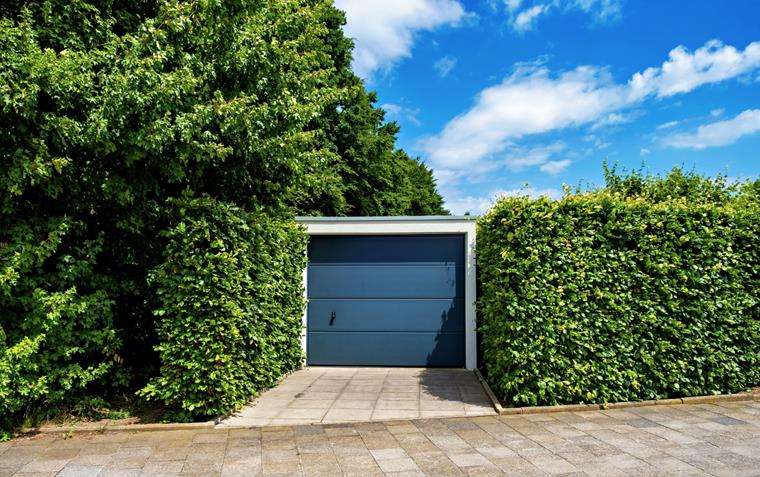
Place 6: Garage Ordinance
In some federal states, the use of garages is strictly regulated. For example, lawn mowers, barbecues, or sports equipment may not be stored in them, as garages are intended exclusively for parking vehicles. Violations can be punished with heavy fines. The regulation is intended to ensure that garages are not misused, that enough parking spaces are available in cities and that potential fire hazards are minimized. In practice, however, this often leads to absurd situations – after all, hardly anyone uses their garage just for their car.
Violations of the garage regulations can be punished with fines, which in some cases amount to up to 500 euros. In practice, however, checks are rarely carried out – usually only when there are increased complaints about lack of parking space in certain areas. As long as the garage is still being used to store a vehicle and its actual purpose is therefore fulfilled, the authorities do not usually impose any fines.
Place 5: Different Fire Protection Regulations per Federal State
Fire protection regulations in Germany vary from state to state, which makes the design and implementation of structural projects considerably more difficult. An innovative timber construction system can be classified as safe in Bavaria, for example, while it is rejected in North Rhine-Westphalia. This inconsistency raises the question of whether uniform standards across Germany would not be more sensible.
There are already approaches to standardization as well as cross-state regulations, such as DIN EN 13501, which defines uniform criteria for the classification of construction products and types of construction with regard to their fire behavior throughout Europe. Nevertheless, there are still differences between the federal states, which make construction projects considerably more difficult. Therefore, the question of uniform nationwide standards remains a central issue in the industry.
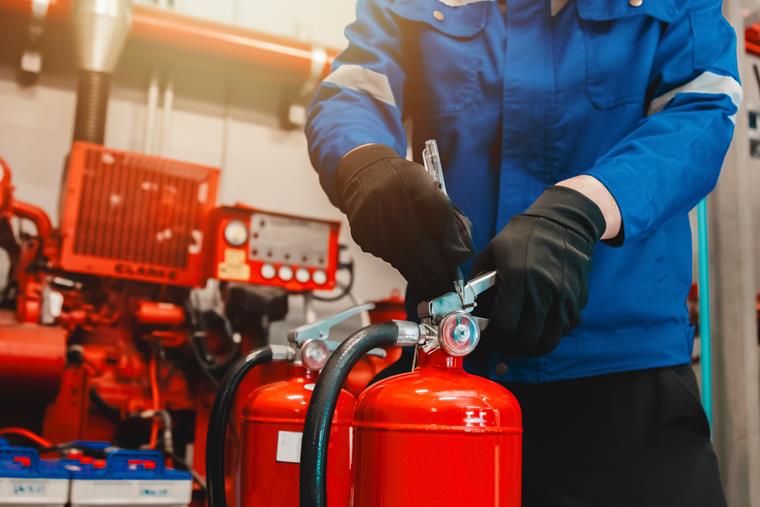
Place 4: Regulation of Minimum Distances
In many cities and municipalities, there are rules that stipulate how much space must be between two buildings. Originally, these were introduced to prevent fire, allow enough light and fresh air into houses and create distance between neighbors. In most federal states, the minimum distance is 2.5 to 3 meters, but varies depending on the building area and building height.
Today, these regulations are often considered outdated, because they make it difficult to use land sensibly and can waste an unnecessary amount of surface area. In Berlin, for example, the high demand for living space leads to conflicts with these distance regulations. According to the current building regulations, the clearance area is 0.4 H (40 % of the building height), but at least 3.0 m. In some cases, this can lead to narrow buildings that impair the quality of life of residents.
But: Cities are constantly looking for solutions. Berlin is working on special guidelines that take ecological aspects into account, and other federal states are also adapting their rules to create more space for housing. These developments show how important it is to find a balance between efficient land use and a high quality of life. A regular review and adjustment of these rules could help to improve the design of urban space.
Place 3: Regulations on Roof Pitch
In Germany, there are no uniform legal requirements for roof inclination. However, some building regulations prescribe certain slopes in order to ensure a uniform design and to adapt to local building cultures. However, these regulations are not always in line with modern, architectural, or energy requirements and can restrict the creative freedom of architects and builders.
But don't worry: Through careful planning and close coordination with the relevant authorities, solutions can often be found that both comply with the regulations and allow for innovative construction methods.
Place 2: Extensive Environmental Assessments
If you are planning to build, lengthy environmental assessments may be required, which can significantly delay and increase the cost of the construction process. Even if the actual environmental impact is minimal. An example: Before construction was allowed on an unused meadow, an ornithological report had to be prepared, which observed birds and their behavior for a year. The cost: around 50,000 euros.
That sounds worrying at first, but such comprehensive analyses are fortunately the exception. They are usually only used for larger construction projects with a potentially significant impact. For smaller projects with minor environmental impacts, there are usually simplified procedures.
A clear advantage of these environmental assessments is that they have been proven to contribute to more sustainable urban development and improve the environmental quality of structural projects.
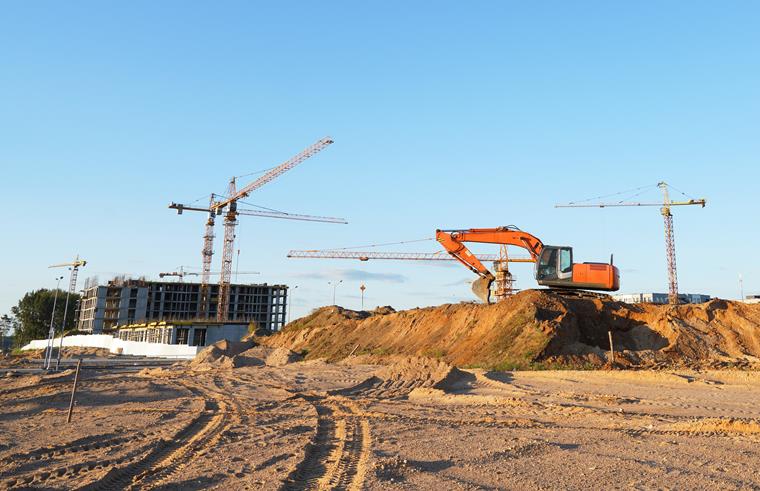
Place 1: Excessive Number of DIN Standards
This brings us to the last building regulation. There are currently around 3,700 building regulations in Germany, which not only make the design and implementation of structural projects more difficult, but also drive up construction costs. Architects and engineers have been criticizing for years that the complex regulations make new residential construction unnecessarily expensive.
Around a quarter of the increase in construction costs since 2000 is due to additional standards and regulations – and not to higher wages or material prices. The increasing number of regulations is making construction projects ever more complicated, which is why experts are calling for more flexibility in building law and opportunities to deviate from certain standards.
Overall, the multitude of building regulations in Germany represents a considerable challenge, which further increases construction costs and unnecessarily complicates projects.
What can be done?
Now we've talked about some of the most absurd building regulations in Germany – but what does this mean for the future? The construction crisis is not just a question of rising material costs or a shortage of skilled labor. A large part of the problem lies in regulations that have hardly been adapted for years. Many regulations are the result of theoretical considerations without always keeping an eye on practical feasibility.
So what can we do to make structural projects more efficient, cheaper and simpler? Here are a few possible solutions:
* A uniform building code for the whole of Germany
We currently have 16 different building regulations – one for each federal state. This means that the same building can be approved in Bavaria without any problems, but fails in Brandenburg. A uniform nationwide building code could make many things easier and provide more clarity.
* More science-based decisions
Many building regulations have evolved over the years and are based on tried and tested principles. However, it often remains the case that we have always done it this way already. With the advances in technology and sustainability, it would make sense to regularly review which regulations are still up to date and where adjustments could help to allow for more efficient and future-proof solutions.
* Courage for simplification
Less bureaucracy, simpler approval procedures, and fewer unnecessary regulations – this would not only relieve the burden on building owners and designers, but would also speed up residential construction overall. Of course, rules are important, but not every regulation really contributes to the safety or quality of a building.
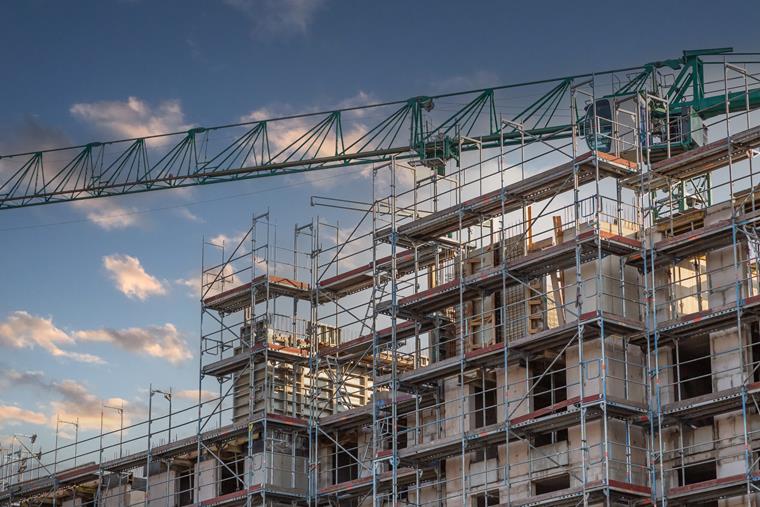
Of course, these are just some of the discussed approaches – whether they can actually be implemented in practice is another matter. But perhaps it's ideas like these that are necessary to make building in Germany easier – and maybe you'll think of us the next time you're walking across a bridge and NOT walking in lockstep.