


Ethiopia is considered one of the poorest countries in Africa. After 14 years of construction, the country is now home to the largest hydroelectric power plant on the continent: the GERD dam on the Nile. The electricity produced here could make Ethiopia wealthy.
Will poverty and misery soon come to an end there? Together, we will take a closer look at the project as a whole. What opportunities does it provide for the population? What about the stress with neighboring countries? What does the GERD dam really mean for Ethiopia? Stay tuned!
GERD Dam in Ethiopia: Way Out of Poverty?
Ethiopia is the most populous landlocked country in the world, with a population of 130 million. It is also one of the countries with a steadily growing population. Anyone who has visited the African state will quickly notice that poverty is a major issue. This is especially evident in the capital city, Addis Ababa. More than five million people live there, and 80% of them reside in slums.
Although there are large companies that generate significant profits, the situation is otherwise pretty dark. Literally. Even in the capital, the power goes out several times a week for hours at a time. This is disastrous for any automated production chain.
What about the rest of the country? Better? No, it's worse. Around 60% of Ethiopians have no access to electricity. Even in larger settlements, there is hardly any infrastructure or sewage systems. Electricity could help with this. The solution is a dam.
Not just any dam, though. The GERD dam is supposed to solve all of Ethiopia's problems. Everyone will have access to electricity, and the country and its people will become wealthy thanks to overproduction. Export is the magic word here. It's a way out of poverty. But how realistic is all this?
Economy in Ethiopia
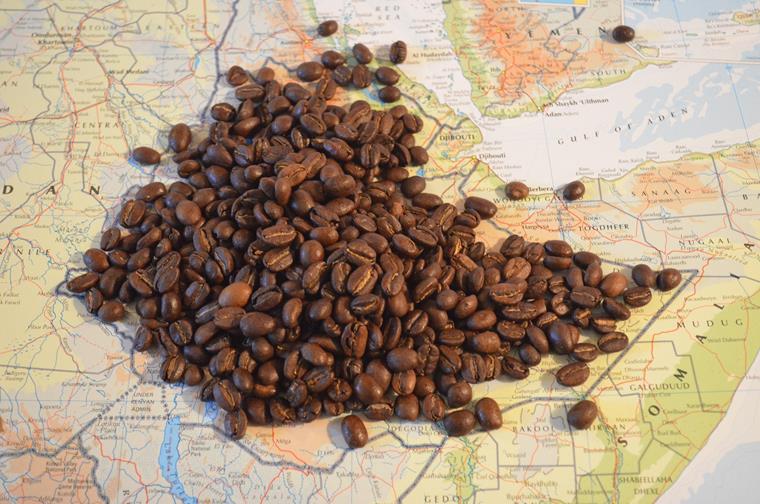
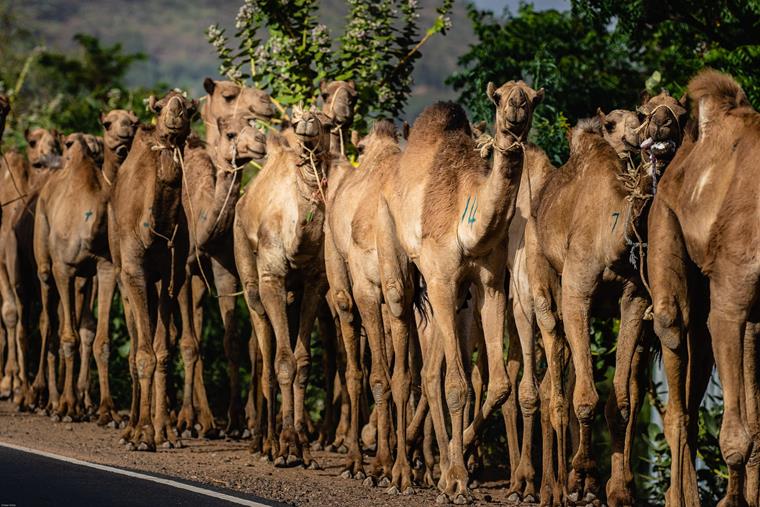
The lack of electricity, poorly developed infrastructure, and inadequate sewage systems are not the only problems facing the land of coffee. Much worse are the ongoing droughts. The last major drought lasted from 2020 to 2023. About 80% of the region's livestock died, and farming became nearly impossible. Then the rain came.
So much rain fell that floods took away what little people had left. In 2023, the inflation rate was around 30%. The meadows turned green again, but there were no longer any herds of cattle to graze on them. The cost of purchasing livestock and food has risen enormously to this day.
Amidst it all was the construction of the GERD dam. It was a prestige project and the hope of an entire country. Since 2022, when the turbines generated electricity for the first time, people have asked again and again: Will everything be okay now? Let's take a closer look at the largest dam in Africa.

GERD Dam in Ethiopia
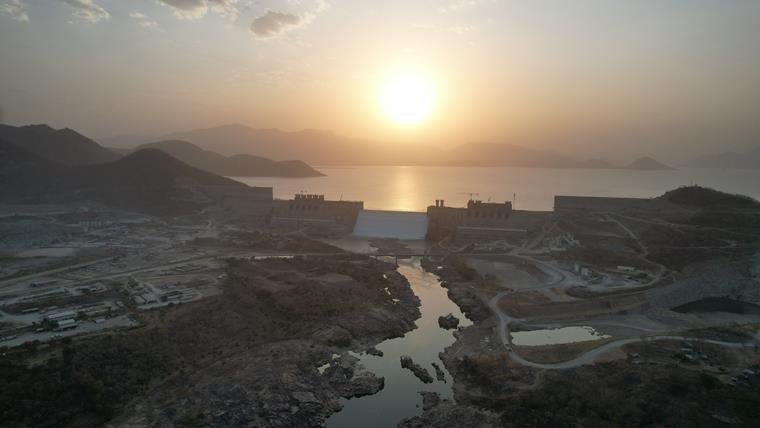
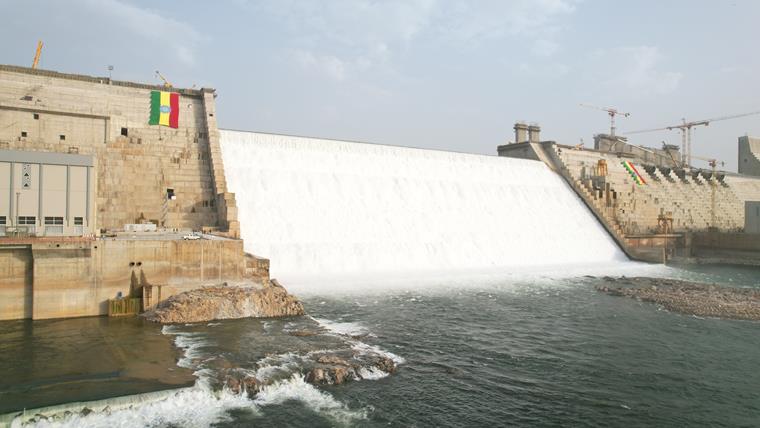
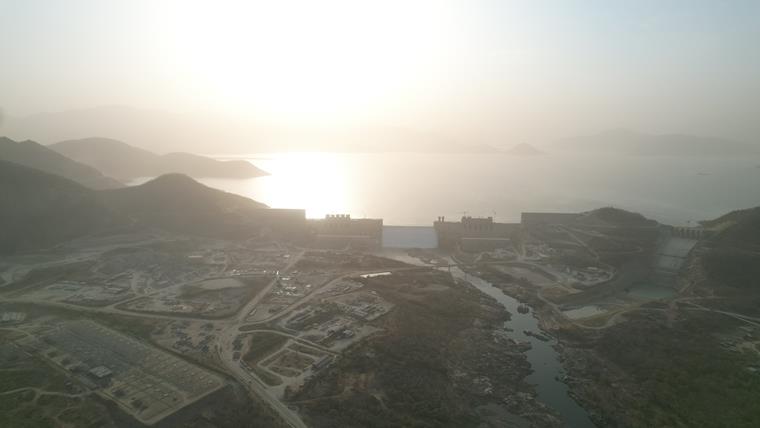
Its construction took a full 14 years, and it was recently inaugurated with great fanfare. The GERD dam, officially known as the Grand Ethiopian Renaissance Dam, was at the top of every news portal worldwide. Ethiopia's largest infrastructure project is impressive. The GERD dam is located directly on the border with Sudan. With a height of 145 m and a length of almost 2 km, the dam breaks all African records.
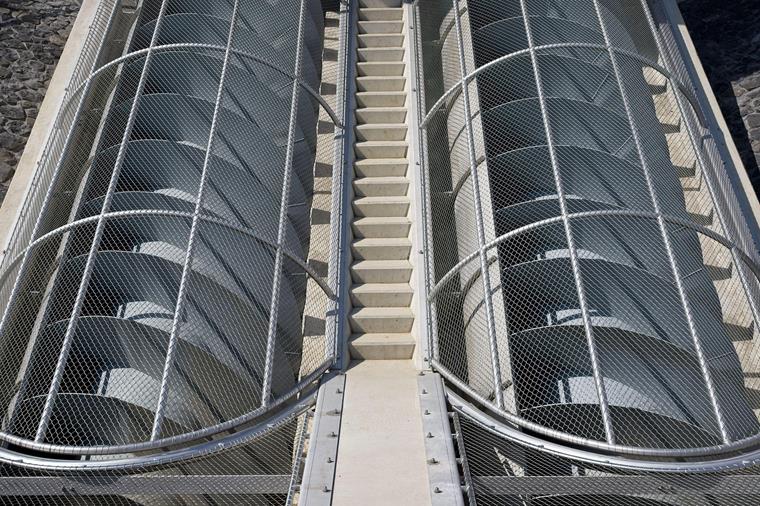
Even more impressive is its output. Once the GERD dam reaches its maximum capacity, it will generate around 5,000 MW. For those who find that hard to imagine, that's roughly the output of four modern nuclear power plants. It's already a bundle of energy slumbering behind the dam.
Idea for Hydropower Plant on Nile
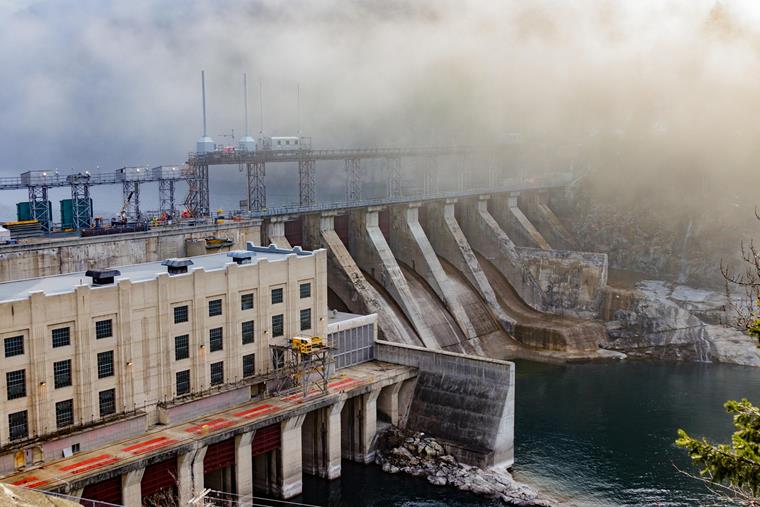
The GERD dam is not the first hydroelectric power plant on the Nile. The most well-known is probably the Aswan Dam in Egypt. However, it only generates approximately 2,100 MW, about half the power. While Egypt sits at the end of the Nile with its dam, Ethiopia has greater leverage with the Blue Nile, which dominates the country's topography.
This is because the Blue Nile is one of the Nile's two water sources. It carries spring water from the Ethiopian highlands. When you have such an important water source right on your doorstep, why wouldn't you use it? Ethiopia urgently needed the GERD dam for efficient power generation. The circumstances were quite favorable.
Project Development of GERD Dam
Of course, the plans for the GERD dam entail more than just economic and social goals. Growing unrest in the country fueled the pressure to unify the nation. Ethiopia is home to around 80 different ethnic groups, which has led to unrest. Tensions arise time and again, erupting sporadically.
Electricity, in particular, is intended to defuse these tensions. The GERD dam is a joint national project. It was not financed by foreign investors, who considered the project too risky based on the general economic situation. Perhaps it was simply intended to be a national project, whichever way you look at it.
Ethiopia itself, domestic investors, donations, and the state treasury fed the pot of money, or more precisely, through government bonds. Ethiopian civil servants were also required to contribute one month's salary per year to finance the GERD dam. What about other projects? They were put on hold for the time being. Only the dam mattered.
Chinese banks were also involved, investing in turbines and electronics. The total cost ultimately amounted to $4.8 billion. That's a bit more than half the cost of Berlin's airport, but a lot more went wrong there.
Want to read more about Germany's troubled airport? You'll find an exciting blog post about it here: Berlin-Brandenburg Airport . Or, are you interested in large-scale construction projects in general and wondering why they just don't seem to work in Germany anymore? Find out more about the background here: Large-Scale Construction Projects in Germany .
Speaking of large-scale construction projects, have you heard about China's latest major project? No? Read more about the world's highest suspension bridge here: Extreme Bridge Construction: Duge Bridge in China . Now, let's continue with the construction of the GERD dam. Here, too, not everything went smoothly.
Construction of GERD Dam
The GERD dam was supposed to be completed by 2017. As is often the case with large-scale projects, however, something got in the way. Then something else happened. By the end of 2018, only 65% of the dam was complete. Why? It's not easy to summarize.
The main reasons were changes to the original plan, allegations of corruption, and the incompetence of the institution responsible for the entire dam. The latter was METEC. What was that supposed to be? The Metals and Engineering Corporation of Ethiopia is a state-owned industrial entity founded in 2010. Its main purpose was to promote industrialization in Ethiopia, a predominantly rural country.
METEC was then tasked with the design and construction of the GERD dam. However, problems quickly arose. Allegations of corruption were made, and the CEO was arrested, among other things. Subsequent investigations revealed that, between 2012 and 2018, METEC had misappropriated public funds and used them to purchase overpriced goods worth more than €1 billion without a proper tender process.
METEC was dissolved, and its components were divided up with their respective tasks. Companies, including banks, from the People's Republic of China stepped in to cover the costs of turbines and electrical engineering for the GERD dam. This allowed the construction to continue.
Africa's Largest Hydropower Plant in Operation
On September 9, 2025, the time had finally come. After 14 years of construction, Africa's largest dam, the GERD, was officially connected to the power grid. The reservoir sits 125 meters above the current level of the Blue Nile and can store up to 64 billion cubic meters of water.
At first, this figure may seem abstract. In other words, all of Germany's approximately 83 million inhabitants could live off this water supply for about 1,350 years. That's a lot of water that has accumulated there.
Opportunities for Ethiopia
The opportunities for Ethiopia are obvious. Electricity, electricity, and even more electricity. The government justifies this unusual billion-dollar project's priority with the previously stalled industrialization in Ethiopia. Through energy independence and revenue from electricity exports, the country and its people should be better off.
Ethiopia should be connected to the power grid as much as possible. After years of crisis, agriculture needs time to recover. Electricity, on the other hand, can generate profits and prosperity in the short term.
At the same time, the GERD dam is a powerful national symbol. The unrest among the country's approximately 80 ethnic groups is mainly due to the high poverty rate and poor supply situation. The project aims to unite the nation after so many years of unrest. A healthy economy means a satisfied population. But is that enough?
Risks and Problems
In fact, it is unlikely that the political and social conflicts surrounding the GERD dam will simply disappear. This is because Ethiopia's problems run much deeper than just beneath the surface.
The GERD dam has consumed about 60% of Ethiopia's national budget. Consequently, funds are lacking for other infrastructure projects, such as roads, wells, and sewage systems. What good is electricity if it does not reach the people who are supposed to benefit most from the hydroelectric power plant, according to the government? What about those who are not yet connected to the power grid? The next few years will reveal how the country addresses these issues.
Tensions with Egypt Over GERD Dam
Egypt and the Nile – a relationship as old as the pyramids themselves. For over 7,000 years, since the time of the pharaohs, the Nile has been considered the lifeline of the Egyptian people. The Nile Delta and the riverbanks are the only places where agriculture is possible. And Egypt's population continues to grow.

Egypt fears for its precious water because the GERD dam holds back so much water from the Blue Nile, one of the Nile's two sources. After all, rain alone is not enough. Around 90% of its drinking water comes from one of the world's longest rivers. Only when the Nile regularly floods its banks and leaves fertile silt behind can the country feed its people.
However, strictly speaking, most of the grain is imported from abroad anyway. Egypt has not been able to feed itself for a long time. A new project, the New Delta, aims to change that. We have already written an exciting blog post about it. Take a look if you are interested in the topic: Nil Delta 2.0 – The New Delta Project . The New Delta project is partially dependent on the Nile.
Since Egypt is already exploiting the Nile, there is a significant risk that the GERD dam will exacerbate water shortages. What is dammed in Ethiopia does not reach the Aswan Dam in Egypt. According to United Nations forecasts, Egypt will exceed the threshold for absolute water scarcity by 2025.
Trouble with Sudan Over GERD Dam
Like Egypt, Sudan also depends on the Nile. As its northern neighbor, Sudan has a dam on the Nile located where the Blue and White Nile converge. Additionally, Sudan's border lies only a few kilometers downstream from the GERD dam.
While the damming of the Blue Nile at the GERD dam causes water scarcity, Sudan benefits from it as well. However, this depends on Ethiopia's goodwill.
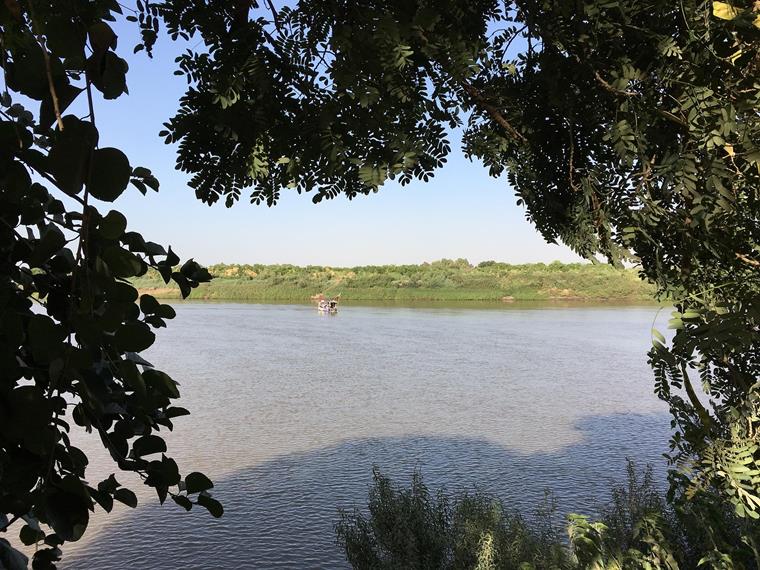
The eastern part of the country is regularly hit by flooding from the Blue Nile. Damming the water upstream could regulate such dangers. At the same time, a break in the GERD dam could cause an absolute disaster for its neighbors. Unlike Egypt, Sudan seems to be more interested in cooperating with Ethiopia.
Electricity from the GERD dam is already flowing into Sudan. Nevertheless, Ethiopia controls one of the Nile's two sources with the GERD dam. Therefore, it is understandable that neighboring countries mistrust Ethiopia.
Conclusion: GERD Dam in Ethiopia
In summary, the GERD dam appears to present a tremendous opportunity for Ethiopia. However, many questions remain unanswered. If the Ethiopian government's announcement that 90% of the population will have access to electricity by 2030 is to be realized, how will a country primarily known for coffee cultivation raise such enormous sums of money?
After all, appropriate infrastructure for electricity is necessary. This was neglected during the construction of the GERD dam. Added to this are social unrest in the landlocked country. Promises that will only come to fruition in a few years are of little help here.
The situation with Egypt is also tense. The land of the pharaohs will not easily relinquish its power over the Nile and accept the GERD dam. Every attempt at mediation by neutral outside parties has failed — and has done so for over ten years. Water is a scarce yet indispensable commodity in the desert states of East Africa. The biggest problem is probably that no clarifying agreement on the use of Nile water was signed before construction began. Consequently, there is a great deal of mistrust toward the GERD dam.
Although Ethiopia is open and helpful when it comes to electricity supply and mutual benefit, it's questionable whether this is based on social ideals or cold calculation. In any case, we are curious to see how the situation on the Nile will develop in the coming years.