


Imagine you’re a student at the state-run University of Florida. But you need to cross a multi-lane, heavily trafficked street every day to get to campus. Honking horns, screeching brakes, squealing tires, and snide comments from annoyed drivers—that’s your daily soundtrack. A situation that is dangerous for all three parties: students, drivers, and, of course, the university. After all, everyone is supposed to arrive safely.
So, in the 2010s, it was decided to build a pedestrian bridge over that very road. Great idea! But the execution was a tragic disaster. No sooner had the FIU pedestrian bridge been completed than it collapsed—right onto the moving traffic. Cars were left with only their bumpers sticking out from under the rubble. Several people died. Investigations began immediately. What had caused it? An earthquake, a storm, or improper construction? In this article, we’ll take a closer look at the collapse of the FIU pedestrian bridge.
FIU Pedestrian Bridge: Innovation and Spectacle
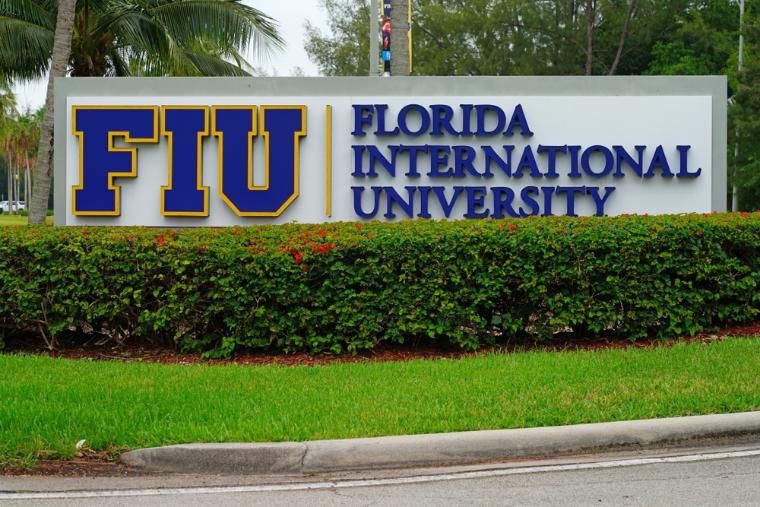
After several fatal accidents involving students crossing the street, Florida International University gave the green light for a permanent solution. In the future, a bridge would connect Sweetwater, a Miami neighborhood, to the campus. This would ensure that the approximately 4,000 students from the neighborhood could safely reach the university in the future.
But it wasn’t supposed to be just any ordinary bridge—it was meant to be a real spectacle. As prestigious and innovative as possible. So a new structure was to be implemented: the ABC structure for bridge construction. ABC stands for Accelerated Bridge Construction. The goal was clearly rapid completion with minimal closure time for the multi-lane road, resulting in less traffic disruption.
To achieve this, engineers developed a method in which the bridge itself was not built piece by piece, as is usually the case. The entire main span of about 53 m was manufactured as a giant precast element right next to the road. The bridge section weighed a whopping 950 t and was ultimately hoisted into place within a few hours. The event was accompanied by drone footage, press reports, and hundreds of onlookers. After all, it wasn’t every day you saw something like that.
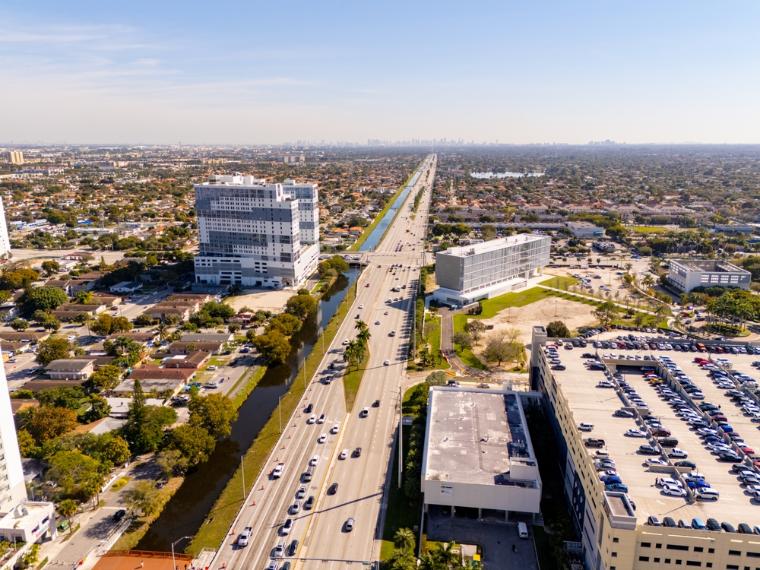
The entire event was staged with such media appeal that, at least regionally, no one—neither the general public nor the professional community—could escape the numerous reports. In terms of design, the concrete truss bridge with its slanted diagonal members was intended to resemble a cable-stayed bridge. A true showcase project of modern engineering.
Several renowned engineering and construction companies worked on the bridge, which was partially funded by federal funds. This created enormous public pressure.
- Modern, sustainable, innovative, and a symbol against traffic fatalities: This raised a great deal of expectations. It is possible that, as a result, everyone involved focused more on rapid completion than on the necessary safety of the structural project.
Collapse of FIU Pedestrian Bridge: Failure with Warning Signs
The hoisting of the bridge became a media spectacle. But what the cameras didn’t capture: cracks in the concrete formed quite quickly. The connection node between the deck slab and the diagonal strut (“Node 11/12”) was particularly affected. These cracks were even photographed and documented. Some of those involved immediately saw that the damage to the bridge was significant, and discussions ensued among engineers, site management, and inspectors. They recognized that there was a problem, but did not realize how serious it actually was.
Some assumed that concrete cracks were “normal” in prestressed concrete structures. When asked publicly, the chief engineer in charge stated that the bridge was safe. A fatal decision. According to later analyses, the damage already showed a progressive structural failure. The pedestrian bridge would collapse. But no one wanted to see that.
In fact, on the morning of March 15, 2018, a meeting was held among several parties involved in the bridge project. Together, they discussed the significance of the cracks, a possible course of action and how to deal with the situation. The result: no road closure, no evacuation—instead, the decision was made to retension the tendons in the critical area. This was intended to reduce the formation of cracks.
The problem: This work took place precisely at connection nodes 11/12. And that area was already severely damaged anyway. While the construction workers were in the process of retensioning the rods, the structure failed. The main span overturned along its entire length, onto the moving traffic. Within seconds, tons of concrete lay on the heavily trafficked road.
Consequences and Investigation of Collapse
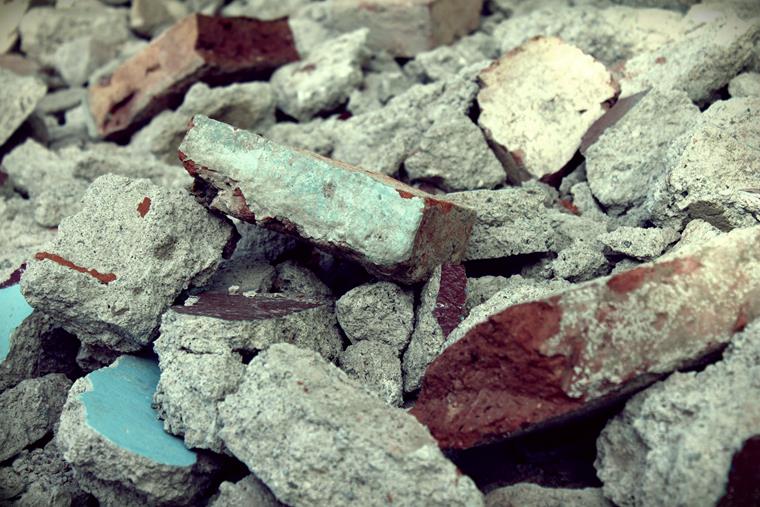
Unfortunately, the collapse had serious consequences. Several vehicles were buried under the rubble. A total of six people died in the incident. Images of the tragedy were broadcast worldwide by the media. Early reports contained a great deal of speculation, ranging from construction errors and material failure to design flaws in the collapsed bridge. Internationally, however, interest in the topic quickly died down. Nationally, though, the investigation began.
In the U.S., the NTSB is responsible for investigating the causes of collapses involving public structures. This is an independent agency that analyzes all civil aviation accidents as well as major transportation accidents on roads, railways, waterways, and in pipelines in the U.S. Based on these analyses, targeted safety recommendations are subsequently developed to prevent future accidents in the transportation sector.
In this regard, its approach is similar to that of Empa in Switzerland, which, for example, analyzed the collapse of the Uster indoor swimming pool in 1985. We have already reported on this construction disaster in the following article. Feel free to check it out if you’re interested in the topic: Collapse at Uster Indoor Swimming Pool in 1985 .
Results of 2019 NTSB Investigation Report
The official investigation report was published in 2019. Its key finding had a lasting shocking impact on the professional community: the collapse of the FIU pedestrian bridge in Miami was caused by serious calculation and design errors. The shear capacity of the joint that failed had been calculated incorrectly. As a result, the entire structure was significantly weaker than assumed.
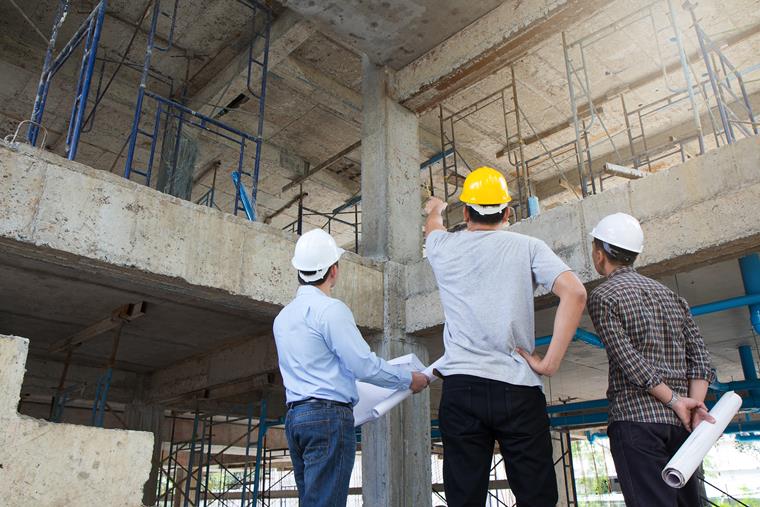
In fact, it is necessary to say here: Such errors may happen. That is precisely why there are various oversight bodies. In the case of the FIU pedestrian bridge in Florida, this very point was particularly critical. Even the independent review failed to detect the calculation error. The NTSB calls this incident a failure on multiple levels, including:
- Design engineers
- Testing engineers
- Project communication
- Risk management
One of the most important points in the report: There was no material failure. The collapse of the FIU pedestrian bridge was not an accidental event, but could have been prevented. Not only was the failure of the bridge itself man-made—so were the consequences for all those whose vehicles were buried under the rubble. The road ‘’'should have been closed immediately'‘’ once the cracks become visible.
Collapse of FIU Pedestrian Bridge: Why didn't anyone do anything?
The central question surrounding the entire disaster is: Why didn't anyone stop traffic despite visible warning signs? Why was the road still open at all? The answer, however, is quite simple: People trusted the experts. And the experts were under considerable time pressure, which was simply a consequence of the project’s immense prestige. It’ll already go wrong—they saw the risk but brushed it aside.
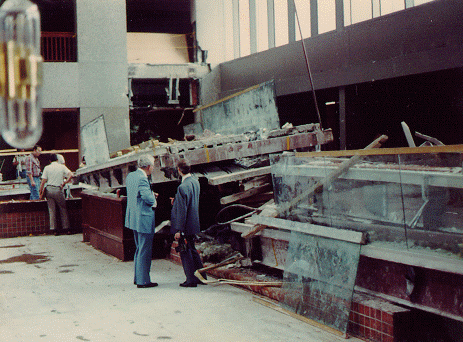
Apparently, no one wanted to interpret the situation as an acute emergency. An isolated incident? Unfortunately not. Rather, this is a classic problem of large-scale projects: warning signs gradually become normalized. After all, other structures had turned out fine. One instance where this kind of thinking led to a similar disaster was, for example, the collapse of several connecting bridges at the Hyatt Hotel in 1981. We’ve also published a blog post about that, which you can read here: Collapse at Hyatt Regency Hotel in 1981 .
Conclusion: Collapse of FIU Pedestrian Bridge in 2018
The bridge itself was a very good idea for protecting both students and drivers in front of the campus. The innovative technology behind it, highlighted by the media spectacle, impressed not only the entire region but also experts far beyond. The new approach to building bridges as efficiently and quickly as possible was well thought out.
In the end, the project failed due to human errors. Warning signs were not taken seriously. Responsibility was ignored. Legally, the assessment of the collapse turned out differently than one might think at first glance. The consequences were primarily within civil law.
The families of the six fatalities and numerous injured individuals received a total of approximately $102 million in compensation as part of settlements. What about criminal convictions? There were none. The reason is quite simple to explain. Responsibility for the accident was spread across several companies and decision-makers. Therefore, no single person could be clearly held liable for the collapse.

The engineering offices involved suffered massive damage to their reputation and were effectively barred from receiving further major contracts as a result. Furthermore, the collapse of the FIU pedestrian bridge had long-term consequences for the entire industry. It still serves today as an example of how important are appropriate testing procedures, risk management, and responding to warning signs in infrastructure projects—both in the U.S. and around the world. After all, engineers bear a huge responsibility. Not only for the structures they build, but also for their surroundings and the people who will later use them.
A similar case of structural failure was the collapse of the Carola Bridge in Dresden in 2024. We’ve taken a closer look at this case—and the poor state of bridges in Germany in general—in a separate blog post. If you’re interested in the topic, feel free to check it out: Dilapidated Bridges in Germany .