


Innovation drives us forward, makes new things possible, and opens doors where we didn't even know there were walls. But sometimes innovation, daring to try something new, can also involve risks. On May 9, 1985, at 8 p.m., the junior swimming team of the Swiss city of Uster begins their training session. Half an hour later, everything is in ruins.
A concrete ceiling, suspended with new material that was supposed to be corrosion-proof, falls like a lid onto the swimming pool. What follows are hours of rescue and recovery work. Twelve people lose their lives. It quickly becomes clear that the supposedly corrosion-proof metal stirrups were partially rusted through and broken. At some point, they could no longer hold the slab.
How could something like this happen? Could the accident at the Uster indoor swimming pool have been prevented? Together, we take a closer look at this more than 40-year-old construction disaster. And at the end, we ask ourselves: What can we learn from this tragic event for our modern construction industry?
Swiss Construction Industry in 70s and 80s
To better understand this tragedy, let's first take a look at the time when the indoor swimming pool in Uster was built. Back then, the construction industry had a very bad reputation. Whether it was houses sliding down hillsides, leaky basements, or corrosion in newly constructed reinforced concrete buildings—headlines were everywhere in the newspapers: cracking concrete, faulty waterproofing, corrosion on metal parts like in reinforced concrete.
Even though such cases were mainly reported in local news at the time, they were becoming increasingly frequent. Switzerland had a construction problem, and a very serious one at that. The construction of an indoor swimming pool in Uster, a town in the canton of Zurich, attracted public attention. Already from the outset, the press viewed the project with skepticism. But everything went well. The swimming pool was built and was well attended. So the daily newspapers sought other targets and the years passed, until 1985, when the Uster indoor swimming pool collapsed.
Uster Indoor Swimming Pool Until 1985
Before we turn our attention to the actual collapse of the Uster indoor swimming pool, let's take a look at the building and its structure. The groundbreaking ceremony for the Uster swimming pool took place in 1971. It was completed a year later and opened in November. It was just one of many contemporary projects.
This was because the late 1960s and early 1970s saw a veritable swimming pool boom in Switzerland. Swimming was fashionable and popular, whether for leisure, school sports, or competitive swimming. So it was no surprise that many municipalities put a new indoor swimming pool at the top of their list of priorities.
The installation of suspended ceilings in swimming pools was particularly innovative, as was the case in the Uster indoor swimming pool. Light metal frames, usually fitted with timber or Eternit panels, were extremely efficient in improving acoustics while preventing moisture damage to the raw slab. Sometimes elements made of mineral wool or lightweight concrete were also used.
Such slabs were then suspended from steel cables or threaded rods under the actual supporting structure. Another positive side effect was that the interior of the pools was simply more attractive. It allowed to hide all pipes under the false ceiling.
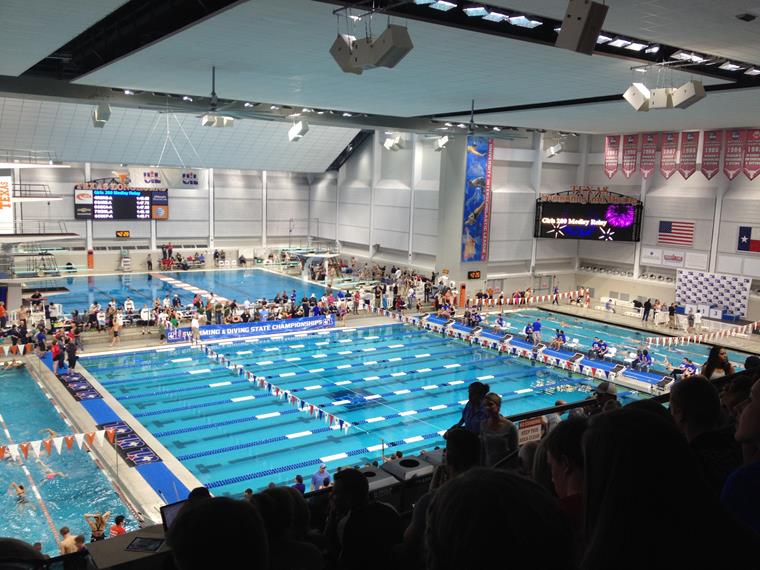
Specifics of Uster Indoor Swimming Pool Prior to Collapse
At the Uster indoor swimming pool, the main ceiling was first concreted, with 207 suspension stirrups with a diameter of 10 mm already incorporated into it. The actual roof was only installed afterwards. The workers suspended the suspended ceiling slab on the metal stirrups. It was not made of lightweight materials, as was usual at the time, but also of concrete, weighing several tons. From the beginning of 1972, it already hung unsupported above the main pool. And it held – for over ten years.
And that despite the fact that a special plaster and a timber panel were later added to improve the acoustics. In the end, the entire suspended slab weighed about 30% more than originally planned. Is that why it collapsed? Actually, no. This additional tensile stress on the stirrups would not have been enough to cause the collapse at the Uster indoor swimming pool.
Fatal Alloy at Uster Indoor Swimming Pool
Another unusual feature was the use of a special alloy for the supporting structure of the slab. This was because chlorine vapors accumulated between the suspended slab and the actual hall ceiling during standard pool operation. These vapors are not only toxic, but also corrode steel quite aggressively.
To prevent corrosion, the construction industry relied on a real innovation, at least in the building sector: a stainless chrome-nickel alloy. This was a novel combination of iron, chrome, and nickel at the time. It is a metal that offers excellent corrosion and heat resistance.
Even today, it is used almost everywhere where water or heat are involved: in ovens, on cutlery, in dishwashers – a real all-rounder. And therefore predestined for use in swimming pools. That's what people thought at the time.
Collapse at Uster Indoor Swimming Pool 1985
The years passed and nothing happened. All inspections of the cavity where the toxic chlorine gases were extracted went smoothly. Everything was fine, reported the engineering office commissioned to carry out the inspections. But that was precisely the problem's location. And at 8:25 p.m. on May 9, 1985, the fatal consequences of this decision showed themselves. The Uster indoor swimming pool collapsed.
Surviving eyewitnesses later reported that it had been a completely normal evening. The juniors of the local swimming club had started their training as usual. About 40 people were in the pool. Everything was going exactly as usual. Until the final whistle. There was a loud crash, then the ceiling slab came down. Almost in one piece.
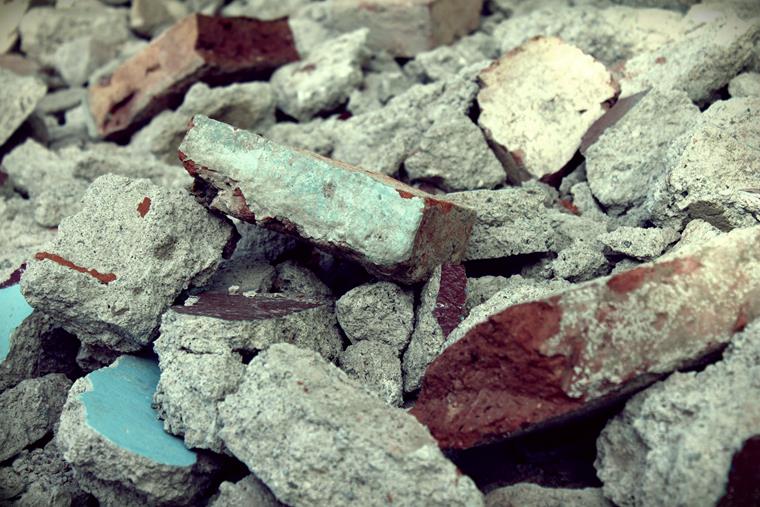
Like a ton-heavy handkerchief, slowed only by air resistance, it descended like a lid onto the pool. And trapped the swimmers beneath it. The swimming coach gave the instruction to dive down at the last moment. For many, it was already too late. Only a gap in the diving platform allowed some of them to save themselves.
What followed were hours of chaos and uncertainty. Emergency calls were made, and rescue workers were on the scene within minutes. Among them was a trained diver. He repeatedly descended into the deep black water to rescue people who had not managed to pull themselves out of the pool. Above him, jackhammers worked tirelessly to create more holes in the concrete.
A tragic accident, which claimed several lives. Ultimately, twelve people died in the collapse at the Uster indoor swimming pool, and 19 others were seriously injured. The question remained: How could this accident have happened? What exactly had happened? Empa was commissioned to find out exactly that. And we will now take a closer look at the results.
Investigation of Uster Indoor Swimming Pool Tragedy
On the very night of the collapse, the public prosecutor's office commissioned Empa to analyze the ceiling slab, particularly its suspension system. But wait a minute—what exactly is Empa?
Empa is Switzerland's interdisciplinary research institute for materials science and technology development'. Its mission is to bridge the gap between ‘’'theory and practice'‘’. Experts from Empa took a close look at the accident at the Uster indoor swimming pool. We have summarized their key findings for you.
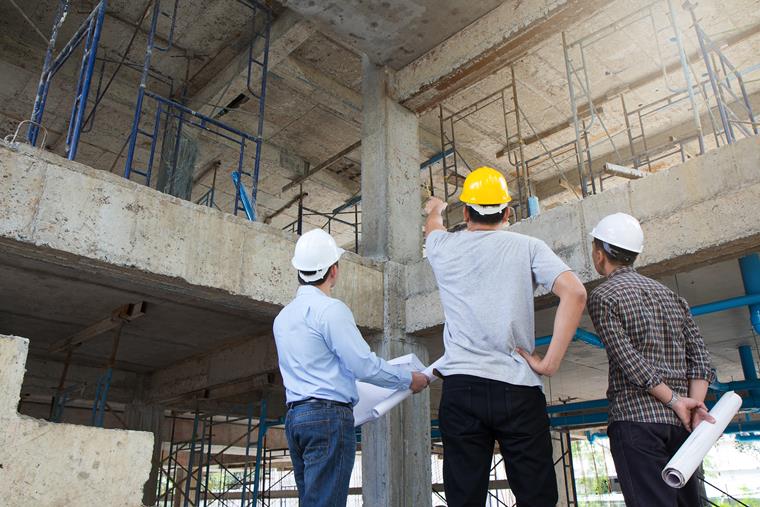
How did the collapse at the Uster indoor swimming pool happen in 1985?
The ceiling slab had been very secure for a long time and everything had been running smoothly. At least, if you believe the inspectors' reports. In fact, there had already been a clear note of the impending disaster in 1984.
During a routine inspection, one suspension stirrup was discovered that had completely broken. So this was immediately reported to the city of Uster, right? No? On the contrary: the report stated that the state of the ceiling slab was flawless. The broken stirrup was bridged with another welded member. Nothing else happened. A decision that would cost several lives.
You may think that with over 200 stirrups made of 10 mm thick steel, it's no big deal if one stirrup breaks. But the special structure of the ceiling slab has its disadvantage precisely there. If only a few stirrups break, the neighboring ones are overloaded and also break. A kind of tragic domino effect.
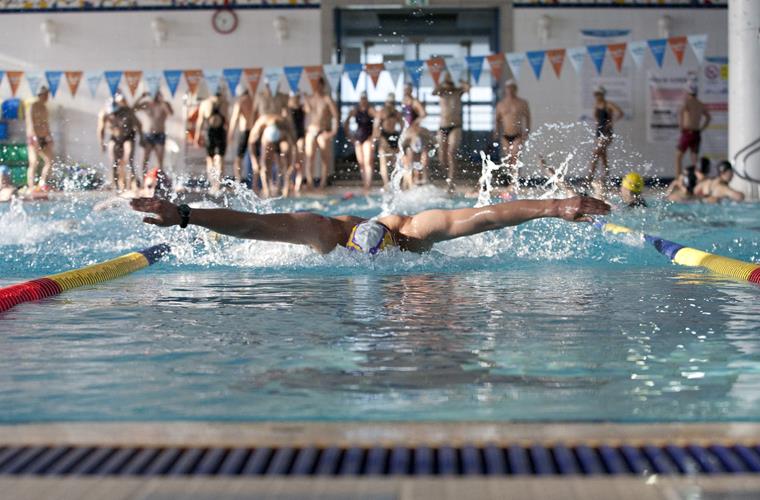
So that was it, a broken stirrup? No, it alone was not the only thing that should have been in the report. The engineers discovered small brown spots on other stirrups, but did not recognize them as rust. They assumed that the broken stirrup had already been torn when it was installed. And with that, the matter was closed. A few months before the entire ceiling slab collapsed.
Stainless Chrome-Nickel Alloy?
Chrome-nickel steel is still used today in maritime environment. More specifically, in boat building. Here, the alloy withstands the constant exposure to salt and sea air. However, this is V4A steel, that is, chrome-nickel steel alloyed with 2% molybdenum.
The stainless steel used in Uster was V2A steel, a stainless steel without the protective molybdenum component. It is corrosion-resistant, yes. But not against chlorine compounds. At the time, this was relatively unknown in structural engineering. However, experts, metallurgists, and corrosion specialists had already known about stress corrosion under the chlorine effect for years.
V2A steel was therefore completely unsuitable for an indoor swimming pool environment. The chloride-containing moisture film that forms on the stirrups due to the vapors erodes the steel. And in Uster, the suspension stirrups were exposed to chloride-containing air all the time.
This process does not happen overnight, but over many years. Anyone who has already found corrosion on metal knows that it is not something you can easily overlook. However, chrome-nickel steel does not rust over the entire surface. From the outside, all you can see is a collection of small dark spots.
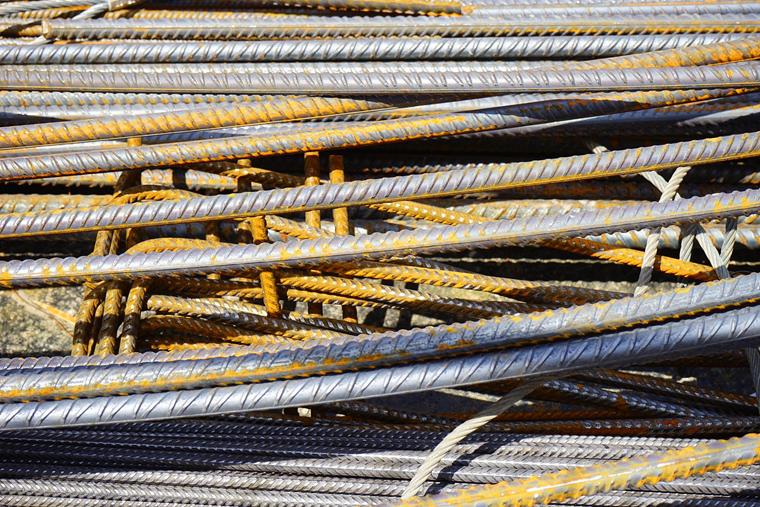
A corrosion expert would have recognized the problem at the Uster indoor swimming pool in good time, but at the time, corrosion was not even considered a possibility. Non-destructive analysis as we know it today did not exist back then. And without a clear note from the testing engineers, it was not possible to remove part of the material and have it analyzed externally.
Starting from these dark spots, the strong tensile stress caused cracks in the steel to form and grow deeper and deeper into the metal stirrups. At some point, one of them broke. And then another. Until the entire suspension system failed.
Analyses by Empa show that the fracture surface of 55 of the total 94 broken stirrups was 76 up to 100% rusted. This was difficult to detect from the outside. This makes the accident at the Uster indoor swimming pool even more tragic.
Who was responsible for the ceiling collapse at the Uster indoor swimming pool in 1985?
That's not an easy question to answer. Without the background information, there would certainly have been a huge outcry about construction negligence. As you will remember, such incidents were almost a daily occurrence at that time. However, that was not the case here.
In fact, three people were convicted: two engineers and the architect. They were found guilty of negligent homicide and negligent causing of a collapse. Why? Quite simply, they had noticed the damage, but failed to report it and did not call in other experts to investigate.
Lessons Learned from Uster Indoor Swimming Pool Tragedy in 1985
Following the collapse of the indoor swimming pool in Uster, Empa already launched an intensive information campaign on the corrosion behavior of steel grades just a few months later. A conference in November 1985 led to further dissemination and awareness of the issue.
As a result, several indoor swimming pools with similar structures were extensively renovated and the suspensions replaced. The swimming pool in Uster was ultimately the first, but by no means the only facility of its kind, where V2A steel had been used. In this way, further accidents were prevented in the long term.
And what happened after the collapse of the Uster indoor swimming pool? The building was completely demolished and rebuilt. Today, it is the largest indoor swimming pool in Switzerland and undoubtedly one of the most popular. It is, of course, regularly modernized and maintained. So that something like this can never happen again.
Conclusion: Roof Collapse at Uster Indoor Swimming Pool in 1985
The collapse of the indoor swimming pool in Uster illustrates in a very tragic way the enormous responsibility that engineers bear for their projects. Their calculations and their implementation of the architect's design ultimately determine the safety of the structure. And thus, ultimately, human lives, should the structure fail.
This responsibility on the part of engineers is, of course, far from over once a building has been completed. Public buildings in particular require that they be regularly inspected and maintained. It is, of course, unacceptable for any defects in safety-relevant structural components that are discovered to go unreported. The collapse of the Uster indoor swimming pool in 1985 impressively showed how a wrong decision can turn out in the worst case.
In addition to the absolute responsibility in engineering, another aspect is essential: continuing education. In the construction industry, people often tend to stay in the same place, sometimes for decades. However, continuously expanding one's knowledge is incredibly important. Passing on new methods or findings should be one of the main tasks of the construction industry. And not only during studies, but above all in the later professional life of engineers.
Only those who stay informed can deal with new innovations appropriately. And especially in the leisure sector, creating buildings that not only look modern, but also do exactly what they are supposed to do for decades: be a place of relaxation where visitors can escape the stresses of everyday life for a while and unwind.