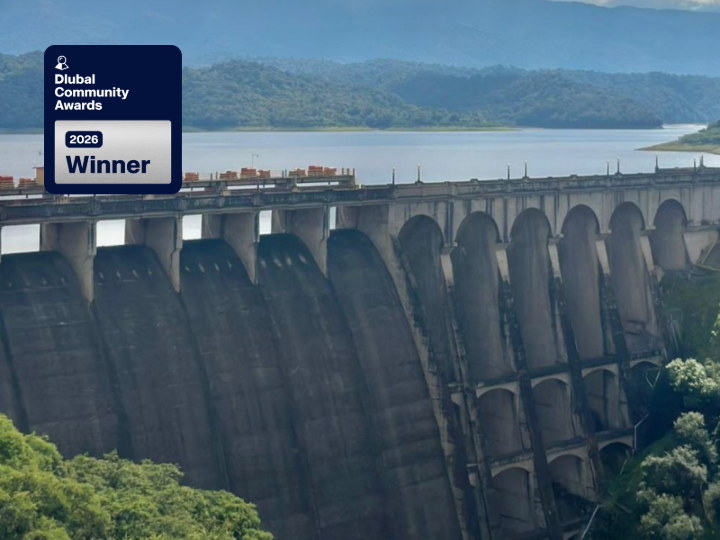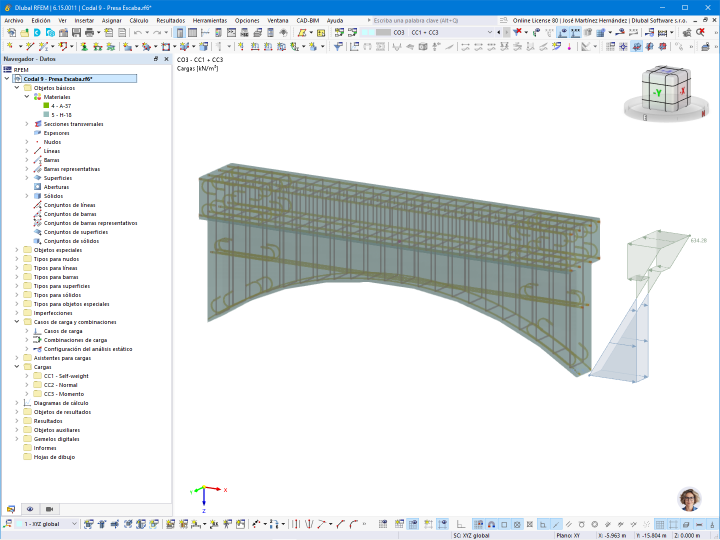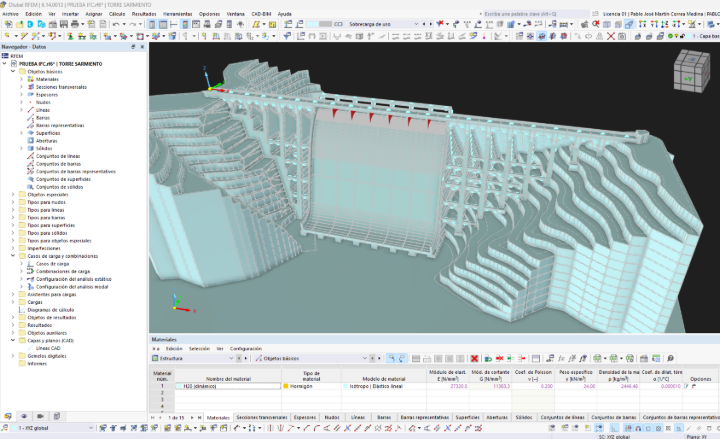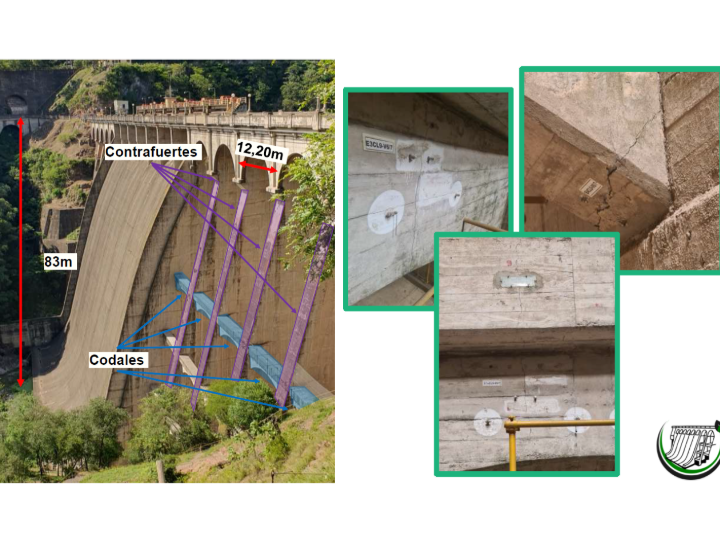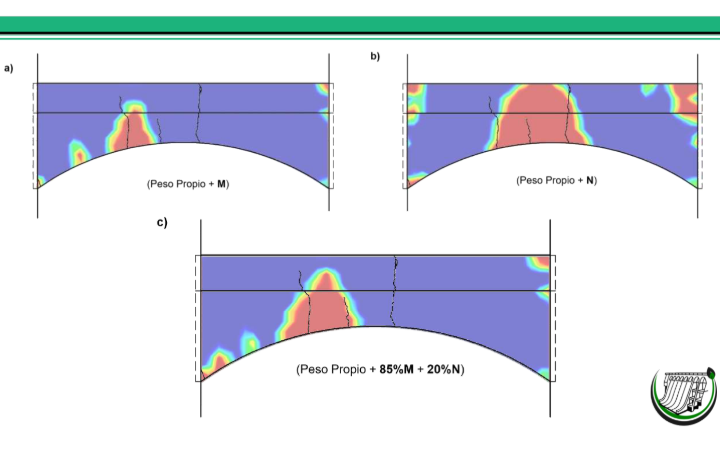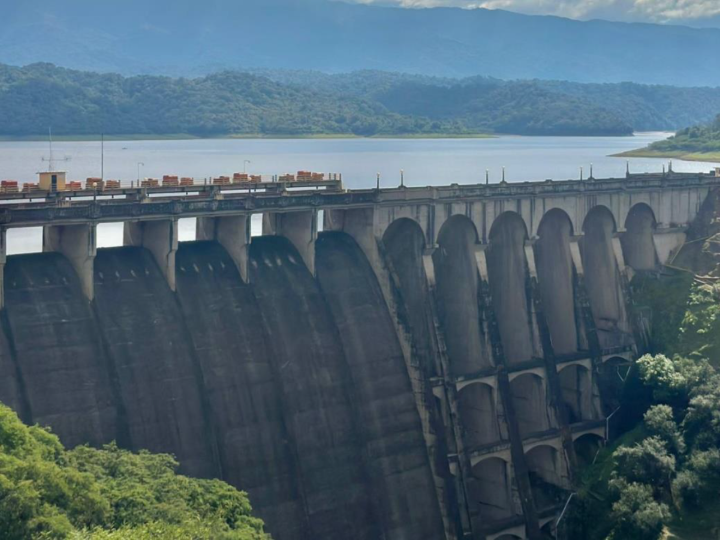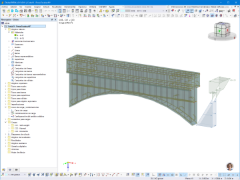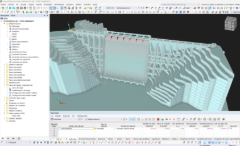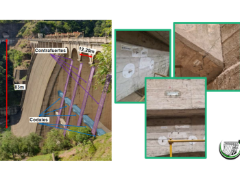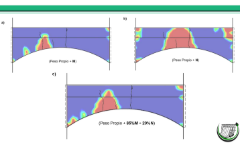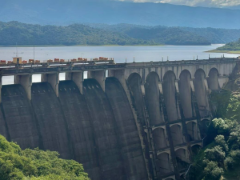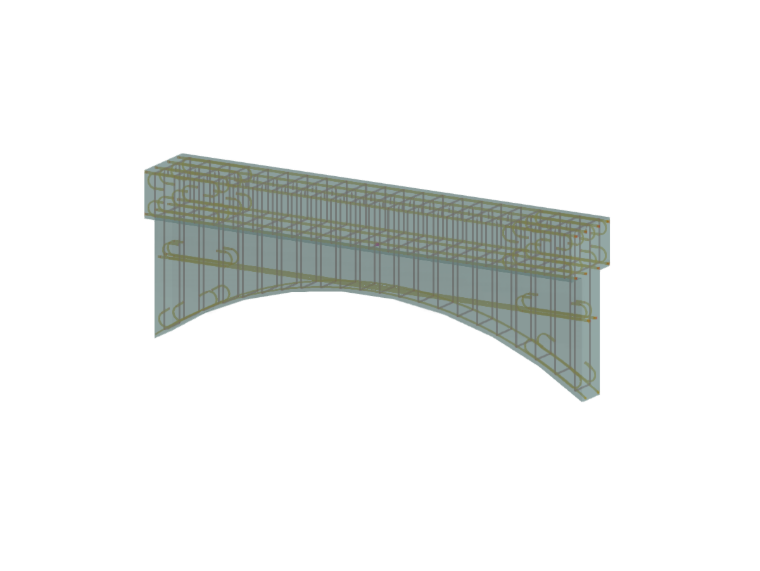
This project develops a multiscale analysis methodology that integrates a three-dimensional global structural model in the RFEM 6 program by Dlubal Software—which models the dam’s linear elastic behavior—with three-dimensional nonlinear local models of its struts. Based on a review of design drawings, technical documentation, and structural inspections, the geometry, reinforcement layout, mechanical properties of the materials, and connection conditions consistent with the original structural design are reconstructed. The stresses obtained from the global model are transferred to the local models to analyze the response of the reinforced concrete under different bending and tensile conditions, comparing the resulting damage patterns with the historical cracking pattern observed in service.
The results show that the bending and tensile forces considered in isolation partially reproduce the observed crack distribution, whereas their combined action better corresponds to the location, orientation, and extent of the damage recorded in the struts. The proposed methodology provides a consistent mechanical interpretation of the origin of these pathologies and serves as a tool applicable to the structural evaluation and diagnosis of specific elements in existing concrete dams.
| Location | Escaba Dam, Marapa River Channel Tucumán Province, Argentina |
| Structural Engineer | Álvaro Brodersen National University of Tucumán |
| Structural Engineer | Pablo Correa Medina, National University of Tucumán |
| Structural Engineer | María Alejandra Daziano, National University of Tucumán |