This article is about Joseph Monier, a man who was more important to the construction industry than almost anyone else. And yet few people know his name. But why is that? And what was so special about Joseph Monier? Stay tuned to find out more!
We have already featured numerous famous architects and engineers on this blog. Many of them made a huge contribution to modern architecture, enabling us to admire such impressive buildings today. Their names are known to anyone who is even slightly interested in architecture and engineering. But what exactly was it about Joseph Monier?
Joseph Monier: Background and Education
Compared to other important figures in the construction industry, Joseph Monier was not an engineer. Nor was he an architect. He was a gardener and inventor. Monier was born on November 8, 1823, in the French village of Saint-Quentin-la-Poterie. That's right: not a big city, but a region that was strongly influenced by craftsmanship. Monier belonged to a family of gardeners. So why are we now talking about a gardener?

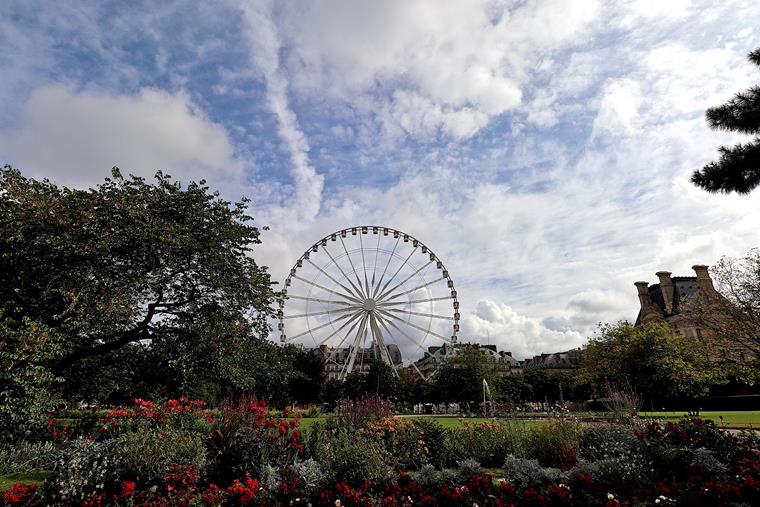
Like his father, he worked at various nurseries after completing his training already until the right people took notice of him. He received an invitation to work in the capital, more precisely in the royal gardens. One of his most famous areas of work was the Jardin des Tuileries. These gardens still border the banks of the Seine and the Louvre today. A real paradise for plant lovers or anyone who wants to relax and unwind.
Here, he was primarily responsible for the popular citrus trees. Oranges in cold Paris? In the past, it was common to decorate palace and castle gardens with exotic orange trees. They were transported in sometimes huge pots between a greenhouse in winter – the orangery – and the promenades of the upper classes in summer. Growing and transporting such huge trees was no easy task.
Joseph Monier: Gardener’s Problems
It was a well-known problem to grow citrus trees in large pots and transport them. The usual materials for plant pots of this size were timber, clay, and concrete. And none of them were really suitable in the long term. Monier was constantly confronted with the disadvantages.
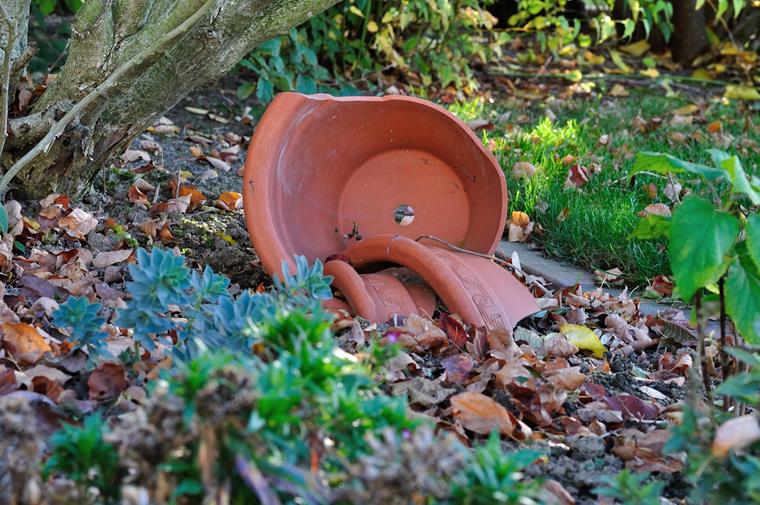
Clay pots could easily withstand moisture and heavy plants, but as soon as it is necessary to transport them, the problems begin. Anyone who has already tried to move such a large clay pot will have quickly noticed how heavy these pots are. Already without soil and plants. On top of that, Joseph Monier kept breaking pots as soon as they were placed even slightly crookedly. This was, of course, very frustrating. But what to use if clay is not an option?
How about taking a step back to the beginning: timber is a true all-rounder! And growing plants in wooden tubs should work. They were still heavy, but much lighter than clay. However, Joseph Monier was not satisfied with this either, because wooden tubs decay quickly. And he couldn't have that, given the long time his citrus trees spent in such pots.
Another option was concrete pots. After all, concrete is known to be very durable. But the structural analysts among you are probably already shaking your heads. Yes, concrete is resistant to compressive forces. But as soon as tensile stresses occur, that's over. Cracks quickly appear when transported over uneven surfaces, under pressure from water or roots inside, or due to frost. There was simply no solution that really satisfied Joseph Monier. So he experimented himself.
Joseph Monier: His Revolutionary Idea
In the 1860s, Monier began experimenting on a large scale. His goal: to finally have a planter that met the requirements of his work. Ultimately, he actually found a way to achieve this. He embedded iron mesh and members in cement mortar.
The iron was intended to prevent cracking – and it worked surprisingly well. With the help of his newly developed combination of iron and concrete, Joseph Monier finally had large, stable pots for his plants, in which cultivation and transport were no longer a problem. But that was only the beginning.

In 1867, he patented his invention. The title was essentially “Plant pots made of iron and concrete.” You're probably wondering: Great, but what does the construction industry want with plant pots? Joseph Monier quickly recognized the potential hidden in reinforced concrete. He didn't stop at giant pots. He applied for more patents.
Joseph Monier built and developed water tanks, pipes, plates, and even bridges from his reinforced concrete, all of which he patented. This turned an idea for improved plant pots into a whole new building material system. And suddenly there were completely different possibilities for a wide variety of structures.
Those who are not so familiar with the subject may ask themselves: Why was it enough to simply add iron to the concrete? What does this change? Let's take a brief excursion into the science of building materials!
Joseph Monier and Reinforced Concrete Properties
Two components are at work in reinforced concrete: steel and concrete. That much is already clear from the name. Concrete absorbs large compressive forces, while iron is very tensile. So what we have here is a frictional connection – the two materials complement each other perfectly.
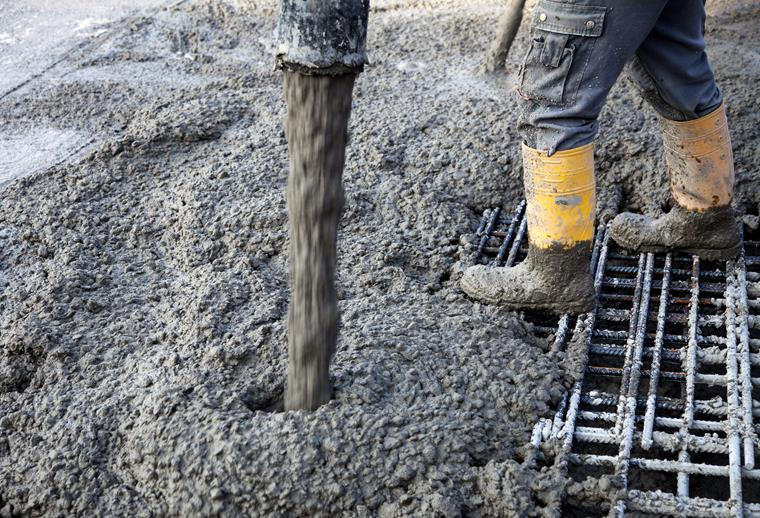
What Monier did not know was that there is much more to what makes steel and concrete such good composite partners. Both materials have similar thermal expansion. When heated, they expand together without causing significant cracks. In addition, concrete protects the steel from environmental influences and, above all, from corrosion.
With the discovery of reinforced concrete as a building material, suddenly so many structures became possible. All of a sudden, large spans could be built, which revolutionized bridge construction in particular. Joseph Monier's water tanks withstood even the harshest winters with temperatures below -20°C without any problems. This quickly made him famous in his community.
Why Joseph Monier never really became famous?
Joseph Monier thus held one of the most important inventions in the building materials industry in his hands. But why is his name hardly known? His idea of steel-reinforced concrete was initially only used in France—and even then, with a limitation.
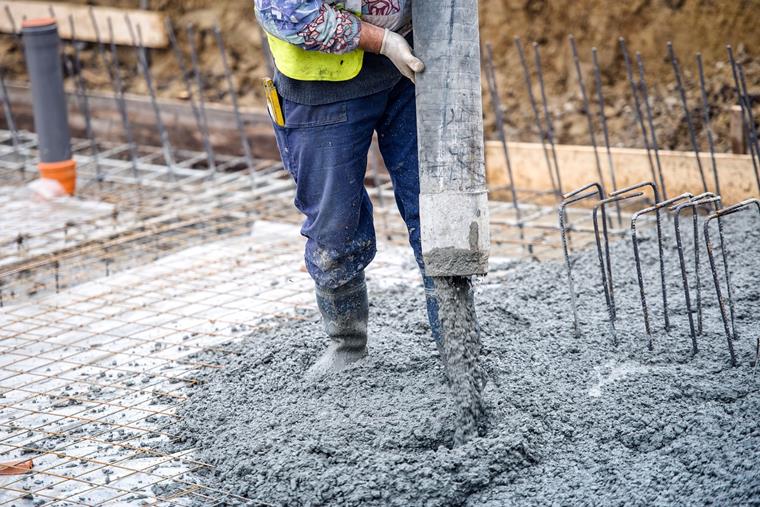
The decisive breakthrough came for Monier concrete in Germany. Here, engineers and companies recognized the true value of the new composite material. They acquired his patent and further developed the building material. Gustav Adolf Wayss, for example, developed a predictable construction method from it, which he himself systematically applied in his structures.
Monier himself was actually not very successful financially. Although he sold patents, he remained largely uninvolved in the triumph of reinforced concrete. During the French revolts, he lost not only his entire company, but also one of his sons, who was a potential successor.
When he died on March 13, 1906, reinforced concrete was just beginning to gain acceptance worldwide. Incidentally, a true master of reinforced concrete came from Germany. His name was Fritz Leonhardt. If you want to learn more about the creator of the world's first reinforced concrete television tower, check out this article: Fritz Leonhardt – Engineer Who Makes Concrete Float .
Conclusion: Joseph Monier
Joseph Monier was not an engineer, a scientist, or a building contractor. He was a practitioner—someone who sought suitable solutions to his problems and experimented. His main focus was not on proving or testing a theory.
His practical approach and experiments led to the creation of a new composite material, the basic principles of which are still used today. This sets him apart from many of the other figures we discuss in this blog.
Joseph Monier's greatest achievement was therefore not the theoretical development of an idea that was then put into practice. He put the cart before the horse. His work was practical proof that concrete and iron work well together.
Based on his reinforced concrete plant pots, engineers developed new calculation methods, construction techniques, and ultimately the modern reinforced concrete structure that we know today. All this makes Joseph Monier a pioneer in the construction industry, even though he was ultimately one thing above all else: a gardener, with heart and soul.