


Key Environmental Loads Affecting Photovoltaic Systems
When designing photovoltaic systems, particularly those mounted on rooftops or integrated into large-scale projects, one of the most critical considerations is understanding the environmental loads they must withstand. These loads typically include wind, snow, and seismic forces, all of which vary greatly depending on the system’s geographical location. For engineers, accurate assessment of these forces is essential to ensure the long-term safety, stability, and reliability of the solar installation.
Accurately determining these loads is not a simple task, as it involves numerous variables influenced by local weather conditions, terrain, and other external factors. For example, wind pressure on a photovoltaic system depends heavily on wind speed, direction, and roof geometry. Snow accumulation can differ based on regional climate and snow type, while seismic loads are determined by local seismic activity. All of these factors must be carefully addressed during the structural design process.
Why Wind Load Matters in the Future of the Solar Energy Industry
Wind load is one of the most significant forces affecting the performance and safety of solar panels. As the future of the solar energy industry continues to expand, installations are becoming larger and more diverse, ranging from small residential rooftops to extensive industrial solar energy systems. In all these cases, wind presents a constant challenge. Strong gusts, turbulent flow around buildings, and extreme storm events can generate considerable uplift and pressure on photovoltaic panels, potentially jeopardizing their stability if not properly accounted for.
Using the Dlubal Geo-Zone Tool for Accurate Load Data
To help engineers meet these challenges, Dlubal offers the Geo-Zone tool, an online service that provides precise and up-to-date data on wind speeds, snow loads, and seismic activity for any location. By using this tool, available on the Dlubal website (link below), engineers can quickly determine the relevant environmental loads for their project, ensuring efficient and safe design workflows.
After entering the project’s location—via ZIP code, town name, or direct map input—the tool provides all the necessary information (Image 1). For example, to determine wind loads for a photovoltaic system, you simply:
- Access the Geo-Zone Tool on the Dlubal website.
- Enter Location Data by ZIP code, city, or GPS coordinates.
- Retrieve Wind Data, such as basic wind velocity values for 50- or 100-year return periods.
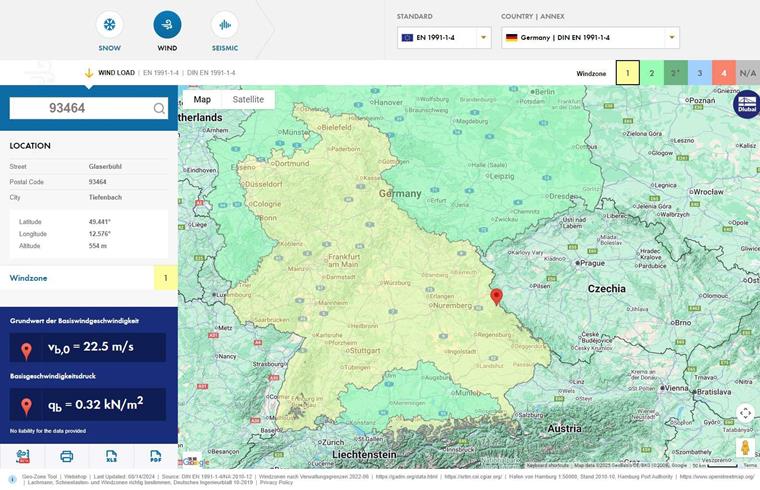
In addition to manual use, the tool offers a web service (API) for seamless integration into external programs. This is especially useful for projects like solar panels for industrial buildings or larger industrial solar energy systems, where accuracy and efficiency are crucial.
Integration with RFEM 6 and RSTAB 9 for Structural Design
In addition to the online platform, Dlubal’s structural analysis programs RFEM 6 and RSTAB 9 also integrate the Geo-Zone tool directly, making the analysis and design process even more efficient. To better illustrate this, let us consider the example of a photovoltaic system mounted on a building’s roof, as shown in Image 2.
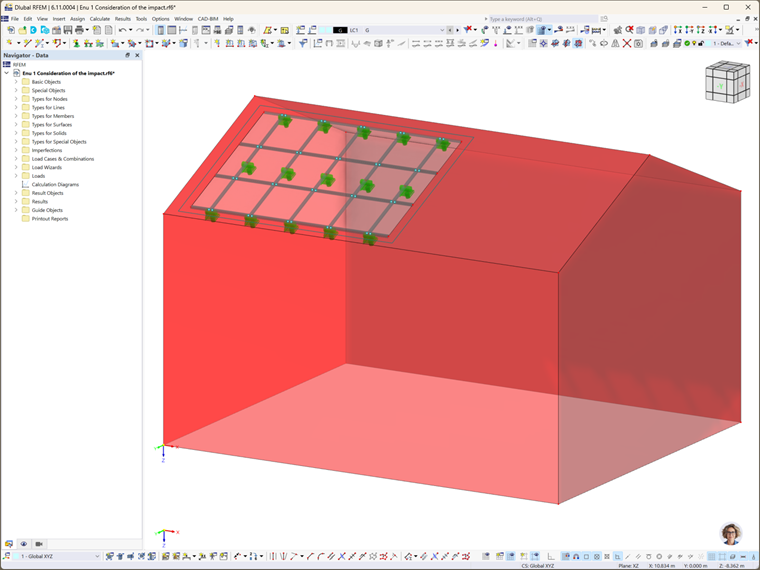
1. Retrieving Wind Load Data with the Geo-Zone Tool
The process begins by opening the model in RFEM 6 and navigating to the Base Data – Model Parameters dialog. Here, you can enter the location of the building where the photovoltaic system is to be installed (Image 3). Once this is done, the software automatically retrieves all the necessary load data for that specific region. This direct connection between the program and the Geo-Zone tool saves engineers from having to manually import or cross-check external data, ensuring that the design is based on accurate and location-specific conditions.
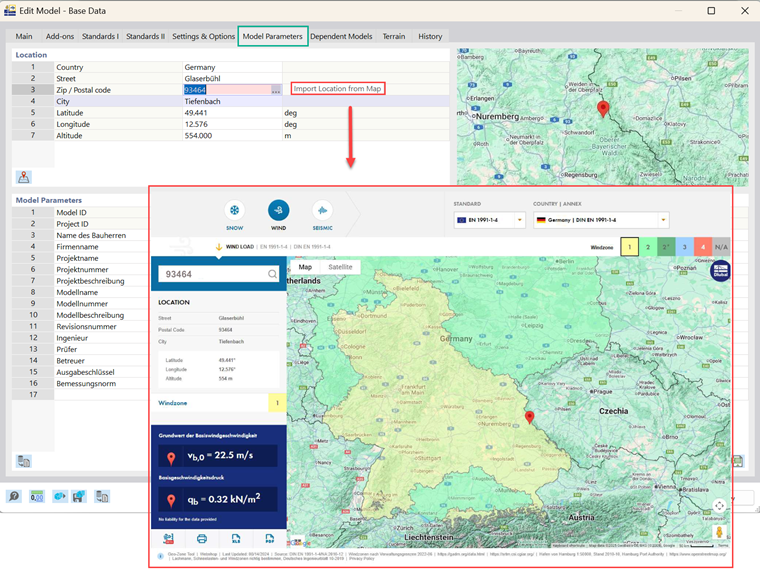
2. Generating Wind Load with the Load Wizard
The next step is to define the wind load itself, which RFEM 6 simplifies considerably with the help of the Load Wizard. For our example, we are working with a duopitch roof. By simply selecting the roof type and indicating the relevant corner nodes in the model (Image 4), the program automatically recognizes the roof geometry, including details such as area, pitch, and rise. At this stage, the wind load parameters retrieved from the Geo-Zone tool are included automatically, so there is no need for additional manual adjustments (Image 5).
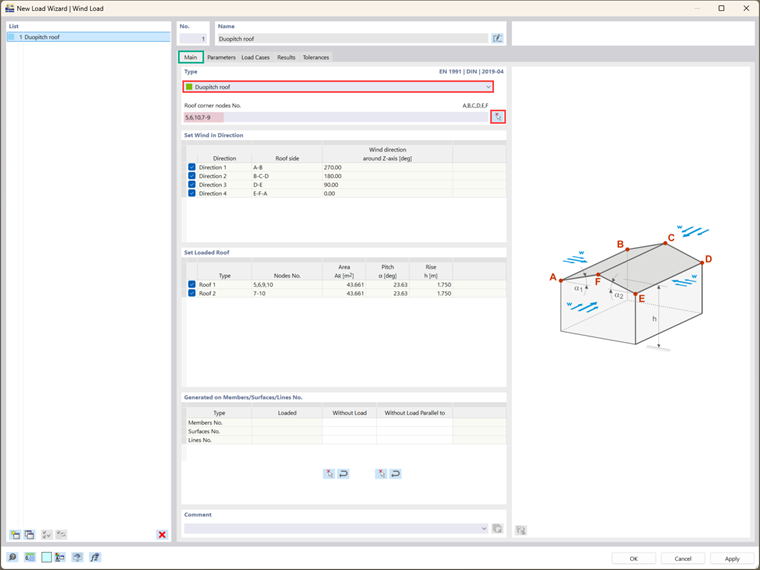

3. Assigning Wind Loads to Load Cases
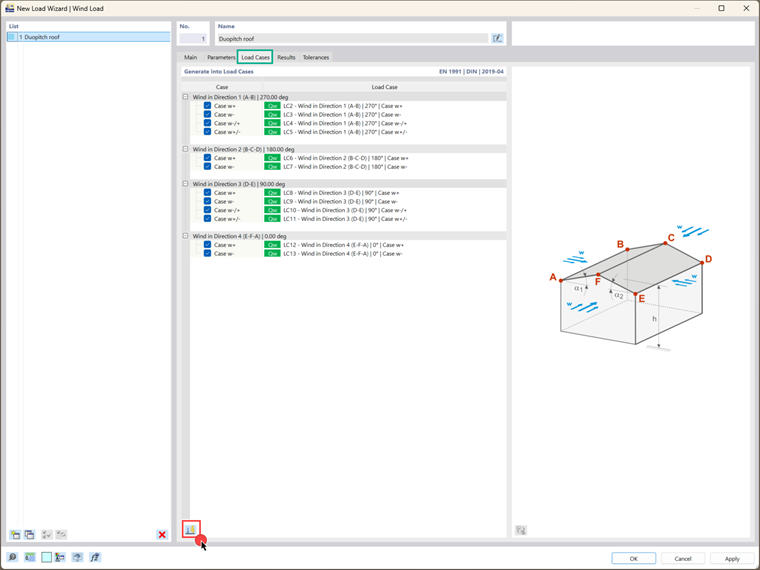
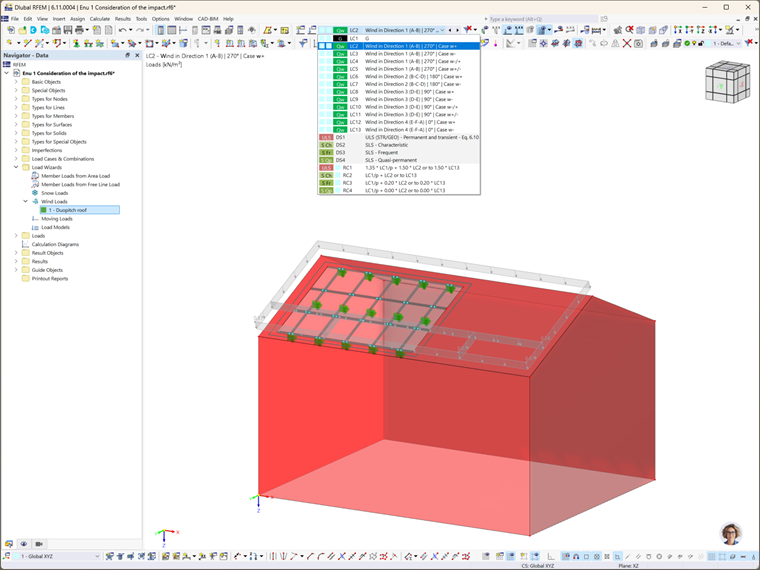
Finally, the generated load can be assigned directly to the appropriate load cases in the model (Images 6 and 7). This feature not only ensures consistency in the data, but also saves a significant amount of time. You can then continue with the overall structural design process, confident that the wind load has been correctly defined for the given location.
In this way, the integration of the Geo-Zone tool into RFEM 6 and RSTAB 9 transforms what could otherwise be a complex and time-consuming task into a straightforward workflow. By combining automated load retrieval with intuitive modeling tools, engineers are able to focus on analyzing and optimizing the structural performance of the solar installation rather than spending valuable time on data collection.
Conclusion: Reliable Structural Design for Photovoltaic Systems and Industrial Solar Energy Projects
The Geo-Zone tool by Dlubal is an invaluable resource for engineers working on the future of the solar energy industry. By providing comprehensive data on wind, snow, and seismic loads, it enables safe and efficient designs for projects ranging from small rooftop panels to large industrial solar energy systems.
When used together with RFEM 6 or RSTAB 9, the Geo-Zone tool not only improves efficiency but also enhances safety and reliability in solar structural design. With precise, location-specific load data, engineers can confidently design photovoltaic systems that perform optimally under local conditions. Ultimately, this ensures that installations—whether residential rooftops or solar panels for industrial buildings—contribute to the long-term success and sustainability of renewable energy projects.