


Hamburg, the Free Hanseatic City with two of the most beautiful districts in the world. HafenCity and Speicherstadt are synonymous with Hamburg's architectural diversity. The Elbphilharmonie Concert Hall, the city's landmark, combines the historical heritage with the modern side of the so-called Venice of the North. But as the Elbphilharmonie has already made clear, one thing is becoming increasingly clear: Hamburg has a problem. A construction site problem.
The Hanseatic city could just as well be called the city of construction sites. Anyone who has ever struggled through the city's traffic to get to the North Sea, for example, knows what we are talking about. Traffic jam after traffic jam. The next detour is just around the corner. All this because the city center has been under construction for years. And the construction projects there have a rather bad reputation. Why? A mixture of innovative construction, wasted taxpayers' money, private investors and politicians who like to interfere. A powder keg ready to explode at any moment.
Having already taken a detailed look at the construction of the Elbphilharmonie, we now have another prestige building on the drawing board: the House of the Earth. Here, too, there were exorbitant increases in construction costs, numerous construction stops, misjudgments, and a significant extension of the construction period. The House of the Earth became a financial hole that rivaled one of our last topics, Burg Houska. The gate to the financial underworld. All deadlines were pushed into the distant future and the budget exploded before what was left of it burned up in the fires of political hell. Let's take a closer look at the whole thing together. Why did the old problems reappear here? And has Hamburg learned nothing?

House of the Earth: Another Prestigious Building for Hamburg
Anyone who has studied in Hamburg or visited the campus knows that the Geomatikum is probably one of the ugliest buildings you can find there. It rather reminds of an outdated prefabricated building, like the ones that are being torn down by the dozen elsewhere. Most of these buildings are long past their prime.
In order to polish their image and finally invest again, a new building was designed: the House of the Earth. A base that would provide a new home for climate research and earth sciences.
In addition to the Department of Earth Sciences with its administration and a section of the Department of Economics and Social Sciences dealing with the consequences of climate change, other smaller research areas are to be established here. The Research Center for Sustainable Environmental Development (FNU), the Center for Natural Science and Peace Research (ZNF), and the Institute of Hydrobiology and Fisheries Science (IHF) would also find a new area of activity here.
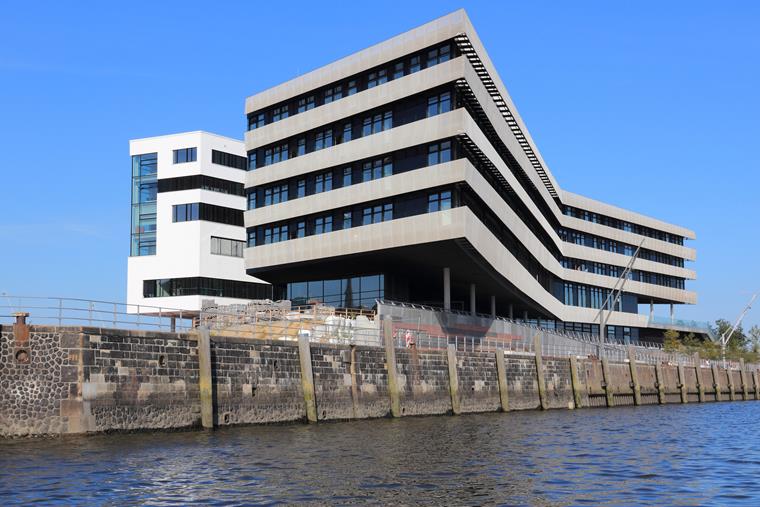
House of the Earth: Data, Goals, Facts
Planning began in the early 2010s and was largely completed in 2013. The new university building was to be integrated directly into the main campus. The primary goal of the designers was, of course, to create a modern place for teaching and learning. But the opinion of the public was also a central point. The goal was to create a new prestige project that would attract national and international attention.
At the start of construction in 2015, a designer was in place: the Campus Building House of the Earth was to be completed in 2020. The budget was around € 140 million. At least for the time being. For both—construction time and costs—were soon to be only blurred memories, past shadows of themselves.
Construction Progress – Chronicle of Problems
When the architectural planning was completed in 2013, the municipal company GMH was entrusted with the further realization of the project. This is the Gebäudemanagement Hamburg GmbH.
Working closely with the University of Hamburg, this company is responsible for the construction, renovation and maintenance of public buildings in the south of the city, such as schools and universities. So the foundation was secure. Nothing could go wrong. Or could it?
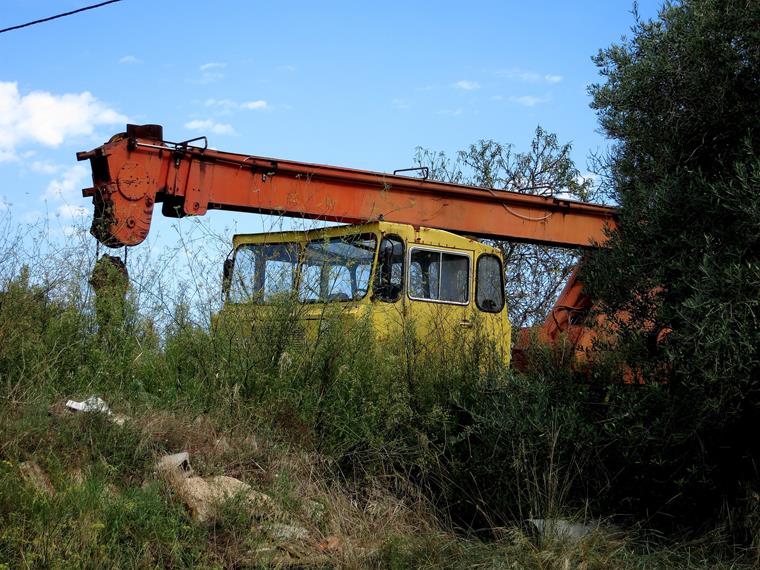
House of the Earth: Problems in Planning Phase
Wrong. Because the problems at the House of the Earth in Hamburg actually already began before construction. In the middle of the planning phase. Nobody noticed it at first. This mainly concerned the technical building equipment (TGA), that is, ventilation, air conditioning, and sanitary facilities. There were clear deficits here, particularly in terms of inadequate dimensioning. An intact indoor climate is essential for geoscientific research.
If the building had been built according to these plans when it was opened, we would have had heat build-up in summer and freezing feet in winter in the House of the Earth – sounds a lot like Deutsche Bahn, doesn't it?
Fortunately, the flaws were recognized by GMH before completion and the technical planning had to be largely redone. That took time. Time and money.
Communication Disaster: Beginning of Construction at House of the Earth
Two years later, the ground-breaking ceremony took place: The construction of the future House of the Earth in Hamburg began. The stumbling blocks in the planning phase continued during the construction of the House of the Earth. In fact, the whole project stumbled again and again, especially backwards or sideways. Who was to blame? Pretty much everyone.
A lack of or poor communication between those involved regularly caused resentment. Important information or minor changes were either not shared at all or only in fragments between the owner's representative (GMH), designers, architects, specialty contractors, and later the contractors. It was necessary to constantly rethink and redevelop the drawings. This meant that even the smallest decisions dragged on indefinitely.

Construction Delays at House of the Earth
Numerous problems extended the construction time, pushing back the original completion date of 2019. Sure, you might think. In 2020, the coronavirus pandemic threw a spanner in the works. Then it's only because the House of the Earth wasn't finished in time. In fact, it was clear long before the pandemic that the opening date would not be met.
Although planning errors had been corrected in the meantime, construction was still delayed after successful replanning. The next target date was 2024, but even that was pushed back. The House of the Earth is currently scheduled for completion in 2025. Tenders, shell construction, interior work: there have been delays everywhere. But what does a longer construction time mean for a public building project?
- Loss of public confidence (construction financing through taxpayers' money, among other things)
- Rising costs due to the site maintenance and contract extensions
- Years of temporary housing for students and faculty
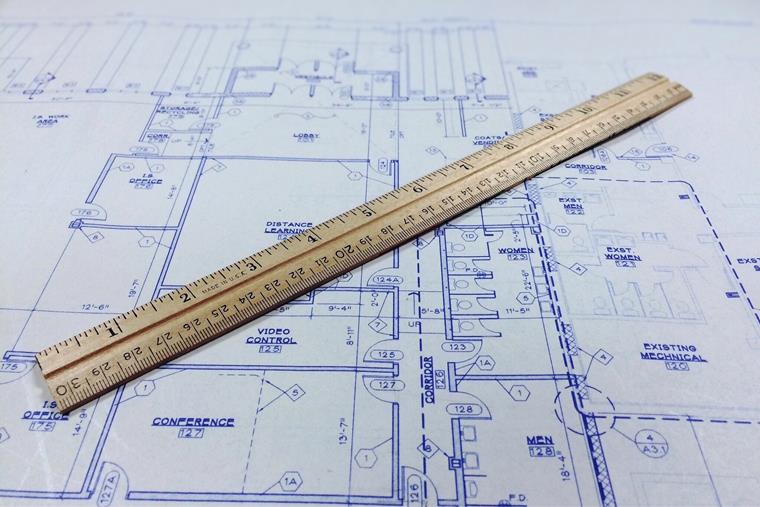
House of the Earth: Cost Explosion
Without building up too much stress: The cost of building House of the Earth rose from €140 million to more than €425 million. In other words, about three times the original budget. But how could this happen? This time, apart from the consequences of planning errors, it had nothing necessarily to do with the incompetence of those responsible, but was a product of unfortunate circumstances.
First of all, the index in the construction sector, that is, the average construction costs per square meter, rose noticeably. Then there was the general inflation, which also contributed to the price increase. So far, so normal. However, during the Corona Pandemic, the construction site at House of the Earth came to a standstill again and again. Of course, it was necessary to maintain the building so that it would not be damaged by lack of heating or ventilation, for example.
As soon as the pandemic was half over, the next tidal wave hit. This time in the form of Russia's aggression against Ukraine. This hit the construction industry particularly hard. Building materials such as steel and insulation increased in price by 60-70% in some cases between 2021 and 2022. The construction industry also faced supply bottlenecks and labor shortages. In particular, large construction sites were significantly delayed.
Another problem that went along with the additional costs was the usual question in such construction projects: Who will pay for it? Who has so much money? The city of Hamburg, the university, the federal government? In the end, every cost increase was necessary. There were discussions. And no, this time there were no private investors. So much for the good news. The not-so-good news, at least for all the city's residents, is that the additional costs were paid in full from the city's coffers, that is, with taxpayers' money.
Water Damage to House of the Earth
No sooner had the proverbial cart been pulled out of the mud than another catastrophe followed. Not from the outside, but from within. Despite extensive new planning, disaster struck. In August 2024, a leak in the sprinkler system tank caused devastating water damage on the second basement floor. This was where the technical rooms and planned laboratories were located. It is well known that technology and water do not get along as well as politics and construction: not at all.
The damage was so extensive that the water seeped into the concrete walls and slabs. Fungi and bacteria spread. Instead of laboratories, people in other white coats moved in: The entire affected area had to be sealed off and thoroughly decontaminated. In the end, about 1,900 m² (20,451 ft²) of floor had to be broken up and removed.
Drying and repairing would take months. So there was another delay here, which pushed back the imminent opening even further. In addition, it's still unclear who exactly will be held responsible for the damage. Next date: a conservative early 2025.
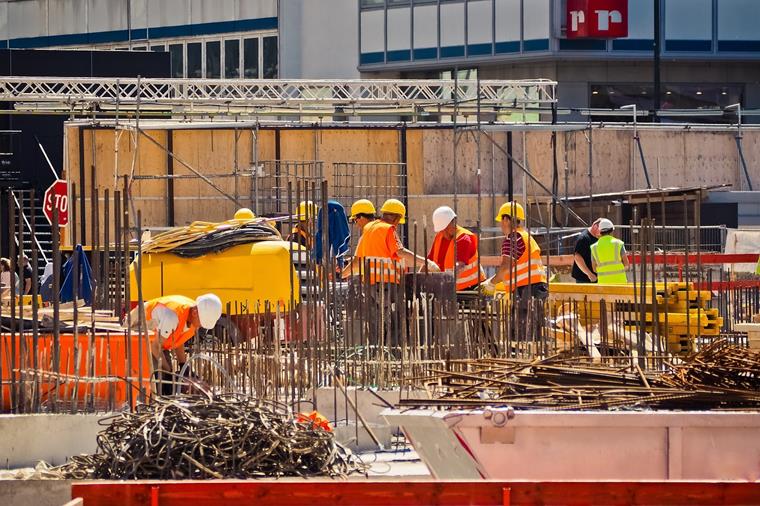
Conclusion: House of the Earth in Hamburg
At the time of writing this blog post (April 2025), there is still no news to hear or read. So it's unlikely to be early 2025. So let's summarize: There were many problems with the construction of the House of the Earth in Hamburg. Some of them were unforeseeable and through no fault of our own, while others are in line with what we have already experienced with other large construction projects.
You can also take a look at our article
Large-Scale Construction Projects in Germany: Have we forgotten how to build?
Here, we go into detail about the problems Germany currently has and has had in recent years with such prestigious buildings. It's worth reading! We summarize for you the biggest problems in our construction industry when it comes to large-scale construction projects, such as the House of the Earth.
The fact is that a large building project is complex. There are many things to consider and processes to coordinate. Things can easily go wrong. And often a small thing has a big impact on the whole construction.
But the House of the Earth is not the first project of its kind in Germany, not even in Hamburg. Here they have experience with public buildings and prestige buildings, after all Hamburg is made up of just such building sites. And yet there are always problems with large German projects.
However, the reason for failures, delays, and cost explosions on large construction sites are the same in most cases, including the House of the Earth.
- Inadequate communication
Communication problems between planning, politics, and execution make it difficult for the construction industry to implement projects sensibly. Often the different trades do not really talk to each other.
Information wanders back and forth between the different levels like a child's game of “silent post”, with one half being turned at least 100 degrees and the other half not even getting through to the end. Communication is so important. BIM could also improve things here in the future.
- Avoidable errors in planning and construction
Another aspect for the successful implementation of such a large project is correct planning and construction itself. The House of the Earth started with a huge planning flaw that set the entire project years back and provided the city with a cash cow. The key here is to work with companies that have experience with such buildings.
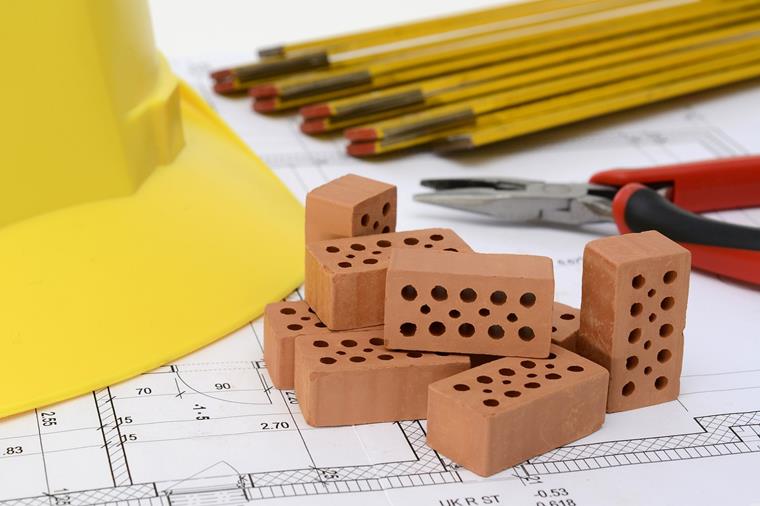
At best, companies with whom the city has already had good experiences as a developer. It's not only the price that counts, but also the actual ability of the craftsmen. It is better to pay a little more at the beginning and have everything work smoothly than to have to make improvements at the end and pay extra.
- Inadequate risk management at House of the Earth
Another major problem with House of the Earth was the inadequate risk management. Of course, there are risks involved in such a large project. Whenever a building is supposed to take years to construct, it can be assumed that, for example, raw material prices in the construction industry will fluctuate or suddenly rise sharply.
Unforeseen events, such as storms, should also be taken into account in the planning. Or other forms of crisis that can have a negative impact on the completion of major projects. What if one of the trades becomes insolvent in the meantime and is unable to continue its work? Then a Plan B is needed.
Comprehensive risk management is essential for the success of a project as large as the House of the Earth. A larger buffer should have been included from the beginning.

Many of the problems with the construction of the House of the Earth would not have occurred if foresighted planning had been done in advance. We in the building industry must always remember that good preparation is the best foundation for a successful building project. In particular, communication between planning and construction becomes more important as the final result becomes larger and more complex. It would be desirable for the construction industry in Germany to take further steps forward, not backward. As a rule, sideways jumps only cause problems.
We need a stronger focus on digitalization to simplify communication, quality assurance in the planning and implementation of structural projects and a Plan B, C, and D. After all, the past has taught us, especially in recent years, that things can always turn out differently than expected. We should always expect the unforeseen and prepare accordingly, especially when so much is at stake.
.jpg?mw=760&hash=d249e2a829ac4486aa8be5d13ef9c91fba1c8d9a)