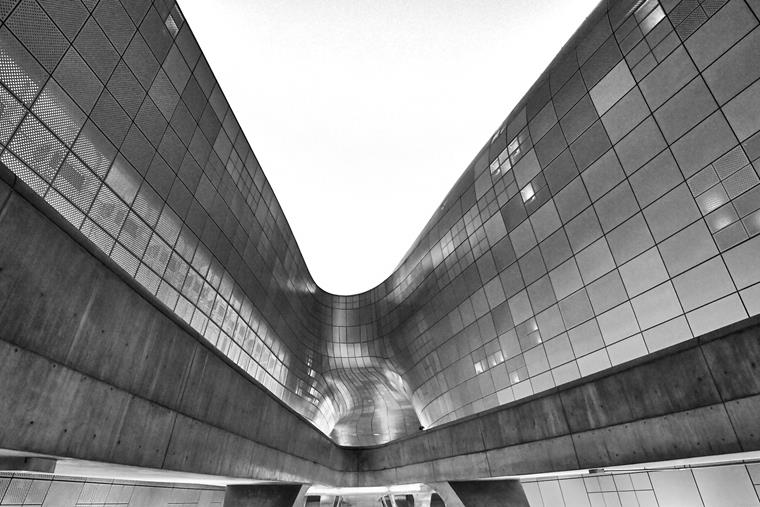
Architect Zaha Hadid is a force to be reckoned with in the building industry. In a male-dominated field, she has made a name for herself with her innovative concepts and futuristic designs. Her buildings have both admirers and critics around the world. Futuristic and thoughtful, chaotic and impractical?
In this blog post we take a look at the life and work of a true legend of architecture. What makes her designs so special and what inspiration did she leave behind for modern architecture after her death?
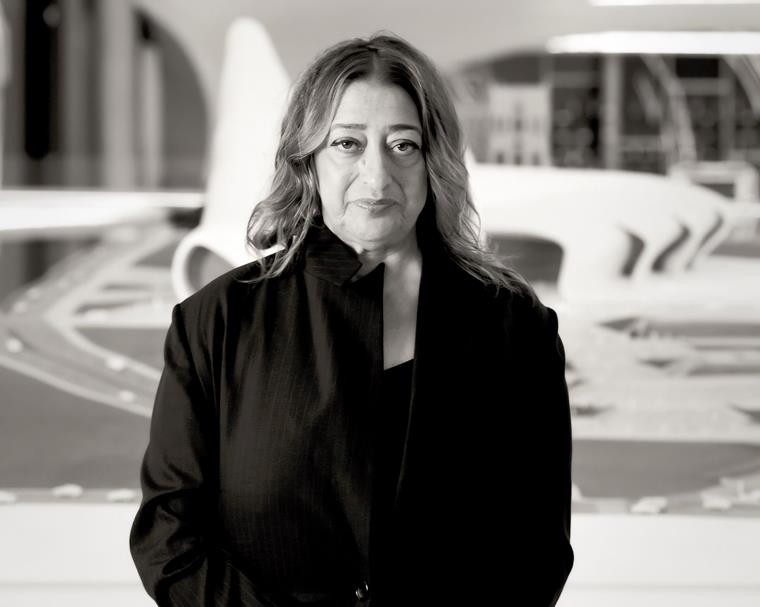
Zaha Hadid: Born Architect
Zaha Hadid came from a wealthy Arab family that made its money through forward-looking investments in industry, trade, and real estate. She grew up in a progressive Western environment that gave her a lot of freedom from the beginning.
Her career in architecture began at an early age. Even as a child, she redesigned her own bedroom and was determined to become an architect. She studied mathematics in Beirut and architecture at the famous AA in London, where she was influenced by the emerging Russian Constructivist movement. In 1980, she opened her first architectural practice in her adopted home of London.
In 1983, her future colleague and partner, the German architect and now architecture professor Patrik Schumacher, completed an internship with her. The two shared a strong interest in flowing forms, which Zaha Hadid herself described as kinetic. Architecture in motion.
Zaha Hadid's Futuristic Aesthetics
Too new for the construction industry?
While neohistoricism and modernism were still dominant in other areas of contemporary architecture, Zaha Hadid's style stood out. The flowing forms of her designs clearly reveal the influence of her mathematical studies. Geometry played an important role in her early work.
It was not until 1982/1983 that she attracted international attention. Her design for the leisure and recreation park “The Peak Leisure Club” on a mountainside in Hong Kong beat out 600 competitors. Her concept of terraced horizontals crossing diagonally won her first place. Unfortunately, her design was never built because the British colony of Hong Kong was returned to China shortly after the competition. And it was far from the last of her projects to never see the light of day.

Nevertheless, her concept earned her a place in the influential Deconstructivist Architecture Exhibition at the Museum of Modern Art in New York in 1988 – as the only woman, mind you. Although she was considered a pioneer of constructivism, she was still far from achieving her desired style. She was looking for something new. At the same time, it was precisely this tireless search that ensured that numerous projects remained on the drawing board. Many clients found her ideas too unusual and difficult to realize.
For example, she was awarded first prize in 1986 for her design for an office building at Kurfürstendamm 70 in Berlin-Charlottenburg. However, her concept never made it past that stage, as the 2.7 m base width was probably too tricky for the engineers in charge. But that was nothing compared to a building project in Cardiff, Wales.
In the mid-1990s, an opera house was to be built there. The architectural competition was held three times, and each time a design by Zaha Hadid won. And each time, the building commission ultimately rejected the jury's decision. Impossible to build, they said. Too daring, too new. Even though the London structural engineers at Arup rated her designs as stable, the decision stood. It got worse.
The building commission was supported by an organized newspaper campaign against Zaha Hadid. A similar approach would be more likely to come from a red-white German tabloid. Apparently there was also bad journalism in England. In the end, this campaign has set Zaha Hadid back several years in her career. So should she just give up? No, that was not an option.
Zaha Hadid: Rising Star on Architectural Horizon
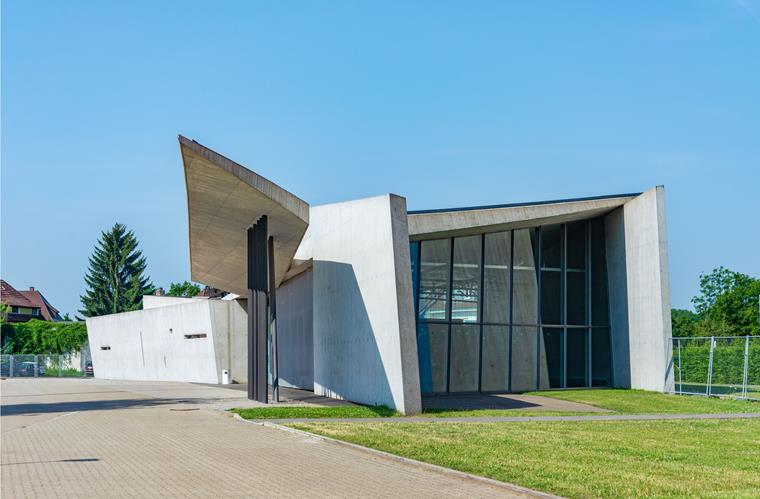
Perhaps this is why their first completed project took so long to materialize. It was not until 1993 that it finally came. In Germany, her design for the fire station for the Vitra factory in Weil am Rhein beat out international competition – once again. The only difference was that this time her concept was actually realized. The sharp angles gave the building an unprecedented dynamism. While experts hailed the fire station as revolutionary and an architectural icon, there were also a number of critical voices.
There were now real Hadid critics who were only too happy to spread discontent with false information. For example, it was claimed that firefighters couldn't cope with the sloping walls, even though everything worked perfectly. Those who worked there often described it as the most exciting fire station in the world. Where there is success, envy is never far away. And that was to be Zaha Hadid's lifelong companion.
Kinetic Architecture by Zaha Hadid
In the early 2000s, other large building projects were realized based on designs by Zaha Hadid. One of them, the largest project in Germany, was the phaeno. Like a modern spaceship, the concrete and steel structure has been rising since 2005 next to Wolfsburg's main train station. It is a stone's throw from the city center and directly opposite the towers of the famous VW factory on the other side of the river.
Here Zaha Hadid's style has clearly evolved. From sharp-edged geometric shapes to flowing movements along the facade. No two sides of the phaeno in Wolfsburg look the same, and depending on the light, the building seems almost alive. At least as alive as its interior.
Zaha Hadid's design is by no means intended for ordinary shops or offices. On the contrary, it is a place for children and their companions to learn something about science. Discovering how the laws of nature work: in phaeno, practical experience plays the leading role.
Despite its 27,000 m³ (953,497 ft³) of concrete', the building designed by Zaha Hadid does not appear bulky at all. It even seems to float, supported by ten cone-shaped concrete pillars. These pillars, which are up to 7 m (23 ft) wide, also contain rooms such as a science theater with a laser show.
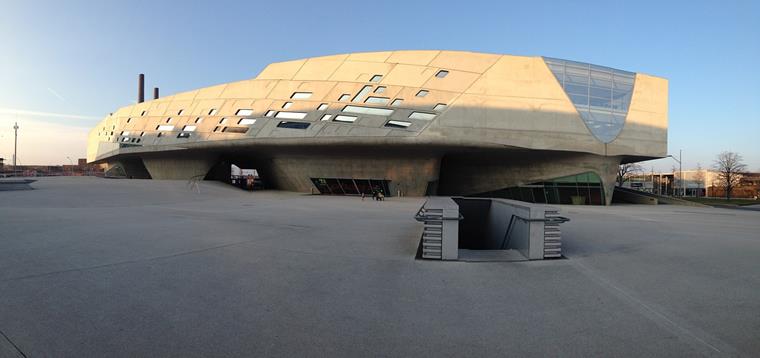
With its almost cave-like architecture, the Phaeno does not appear clunky or overwhelming, either inside or out. According to Zaha Hadid, it creates a pleasant intellectual openness and mobility that promotes creativity.
Zaha Hadid: Flair for Innovations
Zaha Hadid's projects were not only about design, but also about the way in which they were built. In addition to architecture itself, she was very interested in innovative construction methods throughout her life. For example, self-compacting concrete was used in the Phaeno. She was constantly searching not only for new forms, but also for new possibilities in construction.
Her interest in technological innovation was no accident. She was particularly interested in being able to realize her own designs, often very radical. To this end, she collaborated with renowned engineers such as Buro Happold and Arup. Together they planned the use of new materials and construction methods.
Digital design processes, such as parametric design, also played an important role. The evaluation of large amounts of data enabled precise planning when it came to structural analysis, acoustics, special environmental criteria or social requirements.
The advent of increasingly powerful structural analysis programs, for example, allowed for the rapid calculation of complicated or unusual shapes, which Zaha Hadid liked to use. After all, she had a pronounced aversion to right angles. For her, there were no unbuildable projects, only designs that could not yet be realized.
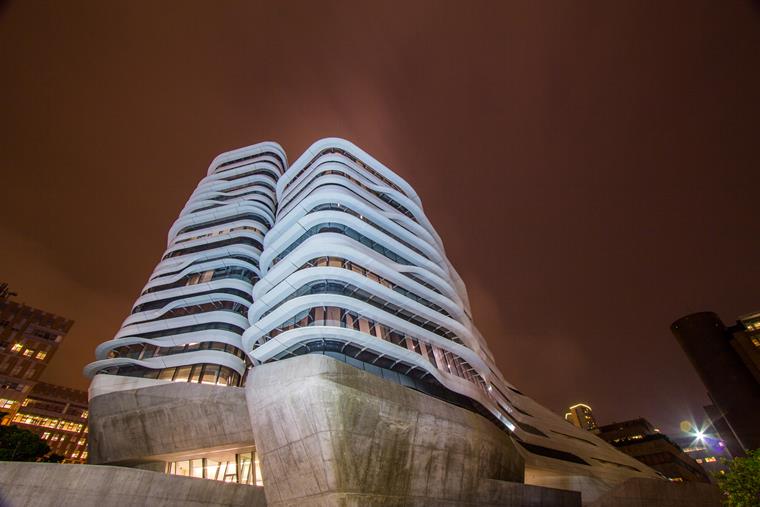
Designer Zaha Hadid
But Zaha Hadid was not only an architect at heart. She was also active as a designer. She created designs for companies all over the world in a wide variety of industries. Here are some of the most interesting:
- Sofa combination for a Milanese furniture manufacturer
- Stage set for the Pet Shop Boys world tour in the 1999/2000 season
- Plastic shoe in eight colors for a Brazilian shoe manufacturer
- Wine bottle for an Austrian winemaker with a limited edition of 999 pieces
- Transparent acrylic tables and plexiglass tables with legs that look like flowing water
- Two high quality wallpaper collections for the wallpaper factory in Marburg.
- Stainless steel cutlery for the WMF company
Zaha Hadid as Teacher
In the late 1980s, Zaha Hadid was a visiting professor at the Graduate School of Design at Harvard University, followed by the School of Architecture at the University of Chicago, in Hamburg, Ohio, and New York.
Until she retired from her professorship at the Institute of Architecture at the University of Applied Arts in Vienna in 2015 due to her age, she headed the studio hadid, vienna there for 15 years. During this time she inspired many young architects.
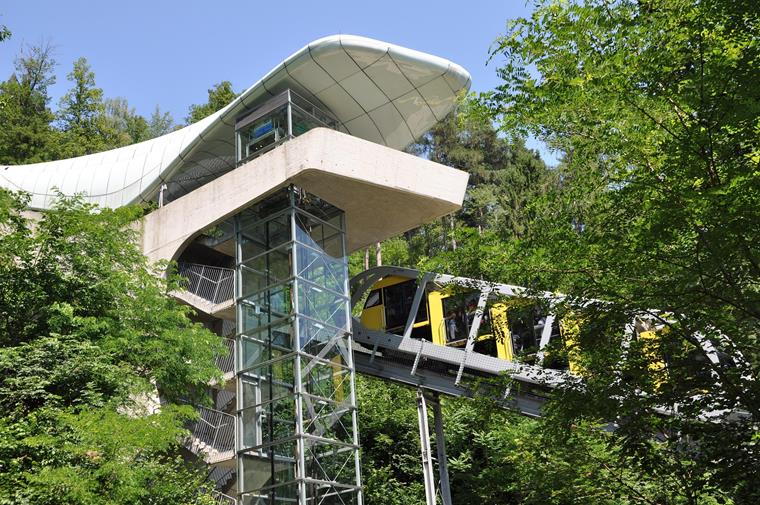
Zaha Hadid: Legacy of Legend
The life of Zaha Hadid unfortunately came to a rather unexpected and sudden end. In 2016, she died in a hospital in Miami following a heart attack. At the time, she had already left a lasting mark on the construction industry.
Not only was she the first woman to win architecture's most prestigious award, the Pritzker Architecture Prize, in 2004. Five years later, in 2009, she received the Praemium Imperiale, an international cultural award from the Japan Art Association.
But even when the star of Zaha Hadid finally rose in the architectural firmament, her legacy did not fade. After her death, her longtime project partner Patrik Schumacher took over the firm and continues to lead it today.
In recent years, the firm has repeatedly used AI technology to optimize design processes, even creating an internal unit called ZHAI (Zaha Hadid Analytics + Insights). This is very much in the spirit of star architect Zaha Hadid, who would have been very supportive of this progressive approach.
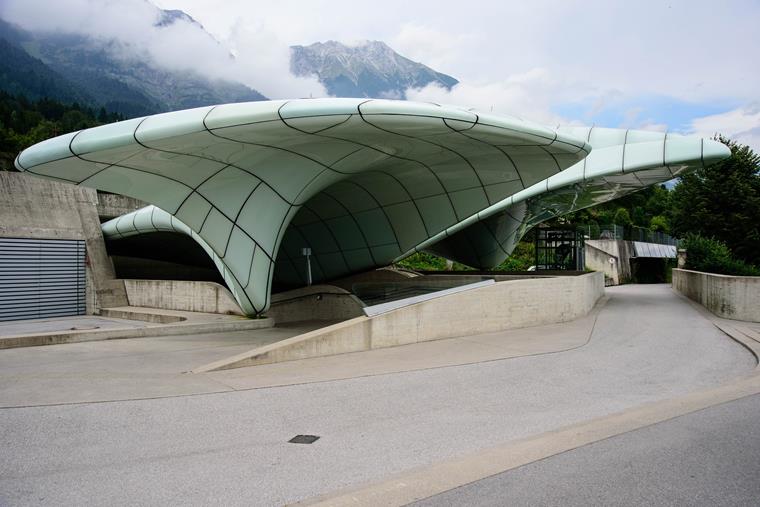
The architecture firm, once founded by Zaha Hadid, still implements exciting projects worldwide today and for the future. Without right angles, with the latest methods of the construction industry, and as a role model for many other people out there who are enthusiastic about architecture.
Conclusion: Zaha Hadid
Never before has a woman made such an impressive mark on the male-dominated construction industry as Zaha Hadid. Whether you like her designs or not is, like many things, a matter of taste. But there is no denying her global success and hunger for new forms and innovations.
Without bold designs, it is impossible to create new buildings that require new methods and materials. Innovation has to start somewhere, and Zaha Hadid is a shining example that the path may be rocky, but it is definitely buildable.