


The setting for today’s post on the Eurotunnel is the English Channel. At its narrowest point, it is only about 34 km wide, yet it has always separated Great Britain from the European mainland. A protective barrier and at the same time the fastest trade route—and has been already since the Middle Ages: Wool from England in exchange for wine from France; later, the first industrial products were added.
The ports on both sides, in Dover and Calais, became the most important trade centers of their respective regions over the centuries. But the English Channel was not only a hub for trade; it also served military purposes. The strait played a supporting role in Napoleon Bonaparte’s invasion plans in the early 19th century. And even over 100 years later, during World War II, the English Channel was part of the strategy for the Battle of Britain.

Just as the English Channel protected Great Britain, it also isolated it. This is because crossing the Channel was extremely difficult. By sailing ship, the journey took several hours to a full day; later, steamships still required two to three hours. The unpredictable sea conditions and, above all, the wind could repeatedly cause significant delays here.
No wonder, then, that merchants, travelers, and, of course, builders already dreamed of a permanent connection from early on. A road crossing the English Channel? No, too far, too unsafe. Then perhaps a tunnel, straight through? Or better yet, running underneath?
Eurotunnel
Since 1994, this long-held desire for a stable connection between Great Britain and the European mainland has become a reality. Today, trains travel under the English Channel in about 35 minutes. With a total length of about 50 km, roughly 37 km of which is underwater, it is the longest undersea tunnel in the world.
In engineering circles, this mega-project is considered one of the most impressive achievements in modern construction history. And undoubtedly one whose implementation stood on shaky ground for decades. In fact, the first concrete ideas for the Eurotunnel date back to the early 19th century.
Eurotunnel: Dream for Trade and Travel
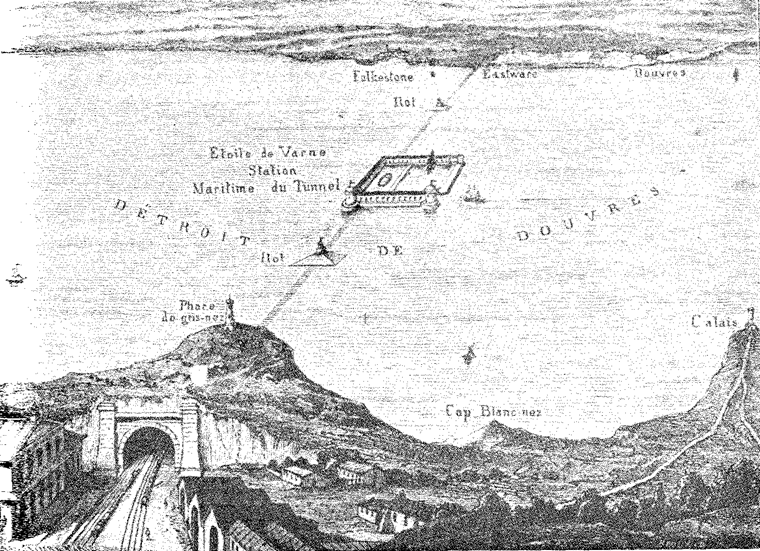
The first concrete proposals to build a tunnel between Great Britain and France date back to 1798. The French engineer Albert Mathieu-Favier drew up plans for two tunnels between Calais and Dover. An artificial island with a lighthouse was to be located in the middle. A journey by stagecoach from Calais to Dover, taking just 5 hours, would be significantly shorter than the usual sea route.
In 1802, Mathieu-Favier presented his design to Napoleon Bonaparte, who was enthusiastic. Incidentally, the British Foreign Secretary was just as enthusiastic. However, before the project could take shape, the old enmity between the countries flared up again and the drawings were scrapped. The risk of a French invasion via such a channel was ultimately too great.
Why the Eurotunnel took so long to build?
Today, people complain—and rightly so—about major structural projects like the Berlin-Brandenburg Airport or Stuttgart 21. There are many promises, few are kept, and nothing happens. In the construction industry, this is not uncommon for such large-scale projects.
You can read about why we have such problems with large construction sites these days in this article here: Large-Scale Construction Projects in Germany . But what about the Eurotunnel? From the first concrete plans to the finished tunnel, almost 200 years passed.
Yet both sides of the English Channel were not idle during this time. There were ultimately 27 attempts to build such a tunnel. Geological analyses, test drilling: It always failed due to political disagreements between England and France – and feasibility issues.
Eurotunnel: Way to Construction Start
It wasn't until the late 1970s that there was a glimmer of hope at the end of the tunnel: the United Kingdom and France reached an agreement. The Eurotunnel project was set to begin. Trade between the British Isles and the European mainland would finally become more reliable and secure.
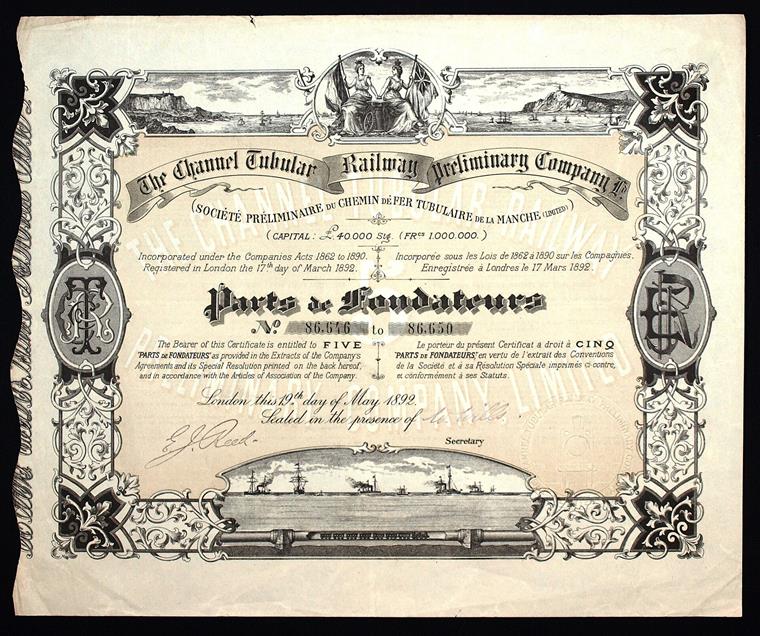
In 1985, the design for the Eurotunnel was finally put out to tender. The contract was awarded to the specially formed British-French consortium “The Channel Tunnel Group Ltd/France-Manche SA,” so to speak the successor to the earlier “Channel Tubular Railway Preliminary Company” of May 19, 1892. Construction was to be fully privately financed.
Eurotunnel: Special Features Under English Channel
Initially, test drilling was carried out at twelve locations in the Channel in 1986 and 1987 using newly constructed drilling rigs. Together with the hundreds of other drillings from previous decades, a clear image gradually emerged of the structure of the rock layers beneath the seabed.
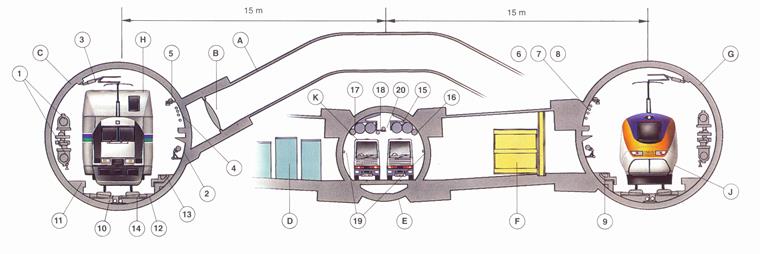
Ultimately, the plan was finalized: The Eurotunnel would consist of three tubes. Two of these would be 7.6-meter-wide passenger tunnels, with a 4.8-meter-wide service tunnel in between. This was intended to ensure maintenance, ventilation, and emergency evacuation. The wide tubes would be used exclusively by trains. Understandably so, as a car tunnel would only cause problems due to accidents or traffic jams.
The tunnel’s route was to run through and follow a single layer of rock. The chalk-marl rock is relatively stable and well-studied. There would be no unpleasant surprises here. Water ingress could also be ruled out: perfect conditions for building a tunnel here.
Challenges Due to Water Pressure and Rock
A project like the Eurotunnel is, of course, no small feat. The biggest challenge was the construction environment itself. Drilling tunnels under the seabed is risky, despite all the calculations and precautions. The high pressure from the sea above made the risk of water ingress ever-present.
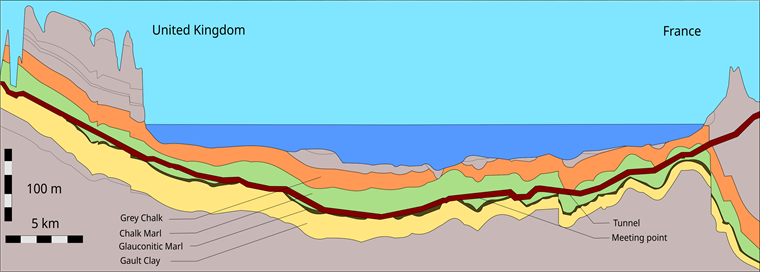
On top of that, the chalk layer in which construction was to take place was quite narrow and not necessarily straight. It repeatedly dipped or rose, which complicated the geological survey of the route. Nevertheless, the engineers on site managed to collect and evaluate all the data. In 1988, construction began.
Construction of Eurotunnel (1988 to 1994)
To build the longest undersea tunnel in the world, the Eurotunnel, giant tunnel boring machines were needed. A total of eleven of these machines were used in the construction of the Eurotunnel. One of these machines was up to 200 m long, weighed about 1,000 tons, and cost around €20 million. Their massive heads had a cutting wheel diameter of 7 to 8 m, and their teeth, made of tungsten carbide steel, continuously worked their way through the chalk rock from both sides of the English Channel.
These specially developed machines were true all-rounders. They could simultaneously excavate rock, transport it away via a conveyor belt, install the precast concrete sections, and lay working rails. Each machine was followed by a supply train. This train carried equipment for power supply, materials for the tunnel walls, a rest area for breaks and a first-aid station.
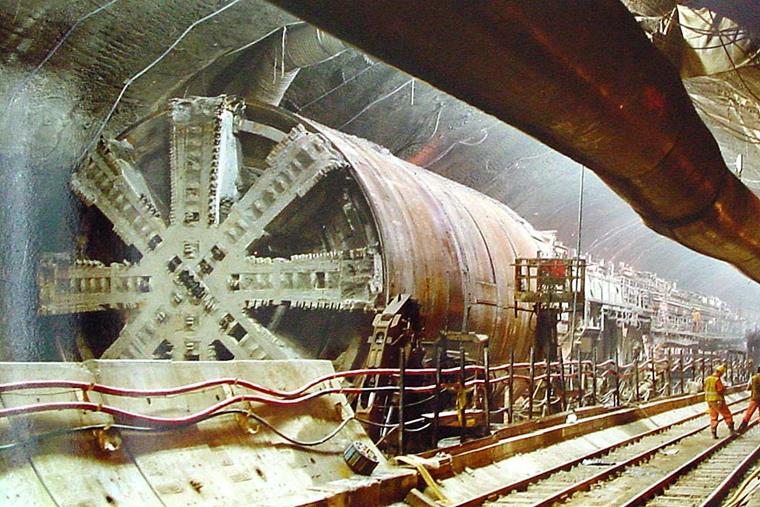
The teams worked around the clock from both sides, and the parallel drilling significantly shortened the construction time. In 1990, the first opening was achieved for the service tunnel—a symbolic moment for the Eurotunnel project. The precision of the drilling was particularly impressive.
The deviation between the two tunnel axes was only 36 cm. This was primarily thanks to the work of the engineers involved, who had surveyed the path of the tunnel boring machines. This level of accuracy was only possible through precise calculations and state-of-the-art laser technology.
Structure and Technology in Eurotunnel
The Eurotunnel is unique in the world. For over 30 years now, it has played a supporting role in trade between the United Kingdom and mainland Europe. Of course, the structure of such a mega-tunnel is particularly interesting. So let's take a look at the technical details.
Eurotunnel Tubes
The tunnel system consists of three parallel tubes: two large railway tunnels for train traffic and a smaller service tunnel in the middle. To ensure smooth maintenance or evacuation in an emergency, the tubes are meshed by cross-passages approximately every 375 meters. The most fascinating aspect is the multi-purpose nature of the service tunnel.
Service Tunnel in Eurotunnel
Before the Eurotunnel, nothing like this existed. A tunnel located between the main travel tubes was a major technical innovation. Thanks to it, maintenance vehicles can access the relevant tunnel sections without disrupting the flow of train traffic.
Furthermore, the service tunnel serves both as an access route for emergency responders and as a safe way out in the event of an evacuation. The numerous connecting passages allow for a quick transfer between the main tunnels. It is therefore possible to switch to the opposite tunnel at any time. And while we’re on the subject: What is the situation regarding safety in a tunnel over 50 km long?
How safe is the Eurotunnel?
The Eurotunnel is based on a comprehensive safety concept—let’s take a closer look. The fact is: The Eurotunnel lies about 45 meters below the seabed. Just thinking about that is sure to make some people feel queasy. That’s pretty deep. But at least this eliminates the risk of water flooding into the tunnel tubes.
And what if something were to explode in the Eurotunnel? Even then, the robust construction would come into play. Shock waves would spread along the tunnel—following the path of least resistance—rather than concentrating in one spot. So not much can really happen there.
Fire Protection in Eurotunnel
Fires in tunnels are rightly feared, as they can spread extremely quickly in such situations. The Eurotunnel has taken precautions for emergencies. The train cars are made of fire-resistant materials and are equipped with built-in fire suppression systems – precautions have also been taken within the tunnel itself, for example:
- Fire hydrants at cross-passages
- Foam extinguishing systems
- Use of halon gas in case of severe fires
- Automatic fire alarms and monitoring systems
If an evacuation becomes necessary, the service tunnel is used again. This is because it is connected to the main tubes via cross-passages. In this way, it should be possible to completely evacuate all passengers within 90 minutes in an emergency.
Technical Defects in Eurotunnel
Anyone who travels by train frequently knows this: nearly half of all delays are caused by a technical malfunction. Such problems have been prevented in the Eurotunnel. Every train has two locomotives, one at each end. If one fails, the other can take over. In addition, remote-controlled diesel locomotives are used. Furthermore, at a depth of about 46 meters, there are two crossings, known as the meeting point. Here, trains can switch from one track to the other if necessary.
Infrastructure systems are also duplicated in the Eurotunnel. These include, for example, emergency power supplies, electrical systems, pumps, and lighting. Speaking of the number two: The two separate tubes naturally also ensure that trains cannot collide.
Modern Control Center Eurotunnel
Up to eight trains can be in the tunnel at the same time. And during peak hours, they even travel through the tubes every three minutes at 160 km/h. In addition, the Eurotunnel is open 24 hours a day, 52 weeks a year. That’s a lot to coordinate. No wonder, then, that the Eurotunnel has some of the most modern control centers in the world.
These include manual communication systems between drivers, the control center, and passengers, as well as automatic safety systems. A total of 500 sensors provide approximately 2.5 million data points daily on temperature, air quality, and the functioning of technical systems. That’s a considerable amount. If there are any hazards or irregularities, the train stops or slows down automatically.
Ventilation System in Eurotunnel
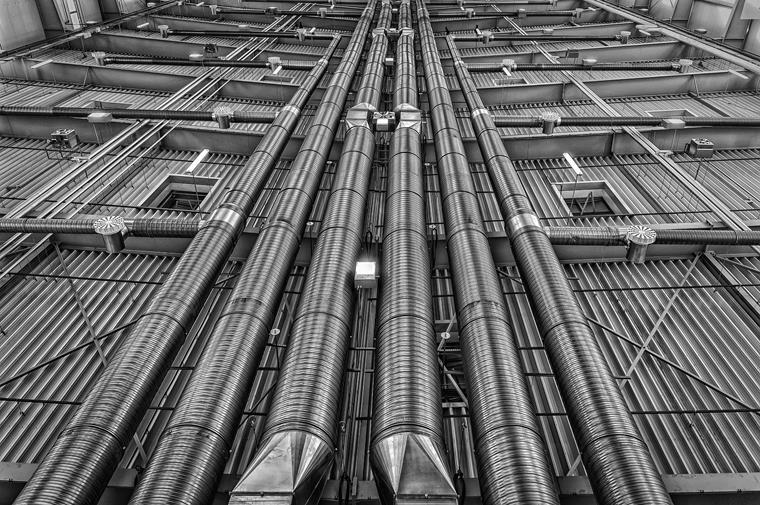
An important factor in tunnel operation is the 'ventilation system. This was already a consideration in the initial designs from the 19th century. In the completed Eurotunnel, this function is now performed by a complex ventilation system, located at both ends of the Eurotunnel.
It ensures a supply of fresh air, additional ventilation in an emergency, and the necessary pressure equalization. This is because high-speed trains not only generate a lot of airflow, but also cause significant pressure differences in such long tunnels.
Safety Regulations in Eurotunnel
To ensure the safe transport of passengers and goods, there are certain safety regulations that must be observed in the Eurotunnel. Passengers traveling by train, whether in the shuttle or in a passenger car, are free to move around the cars or remain in their vehicle during the journey.
The transport of explosive materials, gas and petroleum tanks, nuclear waste, or other hazardous chemicals is prohibited. In addition, there is a strict smoking ban throughout the tunnel and on all trains. This is the only way to ensure that everyone arrives quickly and safely.
Eurotunnel Today
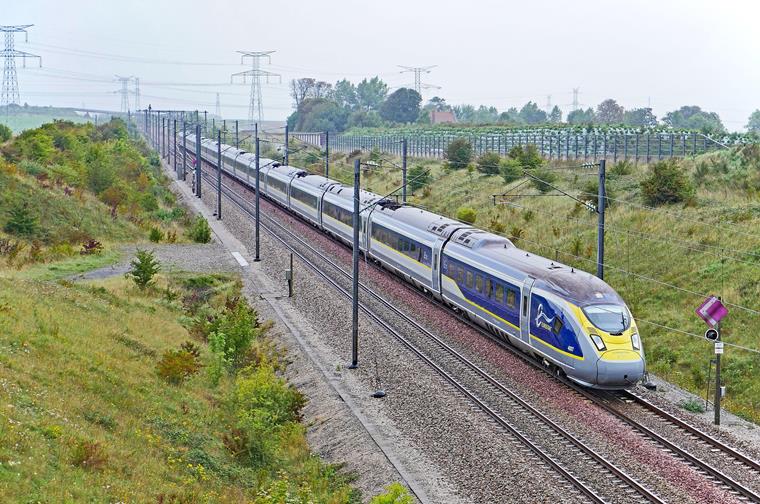
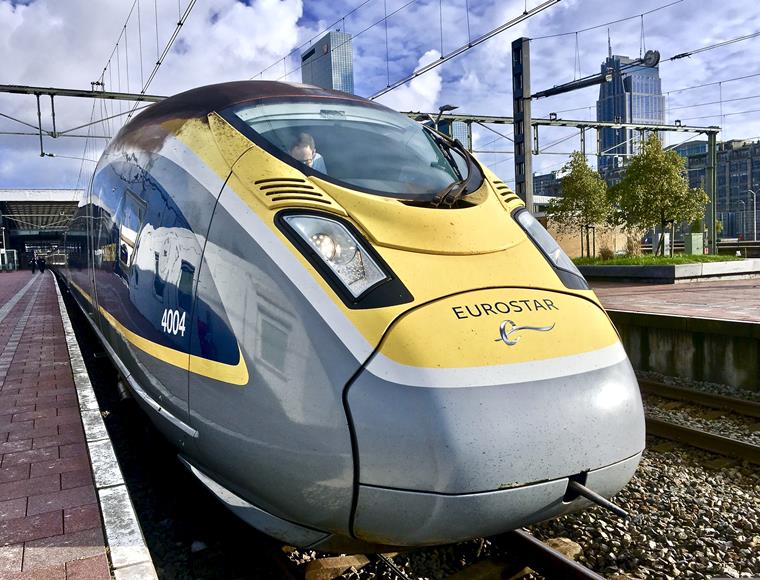
Even today, the Eurotunnel is used exclusively by trains, such as international high-speed trains like the Eurostar. The Eurotunnel serves as a hub for connections between London, Paris, Brussels, and other cities. If you want to travel from London to Paris, the entire journey takes about 2 hours, for example.
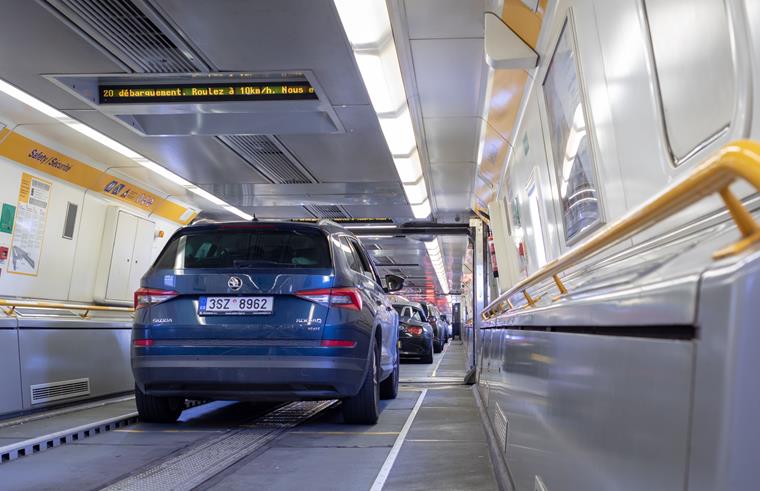
In addition to passenger trains, special shuttle trains called Le Shuttle run through the tunnel. They transport cars, buses, and trucks. The vehicles drive directly onto the train cars and remain on the train for the entire journey, which takes about 35 minutes. Important: Apply the parking brake and turn off the engine!
We’ve talked a lot about the design, construction, and technical details of its operation. But how much did the Eurotunnel actually cost, and what impact does it ultimately have on the economy? Have the dreams of the builders and engineers of the past been fulfilled?
And what about Britain’s stance on the tunnel? After all, construction work on the tunnel had been significantly delayed on the British side. The British remained skeptical about the connection to the mainland even throughout the construction process, and they made sure the French knew it.
Eurotunnel Construction Costs
Construction costs ultimately came to approximately €15 billion, and even significantly more when adjusted for inflation. The entire project was financed by private investors. Three-quarters of the shares in the Eurotunnel operating company are held by French bondholders who are private individuals. And, as is typical for large-scale construction projects, the costs far exceeded the originally planned budget.
Incidentally, the Eurotunnel operating company is now called Getlink. In the past, it was still heavily indebted, which was at times considered extremely problematic. After all, the major oil crisis broke out immediately after the Eurotunnel opened. And what is the situation today?
Today, the situation is somewhat more relaxed. Although the debt has not yet been fully repaid, it has been reduced (as of 2025) to approximately €3.4 billion. Thanks to regular profits (for example, approximately €320 million in profit in 2025), the figure continues to shrink steadily.
Eurotunnel After Brexit: Economic Impacts
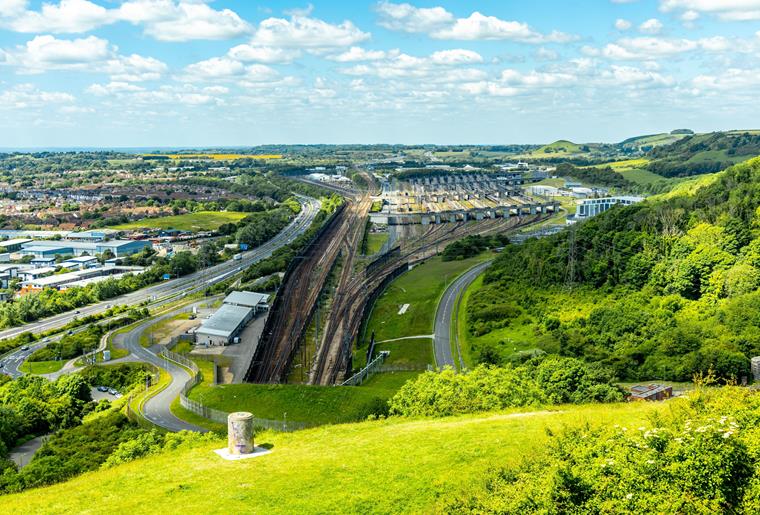
Then as now, the Eurotunnel is theoretically the fastest trade link between the UK and Europe. The Eurotunnel remains a vital part of Europe’s transport infrastructure. Millions of passengers use the tunnel every year, even though numbers have already dropped significantly.
And what about Brexit? In fact, the role of the Eurotunnel has changed significantly since the UK left the EU. In the past, the Eurotunnel was a fast, hassle-free route for travelers and trade. Today, it is a tangible national border with all that entails: passport controls, stricter entry requirements, and fewer opportunities for spontaneous travel.
For freight transport, the signs point even more clearly toward regression. Companies struggle daily with extensive customs formalities, documentation requirements, and longer processing times. Time is money—the route through the Eurotunnel has simply become too expensive for many logistics companies. They are increasingly using new direct routes (for example, from Ireland to the EU), thereby bypassing the UK.
Added to this are ongoing discussions between France and the UK regarding security standards and responsibilities. This is because the Eurotunnel is not directly subject to the EU trade agreement, but is based on a treaty between the two countries. And the rules differ on each side of the English Channel. The economic outlook for the Eurotunnel is therefore challenging, albeit stable for now.
Conclusion Eurotunnel: Technical Masterpiece
In summary, we can conclude that the Eurotunnel is considered one of the greatest engineering feats of the 20th century. Through an impressive combination of modern tunnel technology, international cooperation, and innovative safety concepts, the longest undersea tunnel in the world was built.
The history of the Eurotunnel shows how complex infrastructure projects can connect once-hostile countries. Even if only for a few decades. To this day, the Eurotunnel remains a benchmark project for the construction of large undersea tunnels. It shows what is technically possible today when all parties work together, but also how political stress impacts economic pathways.