


Concrete is perhaps the most controversial building material in the world. And yet it is also the most popular. Bridges, parking garages, skyscrapers—concrete is everywhere. What many people don’t realize is that concrete alone is a highly problematic building material. It cracks, it deforms, and it quickly reaches its limits.
In the 19th and 20th centuries, the demands on structures, and thus also on building materials, grew ever greater. Concrete alone was not enough. The fact that we can still build such impressive structures with concrete today is thanks to the innovations of two men. We’ve already talked about one of them, Joseph Monier. You can read that post here: Joseph Monier: How Gardener Invented Reinforced Concrete
This time, we’re focusing on the second of them, Eugène Freyssinet. He further developed reinforced concrete and, with his prestressed concrete, opened up entirely new possibilities for the construction industry worldwide. Together, we’ll take a look at his life and the legacy he left to our industry. Let’s take a look back at the late 19th century in France.

Construction Industry in Late 19th Century
It was the era of industrialization, a time of innovation in French construction technology, exemplified by the Engineering Legend Gustave Eiffel . Toward the end of the 19th century, Europe was thus in the midst of upheaval. Industrialization had long since permeated all aspects of life and brought new opportunities with it. During this peak period, cities grew rapidly, trade routes were expanded, and the world became more fast-paced than ever before.
Due to this major transformation, the construction industry faced an unprecedented challenge. There was a shortage of bridges, train stations, factories, and warehouses as large as possible. This not only provided construction companies with a steady stream of orders, but also presented them with some seemingly insoluble problems: there was a lack of a suitable building material.
Dominant Building Materials in Late 19th Century
Although construction was brisk, the new demands on the construction industry brought about by industrialization made overly ambitious building projects nearly impossible. This was primarily due to the conventional building materials used at the time.
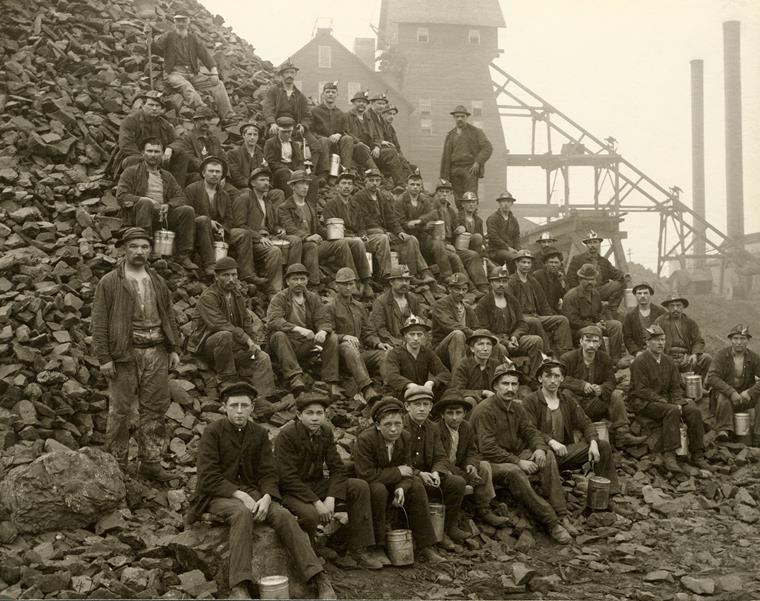
The number one building material was traditional masonry (stone and brick). Already for centuries, if not millennia, it had been the material of choice for constructing residential buildings or functional spaces. Whether stables, fortifications, small bridges, or churches: everything was built with bricks and stone. After all, masonry is highly compressive and therefore durable. But it is also heavy, not very flexible, and there is a rather large limitation in terms of spans.
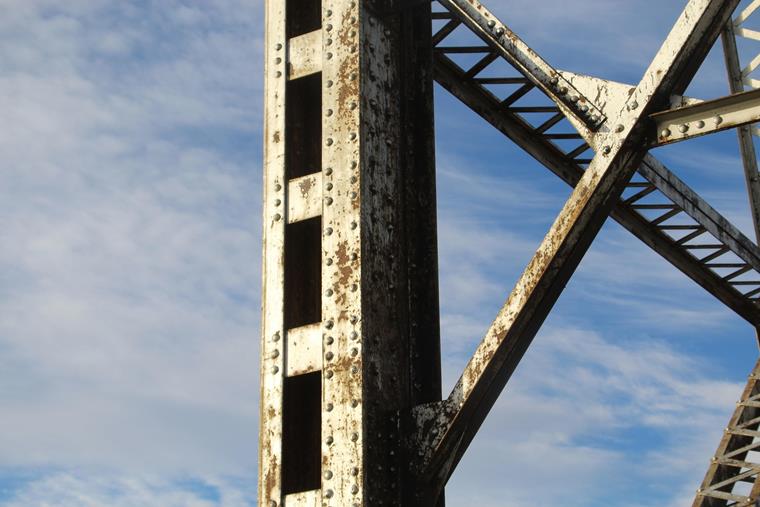
Industrialization brought iron and steel into the picture. For the first time, larger spans became possible, and structures could appear both monumental and delicate. The best example of this is the Eiffel Tower, which we’ve already covered. If you’re interested in the legendary tower, feel free to check it out: Eiffel Tower: Hated, Loved, Almost Demolished .
However, iron and steel had clear disadvantages: Large components were not only complex to manufacture but also very expensive. On top of that, they were highly prone to corrosion. This rendered both materials unsuitable for large-scale structural projects. The construction industry was thus faced with a problem. Early concrete—or rather, the reinforced concrete developed by Joseph Monier—was another option.
Monier’s development of reinforced concrete was more of a coincidence, as we’ve already reported. While the combination of concrete and iron was promising, it was far from mature. Even reinforced concrete was not suitable in the long term for large bridges or warehouses. Eventually, cracks would form or the material would deform.
Today we know that people back then lacked an understanding of material behavior. Phenomena such as creep—the slow deformation of concrete—and shrinkage—the change in volume during drying—had barely been researched. Engineers of that era played it safe. They built with what they knew: everything stays as it is. Safety was associated with massiveness, so very heavy structures were erected that were completely inefficient in terms of material usage. On top of that came the high costs. But there were simply no viable alternatives. Not yet.
Eugène Freyssinet: Revolution in Construction Industry
Toward the end of the 19th century, most engineers worked according to time-honored principles. They preferred to rely on the familiar rather than risk failure through innovation. One man who would change that was Eugène Freyssinet. Born in France in 1879, he grew up during a time of change. The construction industry was changing.
His technical talent already paved the way for him to attend one of France’s most prestigious universities for structural engineering: the École Nationale des Ponts et Chaussées. Here, Eugène Freyssinet completed the traditional training in structural engineering. Such a program included:
- Bridge construction
- Material behavior
- Structural analysis
After graduating, he was immediately hired by the French civil service and focused primarily on public structural projects. His responsibilities ranged from bridge projects and infrastructure development to structural analyses in concrete structures. Already, Eugène Freyssinet began to doubt the existing structural systems.
For one thing kept striking him in his work: concrete behaved differently than the analysis models of the time predicted. Eugène Freyssinet observed unexpected deformations, long-term settlements, and unforeseen cracking with alarming regularity. And all this despite the fact that the work had been carried out conscientiously. So where was the problem?
Eugène Freyssinet: Inventor of Prestressed Concrete
Eugène Freyssinet asked himself a specific question: What if concrete weren't subjected to tension in the first place? His solution ultimately led to the development of prestressed concrete. But how does it all work? Let's take a quick look.
The steel cables for the prestressed concrete are tensioned in advance. The concrete is then poured around them. After curing, the stress in the steel cables is transferred to the concrete, causing it to be under constant pressure. The tensile forces that could otherwise act on the concrete are counterbalanced by the internal pressure. Since concrete is highly resistant to compression, cracks are rarely formed and the load capacity increases significantly.
Unlike normal reinforced concrete, prestressed concrete is thus largely free of cracks, even in the long term. This makes the structural component more stable and durable, and construction becomes significantly more efficient. With prestressed concrete, larger bridges suddenly became possible. At the same time, the exterior became slimmer, and a great deal of material simply became superfluous.
Exactly what was urgently needed in the age of industrialization. Incidentally, the structural engineer who later made prestressed concrete socially acceptable was Fritz Leonhardt. If you’re interested in the topic, feel free to read more here: Fritz Leonhardt – Engineer Who Makes Concrete Float .
Eugène Freyssinet: Creep, Shrinkage, and Perplexity
At the beginning of the 20th century, plans were made to build a new bridge over the Allier, which would later become the Veurdre Bridge. The plan was for a classic stone arch bridge to replace the former suspension bridge. But by chance, an innovative design by Eugène Freyssinet came into play. A contractor recognized the potential of his ideas and convinced the authorities to build several bridges using Freyssinet's new structural system. A real opportunity for the young structural engineer!
Even before construction began, Eugène Freyssinet tested his concepts. To do so, he had a test arch erected and applied his innovative technique for the first time. The abutments were connected by tensioned wires—an early but efficiently working precursor to what would later become known worldwide as prestressed concrete.
Then it was already time to get started. With unusually flat arches and its very slender structure, the bridge was certainly a more than unusual sight by the standards of the time. While structural engineers viewed the 19 cm thick arch at the apex of the bridge with skepticism, contractors were already praising the low material costs.
After completion, however, a critical moment arose: the arches sagged by up to 13 cm. Why was that? This was due to effects such as creep and shrinkage, which had not yet been researched at the time. Eugène Freyssinet reacted immediately: He had the structure rebuilt in a cloak-and-dagger operation.
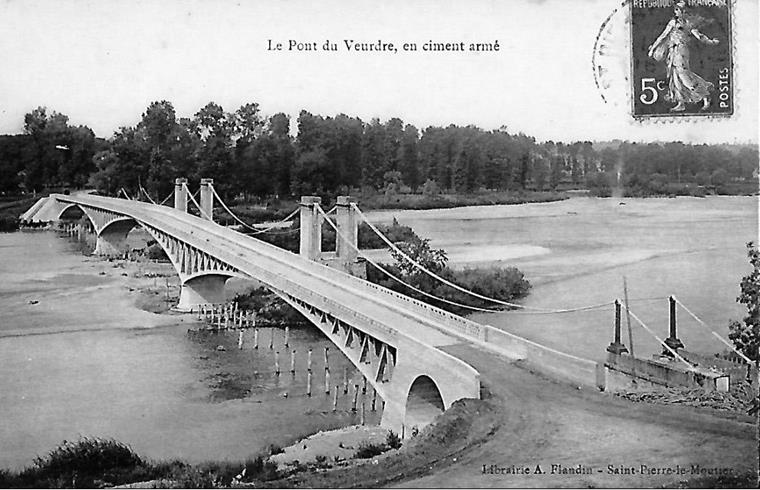
Using hydraulic presses, he restored the bridge to its original shape. It was saved. What’s more, it passed the subsequent stress tests with flying colors and even won over the skeptical press. This experience encouraged Eugène Freyssinet to analyze the unexpected behavior of reinforced concrete closer and to actively utilize it in future projects.
Eugène Freyssinet: No Innovation Without Resistance
As with many innovations, Eugène Freyssinet’s new approach was initially met with skepticism, particularly among experts. The reasons for this were manifold. First, there was uncertainty as to whether prestressed concrete would last in the long term. Let us recall: Up until that time, large structures—whether bridges or warehouses—were, above all, massive. Huge blocks of masonry or reinforced concrete.
Naturally, Eugène Freyssinet’s already delicate designs raised questions. Would they last in the long term? How does one even build something like that, and is the whole thing really more efficient? But Eugène Freyssinet let his structures speak for themselves.
With his structures, he showed that the effects of creep and shrinkage were not only predictable, but could be actively harnessed to make buildings even more capable of providing high load capacity and durability. So a problem turned into a real opportunity. And when, in the late 1920s, the construction of a bridge was being discussed on the rugged coast of Brittany, the time had come.
Eugène Freyssinet: Construction of Pont Albert-Louppe
It was to be over 800 meters long, which was difficult to achieve given the spans available at the time. Eugène Freyssinet saw this as his opportunity. The bridge was to be an experiment, built from prestressed concrete. Concrete was considered a sluggish, passive material, which had a limited load capacity and was truly supporting only when used in massive sections.
Eugène Freyssinet wanted to show the opposite: The Pont Albert-Louppe was to have enormous spans, bolder than anything anyone believed the material was capable of at the time. For concrete, so the thinking went back then, was absolutely predictable. After all, its compressive strength and its limits were well known. Most of Eugène Freyssinet’s colleagues ignored the deformations that occurred. He, however, wanted to use precisely these for his structures. The bridge was perfectly suited for this.
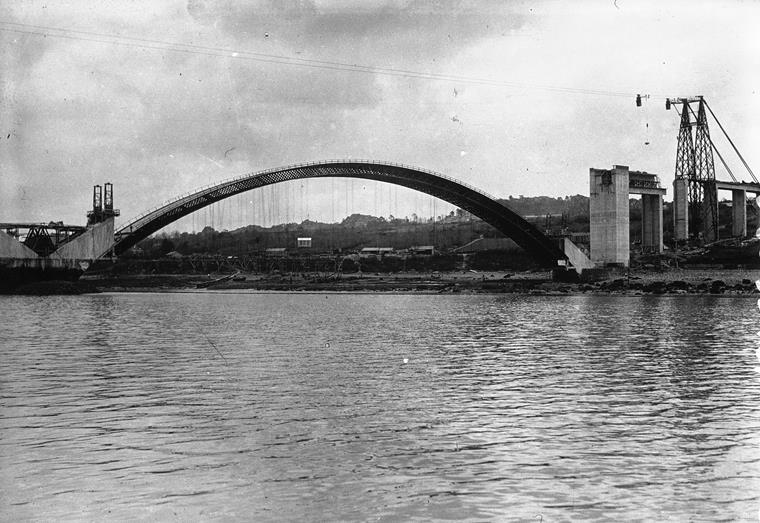
The problem with concrete—which many either ignored or shrugged off—showed itself already during construction. The arches began to settle again, albeit slowly but steadily. According to conventional calculations, this was precisely what was not supposed to happen. What now? Demolition? Of course not, because Eugène Freyssinet had fully anticipated this.
For Eugène Freyssinet, the exciting part of his work was only just beginning. He did not see this as a failure, but as an opportunity to prove his theories on a grand scale. The problem was not the concrete itself, but how it was used. Because concrete is not a rigid material; it moves. And that is exactly what Eugène Freyssinet took advantage of.
Instead of accepting the deformations, Eugène Freyssinet took active measures. Using his hydraulic method, he restored the bridge to its intended shape. Lift it slightly, readjust, set it back: done. For the general public, this was a completely new approach.
The old adage no longer applied: “We build and hope it holds.” Instead, he showed to the professional community: “We control how the structure behaves.” Eugène Freyssinet proved that structures were not rigid objects, but could be understood as a structural system and actively controlled. The Pont Albert-Louppe was proof of this.
Concrete was no longer a passively supporting material, but could be actively and deliberately controlled through prestress. This is precisely where Eugène Freyssinet began with his idea of prestressed concrete. And with that, a whole new era began for the construction industry. An opportunity to support industrialization in the field of construction as well.
Conclusion: No Modern Infrastructure Without Eugène Freyssinet
Thanks to Eugène Freyssinet’s revolutionary structures, prestressed concrete gradually gained acceptance in the construction industry. In fact, it spread rapidly around the world. And today? Today, it is impossible to imagine the construction industry without this material. Its applications are diverse: from bridges to skyscrapers, parking garages, and industrial building roofs. Many modern buildings would be impossible to build without this technology.
In bridge construction, prestressed concrete from the late 20th century in particular has a less-than-stellar reputation. The Carolabrücke in Dresden, which collapsed on September 11, 2024, is a good example of how it is necessary to further develop and improve a building material. The construction industry is constantly learning, often from mistakes that only become apparent later. Above all, the maintenance of such a structure should never be neglected. If you're interested in this topic, feel free to read more about it here: Dilapidated Bridges in Germany .
Despite his enormous significance, Eugène Freyssinet is little known outside professional circles. Hardly anyone who isn't professionally involved with prestressed concrete knows his name. The reason is simple: Eugène Freyssinet did not create a single iconic structure, but rather a new building system. What becomes standard eventually becomes invisible, but no less important. Technical innovation is fundamentally behind visible design. The engineering achievement remains in the background, while the names of architects or sponsors are highlighted.

What remains is this: Eugène Freyssinet fundamentally changed concrete structures. His invention allowed for durable structures, large spans, and efficient design checks. He may not have shaped a famous skyline, but he laid a solid foundation upon which a large part of our modern infrastructure is built. Eugène Freyssinet was a true pioneer in prestressed concrete, who had the courage to rethink traditional structural systems. We’ve already done it this way—but different is better.