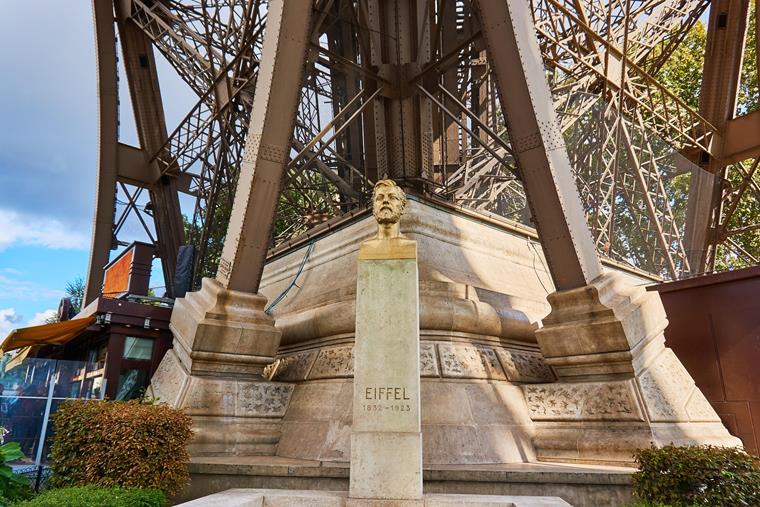
The Eiffel Tower, named after its creator Gustave Eiffel, is one of the most famous landmarks in the world. No photo album of the City of Love would be complete without it in the background. Whether illuminated or not, it towers over many other buildings in Paris. And it has done so for over 140 years.
Yet the Eiffel Tower is a rather unusual monument. There are more than enough landmarks made of stone, bronze, and copper. A man named Gustave Eiffel thought to himself: Why not steel? Yes, why not?
Even today, many of his structures still fascinate people around the world. Because he made much more than just the Eiffel Tower possible. In today's article, we'll dive into the world of a man who created a unique aesthetic out of raw steel: Gustave Eiffel.
Man Behind the Tower – Who Was Gustave Eiffel?
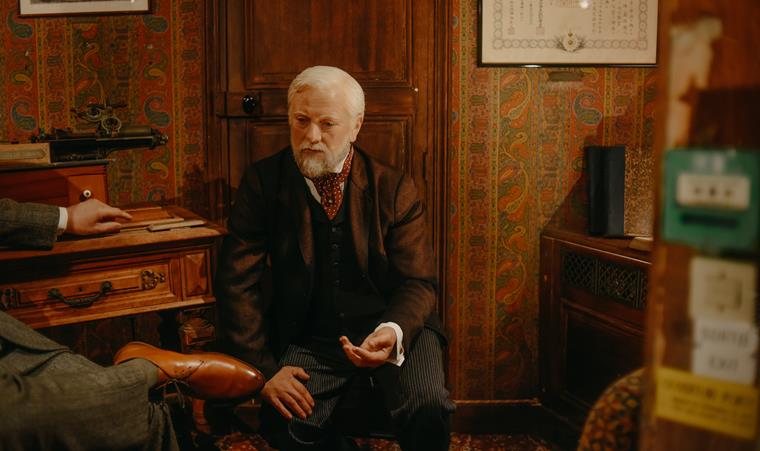
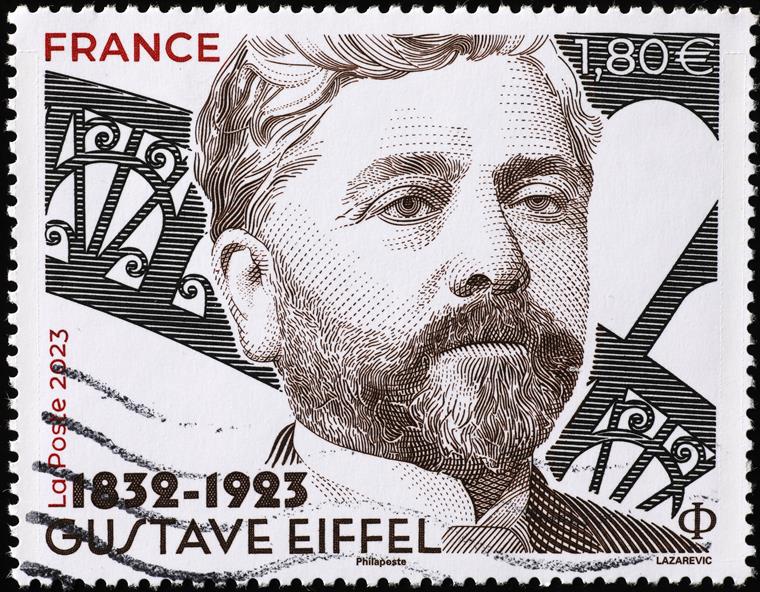
The surname of the French engineer Gustave Eiffel suggests that he came from Germany. In fact, his family originally came from the Eifel region in the Rhineland and emigrated to France in the 18th century. The second “f” was then added to make the name sound more French.
He was born in 1832 under the name Alexandre Gustave ‘’'Bonickhausen dit Eiffel'‘’. The last addition means “called Eiffel.” He grew up in his ‘’'hometown of Dijon'‘’ as the child of a family that had amassed a fortune in the coal trade. From 1880, a court ruling ensured that the name “Eiffel” replaced the surname “Bonickhausen dit Eiffel” as a shortened form.
Gustave Eiffel had requested this change two years earlier because he felt that his name sounded too German and assumed that it would put him at a disadvantage in business. As we remember from our history lessons, the Franco-Prussian War raged from 1870 to 1871. Relations between France and Germany were tense. It is understandable that he wanted to play it safe.
Education and Early Success
Gustave Eiffel's career path was not exactly straightforward. He first attended the Collège Sainte-Barbe in Paris, but failed the oral exam at the École polytechnique, a renowned elite university. He then studied chemistry at the École Centrale des Arts et Manufactures and obtained his diploma in 1855. At this point, there was no sign of engineering.
How did Gustave Eiffel become an engineer? In fact, the education there is very general. Although Gustave Eiffel chose chemistry as his major, he also studied other subjects, such as:
- Mathematics and mechanics
- Materials science
- Fundamentals of mechanical engineering
- Structural engineering and industrial processes
He therefore had a solid engineering knowledge, even though he did not explicitly call himself a “structural engineer” after graduating. After a few months in an explosives factory, he worked in various engineering offices. It was not until 1856 that he finally got a job as a bridge engineer.
Here he was involved in the design of railway bridges, a career move that formed the basis for his entire future career as an engineer. Thanks to his profound knowledge of human nature, his ability to work across disciplines and his inexhaustible perseverance, he achieved what only a few of his colleagues were able to: he was promoted to project manager.
Several years passed and Gustave Eiffel implemented further projects. But his desire for independence grew stronger and stronger. He finally wanted to create his own structures, which would set new standards in terms of innovation and attention. And the best way to do that was as a self-employed person.
Eiffel's Step into Self-Employment
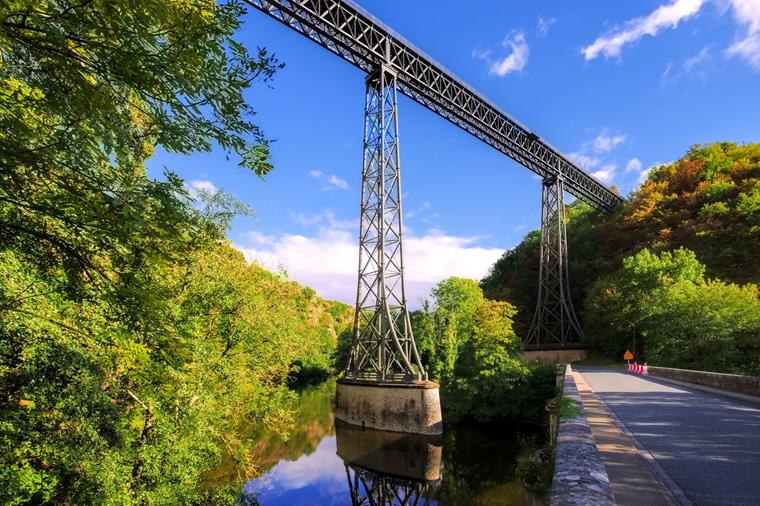
In 1866, he finally set up his own business and it wasn't long before he received his first major commission. In 1867, he was commissioned to build the Rouzat and Neuvial viaducts on the Commentry-Gannat railway line in Auvergne. Here, he continued to do good work, which further enhanced his reputation.
In the same year, he was asked to take on some work for the upcoming World's Exhibition. Gustave Eiffel used this opportunity to further expand and consolidate his network of contacts in the business world. This would prove useful to him later on. After all, having a good network is extremely important in such an industry.
Gustave Eiffel: His Structures Worldwide
Not only in France did Gustave Eiffel quickly make a name for himself. He worked in South America from 1872 to 1874. Among other things, he was involved in planning railway stations in Chile and Bolivia. However, he did not limit himself to railway objects. In Tacna, Arica, and Chiclayo in Peru, he built cathedrals, gaining more valuable experience. In 1877, the Western Railway Station in Budapest was completed under his direction.
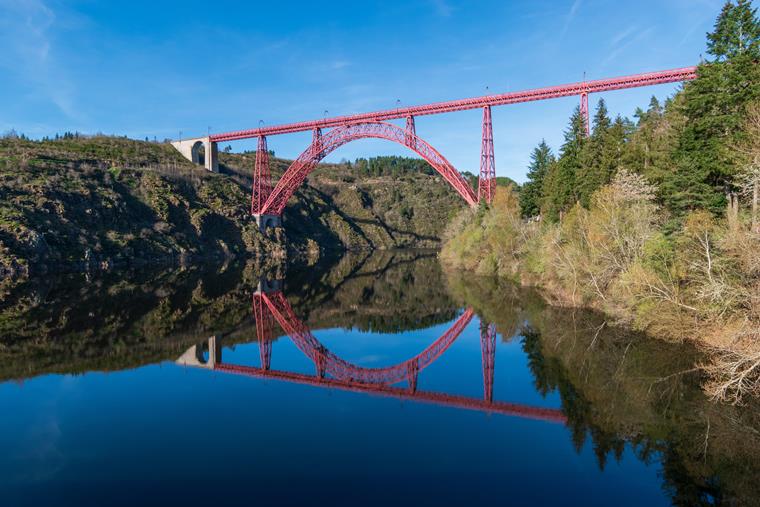
He was also responsible for the construction of the Ponte Maria Pia in Porto, which was opened on November 4, 1877. One of his most impressive structures is the Garabit Viaduct. Construction lasted from 1880 to July 1888.
Even today, the steel structure with its height of 122 m (400 ft) is a historical masterpiece. At the time, it was the highest bridge in the world and its curved shape was definitely something special for that era. Such filigree arches quickly became Gustave Eiffel's trademark.
Are you interested in more impressive bridges? In an earlier blog post, we took a closer look at the current highest bridge in the world, its predecessors, and the contender for the title. Feel free to check it out!
🌉 Extreme Bridge Construction: Duge Bridge in China
Gustave Eiffel: Unknown Co-Creator of Statue of Liberty
Not all of the structures that Gustave Eiffel worked on bear his name. In fact, there is one structure that he played a key role in designing, but hardly anyone knows about it.
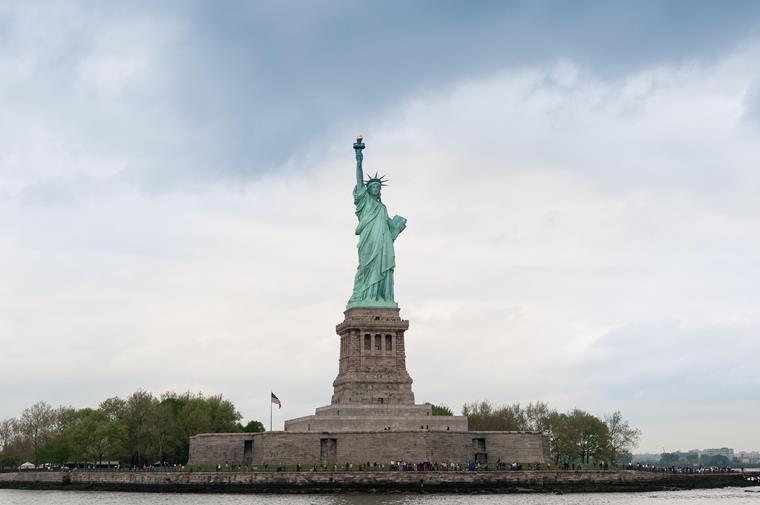
Gustave Eiffel was commissioned to design a structure to support a very special monument. France was planning to give the USA a huge gift: the Statue of Liberty. So in 1879, Eiffel began to develop a structural system that would support the Statue of Liberty in the future.
The supporting structures of the Statue of Liberty's inner framework are therefore based on calculations made by the builder of the Eiffel Tower. To create two such well-known and still famous monuments is impressive in itself.
Engineering in 19th Century
Why was the Eiffel Tower revolutionary?
Everyone knows it. Hardly any other structure is as closely associated with the spirit of France as the Eiffel Tower, built under the direction of Gustave Eiffel. Even back then, the tower was a real rarity. No one had ever built anything so high, and in the 19th century, people would never have thought that such a tall structure was even possible. Especially with steel, which was still a relatively new building material.
The tallest building at the time was the Obelisk in Washington D.C., built in the traditional style using stone. Using steel to build anything other than bridges was unusual. Gustave Eiffel was therefore ridiculed for his plans. He, however, saw steel structures as an opportunity to reach a height of over 300 m (984 ft). Higher than the Obelisk with its 169.05 m (554.6 ft). Much higher. With the announcement of a competition for the World's Fair commemorating the 100th anniversary of the French Revolution, he saw his chance.
Gustave Eiffel drew on the knowledge he had gained during his career. All the steel bridges with their typical truss style: they were incorporated into the construction of the Eiffel Tower. The symmetrical shape with curved flanks withstood even the strongest winds – one of the biggest problems facing such a tall steel structure. But Eiffel's structure was well thought out and still stands today.
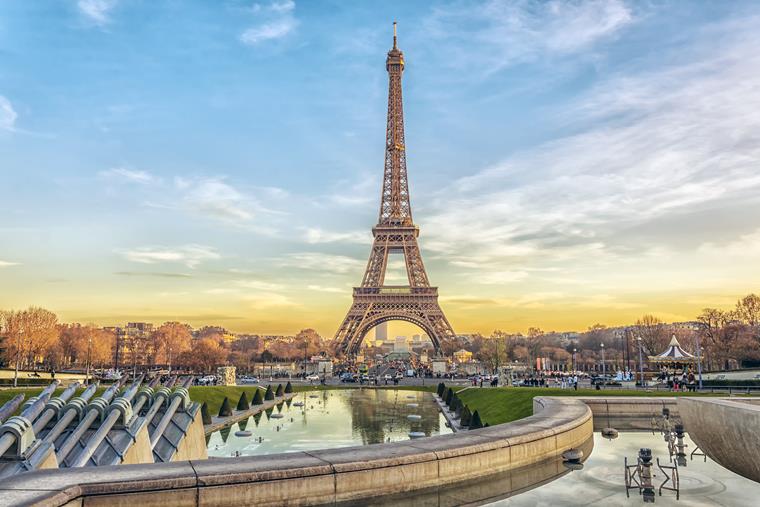
Lightweight structure using special riveted joints and lattice girders, meticulously coordinated logistics – he supervised everything. It was just like his previous projects: It worked. Not always smoothly, but they stayed on schedule.
The Eiffel Tower has stood on the Champ de Mars in the center of Paris on the banks of the Seine since 1889. But the tranquility with which this 10,000-ton colossus stands is deceptive. The Parisians were not always as enthusiastic about their tower as they were when it opened and as they are today.
The Eiffel Tower was almost demolished, but Gustave Eiffel was able to prevent this after years of effort. It was quickly deemed useless, at least after the World's Fair. The euphoric phase, when everyone wanted to ride up to the viewing platforms and look down on Paris, was soon over.
In the end, it was the military that saved the Eiffel Tower from demolition. Its height made it ideal for a national broadcasting station. Later, the Eiffel Tower even housed France's first television station. So before the tower became a global tourist attraction and a real evergreen, it was saved by its sheer overwhelming size. Until the completion of the Chrysler Building in 1930, it was the tallest building in the world.
Gustave Eiffel After Eiffel Tower
The Eiffel Tower was by no means the last major project Gustave Eiffel worked on. Resting on his laurels? That wasn't his style. So let's take a look at what happened in his life after the Eiffel Tower.
Gustave Eiffel and Panama Scandal
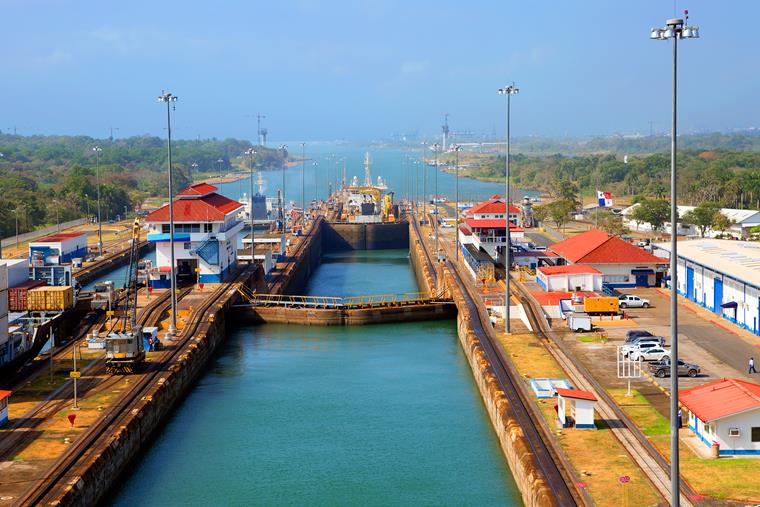
While Gustave Eiffel was busy with his Eiffel Tower in France, another major project was in full swing on the other side of the world. In the small country of Panama, in Central America, a canal was to be built that is still of great economic importance today: the Panama Canal.
Ferdinand de Lesseps, a French entrepreneur, wanted to build a canal at sea level without locks. However, the highest point at which the canal was to be built was 84 m above sea level. Even a layman could see that this could not work.
After numerous catastrophic setbacks caused by landslides and disease, Lesseps was forced to take a different approach. He commissioned Gustave Eiffel to build and deliver 30 locks.
But the project was long past the point of no return. By then, costs had risen to unimaginable heights. The last resort was a lottery for shares in the company responsible for the construction. Gustave Eiffel, who had no idea of the impending disaster, was even pleased that even ordinary people now had a secure opportunity to earn a handsome income through his work. But what he did not know was that the shares sold had been manipulated.
What's more, journalists and members of parliament were bribed to publish completely overvalued share prices. When the highly acclaimed general contractor went bankrupt in 1889, 85,000 French people, mostly from the middle class, lost their money, driving many of them into ruin.
However, it was not until 1892 that a newspaper article revealed that the shares had been deliberately manipulated. The outrage was huge and everyone involved in the Panama project was punished. This included Gustave Eiffel.
Although a court ultimately confirmed his innocence in the Panama scandal, his reputation was ruined from that point on. As an engineer, he no longer received any orders. He handed over his company, Eiffel & Cie., to one of his closest colleagues and withdrew from the construction industry.
Further Setback for Gustave Eiffel
Bridge Collapse in Switzerland
It wasn't just a bitter setback for engineer Gustave Eiffel. The fact that he had already left the construction industry didn't protect him from further misfortune. In 1891, a railway bridge collapsed near Münchenstein while a fully occupied passenger train was passing over it.
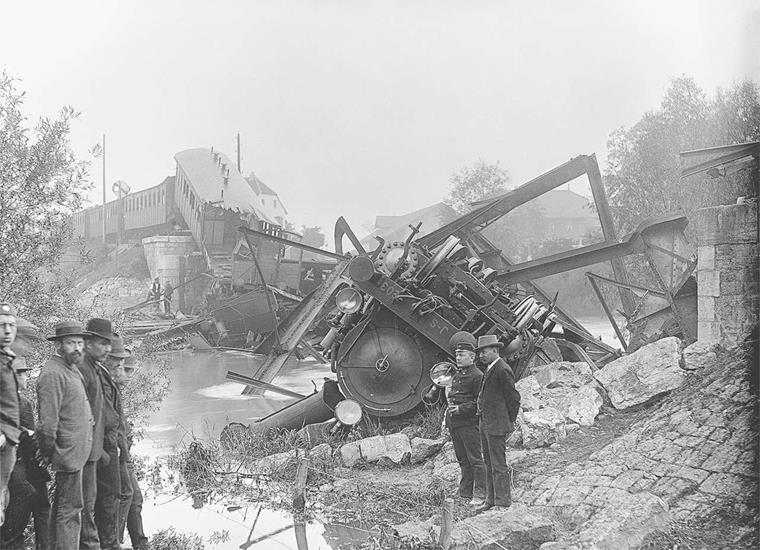
The worst railway accident in Switzerland to date ultimately claimed 73 lives. Another 171 people were injured. But was Eiffel to blame? Analysis showed that no major design flaw caused the bridge to collapse around 15 years after it was built. If that had been the case, it would hardly have lasted that long.
Even though many people blamed Gustave Eiffel at the time, after all, his delicate truss girders were unusually light and beautiful to look at. It was bound to collapse at some point! But it didn't. The causes of the collapse of the bridge were:
- Material fatigue
- Improper maintenance
- Overloading by the fully occupied train
What's more, later modifications and lack of maintenance had weakened the structure over a long period of time. Only visually apparent damage was repaired in a makeshift manner. As a result, Gustave Eiffel suffered no legal damage, but the reputation of his lightweight steel and iron truss girders in bridge construction was tarnished.
Making the Best of Bad Situation: Gustave Eiffel's Legacy in Wind Tunnel
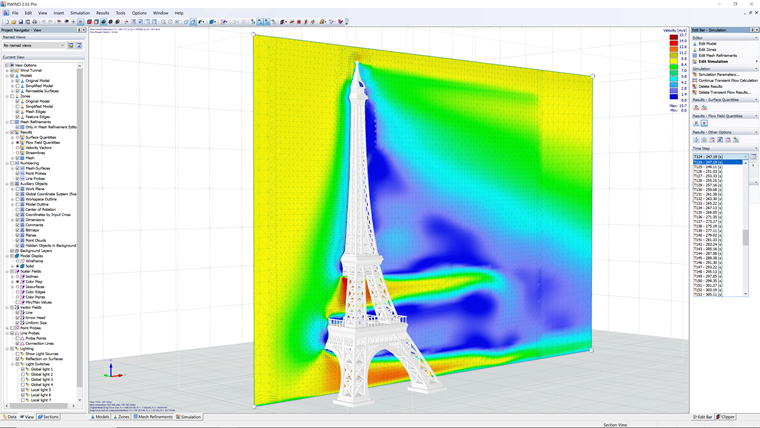
Gustave Eiffel was understandably very disappointed with the construction industry. However, his withdrawal from the construction industry was far from the end of his career. He was not someone who simply gave up and sat around twiddling his thumbs. He turned his attention to science and research. He was particularly fascinated by aerodynamics, which had already played such an important role in the construction of the Eiffel Tower.
This led him to build one of the first modern wind tunnels in his own garden. In numerous experiments, he analyzed the effect of air currents on bodies. Through thousands of systematic tests, he continued to develop his wind tunnel and succeeded in precisely determining the air resistance of a wide variety of body shapes. Without today's computer technology, this was a remarkable achievement.
His measurement methods were so reliable that they were used by aircraft manufacturers and engineers throughout Europe. The larger his project became, the more space and equipment he needed. So he moved his wind tunnel to Paris, where he founded his own aerodynamic laboratory. This laboratory eventually became a leading center for fluid dynamics research.
Conclusion: Gustave Eiffel – Engineering Legend
Gustave Eiffel died in 1923 at the age of 91 and was buried in a cemetery northwest of Paris. He worked until old age on improving his measurement techniques in aerodynamics. Many of the principles he established are still valid today. Although not in the same wording, they have survived in our modern measurement technology:
- Flow tests on models prior to construction; buildings and aircraft should be tested in a wind tunnel as models before they are built
- Systematic measurement series and repeatability; performing thousands of controlled individual measurements with precisely documented test conditions and variables that vary only slightly
- Shape dependence of drag; air resistance depends heavily on the shape and surface of a body, not just on size or speed
- Measurement in an open wind tunnel with straight flow; separation of fan and measuring section to reduce turbulence
- Strong connection to practice; applied aerodynamics instead of pure theory
He has thus exerted a significant influence on modern construction, not only with his buildings, but also with his research into aerodynamics. Even today, we can still admire many of his delicate metal structures and use the principles he established in the latest CFD simulations. His buildings and research have inspired countless brilliant minds – both then and now.