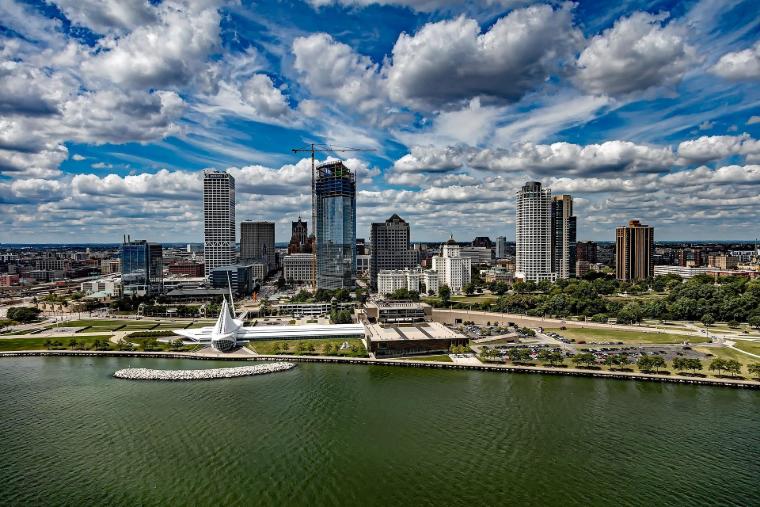
On July 14, 1999, stress is in the air. In Milwaukee, a city in the U.S. state of Wisconsin, everyone at the construction site of the future Miller Park is holding their breath. That’s because a huge blue crane is standing there, lifting a section of the future stadium’s retractable roof over the half-finished building. The massive Lampson LTL-1500 Transi-Lift is hoisting a total load of over 420 metric tons into the air. It’s no wonder it’s nicknamed “Big Blue.”
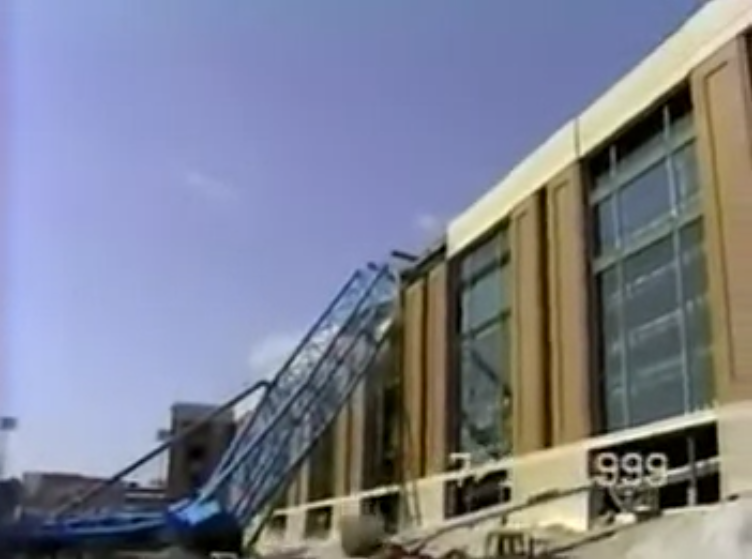
It’s a tightrope walk—after all, the crane is operating at about 90% of its allowable capacity. As the roof section hangs about 90 meters above the ground, the crane suddenly begins to sway. And it gets even worse. The entire Big Blue collapses. There’s even a video recording of it. In the end, three workers died and several others were injured. Was the load too heavy? Analyses showed that it wasn’t that simple. The accident was caused by the combination of unfavorable factors. Let’s take a closer look at the whole thing.
What was the Big Blue?
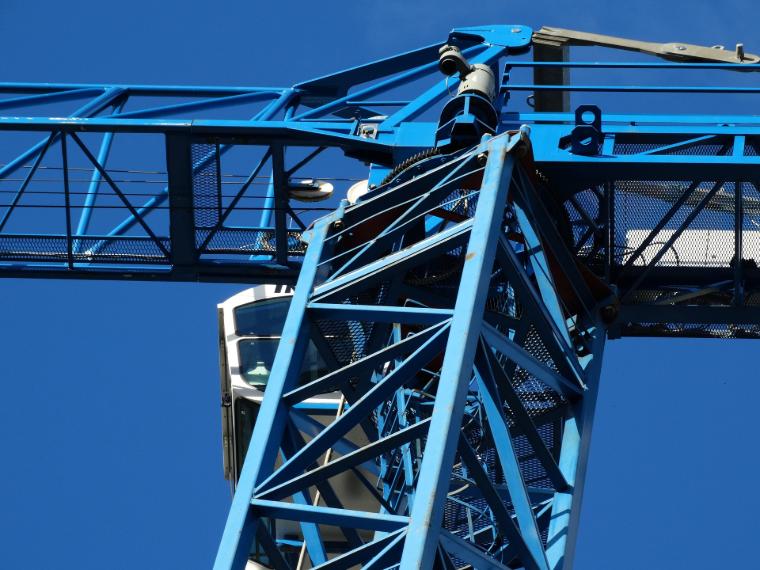
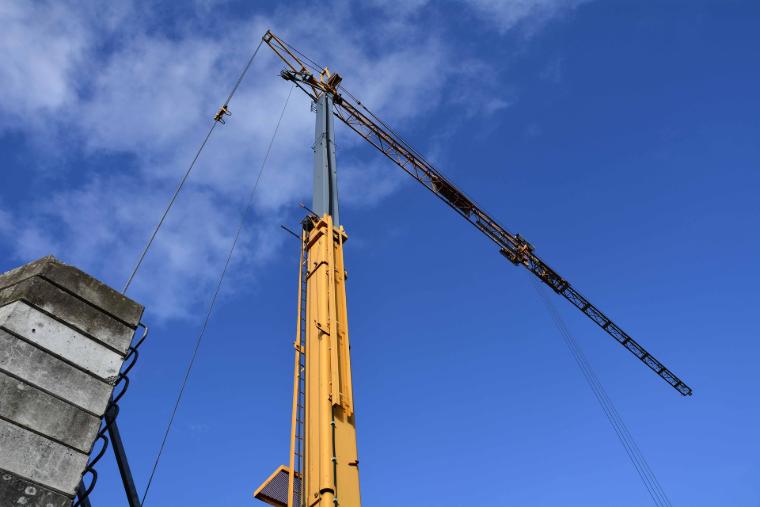
The Lampson LTL-1500 Transi-Lift was a heavy lift lattice-boom crane mounted on a crawler chassis. It was used for handling particularly heavy loads, such as during the installation of the roof structure at Miller Park. The Big Blue’s structure is complex, and its huge counterweights are particularly impressive.
The factory-specified total load capacity is approximately 480 t. In reality, however, this value depends on various factors at the actual construction site. An important factor is the exact alignment, inclination, or position of the boom (crane arm), especially when it comes to considering potential wind loads. The type of load, the ground conditions, and the counterweight used also influence the load capacity of a crane like Big Blue.
In short: For cranes, the allowable load always applies to a specific load case and a specific configuration. A load that would be acceptable based purely on calculations could still pose a hazard under even slightly different conditions. It is necessary to determine the load distribution, the setup area, and the alignment of the crane by experts and to monitor them.
Stadium Roof: Load of Big Blue
At that time, the city was on the verge of major changes. Miller Park was being completely renovated to provide a place for relaxation, recreation, and family activities. The centerpiece of the project was the future stadium with a roof that could be hydraulically opened in good weather. The assembly was a real spectacle.
The large steel segments were pre-assembled on the ground, then lifted, placed, and fixed in position. This meant that less work had to be done at great heights. But that’s exactly what proved to be Big Blue’s undoing. The finished segments were not only heavy but also huge. When lifted, they provided an enormous surface area for the wind to catch.
On the ground, the roof element might have been completely stable, but every engineer knows: as soon as it’s suspended from the crane, it becomes a floating body. The wind has an action on the roof surface, and immense forces are transmitted throughout the entire structural system via the crane boom. This made the lifting process—along with the subsequent fastening—arguably the most dangerous moment on this construction site.
Big Blue: Lifting Process
Reports and analyses by OSHA, the U.S. federal agency for workplace safety and health, provide a detailed reconstruction of the incident. The actual lifting operation was already scheduled to take place that morning. The Big Blue lifted the roof structure just a few meters and slowly swung it. However, problems with the subsoil arose during this process. The crane—or rather, its undercarriage—sank into the ground in several places. So the procedure had to be adjusted.
The crane was repositioned. This changed the lifting path, which simply means: It was necessary to recalculate everything, including load distances, forces, ground pressure, crane alignment, and even potential wind effects. A change like this on the construction site is no small matter. If the assembly procedure is changed, it must be checked whether the original plan still works at all.
On top of that, it was very windy on the day of the accident. OSHA reported sustained winds of about 32 km/h with gusts of up to 43 km/h. That’s already quite substantial. The problem here, however, wasn’t necessarily the wind load acting on the crane. The raised roof segment was so large that its surface area acted like a glass sail.
This generated enormous horizontal forces that affected the entire Big Blue structure. And let’s remember: The Big Blue was already operating at the absolute maximum of its load capacity. A 400-metric-ton structural component suspended in the wind is something that should never be underestimated.
Three Factors Behind Collapse of Big Blue
From a technical perspective, there were three separate problems during the lifting operation that, when combined, led to the disaster. The Big Blue was carrying a load that was too heavy—over 90% of its maximum load capacity. In addition, the structural component being lifted provided a large surface area exposed to the wind. The lateral wind forces placed an additional horizontal load on the crane.
Apart from that, the position of the Big Blue was changed after the first lifting attempt. Given these circumstances, the engineers on site had to perform a complete recalculation. Ultimately, it was not a single factor that led to the collapse of the Big Blue, but a chain of unfavorable conditions, at the end of which the weakest link gave way. And that is exactly what we will now look at.
What failed on the Big Blue?
Many people—perhaps including those who watched the video—would say, “The boom broke.” However, it wasn’t that simple. There was a detailed reconstruction of the failure with a clear conclusion: The failure sequence ended in the area of the kingpin. This is where the structure ultimately gave way.
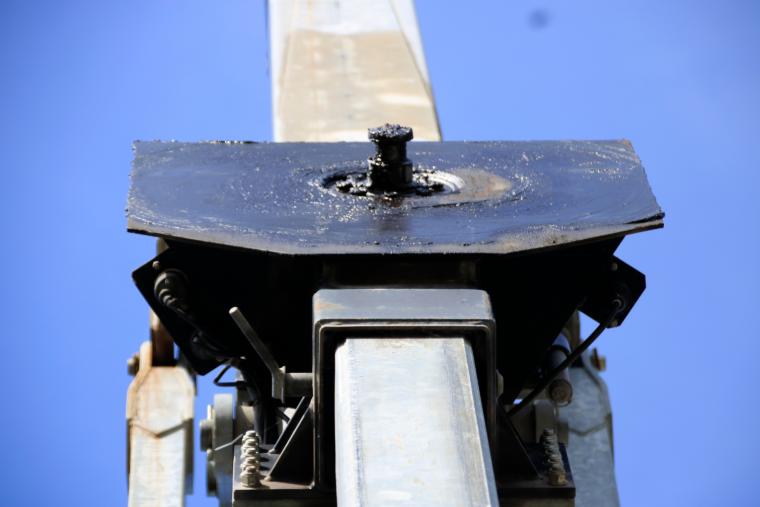
The Big Blue’s kingpin was a solid steel bolt with a diameter of about 30.5 cm. It was located in the central area of the crane and served as a critical connection between the upper rotating section of the crane and the undercarriage. Simply put: It held the upper crane structure together with the crawler undercarriage.
But what was the problem? Was the kingpin already defective? Actually, no. Recall that the maximum load capacity had already been reached to about 90% by the glass roof alone. Added to this were the horizontal forces caused by the wind acting on the suspended roof segment. All these loads were applied to the kingpin.
As the upper part of Big Blue slowly overturned due to this stress, the kingpin mechanism was subjected to such intense stress that the lower kingpin mounting broke. As a result, the upper crane structure moved further away from the undercarriage, and the entire crane collapsed. You can see this best in the original video: Video of Big Blue Crane Accident .
Big Blue Accident: Three People in Hazard Zone
Unfortunately, the damage was not limited to property. Three people also lost their lives in the collapse of the Big Blue. However, they were not inside the Big Blue itself. During the lifting operation, they were standing in the work basket of another crane and working on the assembly of the roof structure.
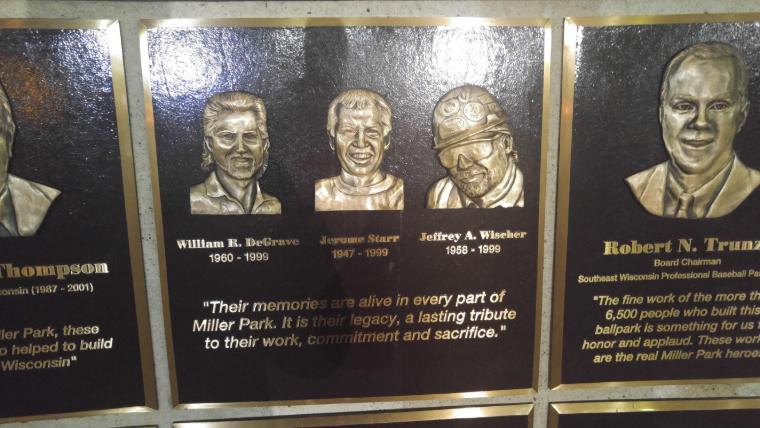
When the Big Blue collapsed, this crane was also struck, and they fell from a great height. Jeffrey Wischer, William DeGrave, and Jerome Starr died on impact. This incident was, of course, thoroughly analyzed, and the following safety questions arose:
- Why were people in the closer vicinity during a heavy-load lift?
- How large should the hazard zone have been defined?
- What work is necessary during a critical lifting operation?
- Who is authorized or even required to stop a lift in the event of imminent danger?
Who was responsible?
One company kept cropping up in many media outlets and forums: Mitsubishi. In fact, Mitsubishi Heavy Industries America was involved in the roof project, but it was not the general contractor for the stadium construction site. The general contractor was a joint venture, that is, a consortium consisting of Hunzinger, Clark Construction, and Huber, Hunt & Nichols.
Mitsubishi was responsible for key parts of the roof structure, and Lampson was involved in the Big Blue structural project as a crane contractor. Why is this important? In a structural project like this, the chain of responsibility is extremely complex. Safety information can be lost at every point of contact. Wherever many people are working, this creates a certain risk. Another important point: Being responsible for something does not necessarily mean being at fault for it.
Big Blue Accident: Official Investigations
The most important sources come from the reports of OSHA and OSHRC themselves. While OSHA reviews workplace safety and health standards and, when necessary, charges companies with violations, the OSHRC serves as an independent administrative court. It reviews appeals against OSHA decisions and may adjust penalties to ensure fairness.
In addition to adverse wind conditions, the most significant factors were insufficient consideration of the wind’s effect on the suspended load and high crane utilization. Added to this were problematic ground conditions and the proximity of workers to suspended loads.
Furthermore, other safety-related aspects of the assembly process were noted. The analysis showed one thing above all: The Big Blue crane accident was a complex chain of failures.
Rumors Surrounding Big Blue Incident
There are numerous reports online from media outlets and private individuals regarding the Big Blue accident. Many of them include interesting details, while others are more like rumors or misinformation. Let’s take a look at the most common ones together and clarify, ‘’'based on official information'‘’, what is true and what is not.
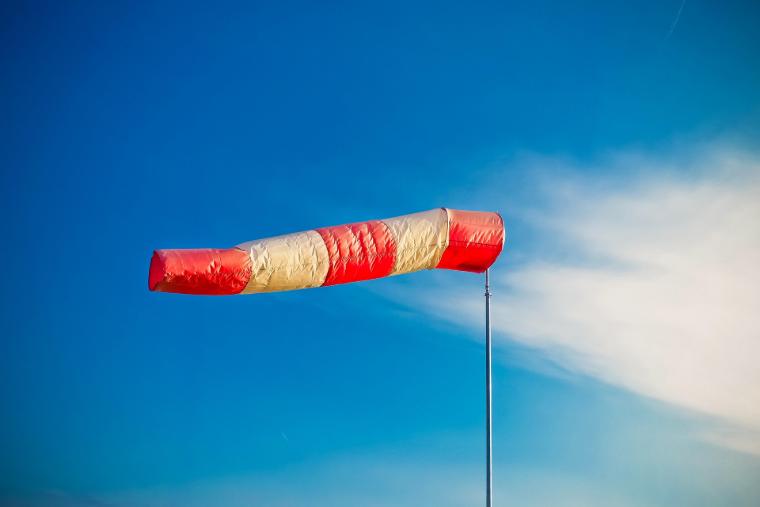
- “The wind played a decisive role.”
True. On the day of the accident, there were high wind velocities and gusts that struck the Big Blue and its load. The roof segment provided a large surface area and exerted considerable horizontal forces on the Big Blue. This wind impact on the suspended load was not sufficiently taken into account. However, the wind alone—as is often displayed—was not responsible for the Big Blue's overturning.
- “The ground subsoil was problematic.”
That’s right. Big Blue had already struggled with sinking or ground issues during the first lift. The subsoil wasn’t ideal for the load the crane was carrying with the suspended roof segment. For this reason, the final lift was started from a more suitable position.
- “The crane was overloaded.”
The Big Blue has an allowable load capacity of approximately 472 metric tons. The structural component ultimately weighed around 400 metric tons, plus the rigging and pulleys. Investigation reports later referred to around 463 metric tons, which corresponds to about 97% of the allowable load. While this meant the Big Blue had reached its absolute maximum, the heavy load alone was not responsible for the Big Blue’s collapse.
- “The regular crane operator went home because of the wind, and a trainee was forced to take over the lift.”
Even in media reports, this rumor remains very persistent to this day. So we took a look at the official reports and asked ourselves: Who was actually operating the Big Blue? The investigation findings explicitly name the crew for the day of the accident:
- Frederick “Fred” Flowers: Hoist Operator, that is, the operator responsible for the hoist, boom, and load
- Steven Aldrich: mechanic and operator of one of the two crawler tracks
- Allen Watts: supervisor/flagger, coordinated the crew
- Daniel Finucan: second crawler operator, a colleague of Danny’s Construction and in training to become a crawler operator
This already shows the origin of the myth about the “trainee”. Finucan was indeed in training—but he was not the crane operator who performed the transfer. He operated one of the crawler frames. This is because the Big Blue required three workers: Each crawler frame needs to be operated separately and a hoist operator is responsible for the lift itself. And since the workers cannot see each other, a fourth person took on the role of flagger.
The crane had definitely not been operated by 'inexperienced workers. The OSHRC explicitly describes Flowers and Watts as highly qualified and experienced workers. Furthermore, the two had already worked together for 18 years as a team. So the key positions were filled by experts—specifically for this crane. But why did the disaster happen anyway?
In fact, according to the manufacturer, Big Blue had a wind limit of about 32 km/h. This means that even with wind gusts stronger than that, the load capacity specified in the load chart was no longer valid for this crane configuration. At a height of about 50 m, there was a wind gauge on the boom.
In the morning, the consistently reported wind velocities were still between 25 and 30 km/h. Later, the wind picked up significantly. In the hour before the collapse, Flowers reported gusts of about 45–48 km/h. Flowers also relayed the measured values during the lift.
The official analysis even concluded that Watts was aware of the dangerous wind velocities. The OSHA commission classified the operation of Big Blue at wind velocities exceeding the manufacturer’s limit as a confirmed violation. They should never have carried out the lift in the first place.
The stadium construction using the Big Blue was by no means the only structural project in which human decisions led to a disaster. Another example of such gross violations was the Collapse of FIU Pedestrian Bridge . In that case, a bridge failed due to wrong decisions made by those in charge, driven by public pressure. Another bridge that collapsed twice during construction was the Québec Bridge. We’ve also written an article about this: Collapse of Quebec Bridge: Failure at All Levels . Feel free to check it out!
- “The workers’ recommendation to abort the lift was rejected by upper management.”
As the supervisor in charge, Allen Watts certainly had the authority to refuse or abort an unsafe lift. OSHA even argued that the specialized expertise of the Lampson colleagues gave them control over the actual lift.
Flowers reported the increasing wind velocities, but Watts decided to continue the lift despite exceeding the wind limit. The story that the crane operator rebelled against the general contractor because of the risks and then left his job is just a story.

Big Blue: Why did such rumors arise?
The reason such rumors arise lies in the nature of the matter. The incident attracted a great deal of attention both then and now. This is especially true since there is a video of the Big Blue accident—and it went viral already back then. Where there are many eyes, many people see the wrong thing or immediately attribute it to technical causes that could not be substantiated at all.
The video is so spectacular that pretty much everyone has an opinion about it. And these opinions vary widely. From claims that it was simply an unfortunate accident to conspiracy theories about whitewashing and a cover-up, just about everything is out there.
Especially on social media platforms, such videos—even those of old accidents—are usually shared with brief explanations. And the more often you read such a statement, the more plausible it seems in the end. In summary, it can be said: The video shows what happened. But not why it happened.
Big Blue Accident: Legal Consequences
The Big Blue accident led to extensive legal disputes. These included proceedings before the OSHRC, which we had already discussed with you. The Wisconsin Supreme Court also heard a case arising from the incident.
The court documented the sequence of events leading up to the accident and the parties involved. What were the consequences in the end? Several companies with different areas of responsibility were involved. There were complex contractual relationships between them, which made defining specific responsibilities very difficult.
Ultimately, there was thus no personal criminal conviction of the crane operator or other workers involved, even though the court found specific errors in the actions of several individuals. OSHA initially imposed a total of $539,800 in fines on Mitsubishi Heavy Industries America, Lampson International, and Danny’s Construction for operating the crane in high winds, failing to observe load limits under those circumstances, and failing to provide safety protection for the workers.
The subsequent civil lawsuit proved to be significantly more costly: A jury found Mitsubishi 97% liable and Lampson 3% liable. It initially awarded the families of the three victims $99.25 million, including $94 million in punitive damages. After years of litigation, the case was finally settled in 2006 with a settlement of approximately $30 million.
Conclusion: Lessons from 1999 Big Blue Incident
The accident during the hoisting of the Big Blue occurred already over 25 years ago. However, the core of the issue is more relevant today than ever before. It is important to understand that during assembly, a structure is a completely different structural system than it is in its final state. It is necessary to consider and calculate each stage of assembly separately. And most importantly: temporary structures require the same attention as permanent structural components that will ultimately become part of the structure.
When something goes wrong on a construction site, it’s rarely due to a single error or circumstance. Conditions can change constantly: it starts to rain, the wind picks up, the ground suddenly settles, or something breaks during assembly. This kind of thing happens quite often. What matters, however, is how the situation is handled on the construction site. Responsibility is too broad a concept to be placed on a single person, especially with such large structural projects.
The safety of workers on the construction site is particularly important. Even specialty parts, custom-made components, and expensive machinery can ultimately be replaced. Human lives cannot. Therefore, there must not only be non-negotiable safety rules, but they must also be consistently enforced.
When a lifting operation of this scale becomes critical, clear criteria are needed for an immediate halt. In the case of the Big Blue, these criteria were fulfilled, but the wrong decision was made. And this wrong decision ultimately cost three people their lives.
Several people were involved in the Big Blue lift. Several knew how risky it was, yet no one spoke up in favor of aborting the operation. A structure may forgive a calculation error on paper. On a construction site, however, such errors must not occur. And if they do happen, someone else has to intervene, rather than thinking, “It will be all right.”