


It is one of the most famous landmarks in New York City. The Brooklyn Bridge, created by the “lord of the steel cables” – John Augustus Roebling. The cable-stayed bridge was to be more powerful and impressive than any bridge ever built. Monumental, something every engineer and architect could be proud of. A life's work. And yet behind it lies a tragic story, which ended the life of its creator, John Augustus Roebling, before construction could even begin in earnest.
In this article, we will take a look at how a German master builder lived the American dream. He was on the verge of creating the structure of his life, the completion of which he would never live to see. Join us as we delve into the career of John Augustus Roebling, his life in the USA, and the construction of one of the most famous bridges in the world.
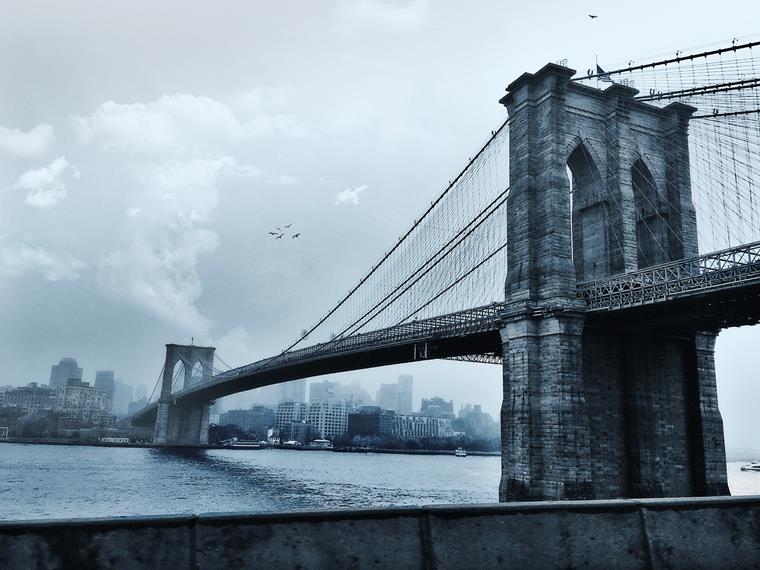
John Augustus Roebling: From Emigrant to Bridge Pioneer
Johann Augustus Roebling was born in Mühlhausen, Thuringia, in 1806. After graduating from school, he studied architecture, civil engineering, bridge construction, dyke construction, hydraulics, and mechanical engineering at the Berlin Academy of Architecture. He also attended philosophy lectures, including those given by Georg Wilhelm Friedrich Hegel. However, there are no notes that indicate that Roebling ever took the exam to become a master builder and engineer.
During his studies, Johann Augustus Roebling learned about the first suspension bridges in what is now Germany. He traveled to Bavaria, the Palatinate, and Westphalia to see them for himself. After leaving university, he initially worked as a construction supervisor. What exactly is that? Roughly speaking, a lower-level construction official who supervised smaller government structural projects.
But his path led him away from all that: very far away. He gave up the opportunity to pursue a career in the Prussian civil service and emigrated to the USA in 1831 together with one of his brothers and other residents of the city. Right before his eyes was the American dream of freedom and better opportunities.
John Augustus Roebling: Dream of the USA
Together with most of the emigrant group, Roebling founded the Germania settlement, later Saxonburg, on approximately 6.5 hectares of land. There, he did not work as an engineer or architect, but devoted himself to farming. In 1837, he became a U.S. citizen and changed his name to John Augustus Roebling: a few letters less for a new beginning.
It was only when his brother died that he returned to his roots. He worked as an engineer on the construction of canals and waterways. He then spent three years surveying railroad routes that would eventually cross the Appalachian Mountains.
It wasn't really what he had imagined, but he held on to his dreams. In 1841, he further developed the steel cable in his workshop in Saxonburg. And that was to lay the main foundation for his later success.
John A. Roebling and His Successful Steel Cable Act
We have already touched on this: Roebling's greatest technical achievement was that he not only further developed steel cables, but perfected them. Before John Augustus Roebling began to study the vibration behavior of suspension bridges in detail, such structures were very susceptible to vibrations of all kinds.

We have already examined this topic in more detail in connection with the Millennium Bridge in London and other, sometimes tragic, bridge disasters. If you are interested, you can read more about this in this article: Millennium Bridge: Why Bridges Sway .
What did Roebling do differently with his bridges? He first developed a stable base in the shape of extremely strong steel cables. But a good cable alone does not make a supporting bridge. John Augustus Roebling was also committed to improving spinning technology on site.
It wasn't just bridges that became safer thanks to his technology. In his own company, John A. Roebling's Sons Company, he manufactured steel cables for suspension bridges, elevators, and even early cable cars. This is what made him truly successful. Without his work, many skyscrapers and large bridges would not have been possible.
His suspension bridges combined stiffness with flexibility and, thanks to additional bracing systems, could withstand even high loads. They were quickly considered to be significantly more robust and durable than other bridges of the time. No wonder, then, that he was soon commissioned to design one of the most important bridges in the world.
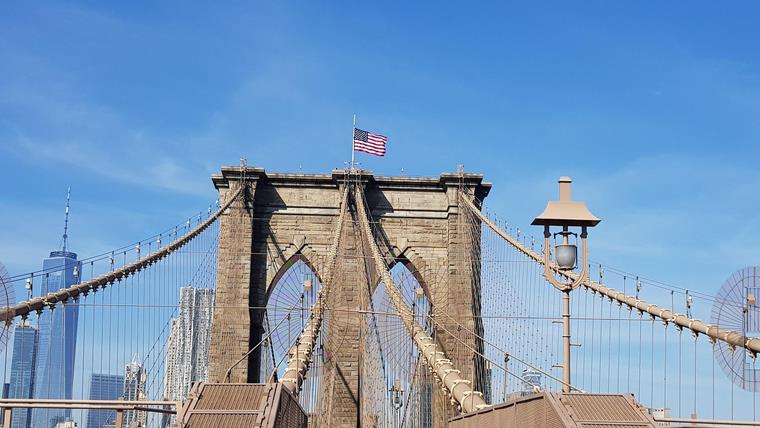
John A. Roebling: Construction of the Brooklyn Bridge
A huge bridge was to be built in New York, connecting the boroughs of Brooklyn and Manhattan across the East River. Since John A. Roebling was considered the undisputed master of cable-stayed and suspension bridge construction, he was quickly chosen for the job. It was to be the largest suspension bridge in the world at the time. Quite ambitious.
Roebling began the design in 1865. But things turned out very differently than planned. When he visited the construction site on July 6, 1869, to measure a bridge pier, he had an accident. His foot was crushed by a ferry. Tragic, but certainly not fatal. If such an injury is treated properly.
However, John A. Roebling was a devoted follower of homeopathy, with heart and soul. He cleaned the wound only with water. It is necessary that the inevitable happen: sixteen days later, he died of tetanus. He was buried on July 25. But what would happen to the bridge now? Construction hadn't even really begun yet.

Struggle for the Brooklyn Bridge: Roebling's Legacy
However, that was not the end of the story. The rest of the construction was taken over by his son, Washington Augustus Roebling. He continued his father's work, but fell ill three years later. The reason for this was the innovative technology that Roebling and his team used to set the piers.
To embed the massive foundations for the bridge piers into the riverbank, a pneumatic caisson method was used. These huge timber boxes were open at the bottom and lowered onto the riverbed. To ensure that no water or mud could enter this workspace, compressed air was pumped into it continuously.
Sounds like a good method, doesn't it? As is often the case with innovative working methods, it had a huge downside, which was not widely known at the time. The workers, often called sandhogs, worked inside these boxes, which were under high pressure. And where there is high pressure, there are high temperatures and low oxygen levels. It's a bit like diving very, very deep.

Since the workers were constantly moving between the timber chamber and the surface, the pressure difference was very large. As we know from decompression sickness, ascending too quickly causes nitrogen bubbles to form in the blood. This is not only extremely painful, but also incredibly dangerous.
The consequences: in addition to pain, primarily paralysis and often even death. Washington Augustus Roebling was hit hard by this disease and became partially paralyzed. What now? The Brooklyn Bridge already took a heavy toll on two chief engineers from the Roebling family. But it was necessary to continue with the work. After all, the bridge was the legacy of John A. Roebling.
Then something happened that was probably unique in the engineering world at that time: a woman took over the helm. Not just any woman, but Washington's wife, Emily Warren Roebling. Wait, was she an engineer too? No, quite the contrary. She wasn't even in the field.
Emily Warren Roebling taught herself everything she needed to know. She learned the basics of structural analysis and materials science and, with this know-how, became the unofficial construction manager. In this role, acting as an interface between her husband and the construction site, she coordinated the various trades.
Thanks to her efforts, the Brooklyn Bridge was finally completed. It was the legacy of her father-in-law, John A. Roebling. Many still consider Emily to be the actual builder of the bridge. In any case, she played a supporting role. It is therefore fitting that she was the first person to cross the bridge on May 24, 1883.
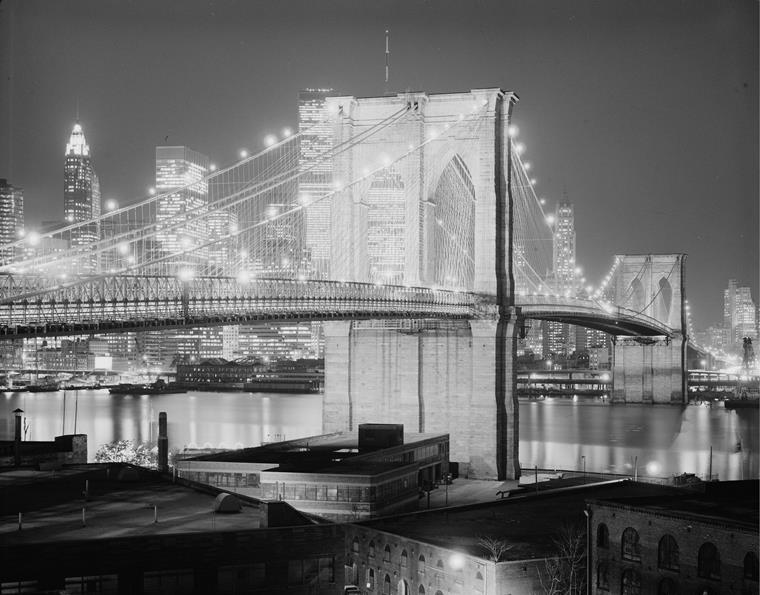
Conclusion: John Augustus Roebling and the Brooklyn Bridge
It is both fascinating and tragic: the mastermind behind the design of one of the world's most famous bridges did not even live to see it completed. John Augustus Roebling died before he could even begin to finish his masterpiece. In the end, we owe its completion to the tremendous efforts of his family: his son and his son's wife.
Nevertheless, John Augustus Roebling left us with much more than just the Brooklyn Bridge. His techniques, especially with regard to steel cables, laid the foundation for entirely new methods of building safer bridges. And not just bridges: elevators, the first cable cars.
Roebling left the construction industry with a huge wealth of potential that made modern, safe construction possible in the first place. And all of this—not just a single structure—is his true legacy.