


Hardly any place in the world is as important to international trade as the Panama Canal. Only here does a cargo ship have to navigate a 26-meter elevation difference twice. At the time, the Panama Canal was considered the Eighth Wonder of the World, a true monument to engineering. Yet its construction had enormous downsides of such magnitude that their effects are still felt today. Together, we’ll explore the history of a structure that defies any list of pros and cons: the Panama Canal.
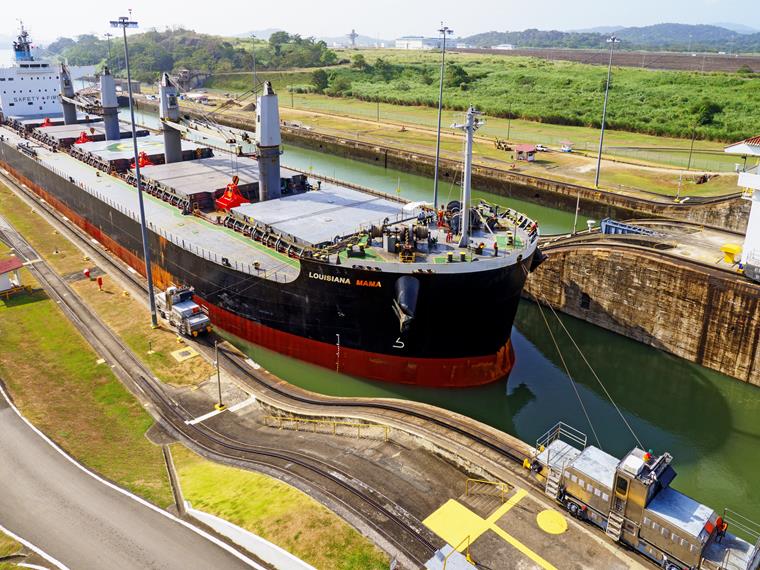
In many cases, engineering is so impressive that it seems almost magical. Much like the Panama Canal. On this small isthmus, where the unassuming nation of Panama divides the oceans, the world's arguably deadliest construction site emerged in the 19th century: the Panama Canal.
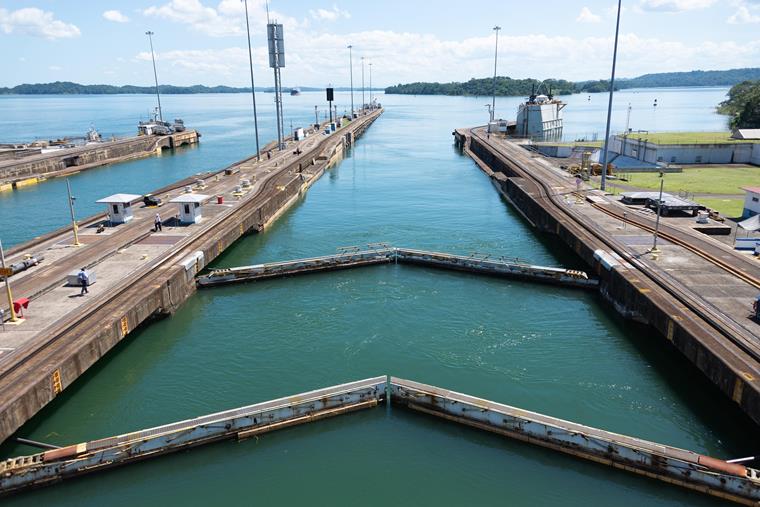
Yet the first glimpse of the Panama Canal is so fascinating that one could almost forget its bloody history. Huge container ships rise seemingly effortlessly against gravity. A ship navigating several locks on a wide river—without the Panama Canal, global trade would not be what it is today.
What today functions seamlessly with high-tech and is firmly established as the standard meant, above all, chaos and death over 100 years ago. The Panama Canal may be the hub of today’s global trade, but behind this technical masterpiece lies a complex mix of megalomania, misjudgments, and corruption. A triumph of engineering and the catalyst for one of the greatest scandals in construction history: Let’s take a closer look at the creation of the Panama Canal.
Dream of Panama Canal
Global trade reached new heights, at the latest with the colonization of the American continent. Trade routes stretched across the vast oceans. Sometimes nothing but water for months on end, then weeks of sailing close to the shore. It is necessary for anyone wishing to transport goods or people to the “New World” to undertake a month-long journey.
Ships sailing from Europe first circumnavigated the entire South American continent until they had passed Cape Horn. And then they headed north again for quite some time. There were no northern routes, because the waters of the Arctic Ocean were either frozen or far too unpredictable.
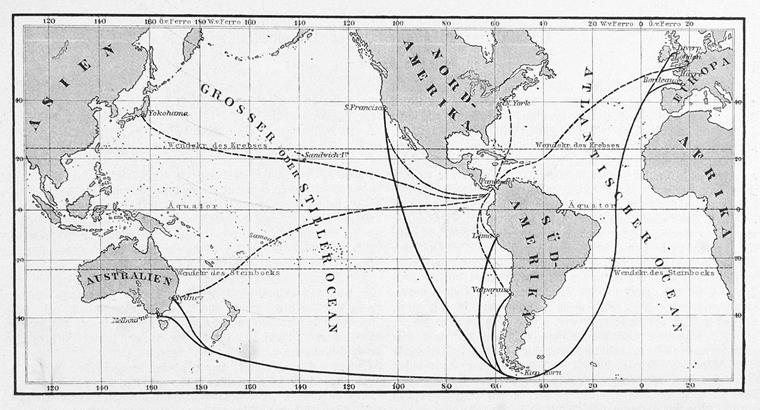
No wonder, already in the 16th century, that Spanish colonial rulers were considering how to cut through an entire isthmus to facilitate shipping. A shortcut between Europe, the east coast of the Americas, and Asia would be a real boon for global trade. The idea for a Panama Canal was there. But it repeatedly failed due to feasibility issues, as the geographical reality cast a massive shadow over the Europeans’ dreams.
In Panama, the environmental conditions for the construction of the Panama Canal were not only unsuitable but highly dangerous. The tropical rainforest, unpredictable rivers, unstable soil, and largely unknown flora and fauna: building a Panama Canal here was undoubtedly still a pipe dream.
At the latest when gold was discovered in California in the mid-19th century, the opening of new trade routes to the West of the New World boomed. A continuous railroad connection was established between the east and west coasts of the United States. But even the week-long train journey was no substitute for maritime trade, which still had its distribution via Cape Horn.
Panama Canal: Suez Canal as Inspiration
The breakthrough in the start of construction on the Panama Canal was actually due to a similar structure on the other side of the world. In 1869, the Suez Canal in Egypt opened its gates to shipping traffic between the Mediterranean Sea and the Red Sea. The project became a huge success, especially from a financial standpoint. And in France, people thought: This could easily be replicated between the Atlantic and the Pacific.
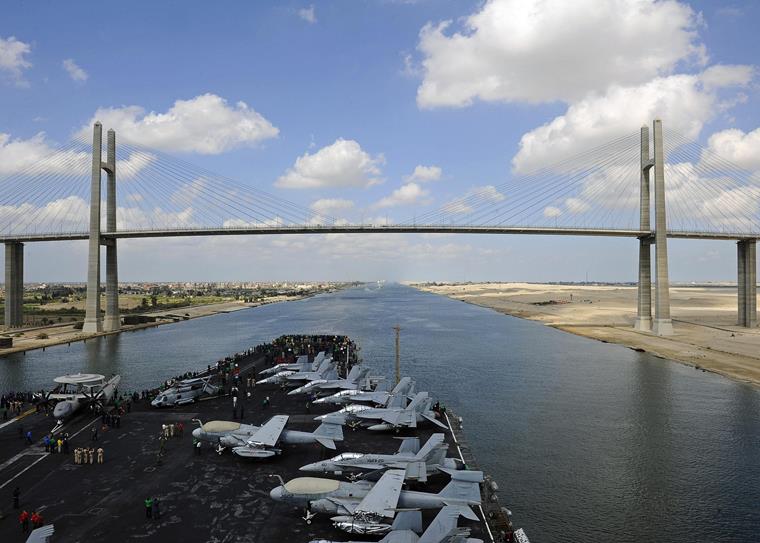
The designer of the Suez project, diplomat and entrepreneur Ferdinand de Lesseps, enjoyed a nearly legendary reputation after the construction of the Suez Canal. And since the construction of the Panama Canal was, in theory, something very similar, it quickly became clear under whose supervision the mega-project would get underway.
In 1876, the Société Civile Internationale du Canal Interocéanique was founded in Paris, which was transformed into the Panama Canal Company by French law in 1879. Its president was Count Ferdinand de Lesseps, who was 73 years old at the time. In agreement with the Colombian government, !!!construction began!!! as early as 1881.
Catastrophic Conditions During Construction of Panama Canal
Ferdinand de Lesseps applied the concept behind his successful canal to his latest structural project. And he did so one hundred percent. The problem: Anyone who takes even a brief look at the environmental conditions will quickly realize that his project was already doomed to failure even before construction began.
Panama Canal: Underestimated Environmental Conditions
For the Suez Canal, a simple cut through the narrow strip of land was sufficient. Sea level took care of the rest. Furthermore, the climate there is very dry: perfect conditions for building a canal.
For the Panama Canal, however, completely different circumstances applied. In Panama, the climate is tropical and the landscape is mountainous. A canal at sea level would indeed be ideal, but at this location it was absolutely unrealistic. De Lesseps, however, stuck to his plan, with disastrous consequences.
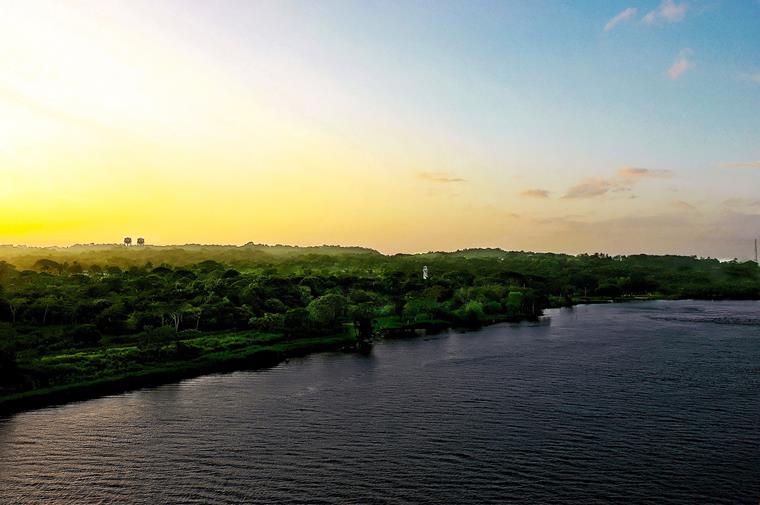
During construction, there were numerous landslides, particularly in the Culebra Cut. This is the most critical section of the Panama Canal—the point where a mountain range separates the two bodies of water, the Pacific and the Atlantic. Without this 13-kilometer stretch and the necessary excavation of approximately 120 million cubic meters of earth it would be necessary to lift the ships over the summit.
However, since the rock there is very unstable, it keeps collapsing, right above the workers' heads. And as if that weren’t enough, the rainy season also threw a wrench in the plans for the Panama Canal. The floodwaters were completely uncontrollable, sweeping away parts of the artificial embankment and claiming numerous lives.
Panama Canal: Malaria and Yellow Fever
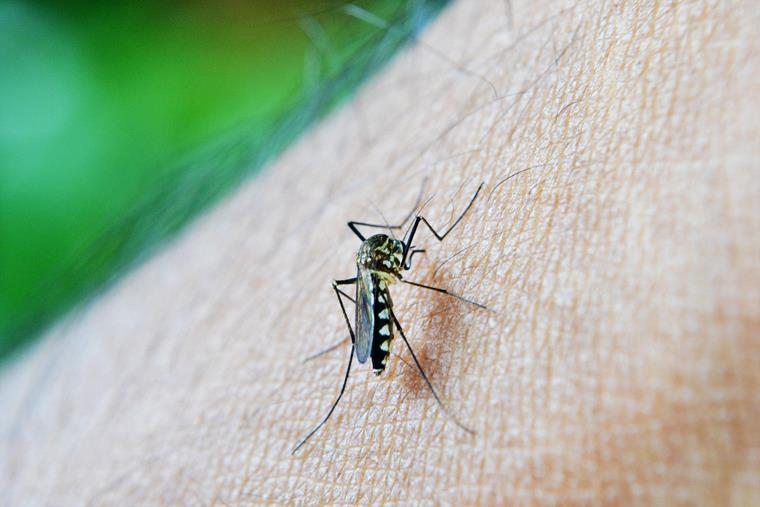
In addition to the landscape and climate, De Lesseps and his team also underestimated the flora and fauna during the construction of the Panama Canal. This led to massive outbreaks of yellow fever and malaria. It took quite some time before anyone realized that mosquitoes were transmitting malaria.
French doctors suspected mites or other small crawling insects were behind the malaria and recommended that workers place their bedposts in buckets of water. The idea: insects would be unable to cross the water. The problem: The mosquitoes were only too happy to use the water buckets as breeding grounds and the disease spread rapidly.
The entire Panama Canal construction project at that time was a textbook example of organizational failure, across the board. Poor design, unrealistic time and cost estimates: In fact, the construction of the Panama Canal should have already been halted. But things turned out differently.
Panama Scandal
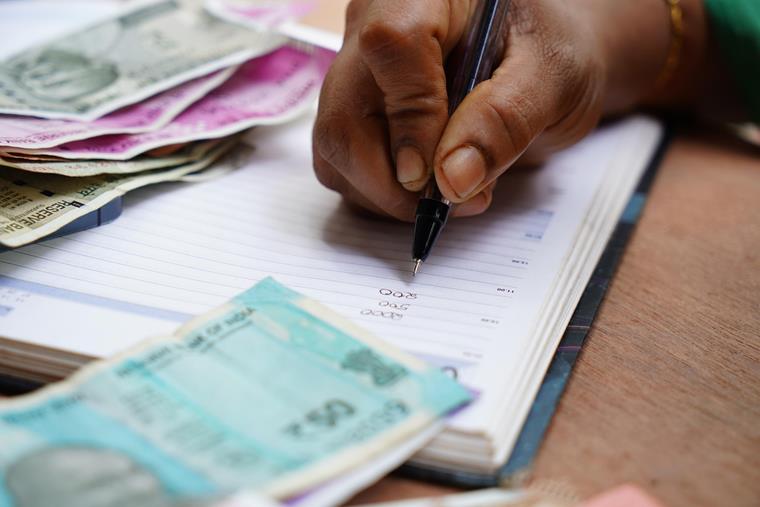
The financing model for the Panama Canal was very similar to that of the Suez Canal. Shares in the Panama Company were sold to the general public in France. Ultimately, there were hundreds of thousands of investors, most of them ordinary private citizens who saw their savings as a sound investment.
But the problems with the Panama Canal construction snowballed, and with them, the costs. Due to on-site failures, however, no progress was made, and the company still needed more capital. And give up? That seemed out of the question.
Instead, de Lesseps revised his original plan and signed a contract with engineer Gustave Eiffel to build a lock canal. We’ve already written a post about Gustave Eiffel. Feel free to check it out: Engineering Legend Gustave Eiffel .
To raise the additional funds needed for continued construction and the locks, politicians and the media were bribed to display the project positively in public. Problems in Panama were never made public. In this way, new investors were attracted time and again. However, this did not go well for long, and in 1889 the company collapsed.
As a result of the bankruptcy, around 800,000 investors lost a large portion of their money. The scandal shook France to its core and continues to reverberate to this day. It showed in a striking way just how closely politics, business, and corruption can be intertwined in major structural projects.
The consequences sent shockwaves through the entire country. The Panama Scandal caused the state to lose its credibility, and even up until World War I, the word “Panama” was used as a slur for France’s capital, Paris. The city of corruption. A continuation of the Panama Canal project under French auspices seemed out of the question. Construction of the Panama Canal was halted.
Panama Canal: American Solution
During the construction period from 1881 to 1889, approximately 22,000 workers died while building the Panama Canal. Most of them fell victim to yellow fever, malaria, and failed blasting attempts on the unstable rock. These figures alone ensured that the entire project was put on hold after the failure of the French.
In Europe, no one was really interested in taking over the disaster-stricken construction site, but things looked different among the neighbors. The U.S. recognized the strategic importance of the Panama Canal and transferred the project to itself. In 1902, France sold the entire complex to the U.S. for $40 million. President Theodore Roosevelt aggressively pushed the project forward politically.
To achieve Panama's independence from Colombia, and thus better U.S. control of the future Panama Canal, U.S. troops occupied the area in 1903. They declared Panama's independence. After some bureaucratic back-and-forth, work on the Panama Canal could continue.
Panama Canal: Continuation of Construction
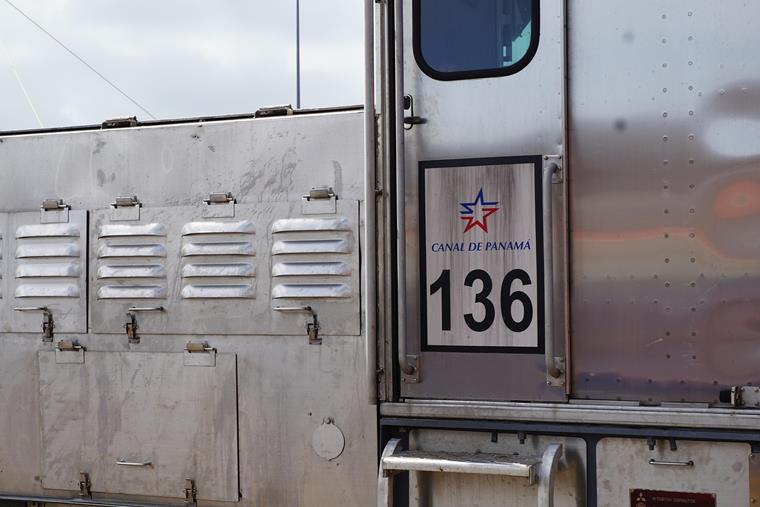
When the United States carried out the transfer of construction of the Panama Canal, the construction site was heavily industrialized. Modern machinery such as excavators and steam shovels was brought in. The basic principle of building a lock canal remained the same.
A lock canal works as follows: As ships pass through several locks, they are gradually raised to a higher level. This allows the elevation difference of mountainous Panama to be successfully overcome. In addition to the lock systems with their massive gates, much more was needed.
One of the most important structures for the Panama Canal is the Gatún Dam. This is an artificially created lake serving as the central element of the entire Panama Canal project. This lake allows for the precise control of water volume and water pressure in the locks. Structural engineering, hydrology, and mechanical engineering worked hand in hand: a technical and logistical masterpiece.
Panama Canal: Human Cost
The workers came from the Caribbean, Europe, and the United States. In addition to racist wage systems, disease continued to account for a large proportion of the deaths. Although living conditions were soon improved through sanitation programs, drainage, and insecticides, many workers never returned home.
Even under U.S. auspices and with the use of state-of-the-art machinery, several thousand people died during the construction of the Panama Canal. In global history, this figure is often underestimated or not mentioned at all.
Opening of Panama Canal
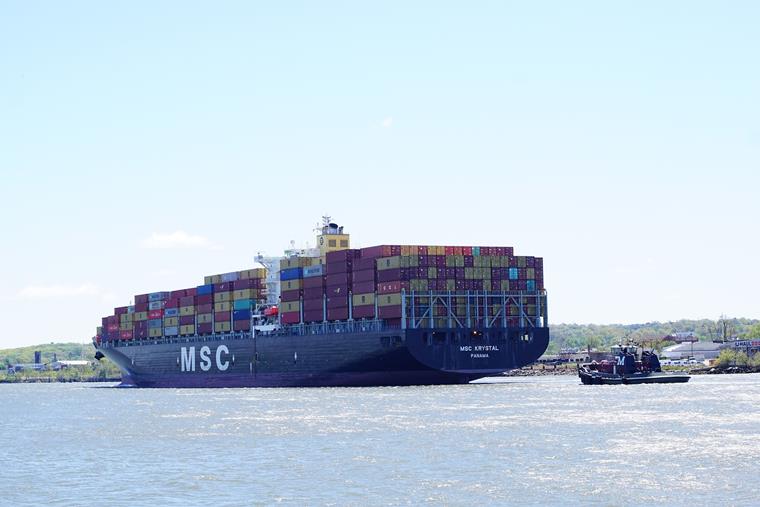
In 1914, almost at the same time as the outbreak of World War I, the Panama Canal was officially opened. This not only shortened global trade routes, but also brought its military significance further to the fore. Moving fleets between oceans now took only a few days or weeks, rather than months.
The small cargo ship Cristobal, a twin-screw steamer, was the first vessel to traverse the Panama Canal. A grand opening ceremony was actually supposed to take place that day, but then World War I broke out. The celebrations were, however, held in 1920. From that date on, the Panama Canal was open to international shipping.
Unrest at Panama Canal
For decades after its opening, there were repeated problems between the United States and Panama. The United States exercised complete control over the Canal Zone. It made all decisions regarding administration, military affairs, and the economy, while Panama had virtually no say. And this was despite the fact that the Canal was located on its territory.
Added to this were political and social stresses. The unequal treatment of U.S. citizens and Panamanians—for example, regarding wages, access to the Panama Canal, and rights—caused public dissatisfaction to rise steadily. Until, ultimately, the situation escalated.
In 1964, serious unrest and clashes broke out between Panamanians and U.S. forces. The result: several deaths. Not only that, but the already strained relationship between the two nations suffered further damage. By then, neither side had anything good to say about the other.
The conflict did not come to an end until the late 1970s. In 1977, new treaties were negotiated between the U.S. and Panama. The main point: a gradual transfer of the Panama Canal to Panama. In 1999, the time had finally come: control of the Panama Canal was fully transferred to Panama. Stress between the U.S. and Panama over the Panama Canal, however, persists to this day.
Conclusion: Panama Canal
To this day, the Panama Canal remains one of the world’s most important man-made trade routes. It is still regarded as a masterpiece of technology, particularly in terms of engineering. At the same time, it is also a tragic product of corruption and ruthless power politics, which ultimately cost the lives of some 28,000 people.
The Panama Canal is clear proof of how important realistic design and transparency are for such large-scale structural projects. It is not uncommon for major construction sites to end in a real construction disaster. After all, we report on this regularly on this blog. If you want to read more about disaster construction sites, we recommend these posts: