


A green city built on four artificial islands, directly on, in, and by the sea. Doesn't sound too bad, does it? That's what many people already thought when they first heard about Forest City. Land reclamation covering 30 km² (11.6 mi²), ecological living and, of course, more living space in Malaysia, a country where over two thirds of the population live in cities. A new city seems like a great idea.
Modern, almost futuristic buildings, extensive parks, a stone's throw from the beach – perfect for families and ordinary people who urgently need more living space. But wait a minute. Forest City was built as a planned city of luxury apartments? A city for the rich and beautiful? For many, that was enough to dispel the magic.
It was supposed to be one of the most expensive urban projects in the world. A showcase project. And what became of it? Probably the most expensive ghost town in the world, because no one wanted to live there. In this blog post, we take a closer look at how it went bankrupt after construction and what the future holds for Forest City. Enjoy reading, marveling, and shaking your head!
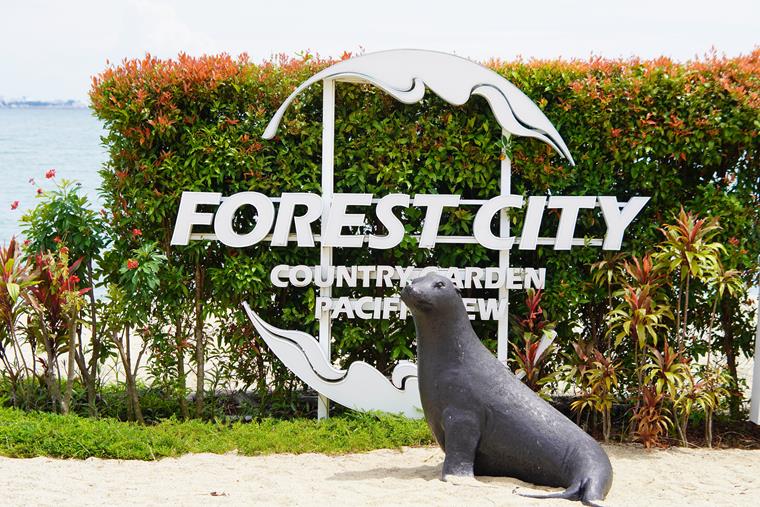
Introduction of Forest City Project
First of all: What is the Forest City all about? The urban development project is indeed very exciting, because building an entire city in the sea sounds almost utopian. Before we dive deeper into the ocean, let's take a look at some facts about the Forest City project.
The location: over 30 km² (11.6 mi²) of new land on four artificial islands near Johor Bahru, Malaysia. A new smart city is to be built here as a state-of-the-art residential area for up to 700,000 people. The idea for Forest City originally came from one of China's largest property developers, the Chinese real estate group Country Garden Holdings. It implemented the project together with the Johor government.
More specifically, it was a collaboration between Country Garden Pacificview Sdn Bhd (CGPV) and another company closely linked to the Johor royal family. This ensured political backing in the region. That saved Forest City at least in the beginning. However, it was not to last. But first things first.
The goal was to create an international showcase project with Forest City. Luxury real estate, a futuristic high-tech city, and an ecologically sustainable smart city: this was to be the future of Malaysia—at least for those who could afford it.
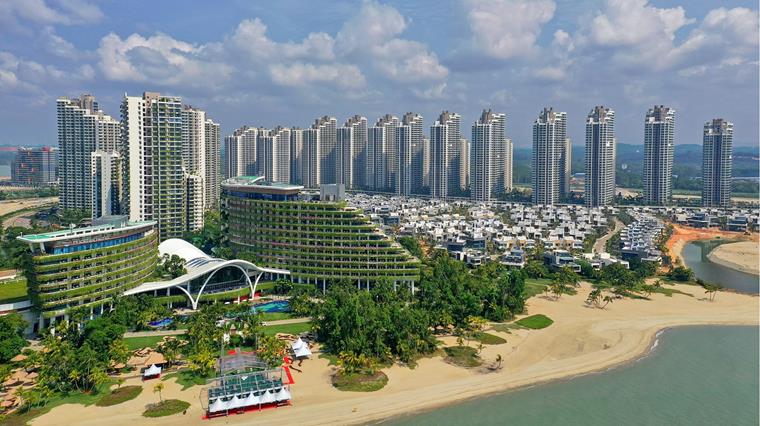
Why Forest City is Extraordinary
Planning an entire city is already something quite different from simply assigning a house number to a building. Urban planning is a skill that must be learned and mastered. So many aspects need to be coordinated and taken into account. Of course, it is easier to build without existing structures that need to be integrated into every change.
From the very beginning, Forest City was a city straight from the drawing board. From the top of the tallest skyscraper to the sandy bottom, which meets the seabed several meters below. However, this did not make the planning any easier.
Land Claim for Forest City: How to Create Artificial Islands?
We are doing what people did three hundred years ago: throwing stones into the moor—or in this case, the sea—until they no longer sink. Then we build a house on top of them and later wonder why everything is so crooked. Well, it wasn't quite that bad, but it was close! How does it all stay stable?
Anyone who has already built a sandcastle by the sea knows how quickly a slightly higher wave can destroy everything and wash the sand away. In fact, there are now quite safe methods for large-scale projects. And they are not as complicated as you might imagine. How was it done at Forest City?
First of all, it was checked whether the seabed was stable enough. After all, it would have to support an entire city in the future. Unfortunately, the result was sobering: the coast of Johor was not exactly suitable, but much too soft and very muddy. So what to do? Give it a helping hand! And not just a little. Large ships, known as sand suction dredgers, were used to continuously dump sand onto the seabed until a new land area emerged above sea level. In total, over 163 million m³ (5,756 million ft³) of sand was needed, equivalent to around 65,000 Olympic swimming pools. Where did all this sand come from? From the sea itself, but also from other countries.
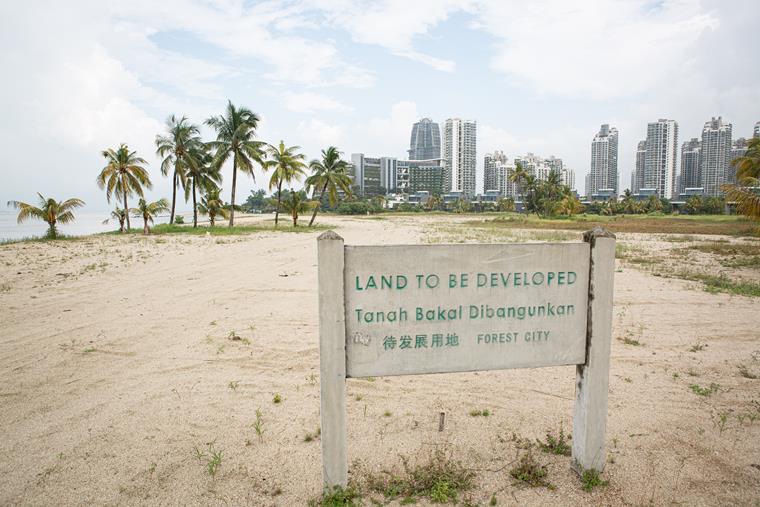
The unstable sand foundation was now in place. What next? To prevent all the sand from being washed away and all the work from being destroyed, the next step was to secure the shape! Stone dams and breakwaters were built around the new islands, like a frame holding the island together.
Then there was another danger for the new islands. The sand was still loose, like on a beach. And to prevent the buildings from sinking, it was necessary to compact the sand. This can be done, for example, by means of strong vibrations generated by probes.
Another problem was the seawater in the future ground of Forest City. The water was gradually pumped out through numerous pipes in the ground. This settled the ground and made it firm. It was all a little reminiscent of the last visit to the beach with small or grown-up children who loved to build where it was difficult: right by the sea. But nothing ventured, nothing gained! Right?
Forest City: Biomorphic Architecture
Building by the sea is expensive, especially when it comes to building materials. This is because sea air is extremely salty and corrodes ordinary structural steel and concrete. This would have resulted in high maintenance costs.
So it was decided to invest properly from the outset. Special corrosion-resistant steel and seawater concrete were used for the buildings themselves. This would keep the city dry, so to speak, despite the sea breeze. And what does the city look like now?
Whatever you think of the project itself, the fact is that the architecture in Forest City is extraordinary. The curved, organic-looking facades make even the tallest skyscrapers seem less threatening. This architectural style fits perfectly into the tropical landscape. As a result, the divide between city and nature is not quite so strong.
What's more, nature should be directly integrated into urban planning. With landscaped parks and conventional avenues? No. Instead, the idea of the Bosco Verticale, the vertically constructed forest, was used as a model. After all, there was plenty of space on the skyscrapers.
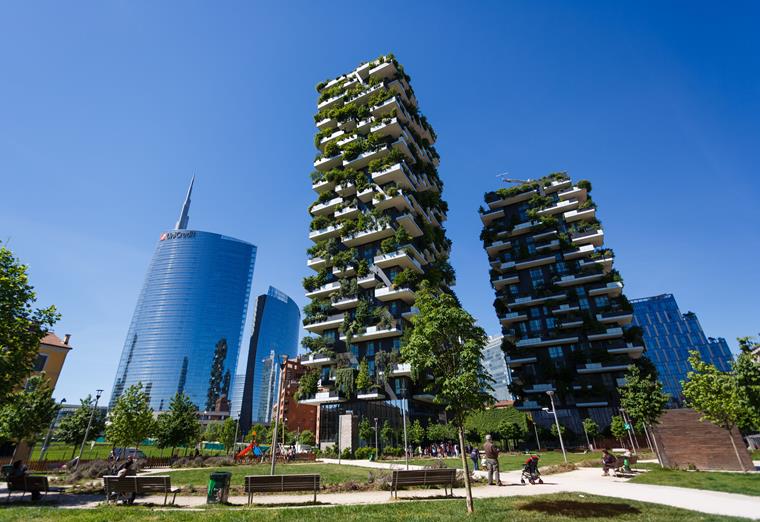
This not only created green spaces on the buildings, but also prevented localized heat build-up and ensured a pleasant climate in Forest City despite the tropical air. The facades that were not planted were equipped with solar modules.
In order not to let the construction time get out of hand, those responsible relied largely on modular construction. This means that parts of the residential areas, such as the facades, were prefabricated and delivered to the construction site. Logistically, the whole thing was enormously complex, as the modules had to be imported from China and transported to Johor by sea.
And the model of the smart and ecological city went even further. Forest City was to be completely car-free. However, this did not mean that there would be no cars there; they were simply to disappear into several floors beneath the buildings. A kind of underground road network in other words.
Even the above-ground roads in Forest City are something special. They follow the sponge city principle. This means that the paved areas are designed in such a way that excess water can easily drain away and be absorbed by the surrounding vegetation. This is particularly important in tropical regions to prevent waterlogging caused by heavy rain or prolonged moisture.
Forest City: How great is it really?
Now that we have looked at the blueprints and the ideal state of Forest City, let's turn our attention to reality. And, as you might already suspect, it is unfortunately not quite as green and innovative. How has the construction of the project been going so far?
At the start of the Forest City project, the entire city was supposed to be completed by 2035. Remember: the smart city would provide 700,000 people with a new, luxurious home. What has become of it? Well, to put it mildly, it's somewhat disappointing.
In 2024, it was announced that around 26,000 residential units in several high-rise buildings had already been completed. Already 20,000 of these had been sold. Mainly to Chinese investors, who all had one thing in common: they had money. Lots of money.
Even the tallest building was already standing. The Carnelian Tower has been shining since 2016 with a total of 45 stories and a height of 196 m (643 ft). Forest City also provides various amenities, such as two five-star hotels and two golf courses that meet international standards.
Furthermore, a four-story shopping center has been built not far from Forest City International School, a private school, which opened its doors in 2018. After all, residents and guests in one of the most expensive cities in the world should be provided with something special!
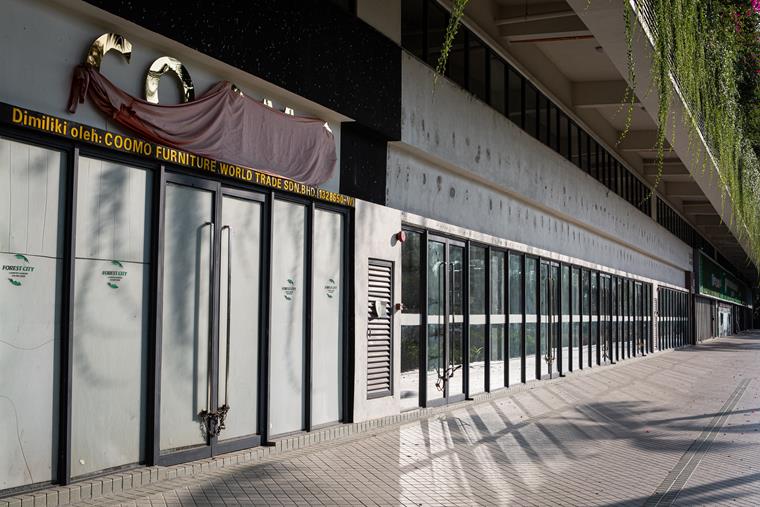
The problem: in 2019, 500 people lived here. Not in a skyscraper, but in the whole of Forest City. According to Country Garden, there were 9,000 people in 2024. However, visits suggest that there are at most 2,000 residents – in an area covering 30 km² (11.6 mi²). If the city is so advanced and luxurious, why does no one want to live there? What happened to the 20,000 apartments that were sold? Let's take a closer look at this together.
Political Influence on Forest City
Let's remember: Forest City was designed and built in close cooperation between Country Garden and the Johor royal family. In 2018, there was a change in the office of the prime minister, and as a result, foreign investment in Forest City was to be significantly slowed down. The new goal was to create homes for locals.
However, this was not successful, as the apartments were far too expensive for Malaysians, costing around US$200,000. But business with foreign investors also failed to take off. Changed visa regulations and new capital controls made it difficult for them to move into their purchased apartments or acquire additional properties. Interest in further apartment sales declined rapidly. And so the city remained almost completely abandoned.
Forest City: Economic Difficulties
As with most structural projects that fell in the early 2020s, the coronavirus pandemic had a significant impact, especially on Country Garden. The group faced severe financial difficulties. In addition, the project was significantly downgraded by the change in government policy and lost its priority, and with it a potential investor.
Since 2023, Forest City has been designated a Special Financial Zone, attracting investors with tax incentives and a duty-free zone. The next Dubai for shady characters and investors? No, because this measure has not shown any effect so far. Forest City is and will probably remain the most expensive ghost town in the world.
Greenwashing Accusations in Forest City Project
Everything is green – except for the financial side. What about the ecological progressiveness of the new mega-city? The green veneer of the progressive eco-city seems more like a curtain that would be better left where it is: closed.
Because when you pull it aside, it shows that this is just superficial advertising. The principle of the Bosco Verticale is great, especially for the design of high-rise buildings. However, Malaysia has the wrong environmental conditions for such a project. The tropical climate is not suitable for lush vegetation on facades.
Mold, root growth, and rot are inevitable. Without regular replanting, it won't look nice for long. If you take a closer look at the buildings in Forest City, you'll notice that everything is plastic! At least a large part of the greenery on the facades is glued on or consists of artificial plants to reduce maintenance costs.
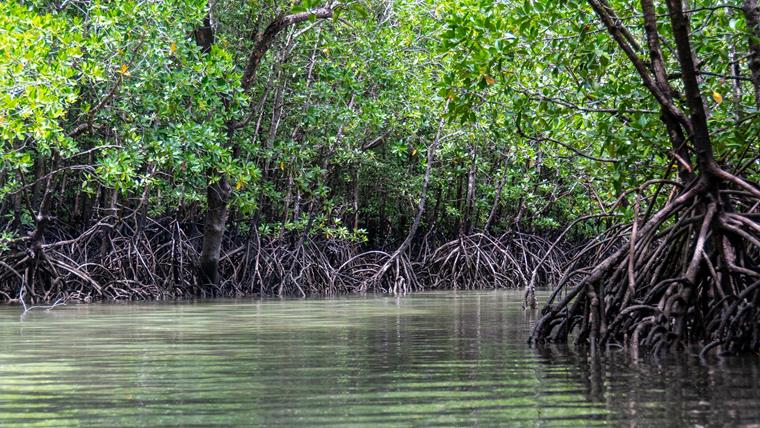
However, it wasn't just the construction of the buildings that was a little misleading when it came to the ecological footprint. To create 30 km² (11.6 mi²) of new land, four artificial islands were created, but not on fallow land. Instead, they were built on seagrass meadows and mangrove forests. Protected, sensitive habitats had to make way for a pseudo-green ghost town. No wonder, then, that this project has been the target of considerable criticism from the public.
Mega Project Forest City: Conclusion
Megaprojects such as Forest City are always a risk. However, the fact that the city, which was artificially built on reclaimed land, is lagging so far behind expectations is tragic – and was probably predictable to a certain extent.
The desire to build an entire city for foreign investors leaves a bitter taste on several levels. First of all, it would have made more sense, especially in a government-backed project, to do something for the local population – to create livable housing for the people who pay their taxes into the budget every year.
It was clear from the outset that no ordinary Malaysian citizen could afford one of the apartments for US$200,000. So investors from outside the country would snap them up. And this is where those responsible failed to think things through.
For the majority of these investors, it was out of the question that they would ever live in the properties they purchased. An apartment in Forest City was purely an investment. Nothing more, nothing less. Even the subsequent creation of a cozy tax haven could not change that.
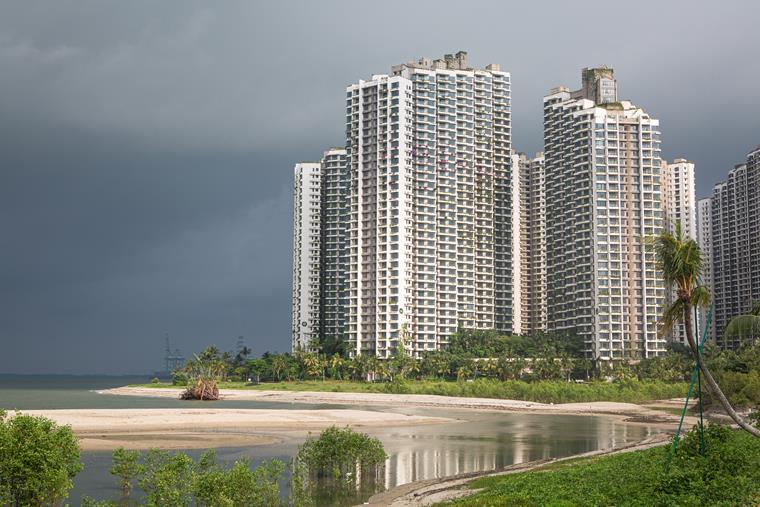
And renting? Uninteresting and far too expensive. Ghost town enthusiasts or people who are willing to pay a lot of money to enjoy some peace and quiet in luxury for a while would probably be the only target groups. And these are probably already fully covered by the two hotels.
What does the future hold for Forest City? According to the latest information from 2023 and 2024, the city's development is to continue in line with its importance and utilization. Unfortunately, this is completely at a standstill. Will Forest City remain a ghost town forever or will it flourish once again, overgrown with plastic plants? Only time will reveal the answers to these questions.