


Today, mega-cities like New York, Dubai, or Shanghai are defined by their skylines. Often, you don’t recognize a city by a specific building, but rather by a view of the skyline. We can’t even imagine major cities without them, and yet skyscrapers haven’t been around for all that long. More precisely, they’ve only been around since the late 19th century.
Construction in 19th Century: Beyond First Skyscraper
Construction is almost as old as humanity itself. Whether in antiquity, the Roman Empire, or the Middle Ages: building safe dwellings has already been the core focus of the construction industry. With industrialization, the demands placed on residential buildings changed significantly. The population was growing, and the majority of people were flocking to the cities.
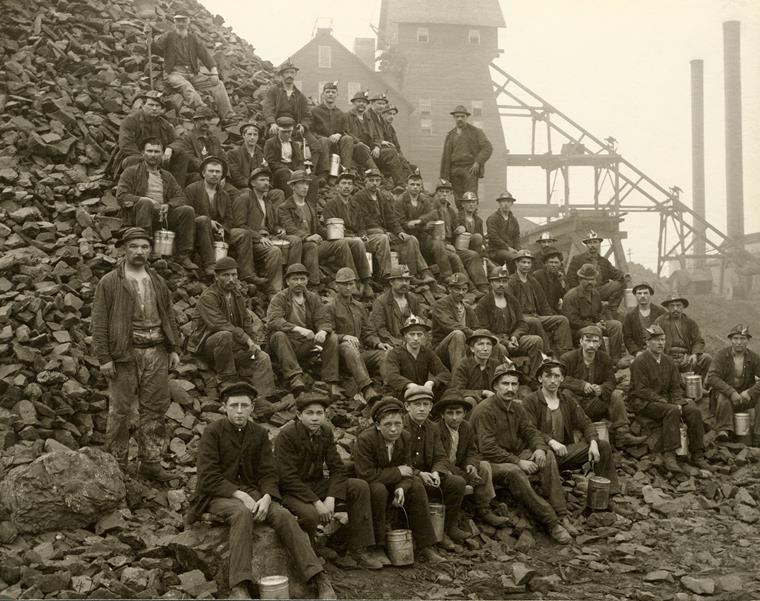
But it wasn’t just residential buildings that faced ever greater pressure to innovate. In addition to a wide variety of factory buildings, office buildings were also being constructed. Trading companies, government offices, newspapers: as many people as possible were supposed to be able to work there. And the construction industry? It was lagging far behind. In the 19th century, the good old natural law of construction applied: the taller a building became, the thicker must be its walls. Only heavy construction is truly safe.
Three, four, maybe five stories—and that was it. Otherwise, concrete structures could be quite expensive and material-intensive. Not to mention walls that were far too thick for sensible use of space. Then a building was constructed that would change the future of the construction industry forever: The Home Insurance Building, with its ten stories, was the world’s first true skyscraper. In this article, we’ll take a closer look at how it all came about and how the high-rise was structured.
Home Insurance Building: Innovation Born of Necessity
As is well known, there are two ways in which major innovations come about. Either through a grand, prestigious idea that is to be realized, or out of sheer necessity. In the case of the first skyscraper, it was the Great Chicago Fire, a massive blaze in 1871 that destroyed most of the city center.

Over 17,000 buildings were lost, and hundreds of thousands of people were left homeless. It was necessary to rebuild the city from scratch. At the same time, Chicago continued to develop into the national transportation hub. The economy was booming; railroads, industry, and trade drove rapid growth. As a result, land in the city became increasingly expensive.
So: How do you get more usable space on the same plot of land? That’s right: You simply build upward! It wasn’t quite that simple, though. That’s because traditional construction methods quickly reached their limits. Ultimately, ground-floor walls had to be several meters thick to support more than three stories. This was not only extremely uneconomical but also impractical. As a result, there was need to be open to new ideas—at least in some parts of the professional community.
Home Insurance Building: Engineer, Not Architect
So, which renowned architect was responsible for the Home Insurance Building? None. The building’s creator was the engineer William Le Baron Jenny. He had extensive experience with iron and bridge construction and proposed a structural framework made of iron and steel for the Home Insurance Building. This structure was then to be encased in fire-resistant brick and clay panels.
This created an internal skeleton, which absorbed the majority of the loads, leaving the exterior walls to bear no load. As a result, the entire building was expected to weigh only about one-third as much as comparable concrete structures on an imaginary scale. And let’s remember: Only concrete structures are safe. Understandably, this made the authorities quite nervous.
William Le Baron Jenny presented his design to the public in 1884 and thereby sparked one of the most extensive debates in the construction industry at the time. With an original height of 10 stories and a total height of 42.1 m, the city administration was anything but on board.
Officials temporarily halted construction, and the authorities ordered a safety inspection. And then another one. They feared that the Home Insurance Building would simply collapse during construction or, at the latest, after its completion. Ultimately, the drawings passed every inspection, and construction was completed in 1885.
Was the Home Insurance Building really the first skyscraper?
In fact, the Home Insurance Building is often referred to as the first skyscraper. Many of you who are familiar with the topic will say that this claim is controversial. And that’s correct. Already before the Home Insurance Building, there were tall buildings, steel structures, and the first curtain walls. However, it was during the construction of the Home Insurance Building that all these innovations came together for the first time.
The building’s height, its fireproof structure, its supporting steel skeleton, and its purpose as an office building: all of these are hallmarks of modern high-rise structures. For this reason, it can be said that while the Home Insurance Building may not have been the first tall building, it was undoubtedly the first modern high-rise building.
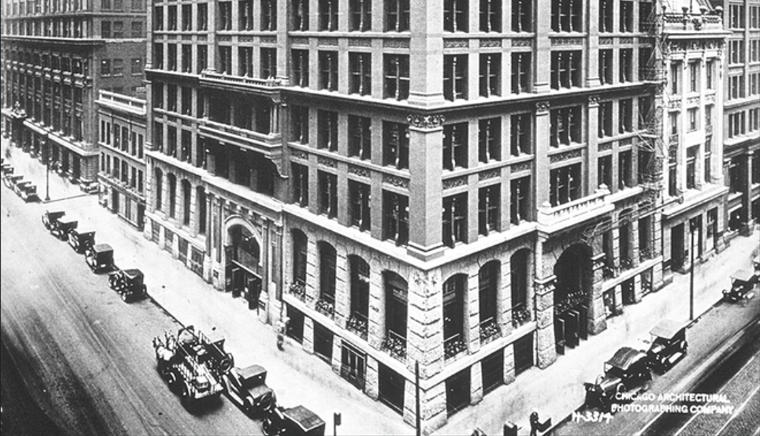
Strictly speaking, it was also not a classic skyscraper, as we know them today, but rather a hybrid structure. It consisted of cast-iron columns, wrought-iron beams, and, in some cases, rolled-steel beams. This placed it right on the border between iron and steel structures. The reason for this is simple: At the time, steel was still very expensive and not always readily available. So Jenny used the most modern materials available to him at the time.
Home Insurance Building: Expansion
Contrary to the city administration’s fears, the Home Insurance Building was a complete success. So successful, in fact, that a few years later, an extension was added. But not at the back or on the side—instead, on top. In 1891, two additional stories were added, bringing the height to 54.9 meters.
Home Insurance Building: Demolition of First Skyscraper
Decades passed, and by the late 1920s, the Home Insurance Building was still 90% leased. Technically, it functioned flawlessly, but times had changed. It was considered outdated, as larger buildings modeled after it had long since been constructed. The new Field Building was to be built on the site. So, in 1931, the Home Insurance Building was demolished.
However, the Home Insurance Building was not completely forgotten. After the demolition, a commemorative plaque was installed on the new Field Building, immortalizing William Le Baron Jenney as the father of the first skyscraper. His structural system gained worldwide acceptance. To this day, nearly every modern high-rise building is based on the same basic principle.
For modern skyscrapers, on the other hand, this technology was further developed decades later to make even taller structures possible. We’re talking about the tube structural system, which was invented by Fazlur Rahman Khan and gained worldwide acceptance. We’ve already covered him in a previous post . Feel free to check it out: Fazlur Rahman Khan: Father of Skylines .
Conclusion: Home Insurance Building
Not only was the skeleton structure with a curtain wall an innovation that found its way into the construction industry standards thanks to the Home Insurance Building. Another lesson learned from the building was the issue with the foundation. This is because Chicago sits on relatively soft layers of clay, which led to settlement being detected in the Home Insurance Building even after its expansion.
Later, based on these findings, new foundation methods were developed for taller buildings. These included pile foundations and caissons. In this way, the Home Insurance Building made a second important contribution to the further development of high-rise construction.
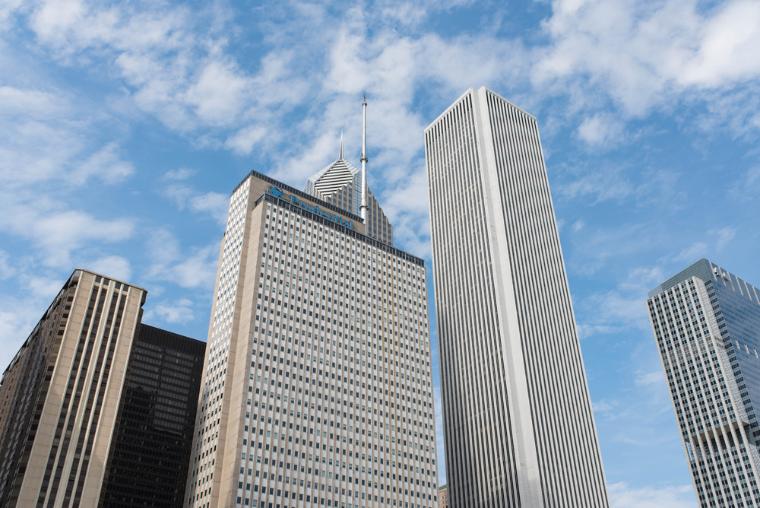
The Home Insurance Building no longer exists today. However, its prototype opened up unimagined possibilities. Through the continuous refinement of this idea of the skyscraper, our skylines have become as spectacular as they are today. William Le Baron Jenney’s idea is still evident everywhere. The Home Insurance Building has never completely disappeared, for it lives on—only much higher than it was in 1885 with its ten stories.
It is not uncommon in the construction industry for an innovative idea to be viewed with skepticism but ultimately to become the new standard. There are numerous examples where engineers and architects were able to overcome established conventions and establish new ideas. If you’d like to read more about this, we recommend the following articles: