RFEM as Bridge Between Structural Design and Construction Practice
The decisive factor in this case study was not simply a calculation. RFEM served as an interface and link between structural design and steel structures. Thanks to 3D modeling in RFEM, planning and practice could be combined in a common, reliable model. The software supported the collaboration in a special way: the person responsible for steel structures contributed his structural design experience, and the structural engineer was able to check variants directly in RFEM in a comprehensible manner.
In this way, an existing preliminary design was converted into an optimized solution. The end result is not only safe, but above all efficient. This is precisely the core service that the customer associates with Dlubal solutions.
Optimization Instead of Just Design – Using RFEM in 3D Model
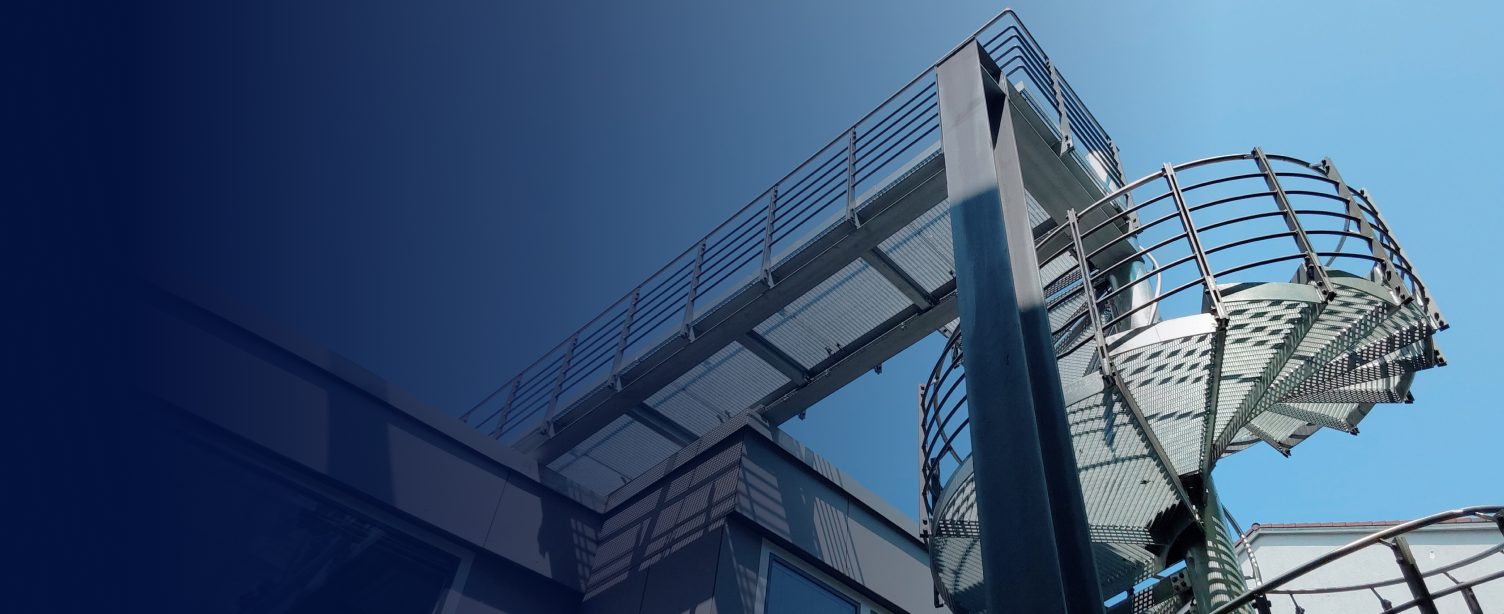
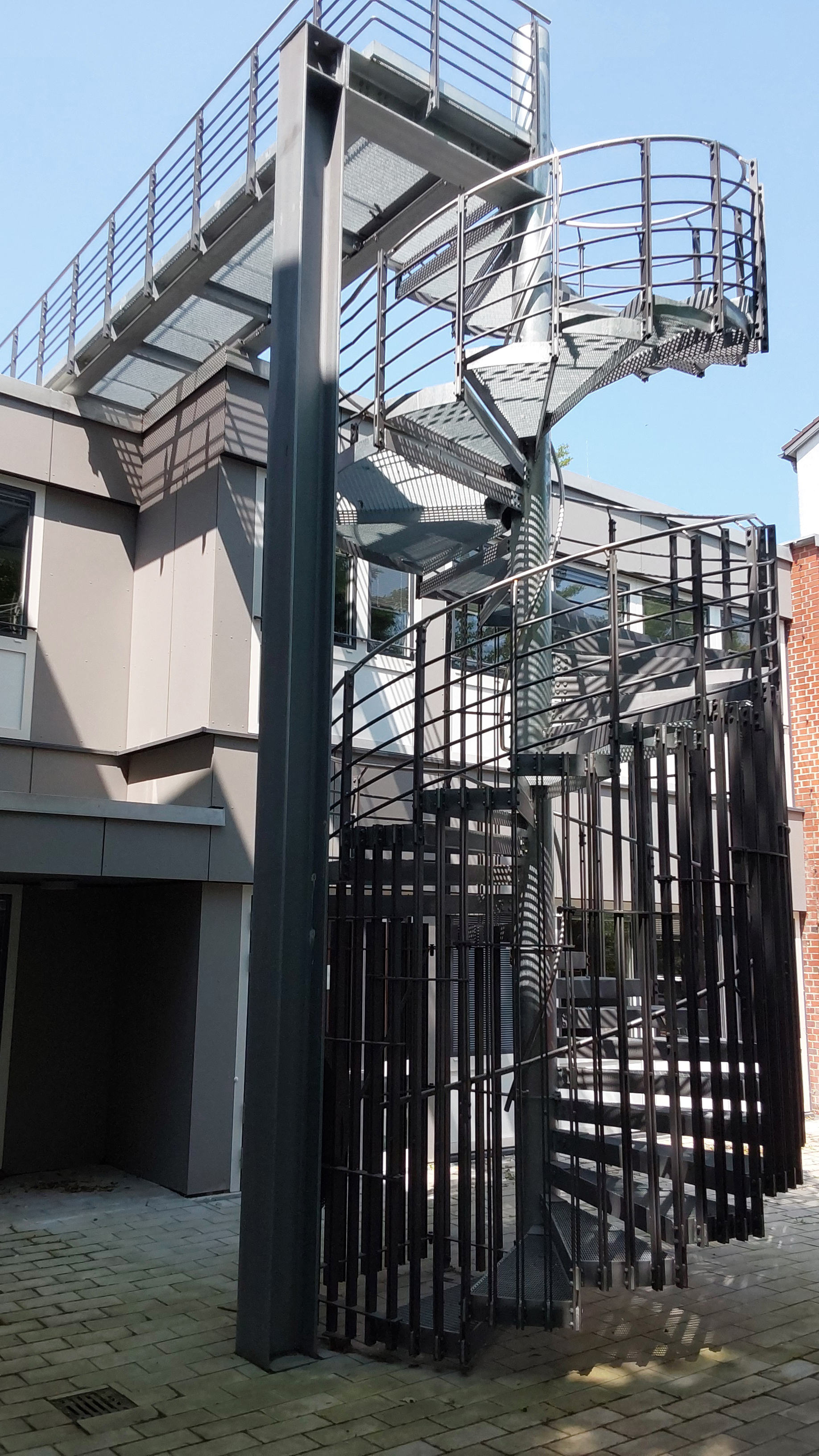
The advantage of a detailed 3D calculation in RFEM was particularly shown in the steel staircase of the evangelical church: Temperature stresses were taken into account, but they led to unnecessary constraints and thus to an oversized structure.
Using RFEM, the staircase could be realistically modeled as a 3D structural system, including structural details, such as slotted holes, with the aim of keeping constraints from temperature changes as small as possible. This combination of model accuracy and verification with Dlubal made the optimization reliable and led to a clear result: €350,000 became €150,000 – a saving of over 50% for the client.
Increasing Productivity with Dlubal
I use RFEM and RSECTION because of their accuracy, efficiency, and user-friendliness.
Dipl.-Ing. Univ. Hippolyte Sagbo
SAGBO INGENIEURE
Important Main Features: Printout Report & Load Transfer (Import Support Reactions)
In addition to such project levers, RFEM offers customers a noticeable advantage, especially in their day-to-day business: Recurring tasks are completed faster, in a more standardized manner, and with less manual effort. Two features are particularly noteworthy:
- Printout report (RFEM 6): The customer works with a standard RFEM file including a predefined printout report (for example, for reinforced concrete slabs) and uses this template repeatedly—for example, for reinforced concrete slabs. According to the customer, the report in RFEM 6 is significantly more efficient than before, which speeds up documentation and makes it more consistent.
- Load transfer / “Import Support Reactions”: For him, this feature is a real time-saver, because it automates work steps that would otherwise take “a few hours” to complete manually. This makes load transfer between models/subsystems much more convenient—and the workflow remains fast and easy to follow.



.jpg)