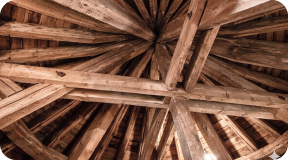
Timber Tennis Hall: Combination of Structural Analysis and Innovative Foundations
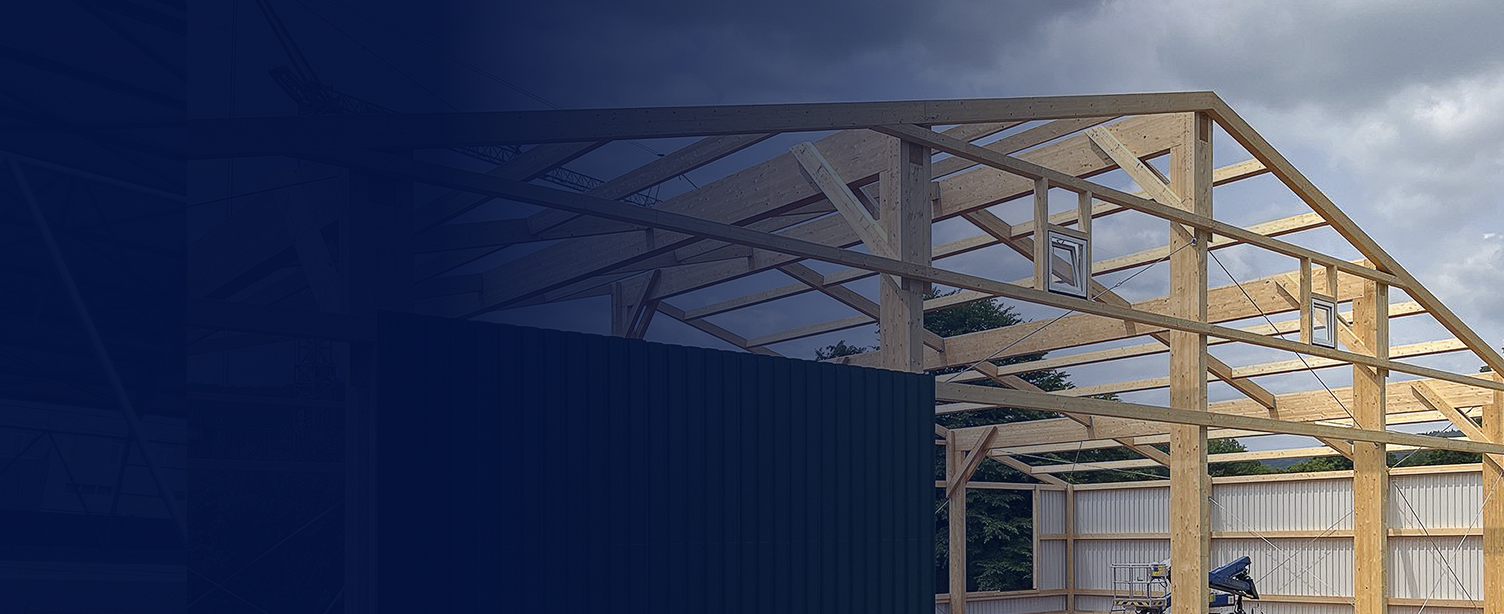
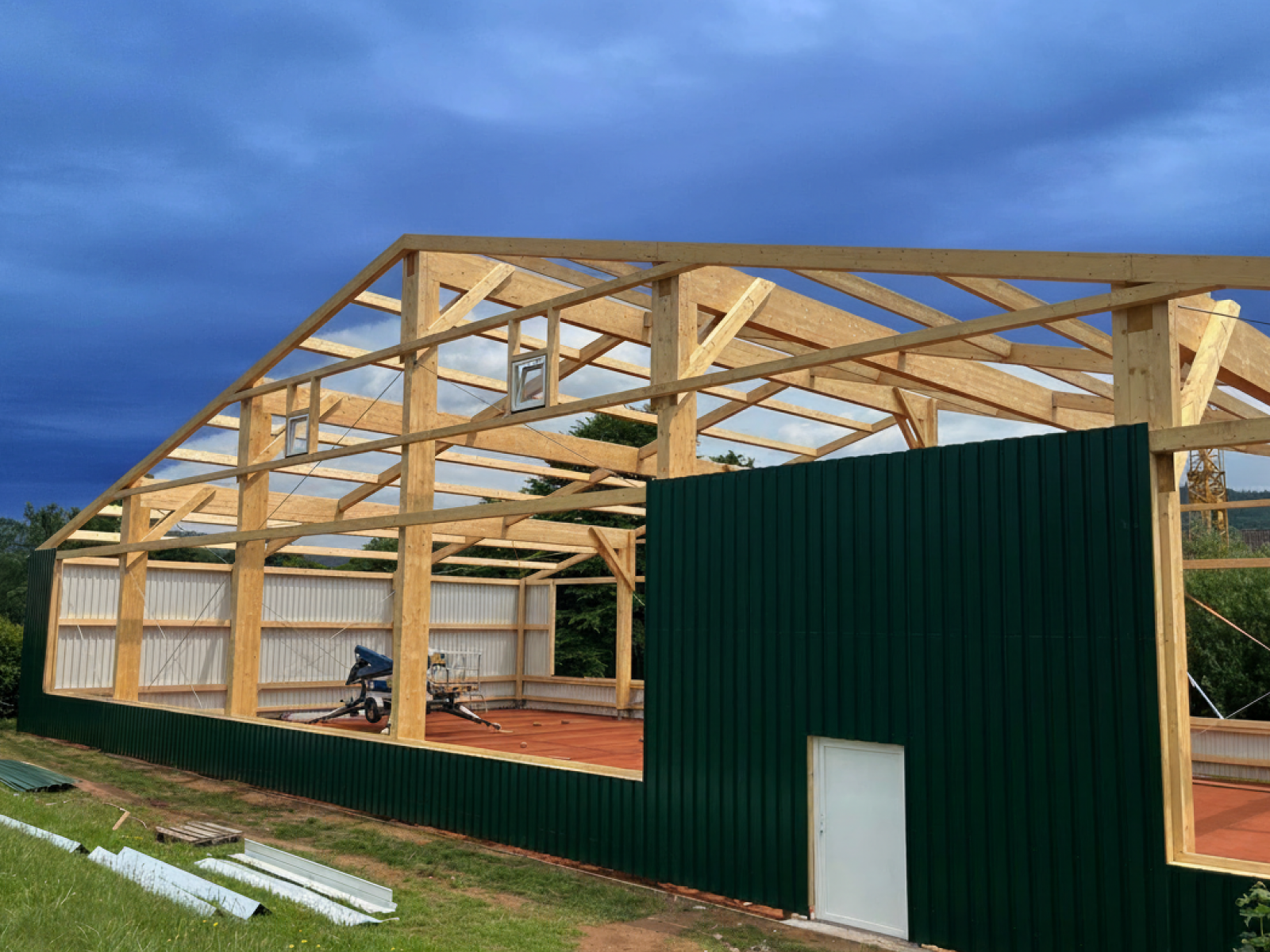
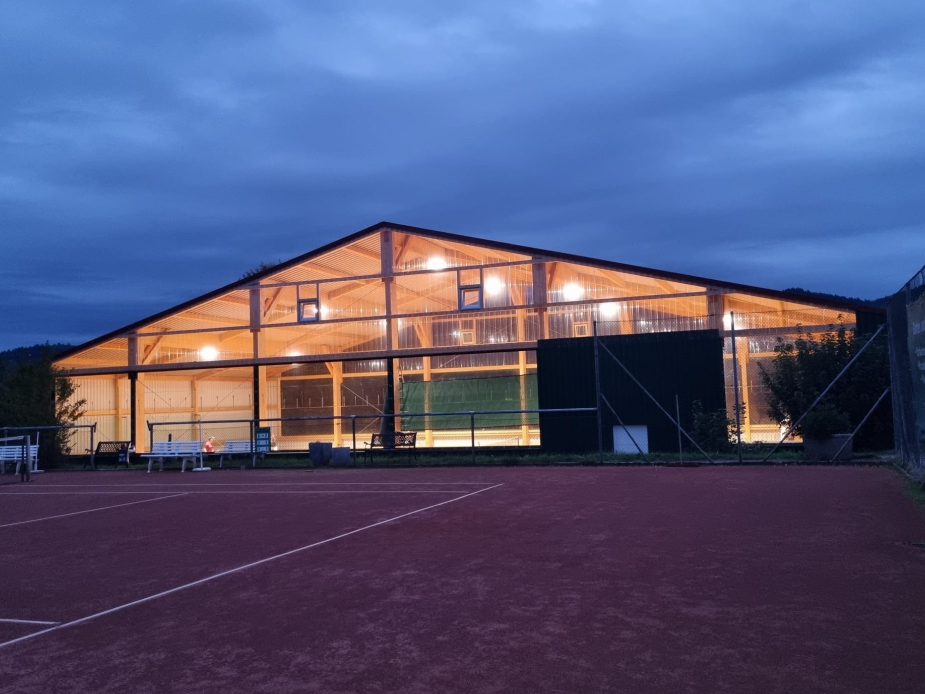
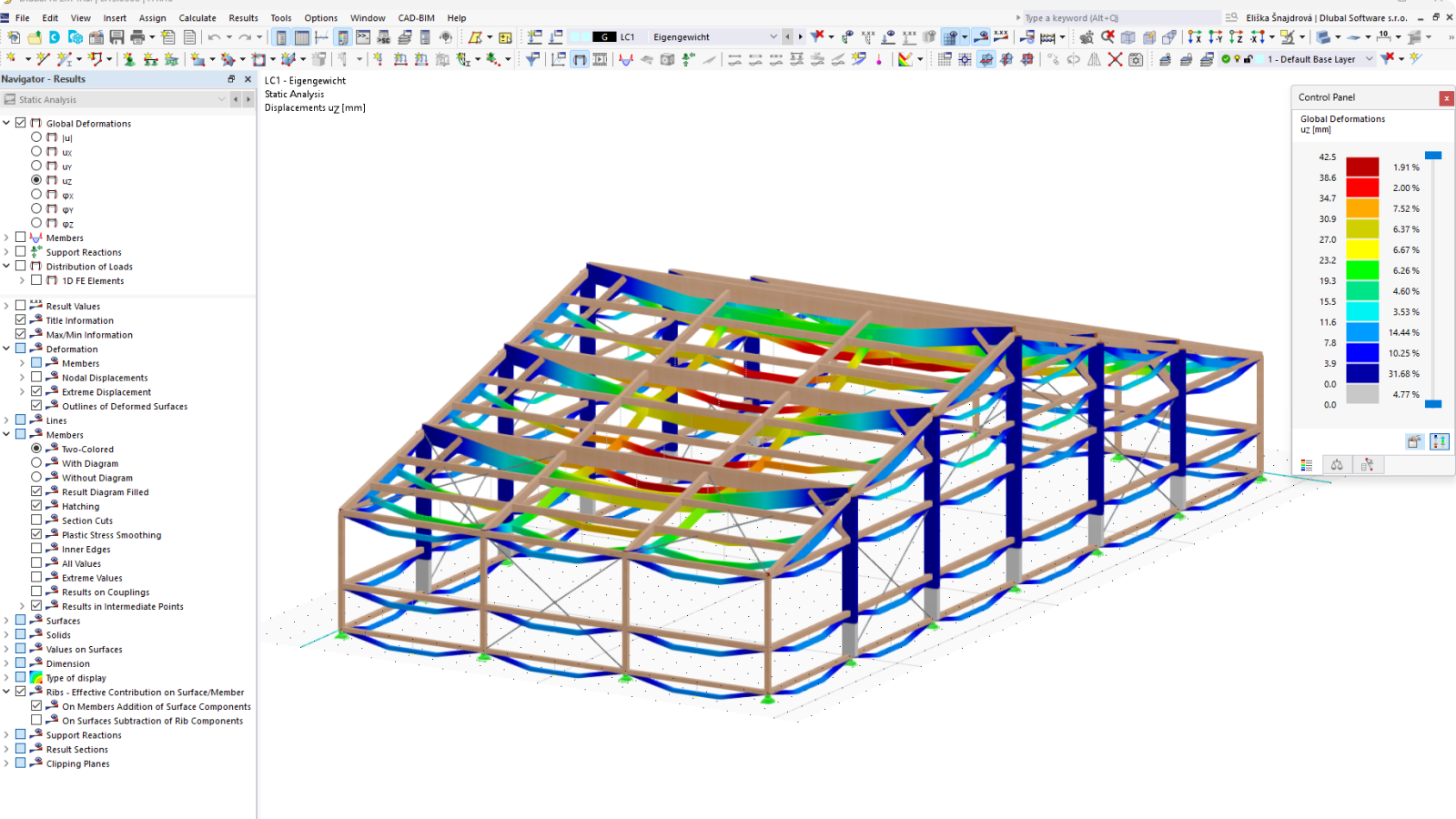
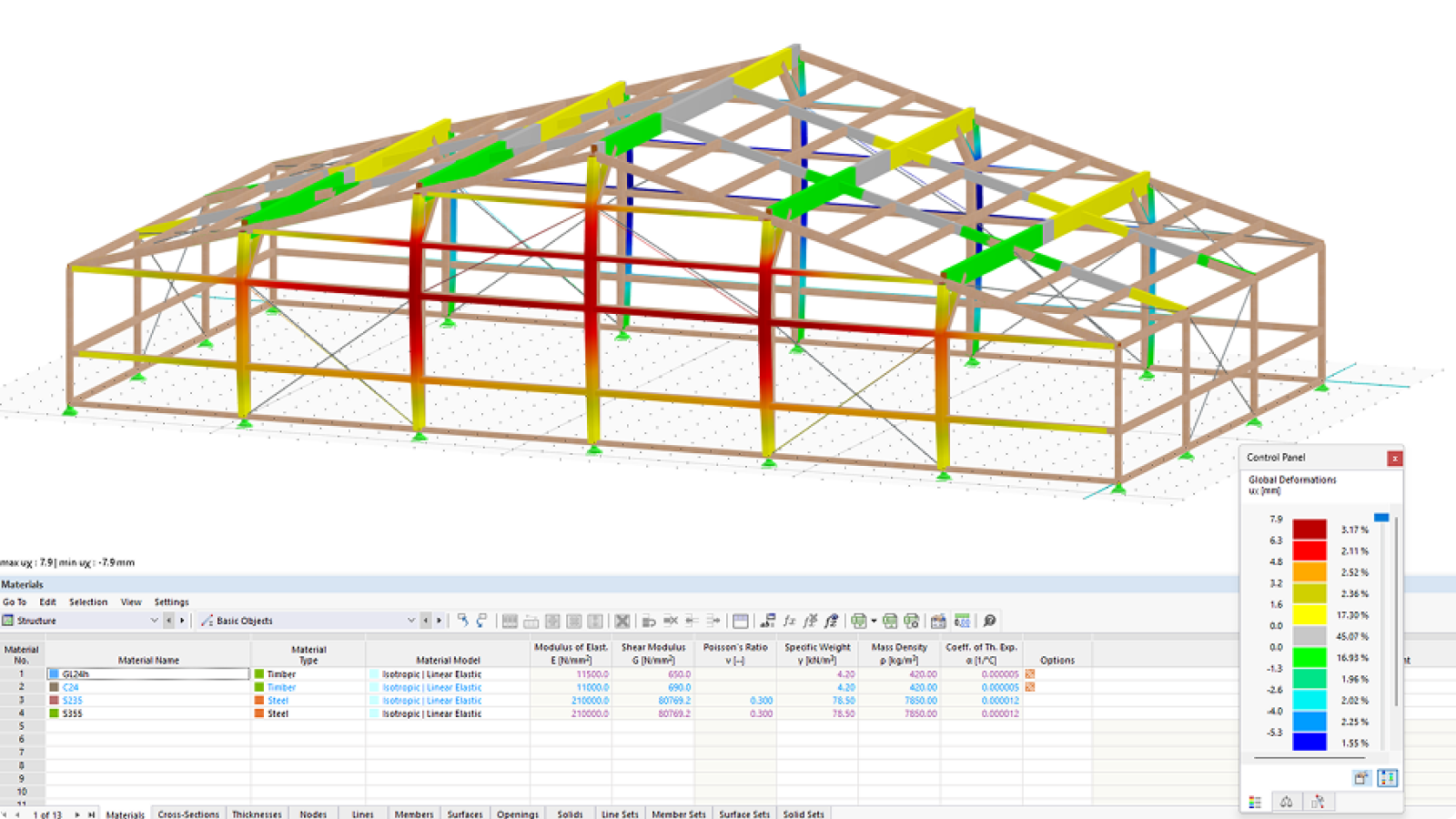
The tennis hall has maximum dimensions of approximately 36.0 m x 18.0 m and a height of approximately 9.4 m. It was constructed using a conventional timber structure. Vertical load transfer occurs via purlins, secondary beams, and trusses to the timber columns anchored in micro-screw piles. The timber frames provide longitudinal bracing for the hall, while steel diagonal bracing provides transverse bracing.
Key Features in RFEM Facilitating Work
For Martin Grella, two features in RFEM are particularly helpful. First, the “Member Loads from Area Loads” feature, which makes his work much easier when it is necessary to apply surface loads to members. This feature saves a lot of time because it automates the process and correctly distributes the loads to the appropriate members.
On the other hand, the interface between RFEM and Tekla Structures is a feature he uses frequently. It allows him to import the structural model, including cross-section data, directly into Tekla. This means it is not necessary to transfer every detail manually; instead, he can quickly continue working on the detailed design using the same model. This significantly increases efficiency and reduces errors.
Micro-Screw Piles: Flexible Solution for Lightweight Structures
Micro-screw piles are composite displacement piles according to DIN EN 12699, made of hot-dip galvanized steel, some with threaded sections, designed as extendable deep foundations. The outer diameters of the pipes range from approximately 9.0 to 14.0 cm. Depending on the supporting capacity of the subsoil, they are drilled into the ground in lengths ranging from 1.0 to 10.0 m.
They are a very efficient and simple solution, especially for lightweight structures, modular buildings, or soils with low supporting capacity. They also create a soil cone that absorbs the weight of the soil to accommodate not only compressive forces but also tensile forces. For the tennis hall, this was ideal because the ground was already in place. The foundation could be installed directly at the desired location without any excavation work. For us as designers, it is also advantageous that we can measure the load-bearing capacity of each pile based on the torque generated when driving the piles into the ground.