Challenge
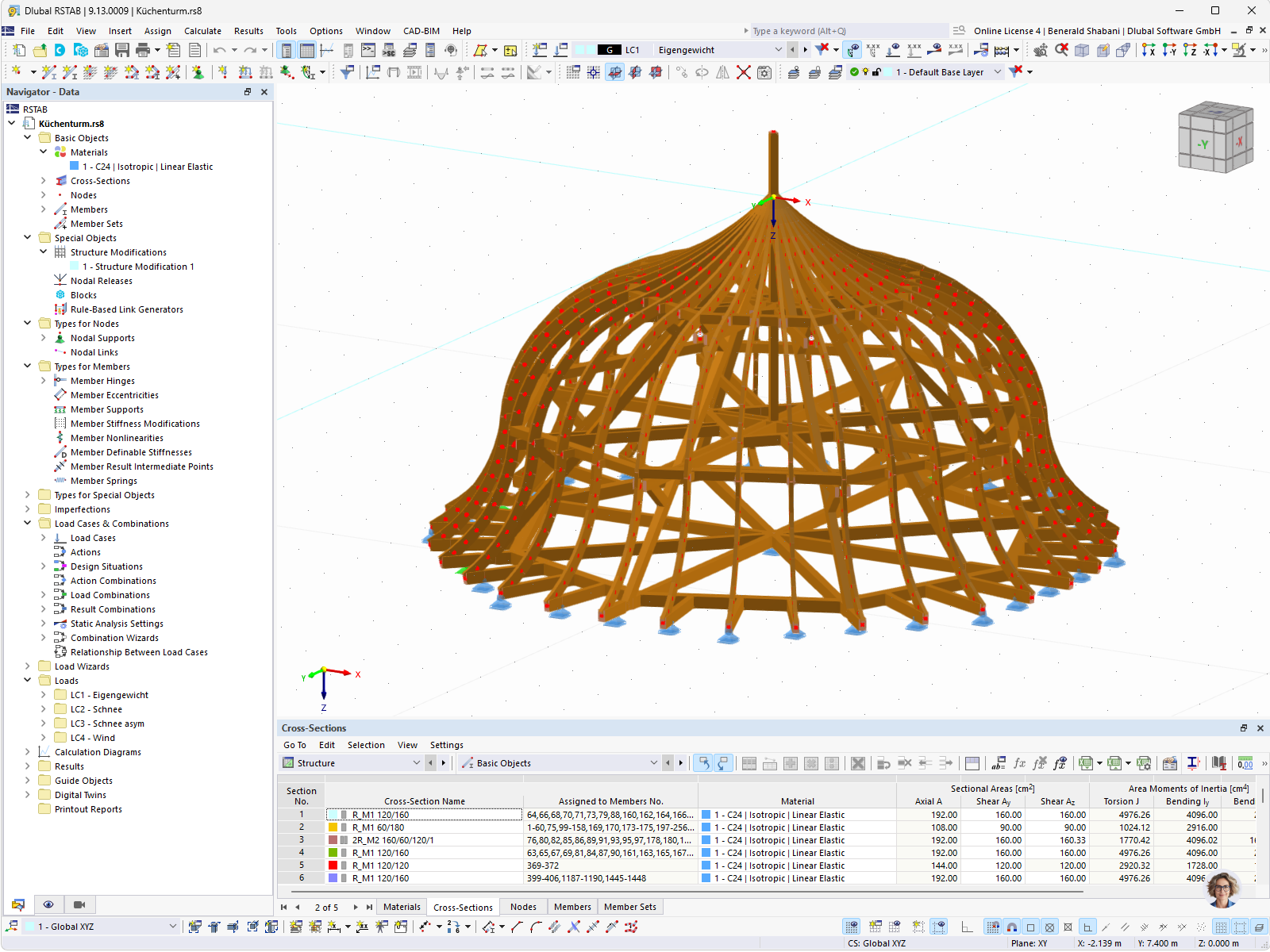
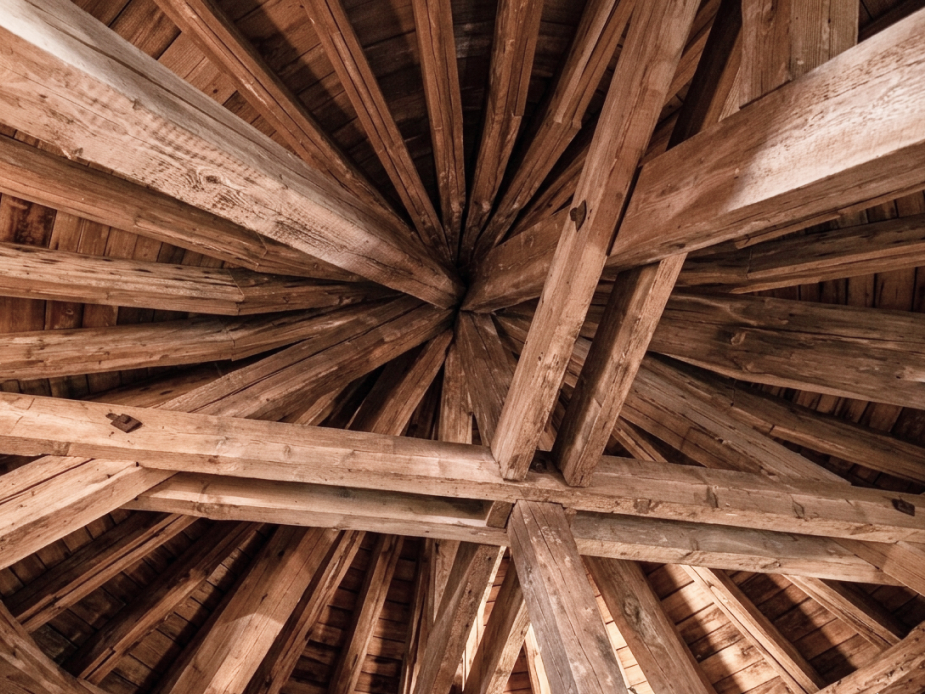
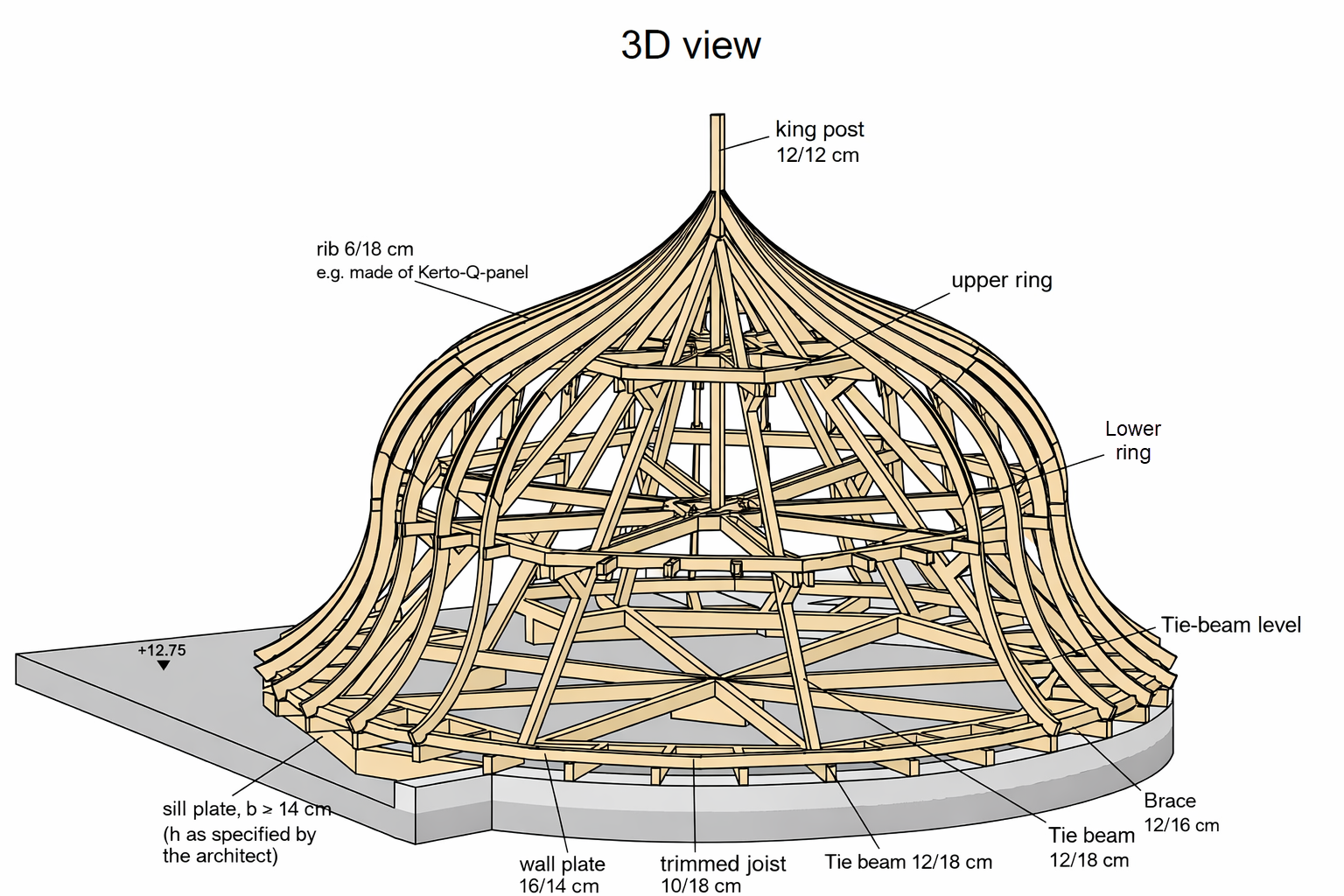
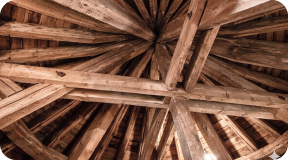
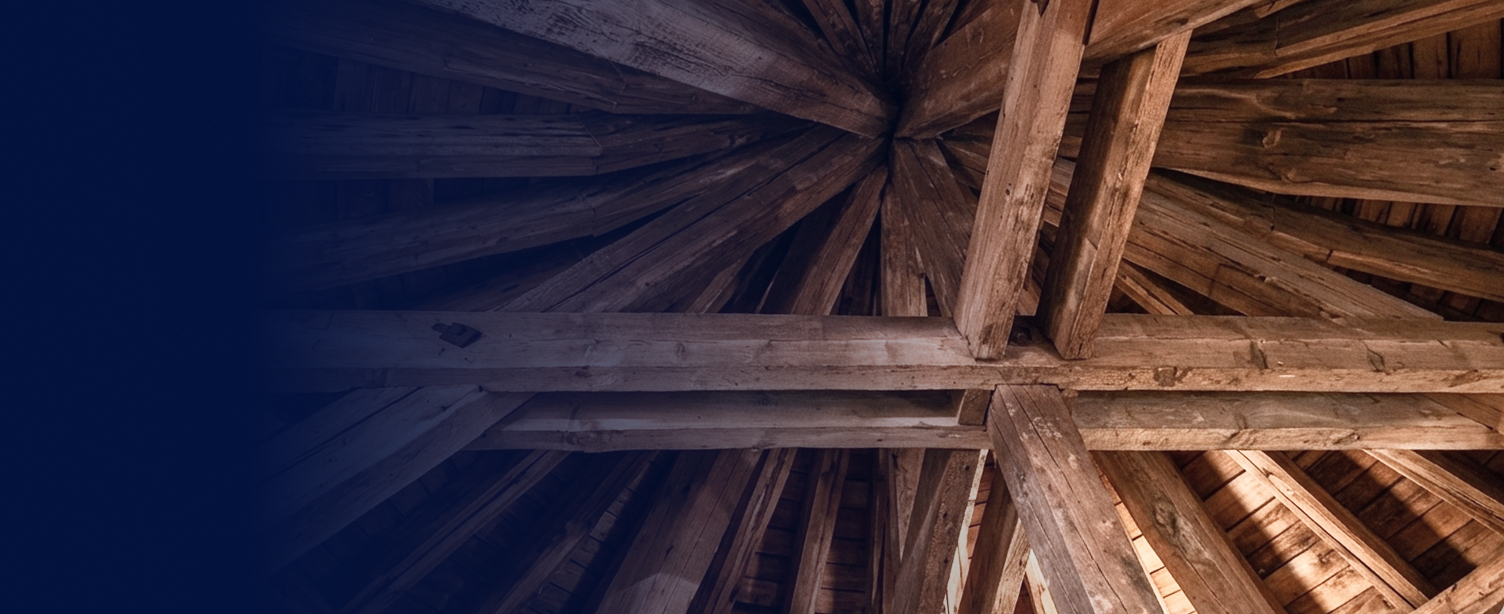
The project focused on the structural analysis and design according to standards for the new roof structure for the kitchen tower of the Marienberg Fortress in Würzburg. The existing timber components were contaminated with wood preservatives containing harmful substances and it was necessary to replace them completely. The new structure was to be reconstructed based on the historical model with an imperial style—in compliance with historic preservation requirements and currently valid standards. The partially curved structural geometry posed special challenges for the modeling.
Solution
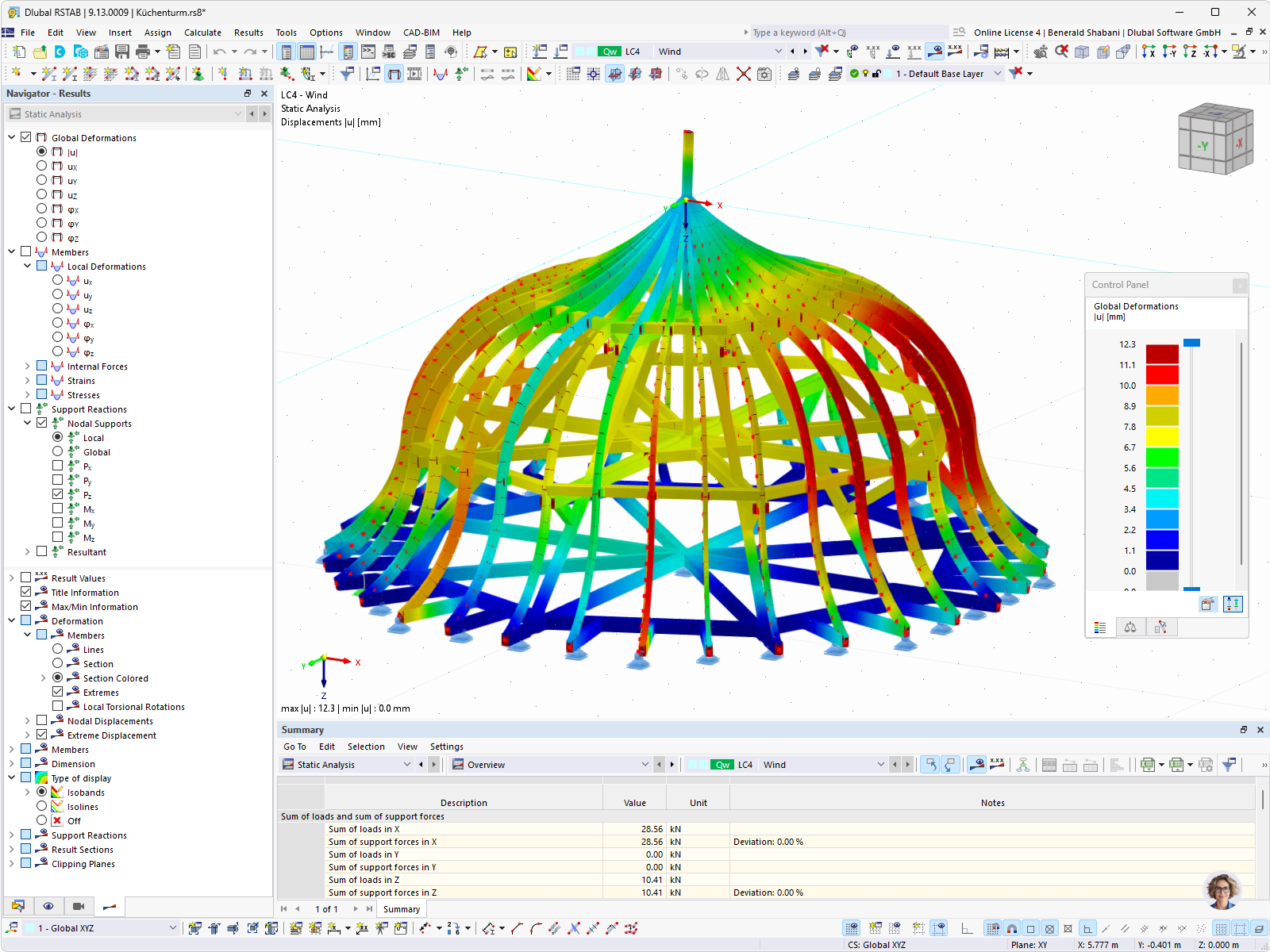
The engineers at ALS used RSTAB to calculate the entire roof structure as a detailed 3D spatial truss model. By using spring stiffnesses to model joints and supports, the actual boundary conditions, as well as the partially flexible connections between the individual structural components could be realistically modeled. Both the load-bearing capacity of the individual components and the overall structural behavior of the structural system were designed in accordance with standards.
Benefits
- Realistic modeling: Modeling joints using spring stiffnesses allows for a detailed consideration of the actual support and connection conditions in historical structures.
- Design according to standards: RSTAB provides a complete ultimate limit state design of individual structural components and the global structure according to currently valid standards.
- Efficiency in existing structures: Three-dimensional truss modeling reduces the computational effort even for geometrically complex, curved structures.
- Combined software use: RSTAB and RFEM complement each other perfectly—RSTAB for frame & truss structures and timber structures, RFEM for reinforced concrete and FE calculations.
- Time savings in daily work: Features such as “Import support reactions” and the Geo-Zone Tool significantly speed up recurring tasks in daily practice.