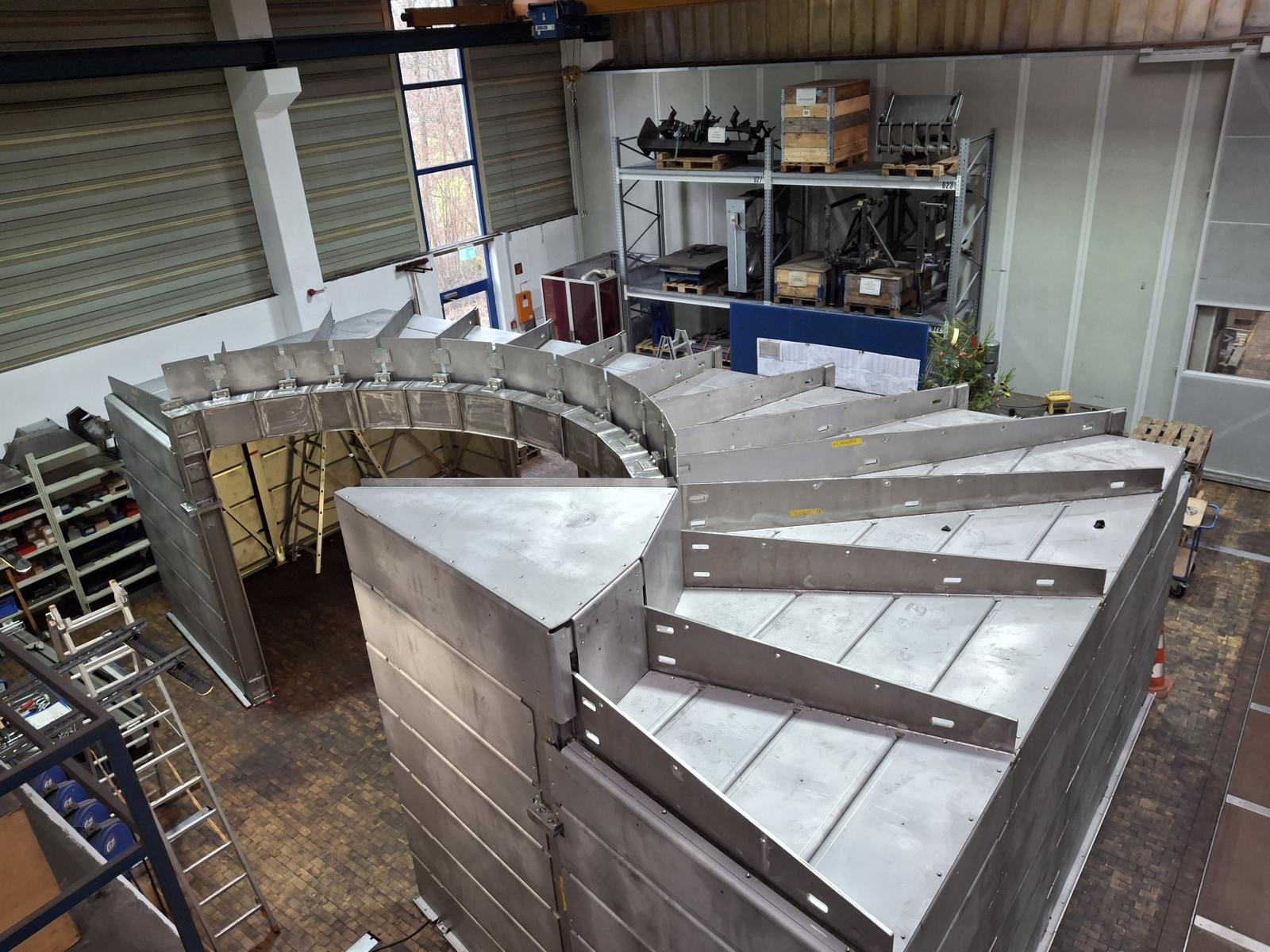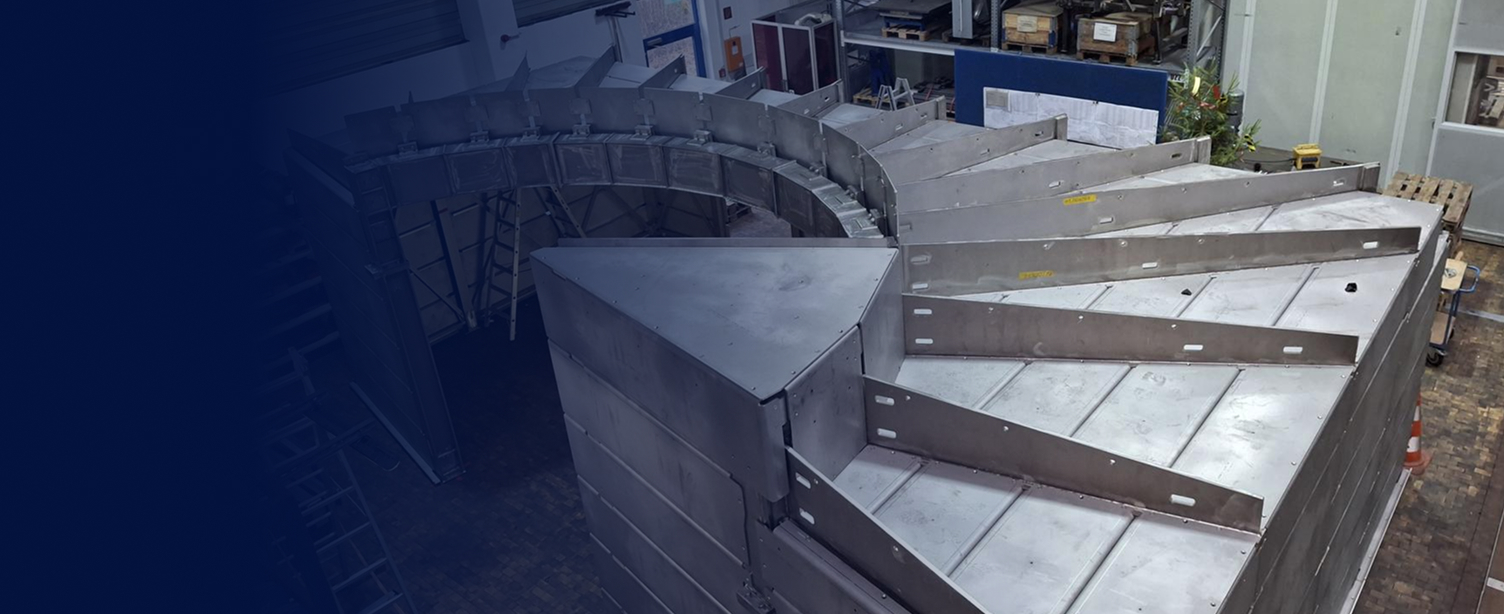
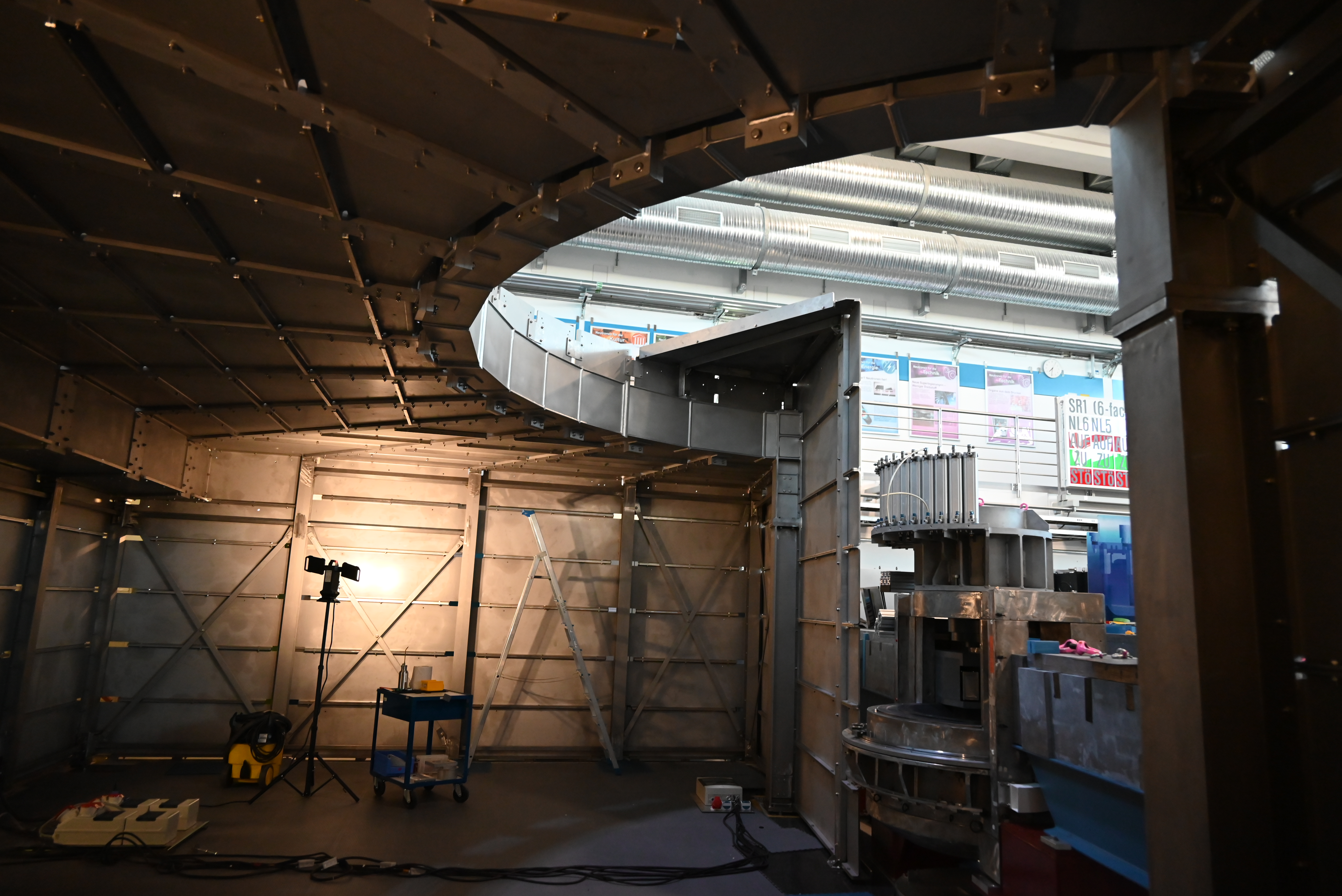
Field shielding experiment structure named "LaDiff" designed by TuB Tragwerk GmbH at TU Munich.
Case Study

80-Ton Load, Zero Tolerance: How Thomas Linder Designed Radiation Shield Using RFEM

Challenge

The design of a radiation shielding enclosure for the “LaDiff” three-axis spectrometer at the FRM II neutron research center of the Technical University of Munich posed extreme engineering demands. The structure had to safely carry enormous loads – a total of 80 tons resulting from a 5 cm thick lead lining – while also meeting extremely strict deformation limits. Since the neutron experiments additionally require an environment free of magnetic interference, the entire substructure had to be made of a special non-magnetic stainless steel. This resulted in a highly statically indeterminate system whose precise design pushes many standard steel design programs to their limits.

Solution

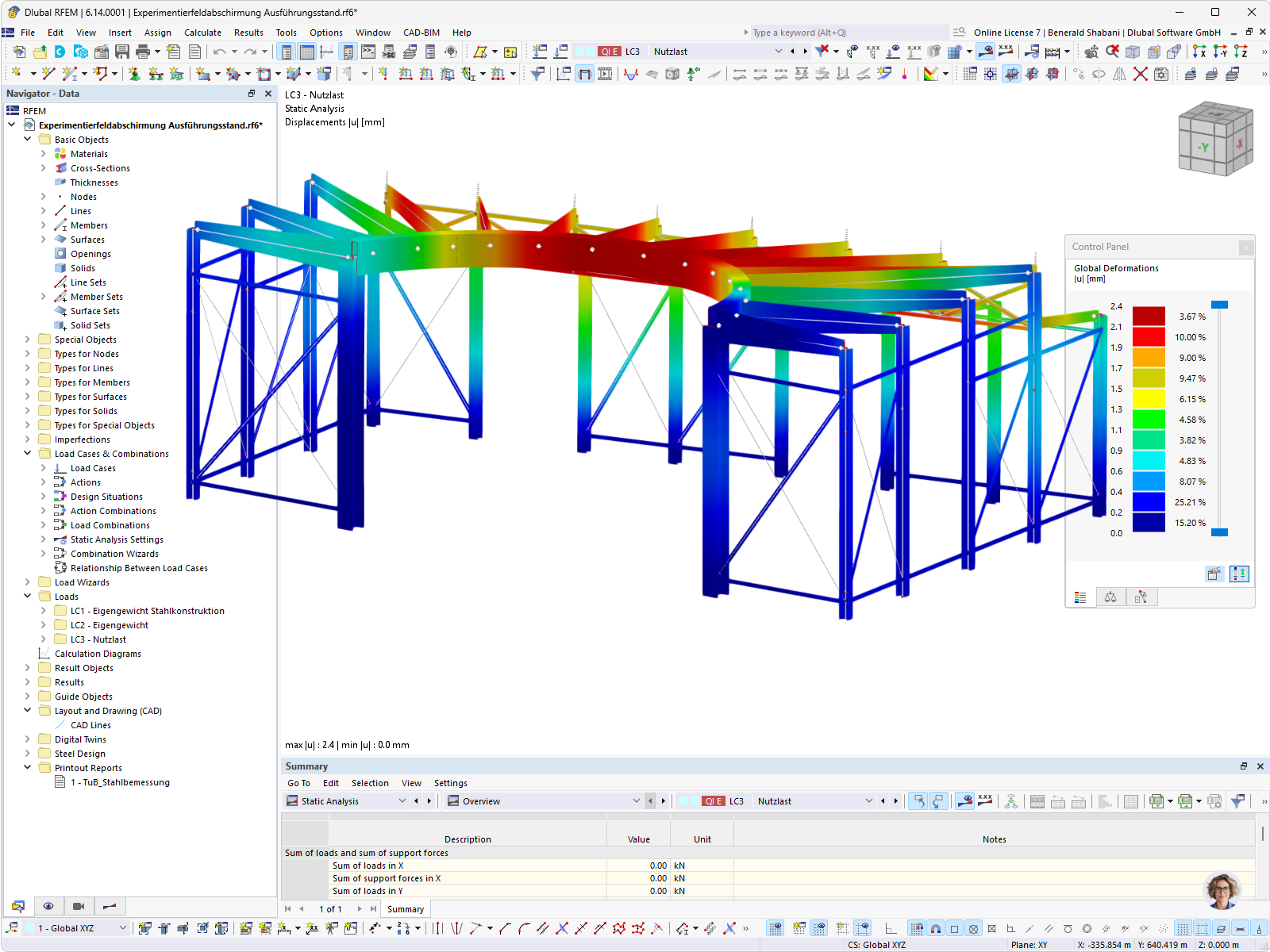
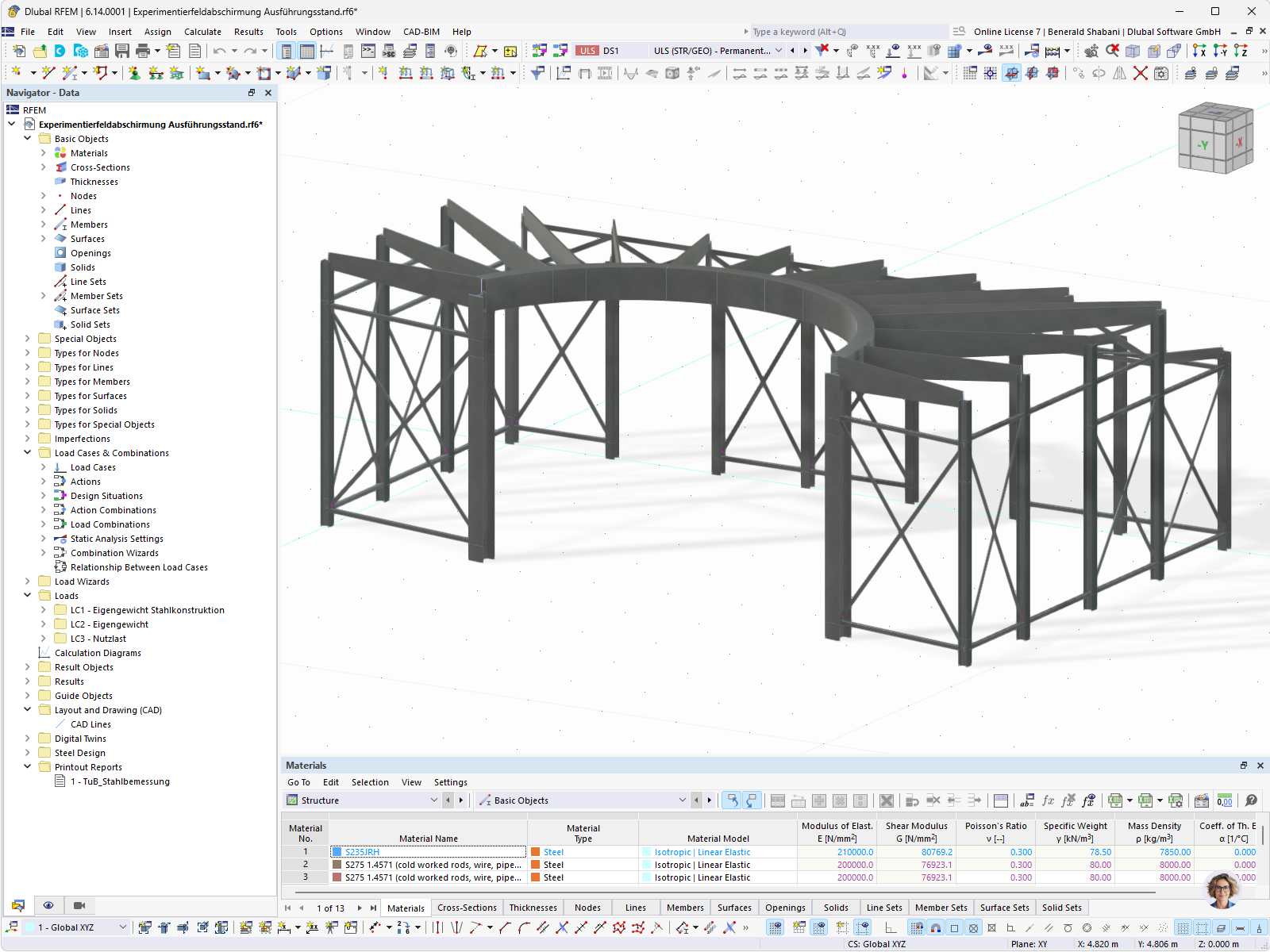
To handle this complex structure, Thomas Linder relied on Dlubal Software’s flagship RFEM in combination with the Steel Design add-on. The software made it possible to model the column-free, trapezoidal floor plan and the radially arranged roof beams exactly in 3D. What was particularly crucial was that RFEM handled the special material requirements without any problems. The program enabled precise stability verifications and load-bearing capacity calculations for the non-magnetic stainless steel, thereby ensuring the safety and extreme accuracy that are essential for a research facility of this kind.

Benefits

  • Extended material options: Unlike many programs that are limited to standard steels, the Steel Design add-on enables straightforward design of special materials such as non-magnetic stainless steel, including all stability verifications.
  • Transparent and traceable calculations: The detailed output of the results displays the exact equations from the standard. This prevents a “black box” character, builds trust, and allows the engineer to trace each individual verification per member.
  • Seamless documentation: The ability to work in parallel in the model and in the printout report is a huge advantage. Functions such as custom views, multiple printing, and automatic updating of the report when the model changes make documentation highly efficient.
  • Outstanding expert support: A Pro service contract guarantees fast telephone support that also helps with special topics. The Dlubal team also provides valuable tips on how workflows can be made simpler and faster.
Project Description and Geometric Design

Constructed in the West Neutron Beam Hall of the Heinz Maier-Leibnitz Research Neutron Source (FRM II), the radiation shielding structure “LaDiff” was designed to enclose the entire experimental area and safely shield radiation emissions. The structure is intended to allow for experiments with neutrons in a controlled environment.

The enclosure has a trapezoidal floor plan measuring approximately 10.0 m x 6.5 m, with no obstructive interior columns. On the diagonal side, the slab features a semicircular opening for material transport into the experimental room, which is supported by a ring beam resting on two columns. From there, radially arranged ceiling beams with variable cross-section depths distribute outward.

Technical Challenges and Digital Design

To ensure maximum radiation protection, the entire structure was covered with 5 cm thick lead cladding mounted on 10 mm thick stainless steel plates. Managing the resulting 80-ton load of the cladding while strictly adhering to minimal deformation tolerances was a key challenge for the team. It was also necessary to construct the entire substructure from a special, non-magnetic stainless steel.

To solve this problem, the engineers used comprehensive 3D building models in RFEM as early as the preliminary design phase to obtain reliable foundation loads for the highly indeterminate structural system. During the design phase, every member of the specialized frame, including the stability analyses, was precisely calculated. The seamless integration of the workspace and printout reports ensured that every adjustment was immediately documented in a way that was transparent to the structural engineer.

Why Dlubal Software?

For Thomas Linder and his team, Dlubal Software is the top choice for projects ranging from simple structural systems to highly complex 3D models. The software consistently impresses with:

  • Maximum multi-purpose capability: Suitable for everything from multi-story buildings to specialized scientific structures or renovations in timber structures, where nonlinear hinges account for slippage in dowel connections.
  • Integrated efficiency: Free features, such as the wind and snow load generators, save valuable time during structural load introduction.
  • Reliability & clarity: Highly efficient structural analysis, backed by responsive support, gives engineers confidence in their results at all times.