Project Presentation
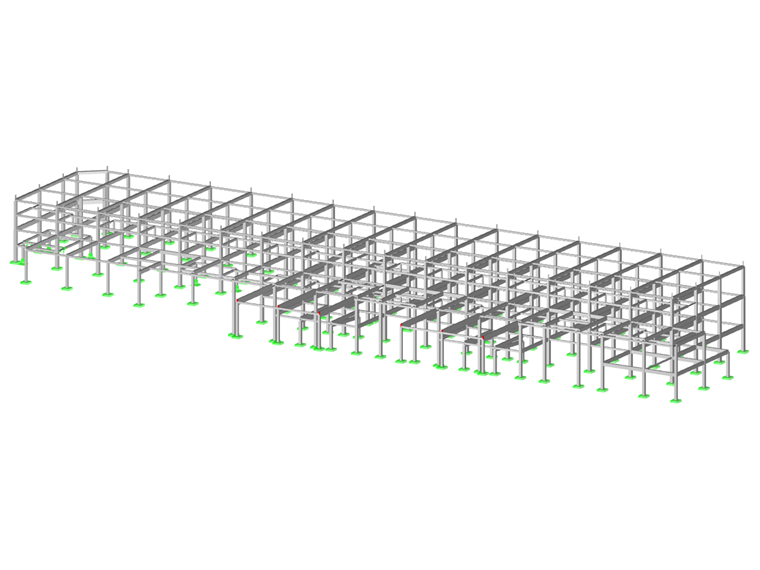
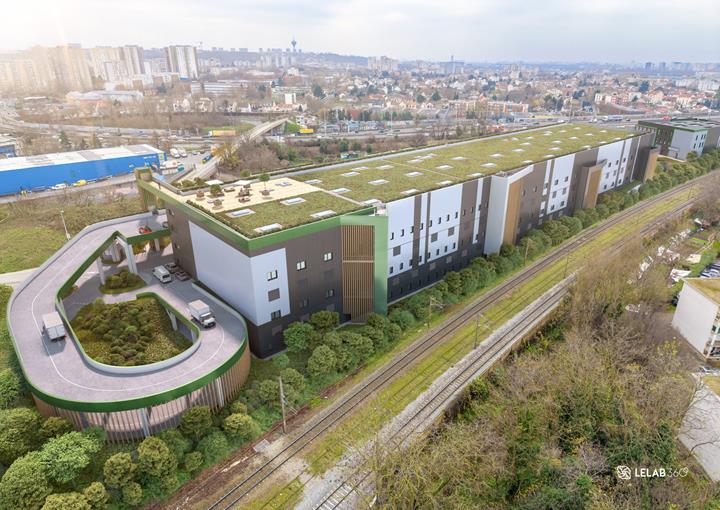
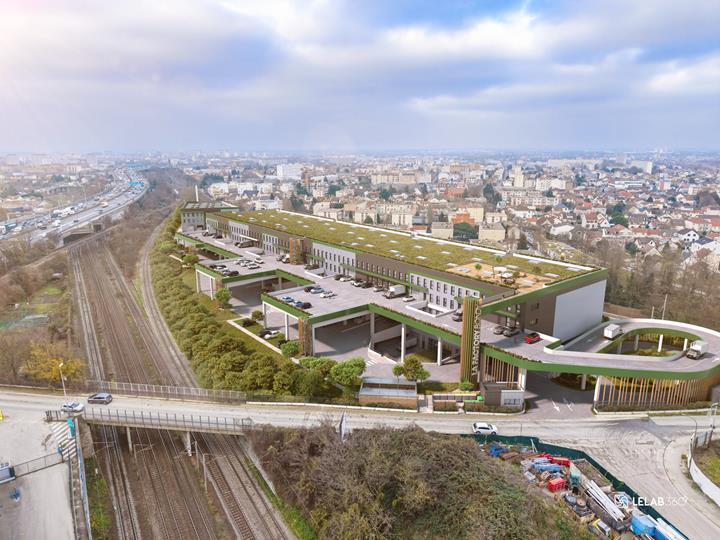
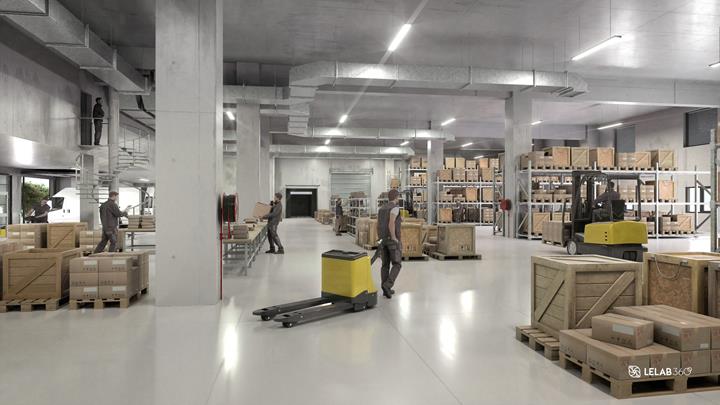
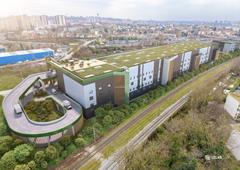
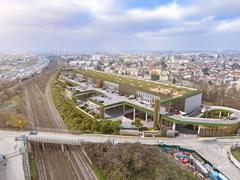
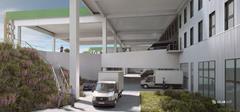
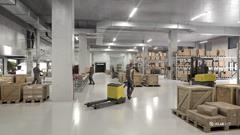
The main building was constructed on three levels, with a total floor area of 21,000 m² (226,042 ft²). The floor dimensions are estimated to be approximately 193 m (633 ft) long and 51 m (167 ft) wide. The building is used for various purposes, including heavy logistics areas accessible to heavy goods vehicles, urban logistics areas for commercial vehicles, and platforms for light industrial activities.
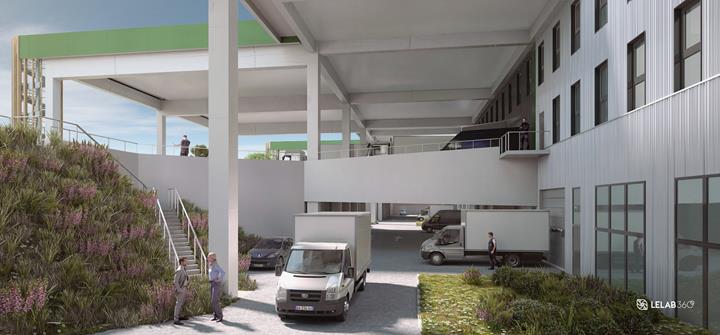
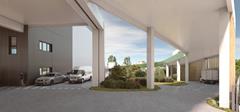
The building was designed with a clear height of 6.5 m (21.3 ft) on the ground floor and 7.7 m (25.3 ft) on the upper levels to allow for great flexibility in the interior layout. The loading docks were designed with both ground-level and dock-level access to accommodate various delivery methods.
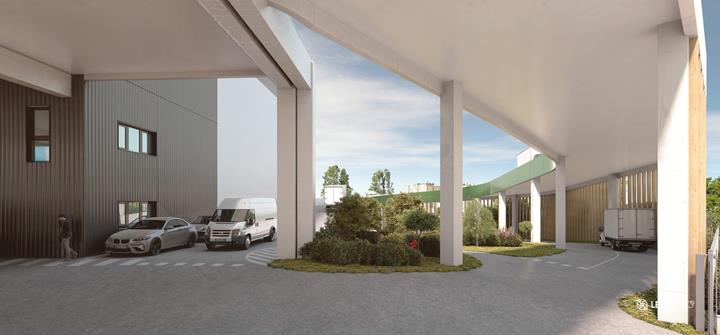
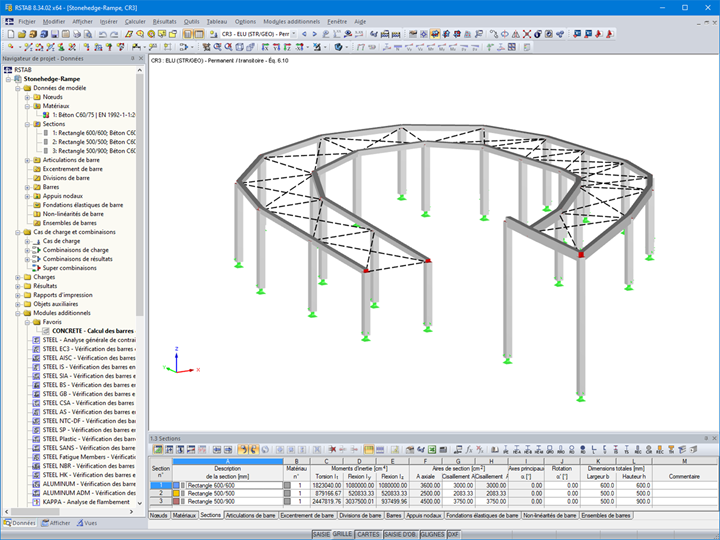
Traffic ramps were integrated into the structure to ensure vertical accessibility to the different levels for transport vehicles. Parking spaces for heavy goods vehicles are located on top of the structure and supported by a concrete structure designed to withstand high traffic and dynamic loads. A large area of the roof will be greened.
The building has been designed to achieve the BREEAM Excellent and BIODIVERCITY certifications, demonstrating a clear commitment to an ambitious environmental approach. Its location, close to the A3 and A86 motorways, as well as its accessibility via public transportation (RER E, Tramway T4, and Metro Line 11), makes it a strategic site. It is also just a few minutes from the Rosny 2 shopping center, further enhancing its logistical and economic appeal.
Technical Details
The project required a rigorous structural approach due to the mixed nature of the planned activities and the urban environment where it is located.
The highly variable operating loads, ranging from heavy goods vehicle traffic to the fitting out of light industrial units, required a structure that could adapt and withstand significant temporary loads. Due to its location in a densely populated area, the construction phases had to be rationalized, the available space had to be strictly managed, and careful logistics were required.
In this context, issues related to concrete shrinkage and creep posed a significant challenge in the design and dimensioning of the load-bearing elements. Delayed shrinkage, particularly in long elements, such as beams, can lead to cracking or unwanted deformation if appropriate structural measures are not taken. Creep, on the other hand, affects the long-term behavior of structures subjected to permanent loads, gradually modifying the distribution of internal forces, which may lead to a loss of prestressing or a redistribution of moments in statically indeterminate structures.
These phenomena have been taken into account in particular in the selection of materials, the management of loading phases, and the definition of allowable deformation limits. They have also influenced the selection of certain prefabricated elements, whose delayed behavior can be more effectively controlled in the factory by strictly controlling manufacturing and drying conditions.
Access ramps generate significant horizontal forces that must be correctly transferred to the frame structure. Furthermore, the presence of superstructures for parking heavy vehicles required specific design of the slabs and beams, with clearance heights and reinforcement adapted to traffic loads.
Using precast concrete reduced on-site work time while ensuring consistent installation and optimal quality of the load-bearing elements. This construction solution also offers high precision in the layout of the elements, facilitating assembly, structural continuity, and control of delayed reactions over time.
Calculation Tools
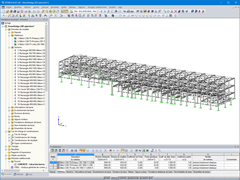
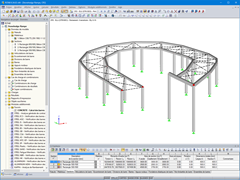
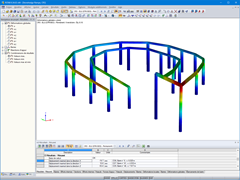
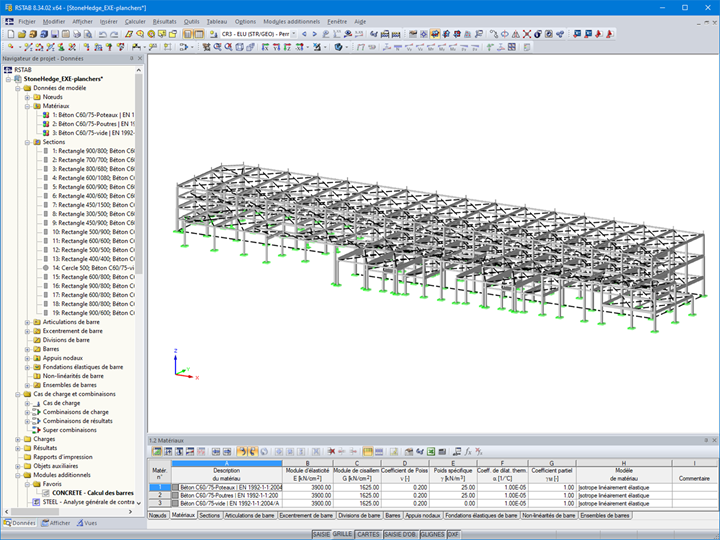
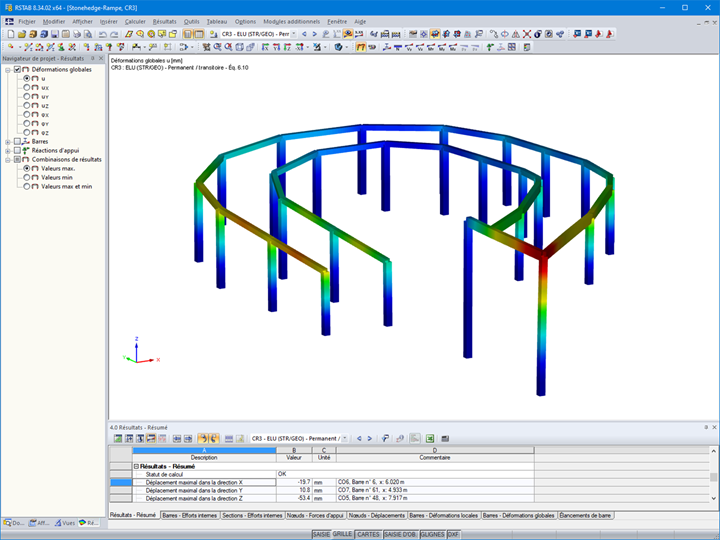
The entire structure was modeled and designed using the RSTAB software, which is particularly suitable for analyzing precast concrete structures in a three-dimensional environment.
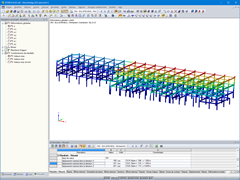
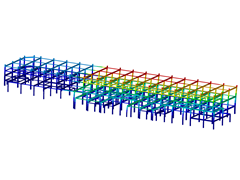
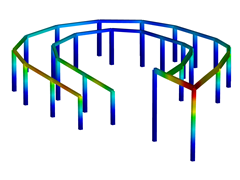
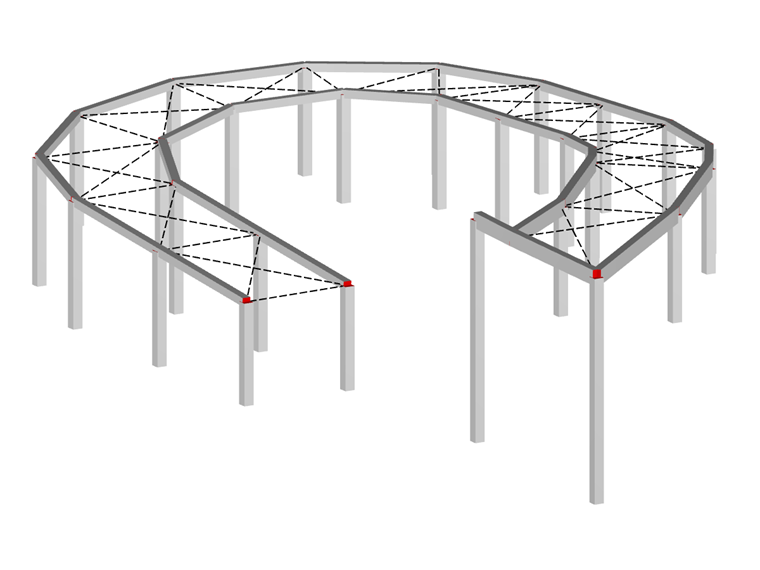
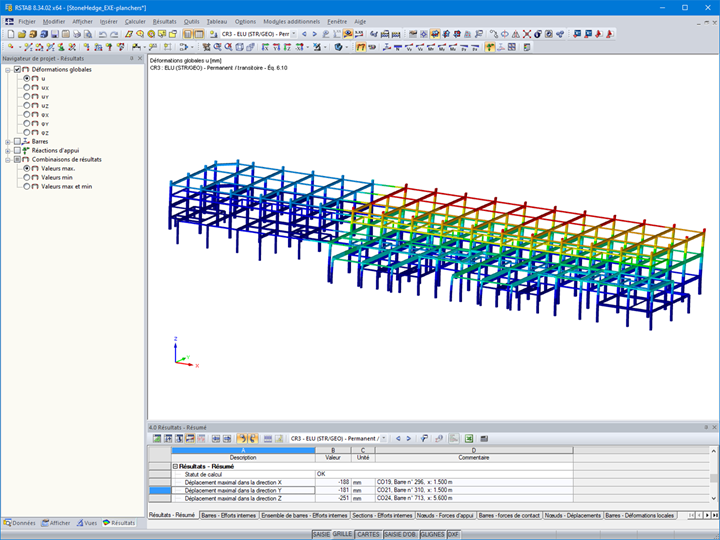
Each load-bearing element was integrated into a detailed digital model, enabling precise simulations of internal forces, deformations, and support reactions. The columns, beams, and secondary beams were designed taking into account the specific loads for each area, including overloads due to industrial vehicle traffic, forces due to inclined ramps, and dynamic actions induced by moving loads.
The ultimate and serviceability limit states were designed in accordance with the applicable standards. Particular attention was paid to the overall stability of the structure, the buckling resistance of the vertical elements, and the design of the connections between prefabricated elements, which are subject to complex, eccentric loads.
Conclusion
Thanks to the computational power of RSTAB and a precise modeling of the frame, the structure could be optimized in terms of cross-sections and spans to ensure technical efficiency, material savings, and compatibility with the construction site requirements for prefabrication and lifting.
| Location | 16 chemin des Carrouges 93140 Bondy France |
| Engineering Office | SPIC SAS |
| Investor | GSE |
| Project Management | AECO |
| Client/Investor | Stonehedge |
.jpg?mw=720&hash=f9a3ea9338639d9f68fa91ab5a901552880ef014)
.jpg?mw=240&hash=d88fcdf048e91c2fd7166b4ff4118cfd85eaa377)