


Even in ancient times, during the era of great buildings like the Colosseum in Rome, it was common for a master builder to oversee the construction of such monuments. They were responsible for both the design of the building and the planning and coordination of its execution. In modern construction, however, this is different.
Nowadays, architecture and engineering are strictly separated. This is mainly because both fields have become much more complicated and extensive. They have grown apart, so to speak, and this has had consequences. It is not uncommon for the two parties to be at odds. Architects' designs are "not buildable," and engineers' implementation plans have too many proposed changes. Is it even possible today to have architecture and engineering from a single source?
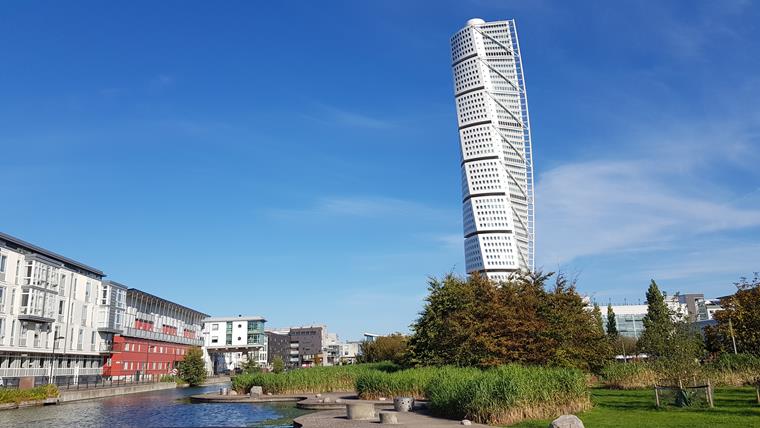
Santiago Calatrava is a Spanish architect, engineer, and sculptor who has followed this path precisely. He is known for his unique, futuristic buildings. These organically shaped works of art attract attention in major cities around the world, like sculptures.
Calatrava's buildings are real tourist magnets. Not just because the roofs are often dazzlingly white, even years after construction. New? Washed with a special detergent? No! Pure white ceramic tiles cover the buildings like a scaly skin. Beautiful! As long as you don't look too closely. But more on that later.
Innovative construction meets artistic design — a recipe for success! In this article, we take a closer look at the man behind it all: Santiago Calatrava. How did he become so famous, and why is he still persona non grata in some countries? Read on to find out!
Santiago Calatrava: Career and Education
Santiago Calatrava was born on July 28, 1951, in Valencia, Spain, and he comes from a noble Spanish family. He first studied architecture at the Polytechnic University of Valencia, then civil engineering at the Swiss Federal Institute of Technology in Zurich. In 1981, he earned his doctorate with a thesis on the foldability of trusses and established his firm, "Santiago Calatrava AG", in Zurich. Two more offices followed in 1989, one in Paris and one in Valencia.
In 1992, he was awarded the Gold Medal of the Institution of Structural Engineers. Since 1908, this medal has been awarded to professional structural engineers to recognize and promote their work. Santiago Calatrava continues to work in Zurich and New York today.
What Makes Santiago Calatrava's Structures So Special
His designs caused a sensation right from the beginning. He draws inspiration from nature, which is always in motion. It's understandable, then, that he incorporates moving elements into his buildings, reminiscent of animal movements or human anatomy. He usually relies on a harmonious mix of different materials, mostly steel, concrete, and glass, in his designs.

Hardly any major European city has not asked Santiago Calatrava to design a building for its city center. His works are popular because they stand out through their shape, color, and material.
To illustrate, we have selected some of his most famous buildings for you. What makes them special? What is typical of buildings designed by Santiago Calatrava?
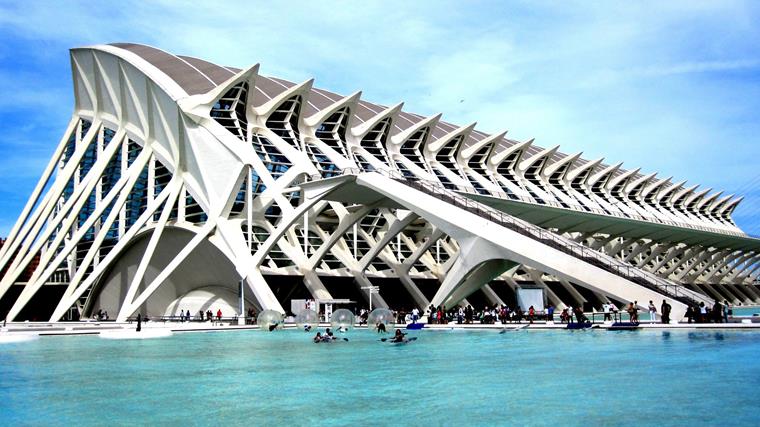
When you think of Calatrava's buildings, the Ciudad de las Artes y las Ciencias in Valencia probably comes to mind first. It's a complex name for a complex cultural and science center. Its futuristic shape resembles a sea creature, and its flowing lines make it appear almost alive.
The Milwaukee Art Museum, on the other hand, stretches from the sea to the sky. Its roof immediately catches the eye, and the best part is that these white wings are actually movable. It's no wonder this is one of his most famous works.
However, Santiago Calatrava did more than create museums and other cultural institutions. He also designed and built a series of transport and traffic structures. The flowing lines and technical sophistication of his designs transform everyday structures like bridges, train stations, and subway stations into impressive works of art.
The World Trade Center Transportation Hub in New York City, also known as the “Oculus,” is probably the best example of this. Its unusual shape quickly made headlines. However, he did not receive only praise for this project or for some of his other works.
Santiago Calatrava: Criticism and Controversies
For decades, buildings designed by Santiago Calatrava have been guaranteed to be successful. Tourists love these extravagant buildings with their striking shapes. However, a closer look at Calatrava's projects reveals media reports showing a different side of the star architect.
Double construction costs, significant delays, and an arrogant attitude toward clients—the headlines pile up. It's not unusual for architects to be criticized in the press. Zaha Hadid experienced something similar, as we discussed in another blog post. If you are interested in this topic, you can find the Blog Post on Zaha Hadid .
But what was behind the criticism of Santiago Calatrava, an architect and engineer who has won over clients worldwide? Quite a lot, actually. Of course, mistakes happen, and we are all human. However, when coincidences and problems pile up, it's reasonable to conclude that the work hasn't been done properly. We will show you a few examples.
Calatrava's Structures: Between Admiration and Architectural Blunder
Santiago Calatrava is one of the most famous architects of our time and has received commissions from all over the world. Every major city has at least one of his sculptural projects.
To give you an initial overview, let's start in his homeland. He received a great deal of criticism here, partly due to massive flaws in his buildings. The situation became so dire that he closed his office in Valencia in 2012. But let's take it one step at a time.

Projects in Spain and Portugal
The most famous buildings by Santiago Calatrava are striking, monumental structures with flowing shapes that stand out in any cityscape. Initially, the architect and engineer designed mainly bridges, such as pedestrian bridges. Even then, his motto was the more prestigious and monumental, the better.
Alamillo Bridge in Spain
Calatrava gained international fame with the Alamillo Bridge (Puente del Alamillo) in Spain. This cable-stayed bridge spans the Guadalquivir River in Seville, the capital of Andalusia. Calatrava designed the harp bridge for Expo 1992, setting a new milestone in bridge construction technology.
The Alamillo Bridge was the first cable-stayed bridge in the world without back anchoring. The bridge was originally designed as a double bridge, but it became clear in the planning phase that one bridge would be expensive and complicated enough. This was a recurring theme in most of his designs. Therefore, only one bridge was built, and it is impressive nonetheless.

City of Arts and Sciences
(Ciutat de les Arts i les Ciències, Valencia)
As we mentioned earlier, one of Calatrava's biggest projects is the City of Arts and Sciences in Valencia. The City of Arts and Sciences in Valencia. Calatrava designed this park and building complex together with Spanish architect Félix Candela. Construction began in 1991, and the first building opened seven years later. Since then, the complex has been considered a Valencia landmark.
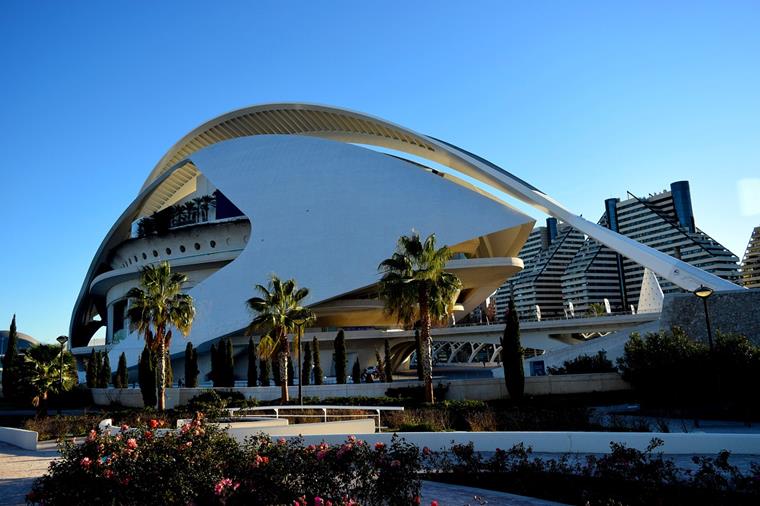
The Palau de les Arts Reina Sofía opera house, which opened in 2006, is part of the cultural and scientific center. Its design immediately catches the eye. In particular, the narrow roof attracts attention because it looks unusual. With its curved exterior walls, the building provides around 40,000 m² of space. It is also considered the opera house with the largest enclosed volume in the world.
Its four halls can seat a total of around 3,800 people. Given its total area of 40,000 m², would you expect more? For comparison, the large and small halls of the Elbphilharmonie in Hamburg can seat up to 2,700 people depending on the stage configuration, which is not much less. Would you like to learn more about Hamburg's landmark, the Elbphilharmonie? Then take a look here:
Elbphilharmonie in Hamburg
.
The capacity of the halls is not the only reason why this opera house in Valencia has received negative criticism. It is considered too large and monumental. At around €1.2 billion, construction costs exceeded the planned budget fourfold. Furthermore, the appearance of this sculptural building has its drawbacks.
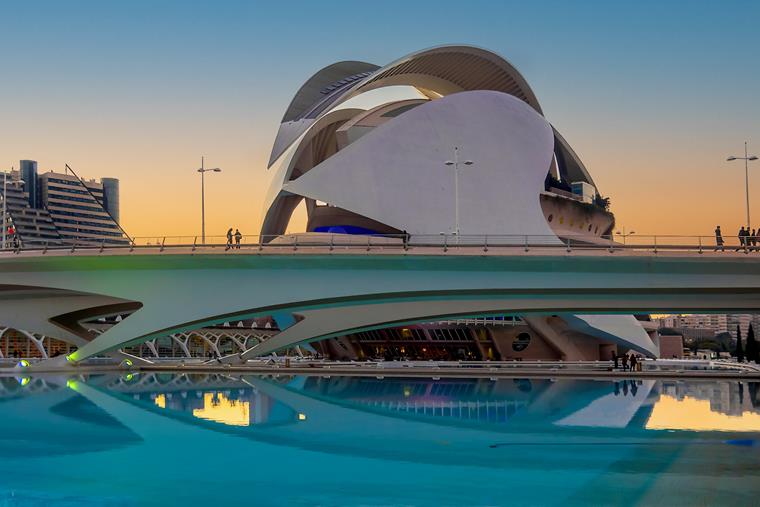
Due to its unusual shape, maintenance work was time-consuming and costly. Much of the outdoor area was completely unusable. To make matters worse, the facade began to crumble at the end of 2013. Parts of the ceramic cladding came loose and fell to the ground. The opera house was reopened to the public only after the facade had been restored to its original appearance.
The city government sued the architect and engineer — and won. Calatrava was ordered to repay the costs. To this day, this project remains a symbol of oversized prestige buildings.
Congress Palace (Palacio de Congresos), Oviedo
When it comes to Calatrava's most impressive buildings, the Congress Palace in Oviedo, Spain, is a must-see. It was commissioned directly by the Spanish royal family. It was built and named after Princess Letizia, the wife of the heir apparent at the time.
The palace consists of three buildings. Underground parking and a large shopping arcade provide visitors with space to stroll around. The central part of the palace, spanned by a large dome, is immediately striking. This is where meetings and exhibitions take place.
The entire complex is surrounded by a U-shaped development. It houses a hotel with around 150 rooms and various offices. The elevators are located in the columns of the peripheral buildings. A special highlight was to be a movable roof that would emphasize the building's biomorphic architecture. However, things did not go as planned.

First, it took four years longer than planned and ended up costing much more than anticipated. So far, nothing unusual. We are well aware that large-scale projects rarely stay within budget. In our article Large-Scale Construction Projects in Germany , we examined the reasons behind this phenomenon. Take a look!
However, there were even more problems. During construction, the roof collapsed in 2006. Was it due to incorrect assembly? Or just bad luck? No, it was a construction flaw on the part of Santiago Calatrava, as a Spanish court ruled in 2014. The collapse caused €3.4 million in damages. The collapse resulted in additional costs. But that wasn't all. Jovellanos XXI had spent €6.95 million to ensure the Calatrava-designed roof could be moved. However, due to problems with the hydraulic sliding system, this plan fell through.
In the end, minus the fees still to be paid, Calatrava had to pay around €3 million in damages. This dealt a significant blow to his reputation in Spain and abroad. Given that his firm charges such high fees, mistakes like this should not be allowed to happen.
Even today, public opinion on the building is rather divided. While many visitors praise its aesthetics, others note that it does not fit into Oviedo's cityscape at all. Surrounded by historic buildings, the palace seems out of place. Additionally, large parts of it stand empty, especially the shopping arcade. It's definitely a shame, but also foreseeable.
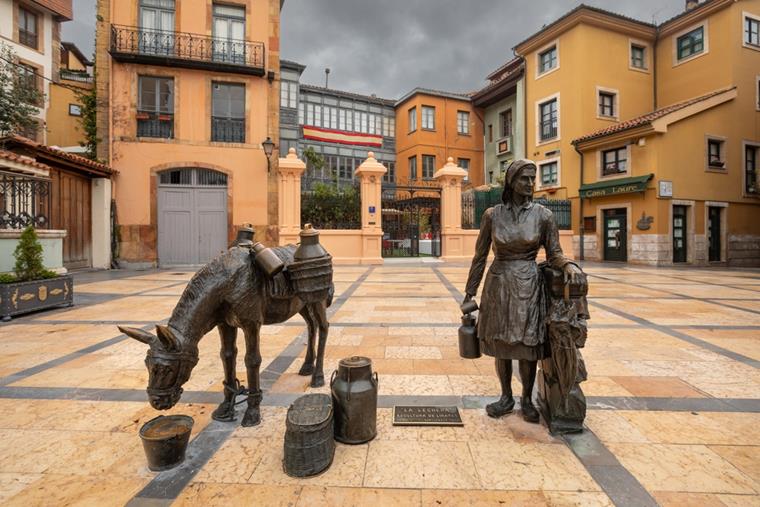
After all, maintaining such a large structure regularly is necessary, and that takes a lot of time and money. One visitor's assessment sums it up quite well: Should a building's prestigious appearance take precedence over its functionality and integration into the environment?
Calatrava's Buildings Around World
Santiago Calatrava is one of the most controversial architects. His curved buildings have set the standard in some of the world's largest cities. Despite regular criticism, he continued to receive more and more commissions. This was also the case in the United States.
Main Hall “Oculus,” New York
It was an emotionally and monumentally important commission for Calatrava. He was asked to design the main hall of the One World Trade Center Transportation Hub in New York City. Given its role in the memorial to the World Trade Center attack, it was clear that something extraordinary was required. Something striking, large, and spectacular. Calatrava accepted the commission.
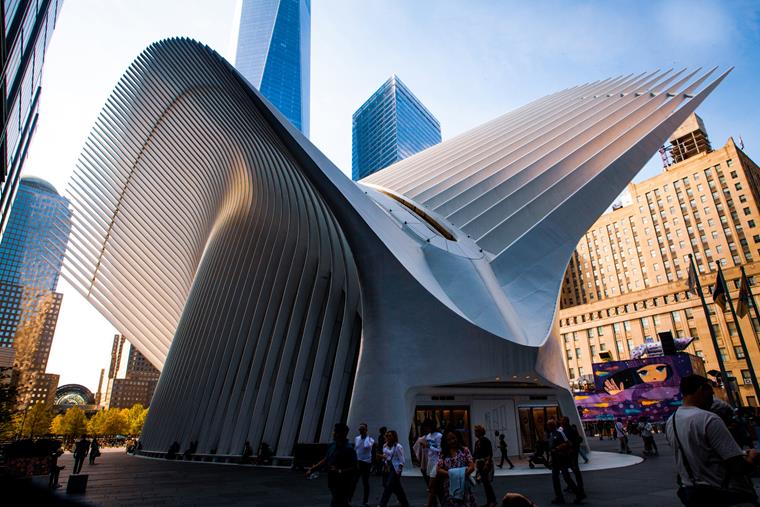
If you visit the One World Trade Center today, you can't miss the train station. With its bright white ribs, the striking building was modeled after the wings of a white dove. On every anniversary of the tragedy, the roof opens to let sunlight in at exactly 10:28 a.m., the time of the impact.
It sounds nice, doesn't it? So, finally, a building by Calatrava with nothing to criticize? It would be nice, but it's unlikely. Here, too, the series of justified criticism continues. First, the construction period was 12 years, much longer than agreed upon. Two to three years had been expected. At a cost of nearly $4 billion, the building is probably 'the most expensive railway station in the world, even though only half that amount was budgeted. Was this immense sum worth it, though?
The Oculus Hall is impressive, both inside and out. Both inside and out. The large amount of glass, in particular, makes it appear open and inviting despite its use as a station concourse. It is nothing like ordinary stations. However, as with many of Calatrava's buildings, the devil is in the details.
For example, such an important station is logically very busy. Thousands of visitors stream in and out every day. The only problem is that there are not only too narrow stairs, but many of them leading down to the tracks. When you have to push your way past people, it is difficult to find your way around. In addition, a few years ago, the roof opening mechanism began to leak. So it rained inside the $4 billion station. The repairs were extremely complex and expensive.

Further Problems with Calatrava's Structures
We could go on like this for quite some time. However, we would mostly be repeating ourselves: too expensive, too long construction time. These are the main problems Santiago Calatrava's clients usually face. But there are others. Often, they are minor issues; sometimes, they are major faux pas. We will list a few of them here for you.
- In the city's opera house in Valencia, for example, the stage is not visible from all seats.
- The glass walkways on bridges in Venice, Murcia, and Bilbao were slippery, so they needed to be treated with a protective coating.
- There were no toilets in the Valencian Science Museum.
- High maintenance costs were incurred for a movable gold sculpture in Madrid, amounting to a quarter of the city's total budget for all 2,000 monuments.
- Water damage caused by decorative ponds designed to reflect buildings
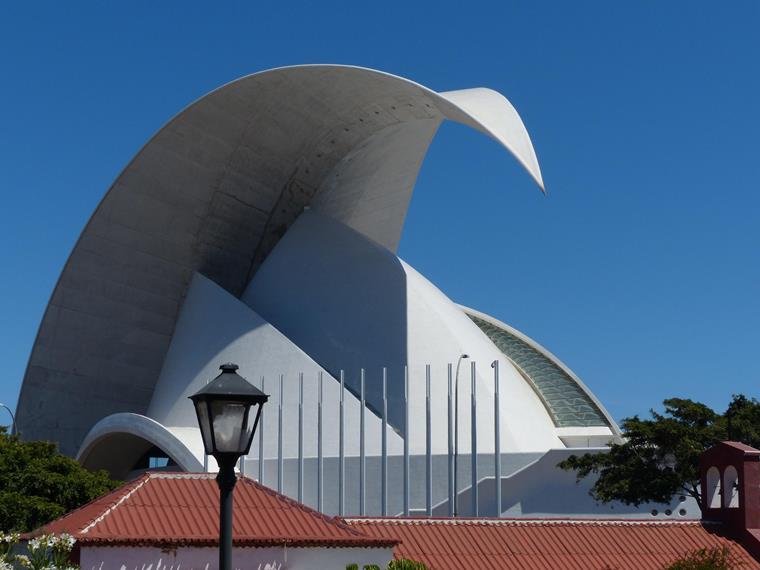
On the other hand, you could say that every city with a Calatrava building has something unique. Or does it? Many buildings touted as unique are actually very similar. There are multi-purpose halls or convention centers in Oviedo, Valencia, and Tenerife that seem frozen in time. Their design and overall style are strikingly similar. The same goes for the curved bridges in Barcelona, Bilbao, and Seville.

Conclusion on Santiago Calatrava
What is Santiago Calatrava doing today? He continues to work in his offices in Zurich and New York City. He continues to receive commissions. He has been persona non grata in his native Spain since the Spanish economic crisis, if not before. The economy began to falter in 2006, and the real estate bubble burst in 2008. It's no wonder, then, that Calatrava's magnificent buildings fell into disrepute at that time. Following the crisis and his court cases, he closed his Valencia office in 2012.
His colleagues are largely invisible, and each of his buildings bears the Calatrava brand. Nothing is known about the master students to whom he passes on his knowledge. Will the era of white, monumental buildings end with him? Only time will tell.
Elegance and escapade both apply to Santiago Calatrava. There is no question that his buildings are oversized, monumental, and impressive. However, the heated debate surrounding this architect and engineer raises an important question about the role of modern architecture in our society. Should aesthetics take precedence over function?
Buildings intended to transform entire cities into attractive metropolises, similar to the Bilbao effect, must certainly make an impression. However, most cities with Calatrava buildings do not need this. New buildings should instead be based on the style of their surroundings and the location's history.
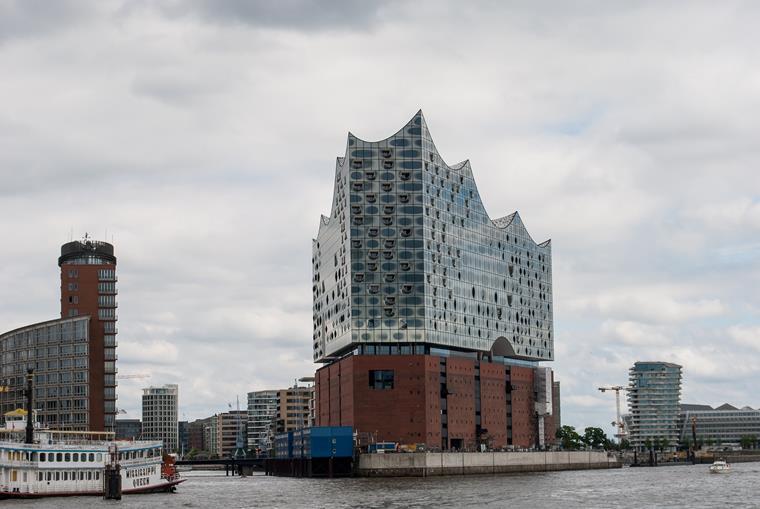
The Elbphilharmonie in Hamburg has successfully achieved this balance between historic old town and modern architecture. It merges a historic warehouse base with a wave-shaped glass structure that references the river's importance, forming a unified whole. Modern meets tradition. It just works. This is a place where history is told.
On the other hand, in Calatrava's buildings, it seems as if the architect has forced his design onto the cityscape in an inappropriate way. There is no connection to the surroundings. This is particularly noticeable in the Congress Palace in Oviedo. The modern, gleaming white building with the opulent roof simply does not fit into the city. It looks out of place, as do many of his large, prestigious buildings.
Of course, architects are artists too, especially Calatrava. He designed his buildings piece by piece from organic shapes and created the first designs as watercolor drawings, which were published. He masters his craft. However, being an architect and engineer involves more than that when it comes to building a successful project.
There is a lack of individual solutions and a lack of willingness to engage with the city in question. Of time. The question is: What does the city need in terms of a building that represents it? The focus should not be on making a building look as spectacular and unique as possible. As soon as "spectacular, unique art" becomes interchangeable — and some buildings that are very similar to each other are just that — it has missed its mark.
Numerous reports and court rulings surrounding Calatrava paint a fairly clear picture. One possible consequence is that architects like Santiago Calatrava bear some of the blame for the profession's current negative public perception. They want too much: too big, too expensive, and too unnecessarily pompous.
Conventional construction with concrete is uninspiring. Yet, architecture has so much more to offer. Today, we no longer have to choose between buildings that look good and buildings that fulfill their function. There are numerous modern approaches to combining aesthetics with functionality and sustainability, if one is willing to explore them.
Occasionally, the meaning and purpose of why we build structures seems to be forgotten, not only by Calatrava but also by others in the construction industry. Buildings serve people. They don't serve a higher monumental purpose or the ego of a single person or group. The goal is to make people feel comfortable, whether they are there briefly as travelers, visitors, residents, or office workers. Two principles of modern construction have always been at odds with each other: one focuses on aesthetics, and the other focuses on function. However, we believe that the latter is often completely neglected.
What good is a building that looks good, but has an impractical layout and requires a lot of maintenance? Likewise, what good is a building that is functionally designed, can be built and operated reasonably cost-effectively, yet does not appeal to visitors? Aesthetics and functionality must be intertwined. As an architect and engineer, Calatrava should be able to combine these two sides, as he is familiar with both perspectives.
In the future, we would like to see the construction industry working together rather than against each other. Architecture is and will always be a service, as well as the foundation for others' work. Artistic freedom within a predefined framework is not unique to Calatrava; other architectural greats, such as Norman Foster and Zaha Hadid, have also achieved this with similarly spectacular results.