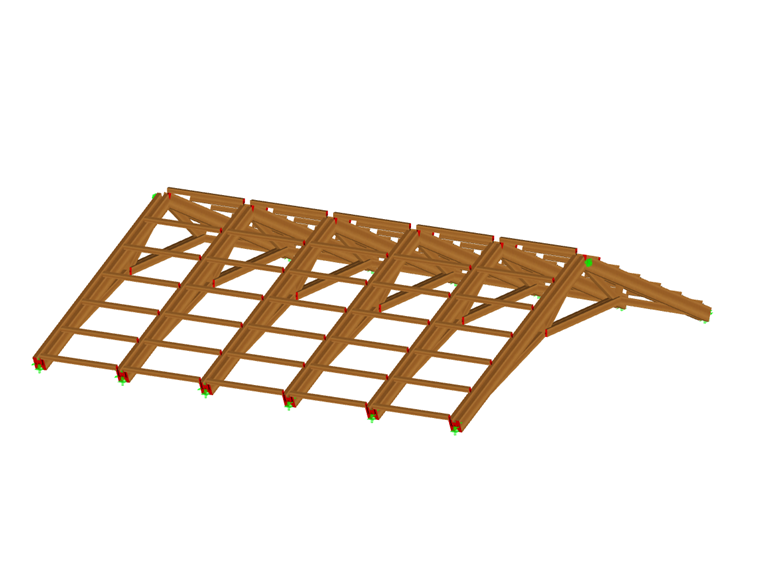
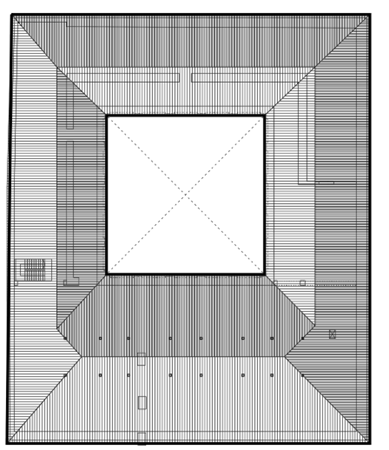
The work itself involves the restoration of the building's envelope, although this calculation and construction development corresponds to that of the entire roof. It is a rectangular building with an interior courtyard in the form of a cloister, one of the four wings that make up the square being larger than the rest. This presentation specifically addresses this area, as the others are constructed using a simple asymmetrical gable system like a ridgepole.
A roof plan is detailed below:
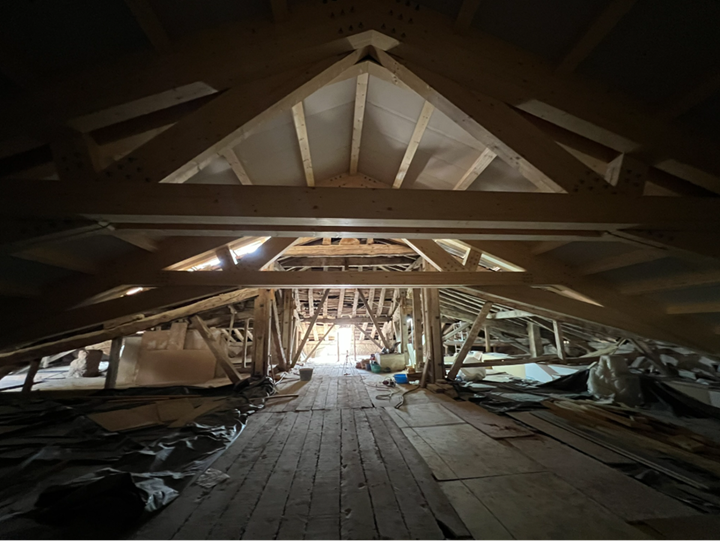
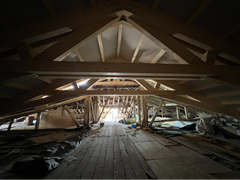
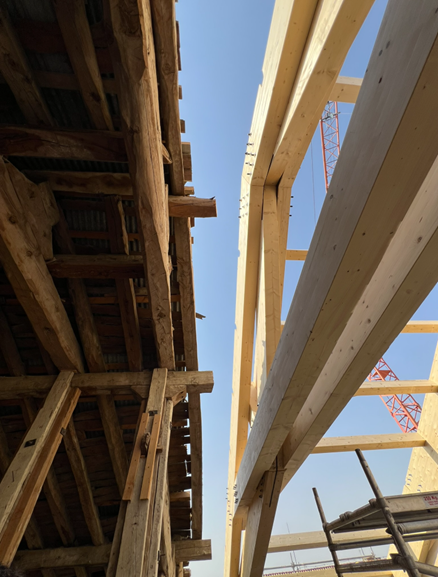
Prior to this intervention, there was the following layout, which divided the lower space into three areas, leaving most of the space unusable and in poor condition:
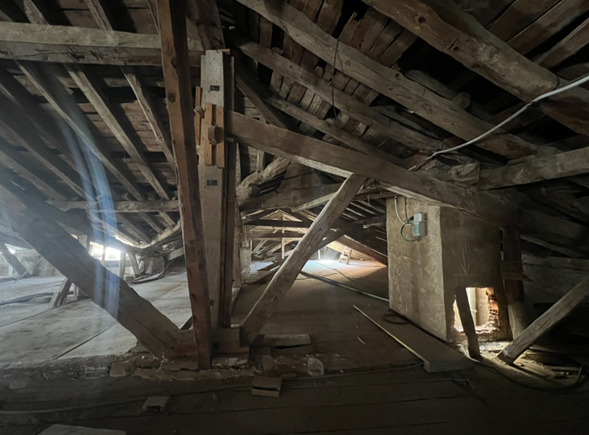
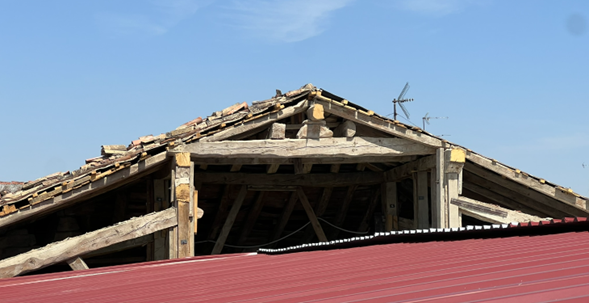
The first photo shows the phase prior to dismantling one of the roof trusses on the main facade. The second photo shows the section of the roof during dismantling, where the previous structural system can be seen.
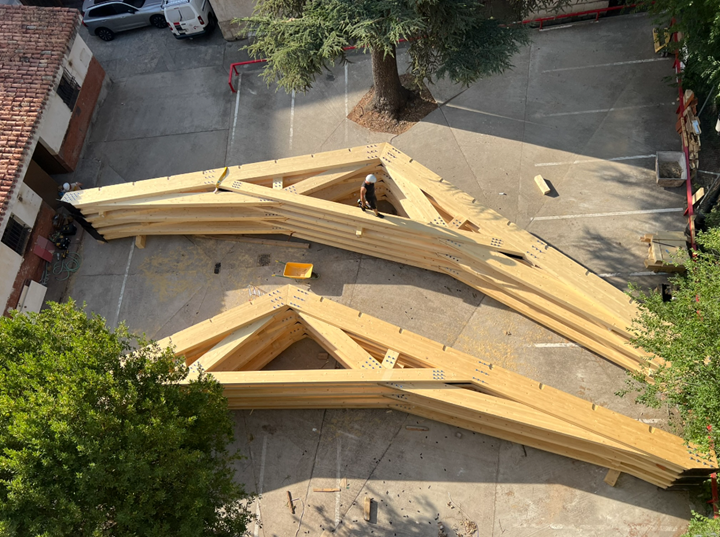
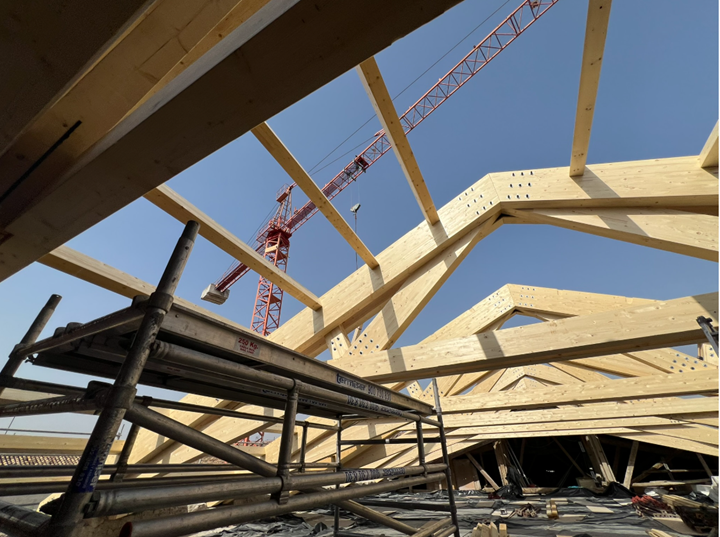
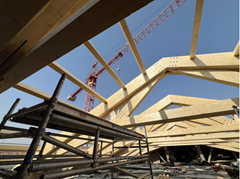
For the intervention, a system is proposed that allows the largest space under the roof to remain completely open, so a type of truss is proposed that combines scissor trusses with raised struts, combining the use of brackets and large-section GL24h laminated timber double pieces to avoid longer lengths or variable sections.
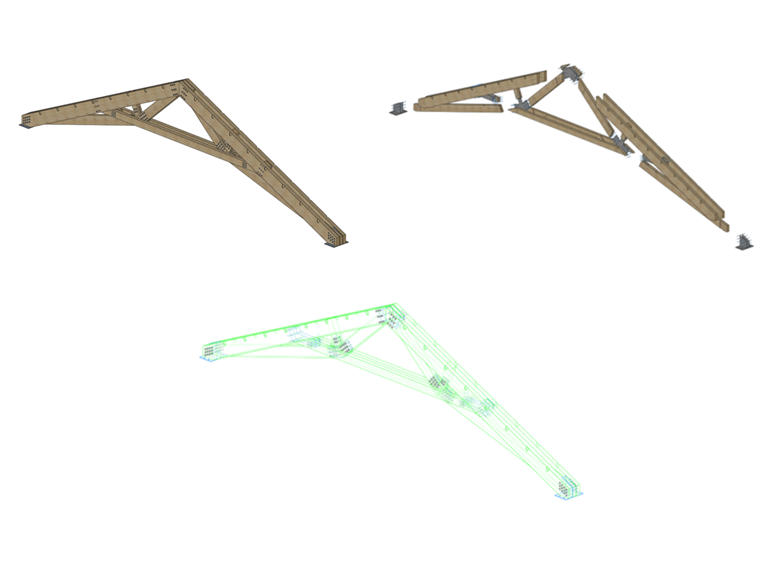
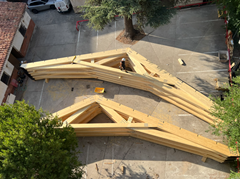
The rest of the roof areas are currently being constructed, as well as the facade, and the project is expected to be completed by August 2026. At the time, the construction of the Episcopal Palace took twenty years, culminating in 1799, with the leaks that existed prior to the intervention being a major problem. The new roof will be supported by these timber trusses, which will allow the space to remain open and free of all the elements that had supported it until now. During assembly, the trusses were lifted with a heavy-duty crane, after being assembled in the building's outer courtyard, up to the building's wide stone walls and assembled together with laminated timber purlins, filled with a sandwich panel and curved ceramic tiles installed dry on battens, following the system that was previously installed.
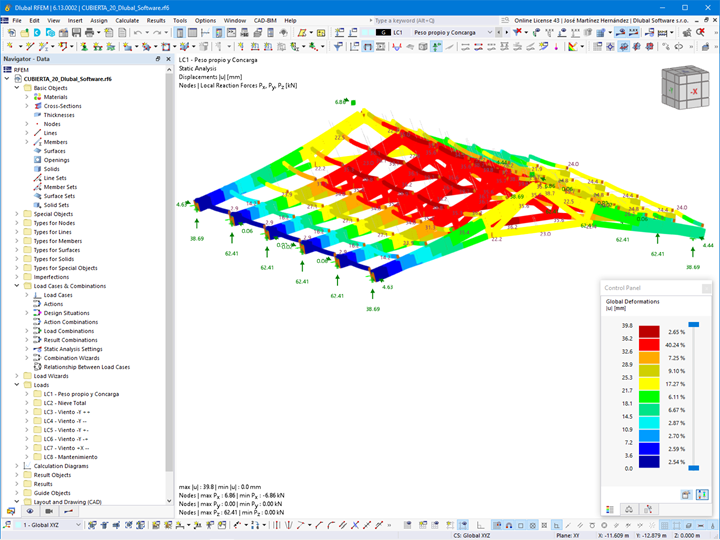
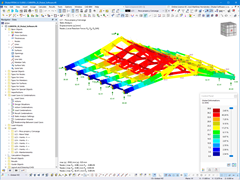
The software used was Dlubal's RFEM, both for numerical modeling and for the dimensioning of the laminated timber members and the connections with S 275 JR steel plates of different thicknesses and threaded members of different diameters in the trusses to ensure the correct connections between the pieces, achieving a structural solution with great stability and optimal elastic behavior without transmitting lateral forces to the existing walls.
| Location | Palencia Episcopal Palace C. Mayor Antigua, 25-19 34005 Palencia Spain |
| Structural Design | Violeta González Alegre Orgánica Ingeniería en Madera |
| Architecture | Además Proyectos. Architects: Florentino Díez and Ignacio Vela Palencia |
| Structure Fabrication | Arte y Construcción |
| Construction | Rivero Construcciones |