


By the end of the 20th century, the concept of architecture was clearly defined: Architects always had their masterpiece in mind—an isolated building. The surrounding environment was generally given little consideration; after all, record-breaking structures followed one after another, alongside prestigious projects. The design of a single building took center stage.
Today we’re focusing on Denise Scott Brown, a woman who saw all of this in a completely different light. She is considered one of the greatest architectural theorists of the century and yet was never given the recognition she deserved. And this despite the fact that her partner and husband even received the Pritzker Prize for their joint work—the highest international honor an architect can receive.
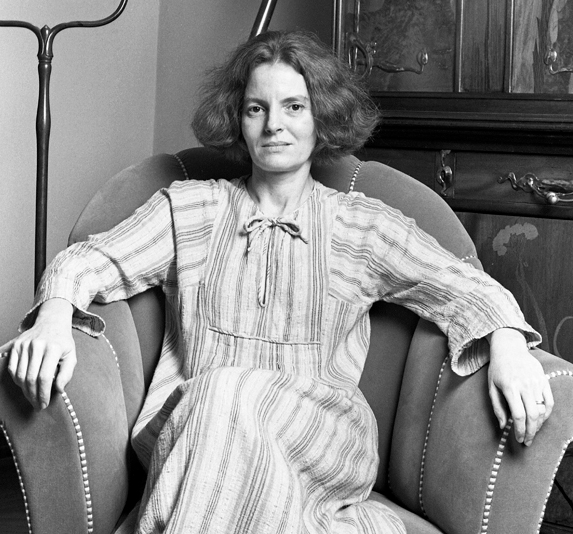
Who is Denise Scott Brown?
Denise Scott Brown is originally from South Africa. She was born on October 3, 1931, as Denise Lakofski and grew up primarily in Johannesburg. From 1948 to 1952, she completed part of her training as an architect there and then switched to the Architectural Association School of Architecture in London to complete her degree.
During several study trips throughout Europe, she gathered inspiration, which she subsequently brought with her to the United States. There, she studied urban planning at the University of Pennsylvania. By the end, she had earned two master’s degrees—in architecture and urban planning. Through these two fields, she developed a completely different and at the time revolutionary view of what architecture should be.
Denise Scott Brown: Projects and Key Research
Unlike many architects and urban planners, she did not limit herself to office work after earning her degrees but instead embarked on a teaching career. In the 1960s, she taught at the University of Pennsylvania, Berkeley, UCLA, and Yale. Her teaching allowed her to devote herself entirely to research.
Gradually, she developed new methods of urban analysis. How do people actually move through cities? How can people’s everyday lives be translated into architecture? In fact, many of her later projects stemmed from research and study projects with students.
Denise Scott Brown: Learning from Las Vegas
Her most famous study, “Learning from Las Vegas,” began in 1968 at the Yale School of Architecture. The results were published in 1972, and even today, “Learning from Las Vegas'” remains an absolute must-read for anyone interested in urban planning. This work was revolutionary.

Together with Robert Venturi and Steven Izenour, she analyzed the architecture and advertising culture of the Las Vegas Strip—a place that architects, in particular, tend to be reluctant to examine more closely. After all, Vegas is loud, garish, and chaotic. Nothing that fit the perfect, elegant shapes of that era. After all, masterpieces like the Sydney Opera House, which we’ve already discussed, were being created elsewhere during that time. If you’d like to read more, click here: .
Denise Scott Brown and her partners weren’t interested in condemning the Las Vegas Strip, but rather in analysing it scientifically. Why do so many people frequent this place, and why does it seem—precisely based on its architecture—to be so popular with the public? Among architects, it sparks, at most, a discussion about the various layers of bad taste—much like a rotten onion. Denise Scott Brown, on the other hand, posed the provocative question:
“Why do architects ignore places that millions of people actively use every day?”
In her view, buildings should not only be functional but also convey messages. Most architects, however, focused on elaborate facades, curved lines, and artfully designed interiors. In Las Vegas, huge neon signs, billboards, and symbols took center stage. Did everyone like that? Definitely not.
When Denise Scott Brown and her husband Robert Venturi drove through Las Vegas together for their study, they played a game fitting for the occasion: I like something much uglier than you do. This shows very well just how important the communicative impact of buildings really is. Something may be objectively and absolutely ugly, yet it still has a certain quality that makes it likable. We’ve already discussed such architectural eyesores in an earlier post. Feel free to check it out: Warning: Architectural Eyesore—Is this art or should it go? .

Denise Scott Brown: Influence on Research and Teaching
This unique—and in some ways obscure—architecture of the Las Vegas Strip has found its way into academic teaching to this day through “Learning from Las Vegas.” The book coined two architectural terms that remain important to this day: “Duck” and “Decorated Shed.” A Duck is a building that itself has a symbolic shape to express its purpose. In the case of Vegas, it was a restaurant shaped like a giant duck. It takes some getting used to, but it’s also somehow fascinating.
The second key concept is Decorated Shed. This refers to a simple, functional building that derives its significance from its facade, signage, or decoration. As a result, the structure could not only be repurposed with little effort but was also well-suited for mass production. Major plus points in terms of efficiency.
While most architects of the time were engaged in research and studies of cathedrals or museum buildings, the team led by Denise Scott Brown analyzed people’s everyday lives: gas stations, motels, casinos, parking lots, and shopping centers. At the time, this was a radical shift in perspective.
Instead of focusing solely on architectural features, they used various interdisciplinary methods from urban planning, sociology, transportation planning, and communication studies. What did the research ultimately entail? Students mapped traffic flows, photographed the Strip, and analyzed advertising signs. For architectural research, this was absolutely unusual at the time.

What were the final results of “Learning from Las Vegas”? The study showed, for example, that cars had a major influence on the architecture. Everything was designed around how much one could see from a moving car. Even from a distance and at high speeds, the large billboards and brightly colored signs were easily recognizable. That was far more important than elaborately designed facades.
Ultimately, the study called on architects to view the built environment without prejudice. Furthermore, Vegas was not meant to become a template, but rather to inspire a shift in thinking. The focus should no longer be on the building itself, but on the way people perceive and use cities in everyday life. To this day, the study is considered one of the most influential projects in the history of architecture—precisely because it fundamentally changed the perspective on everyday architecture and shaped postmodernism.
Denise Scott Brown: Fire Station No. 4, Columbus (1968)
Although Denise Scott Brown was primarily known for her pioneering theoretical work, she also worked on practical projects. She focused on areas such as urban development, campus planning, public spaces, and mixed-use buildings. One of her first structural projects at Robert Venturi’s office was Fire Station No. 4 in Columbus, Indiana.
A functional floor plan is paired with a deliberately simple yet symbolic facade design. Key elements, such as the fire station’s number and the color scheme, immediately stand out. This project was thus an early example of how she and her husband viewed architecture.

No Pritzker Prize for Denise Scott Brown
Anyone who doesn’t know Denise Scott Brown for her theories has surely heard her name in connection with the Pritzker Prize before. In the early 1990s, a debate began that shaped the industry for years. But let’s start at the beginning: What exactly is the Pritzker Prize?
The Pritzker Prize is a kind of Nobel Prize for architects. Each year, an international jury honors someone whose outstanding work has absorbed a major impact on the industry. One famous laureate, for example, is the controversial star architect Santiago Calatrava, whom we’ve already covered in another article: Between Elegance and Escapade: Santiago Calatrava .
In 1991, Robert Venturi received the Pritzker Prize—alone. And this despite the fact that Denise Scott Brown had been his equal partner for decades. Venturi himself did not want to accept the award alone. So he tried to convince the jury to award Denise Scott Brown as well. After all, they had worked together on the projects for which he was to be honored.
However, the jury rejected this, and in the end, Robert Venturi accepted the prize alone. Denise Scott Brown did not even attend the award ceremony—in protest, understandably. Why did the jury make this decision? According to their own reasoning, the prize should, as a matter of principle, be awarded only to one person. Critics, on the other hand, pointed out that there had already been exceptions in the past, but none of that made a difference.
If you’re interested in the history of the Pritzker Prize, you can find out more in this post: Pritzker Prize: Honor or Questionable Seal of Approval? In fact, it took over 10 years before a woman alone received the prize. That woman was the exceptional architect Zaha Hadid, about whom we’ve also written an article: Blog Post on Zaha Hadid
Ten years later, the whole discussion resurfaced. In 2013, students at the Harvard Graduate School of Design launched a petition to recognize Denise Scott Brown retroactively as a co-laureate. More than 20,000 people signed the petition, including numerous renowned architects and Pritzker Prize laureates themselves. Denise Scott Brown made it clear that she did not want a second prize, but rather retroactive recognition of their joint achievement.
“You don’t owe me a Pritzker Prize, but rather a ceremony that honors our joint creativity.”
Denise Scott Brown finally wanted recognition of their joint work. However, this attempt came to nothing. The Pritzker jury rejected the retroactive change in 2013 on precisely this grounds: There should be no retroactive changes. As a result, Denise Scott Brown was left without a Pritzker Prize.
Her case sparked a global debate about the so-called “cult of star architects.” Female partners in architectural offices, in particular, were often overlooked when it came to creative recognition. And this despite the fact that their contributions were by no means less significant than those of their famous male partners. What began as a personal injustice ultimately evolved into a debate on fundamental principles regarding teamwork, authorship, and the visibility of women in architecture.

Conclusion: Denise Scott Brown
Most people will have come across the name Denise Scott Brown in connection with the Pritzker Prize. Yet this architectural theorist provides far more than that. The story of Denise Scott Brown is so fascinating because two important questions arise as the topic unfolds.
First: Who deserves the credit in architecture? Architecture is often attributed to individuals. Yet buildings are the result of collaboration. Often, many bright minds are involved in designs and planning. Often, a building’s brief description ultimately bears only the name of a famous architect. In reality, the team behind it is much, much larger:
- Teams of architects
- Engineers
- Urban designers
- Technical designers
- Building owners
Denise Scott Brown’s example shows how difficult it is to attribute complex achievements to a single person. After all, architecture itself should not be focused solely on a particular building. To truly evaluate architecture holistically, it is necessary to take into account even more factors.
This brings us to the second question: What actually counts as an architectural achievement? For a long time, the Pritzker Prize primarily honored visible buildings. Today, things are often different. Denise Scott Brown and the debate surrounding her have helped to expand the concept of architecture. It is not just the building itself that matters, because an architect’s work is far more diverse. This includes:
- Research
- Analysis
- Theory
- and, ultimately, urban planning.
Denise Scott Brown did not build iconic skyscrapers or invent spectacular shapes. Her influence lies elsewhere: she taught architects to look more closely—not only at what is to be built, but also at the surroundings. Everything should fit together. A good example of how the interplay between surroundings and a building can work is one of Germany’s most famous buildings: Elbphilharmonie in Hamburg .
What Denise Scott Brown has firmly established in professional circles is this: it is necessary to keep in mind what is already there. The fact that such an achievement went unrecognized for decades by the world’s most prestigious architecture prize remains arguably one of the greatest controversies in the history of architecture.