


Two years before the disaster at the Zeulenroda Dam Bridge, the Eighth Party Congress of the Socialist Unity Party of Germany adopted the new five-year plan. To explain: in the GDR, construction was not based on short-term economic conditions or the needs of the population, but on strictly defined plans. And there was no deviation from these plans.
Zeulenroda Dam Bridge: Prestigious Project of the GDR
It was not without reason that there was a planned economy in the GDR: an economic system that has never really worked. This also had a significant impact on the construction industry. But back to the five-year plan of 1972: Among other things, it was decided to improve the drinking water supply in Thuringia. This was also urgently needed.
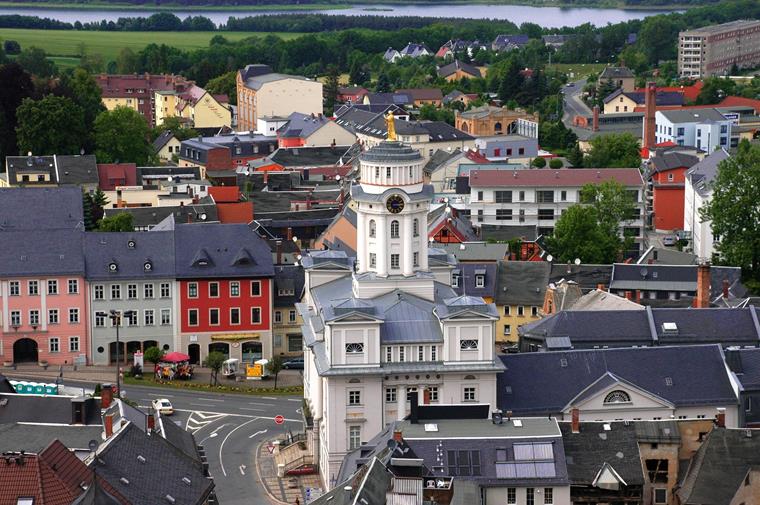
So the politicians in charge decided that building a dam in Zeulenroda in the Weida Valley would not be a bad idea. A large reservoir was to be created. Later, the media gave it the nickname “Thuringian Sea” or “Zeulenroda Sea.” Quite a tongue twister. In the future, it was to reliably supply up to 500,000 people with drinking water.
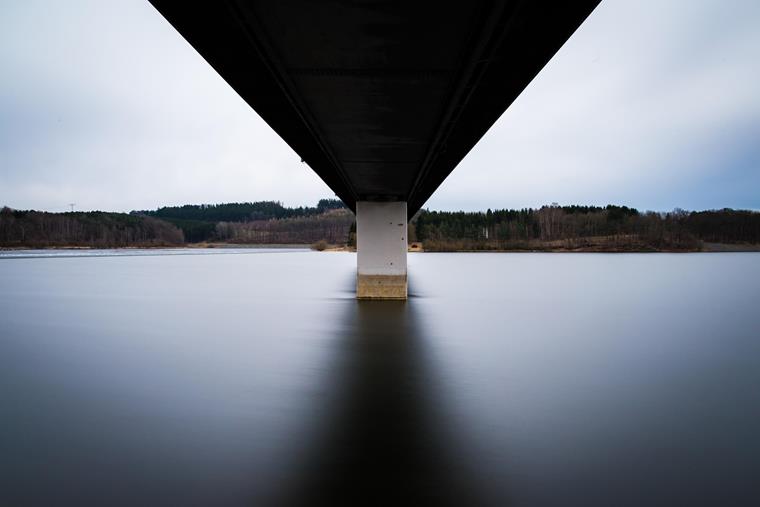
However, the new reservoir also required investment in the infrastructure of the area. Driving around the lake would take far too long. Zeulenroda and Auma should be accessible to each other – easily and quickly. The solution: a bridge over the reservoir was to be built. With a length of 362 m, it was clearly a prestige project for the GDR.
Ambitious Project: Zeulenroda Dam Bridge
As always, the GDR government wanted to leave nothing to chance. So the planning was handed over to Gisbert Rother, an experienced bridge engineer from Berlin. He designed the bridge as hollow box steel structure using the so-called free cantilever method—a modern construction technique at the time.
The individual segments grow piece by piece from the piers towards the center of the bridge. This construction method is found in many modern bridges today. This is also the case with the Duge Bridge. You can find the article about it here: Extreme Bridge Construction: Duge Bridge in China .
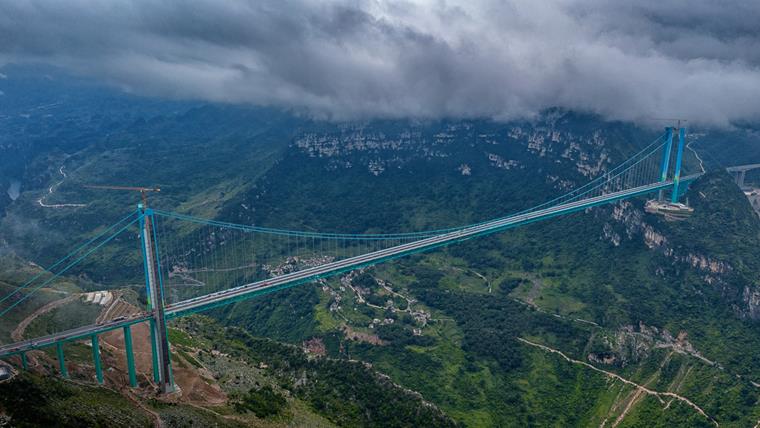
Or in the record-breaking successor, the Huajiang Bridge in China. To read the blog post about it, just click here: Huajiang Bridge: China's New Record . Feel free to take a look if you are interested in the two highest bridges in the world.
Construction of the Zeulenroda Dam Bridge began in early 1973. But the curse of the planned economy struck again. Materials were delivered too late, deadlines crept closer to the cliff edge, and with the shortage of construction steel typical of GDR conditions, the project plummeted into the depths.
Nevertheless, construction was to continue. The main thing was to adhere strictly to the two-year-old drawings. According to later reports, engineer Gisbert Rother himself warned that the bridge would be ‘’'subjected to excessive stress'‘’ during assembly using the free cantilever method.
But who in politics ever listened to construction experts? We are still all too familiar with this vexing issue today. The construction of the Zeulenroda dam bridge continued exactly as planned. Then disaster struck.
Collapse of Zeulenroda Dam Bridge
For the GDR, that is, the government, not the citizens, August 13, 1973, was a real holiday. The 12th anniversary of the construction of the Berlin Wall. Appropriately, a new bridge segment of the GDR's current prestige project was to be lifted into place. But disaster struck.
During assembly, the front part of the bridge simply broke away, directly behind one of the first pillars. The load had been too great and parts of the highly acclaimed structure plummeted to the ground. With them, several workers who had just been trying to attach the bridge segment to the rest of the bridge. The chief engineer's fears had been confirmed: the Zeulenroda dam bridge had collapsed.
Four workers were killed and five others were injured, some seriously. And the material damage? According to contemporary reports, it amounted to more than 3.5 million marks. Converted, that was about €1.25 million. Quite a lot of money for the time, even though the bridge—fortunately—had not even been completed and opened to traffic.

Collapse of Zeulenroda Dam Bridge: Suspicions of Sabotage
This date could not have been a coincidence! After all, such an accident on the anniversary of the construction of the Berlin Wall was a powerful symbol. It was not a round or half-round anniversary, but there was intent behind it! At least, that was the assumption of the GDR investigative authorities.
The area was cordoned off over a wide area – a new wall on the big anniversary. The Stasi then took over the case. However, the accident did not become particularly well known. The state media hardly reported on the collapse. Presumably, this special day was not to be overshadowed by tragedy.
The chief engineer Gisbert Rother and two other engineers quickly came under the scrutiny of the Stasi. Did they have clear evidence? Of course not. Did the Stasi need evidence to arrest someone? Of course not!
So on November 30, 1973, Rother was summoned to Gera for questioning and arrested there. Apparently, the investigators were less concerned with finding the true causes. They just wanted to present someone responsible to the government.
Trial After Bridge Collapse in Zeulenroda
The trial concerning the collapse of the Zeulenroda dam bridge was also conducted under the government's control. In May 1974, the three engineers were charged before the Gera District Court. The charge: violation of occupational safety regulations. So, were the three men accused of not paying enough attention to safety?
To make the trial as high-profile as possible, around 300 engineers from across the GDR were invited to attend as observers. This was intended as a deterrent, of course, in case the experts' findings revealed any errors.
But here, the Stasi had made its calculations without considering reality. A state expert determined that the defendants had complied with the applicable safety regulations. However, these so-called TGL standards no longer corresponded to international standards.
If one looked beyond the borders of the GDR at that time—something the government was keen to avoid—it became clear why. In previous years, similar bridges of the same design had collapsed in Australia, England, and West Germany.
These included the Rhine bridge in Koblenz in 1971. As a result, the safety regulations there were adapted. In the GDR, this had not yet happened. Adapted safety measures could not be planned years in advance.
You're probably thinking: Sounds good! So the regulations were adjusted and the three engineers were exonerated. After all, they had demonstrably done nothing wrong. However, logic did not fit into the strict annual plans either. The court sentenced the engineers to prison terms of up to two and a half years anyway. Simply on principle.
Support from Professional Community
A wave of outrage swept through the professional community. Many colleagues sided with the convicted, wrote open letters, and supported their families.
The pressure on the Stasi grew, and with success! In September 1974, the case was reopened before the Supreme Court of the GDR. A new expert opinion confirmed the findings of the old technical report.
The engineers had followed the applicable rules – the cause of the collapse of the Zeulenroda dam bridge lay in outdated technical regulations. This time, logic and common sense prevailed.
The defendants were acquitted and even received compensation for their imprisonment. Although Gisbert Rother remained under surveillance by the Stasi, he was henceforth regarded, especially in professional circles, as a symbol of professional integrity and human steadfastness.
Collapse of Zeulenroda Dam Bridge: What Remains
The Zeulenroda bridge collapse remained the only accident of its kind in the GDR. The incident had consequences for the outdated construction industry. Building regulations were revised and the design checks for the buckling resistance of box girders were modernized.
The introduction of systematic inspections included annual inspections, simple tests every three years, and major inspections every six years. Today, we know this procedure as DIN 1076. These inspections and adjustments probably contributed governing to the fact that such a collapse did not happen again in the GDR.

After Collapse of Zeulenroda Dam Bridge
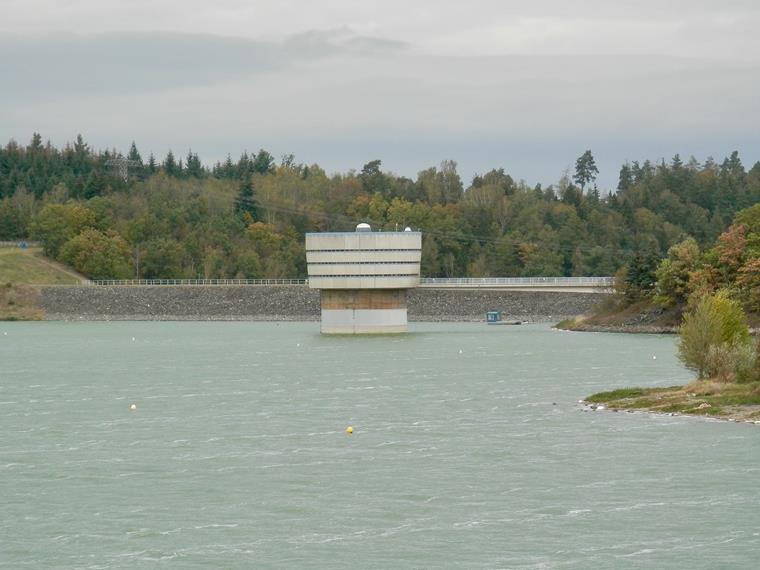
The Zeulenroda Reservoir was finally completed in 1975 and officially inaugurated in 1977. Today, it no longer serves as a source of drinking water, but provides flood protection and provides residents and visitors to the region an extensive recreational area.
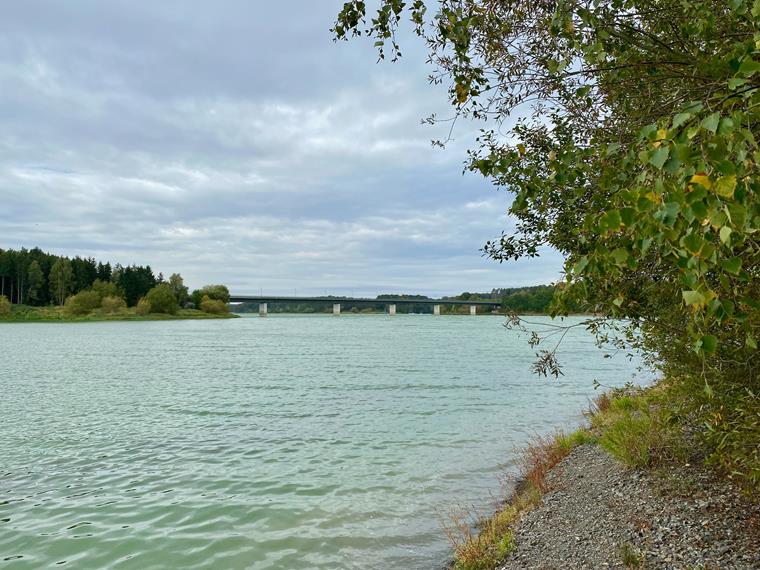
And the bridge? After the Zeulenroda Dam Bridge collapsed, the unfinished structure was demolished and rebuilt. It still stands today. Nothing reminds us of the accident that happened over 50 years ago.
At least apart from a memorial stone erected in 1994 on the Quingenberg side of the bridge. Here, the four workers who lost their lives there at the time are remembered’.
Conclusion: Zeulenroda Bridge Collapse in 1973
The collapse of the Zeulenroda dam bridge shows once again how closely technology and responsibility are linked. It is not always necessary that obvious mistakes made by engineers lead to a disaster.
Sometimes the problem simply lies in the system itself. A truth that was gladly hushed up in the GDR – or arrested and interrogated until it confessed to being a lie.
For us, the collapse of the Zeulenroda reservoir bridge is not only a sign that continuous training is essential for the safety of our structures. It is also a lesson in the courage to seek the truth. Even if the structural system does not want to acknowledge this truth.
Today, the bridge is not just a simple transport link. For everyone who knows this story, it is a silent memorial. The need to develop further and the value of human solidarity: both lead us to take the next step, to do the right thing. To take a step forward, across the boundaries of false accusations and barbed wire, into a better, safer future.