


In structural engineering, designing with glass requires an in-depth understanding of its behavior under various loading conditions. RFEM 6, Dlubal Software's advanced finite element analysis (FEA) platform, integrates powerful design features that help engineers model and analyze glass panels efficiently, ensuring compliance with the latest industry standards. One of the key standards supported in RFEM 6 is ASTM E1300-24, which governs the design of glass used in building applications. This article explores how ASTM E1300-24 is integrated into RFEM 6, covering its use in defining glass panels, applying loads, and performing critical design checks for both strength and serviceability.
Key Features of RFEM 6 for Glass Design
The Glass Design add-on in RFEM 6 is a specialized tool that works directly in the program, facilitating the modeling, analysis, and design of glass components. This add-on simplifies the process of defining both monolithic and laminated glass types, offering flexibility in material selection and layer configuration. RFEM 6 ensures that every aspect of the design, from structural behavior to industry-standard compliance, is considered.
Core Features:
- Material Library: RFEM 6 provides a comprehensive library of glass and foil materials, along with the option to define custom materials, ensuring accuracy and flexibility in modeling various glass types.
- Layered Glass Modeling: The program supports laminated glass design using laminate theory, enabling precise calculations of stiffness for composite panels made of multiple materials. This theory accounts for the individual properties of each layer, ensuring accurate stiffness calculations for the overall panel.
- Shear Coupling Options: RFEM 6 allows engineers to define shear coupling behavior between laminated glass layers, whether uncoupled or coupled (rigid), based on project requirements.
- Detailed Layer Results: RFEM 6’s Glass Design add-on provides detailed, layer-by-layer analysis of laminated glass panels. Engineers can drill deeper into each layer’s structural behavior, helping identify potential failure points and optimize the design.
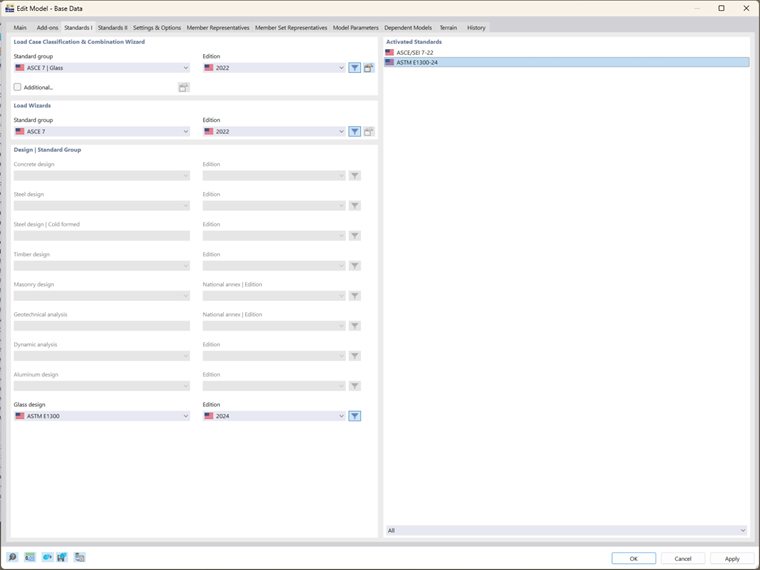
- New Design Standards: With the introduction of the ASTM E1300 2024 design check, RFEM 6 offers a more detailed and precise approach to evaluating glass surfaces, ensuring they meet higher safety and performance standards.
ASTM E1300-24 Integration
One of the standout features of RFEM 6 is its integration with ASTM E1300-24, the industry standard for designing glass panels. This integration streamlines the process, helping engineers ensure that their glass panels meet the design criteria laid out in this standard. The following design checks from ASTM E1300-24 are incorporated directly into RFEM 6:
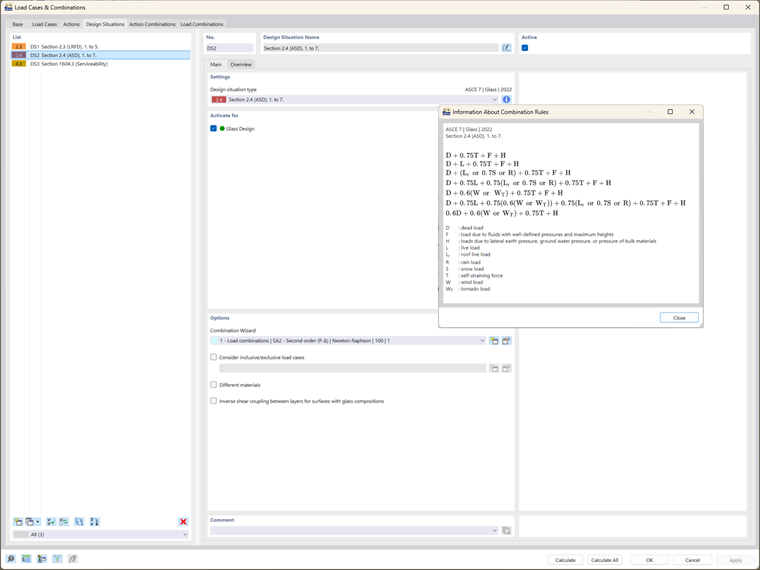
- ASCE 7 (Glass) Load Combinations: RFEM 6 automatically generates load combinations that include load duration factors, crucial for strength design. This is in accordance with the ASCE 7 guidelines, ensuring that all potential load scenarios for glass structures are accurately considered.
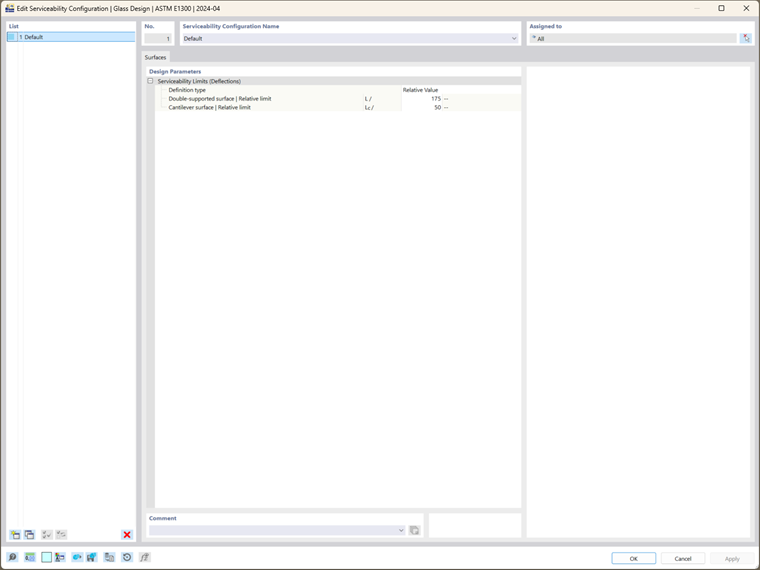
- IBC Table 1604.3 Design Situation (Serviceability): The IBC code provides specific serviceability requirements for glass structures. RFEM 6 integrates these guidelines, assessing deflection to ensure that the glass panel complies with serviceability limits, ensuring that it performs as intended under typical loads.
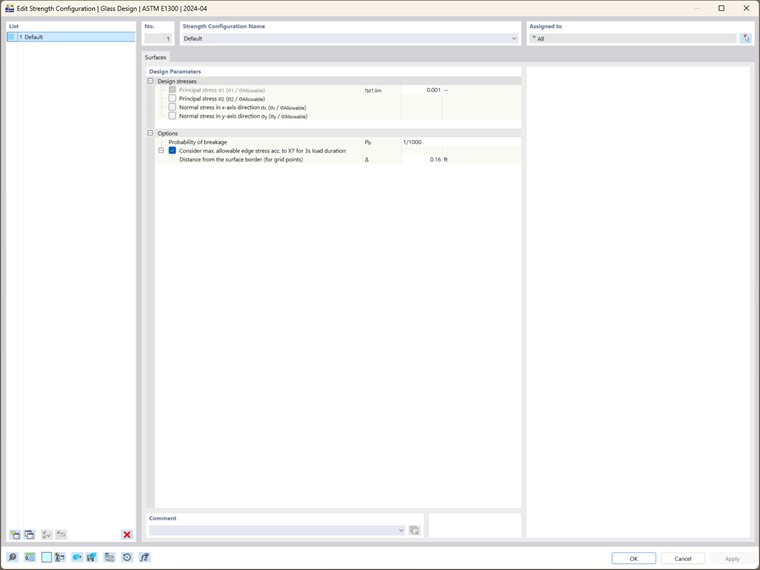
- Maximum Allowable Tensile Stress (Tables X6.1 and X6.2): RFEM 6 calculates the maximum allowable tensile stress for the glass, considering factors such as glass type, load duration, and the probability of breakage (Pb). This is done in reference to Tables X6.1 and X6.2 from ASTM E1300-24, ensuring that the glass does not experience excessive stress under expected loading conditions.
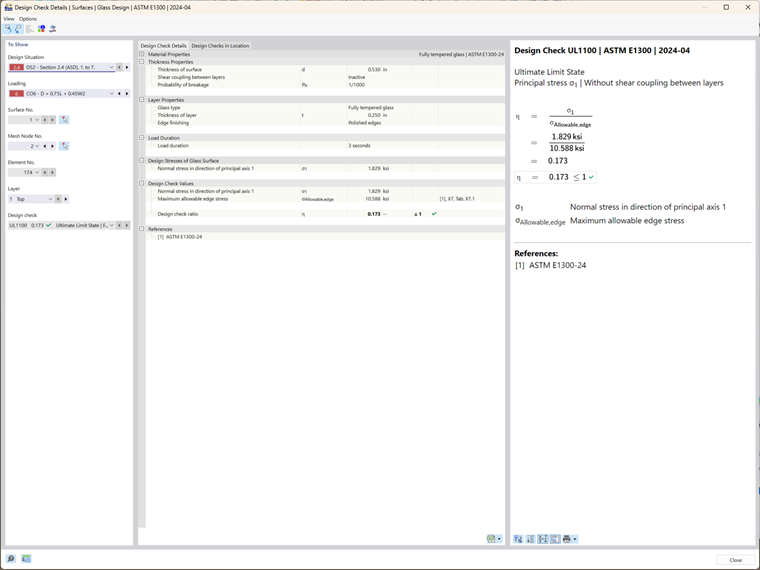
- Maximum Edge Stress (Additional Check, Table X7.1): RFEM 6 includes an edge stress check for specific conditions, such as a 3-second load duration and a probability of breakage (Pb) of less than 0.008. This check ensures that the glass edges can withstand concentrated loads. Edge finishing type (clean cut, seamed, or polished) can be specified, affecting the allowable edge stress. This check is not available for heat-strengthened or tempered glass with clean cut edges.
By embedding these critical checks into RFEM 6, engineers can ensure their designs are fully compliant with ASTM E1300-24, streamlining the design process and enhancing reliability.
ASTM E1300-24 in RFEM 6: Practical Considerations
Creating the Glass Panel Model
When creating a model of a glass panel in RFEM 6, ASTM E1300-24 plays an important role in guiding the assumptions and criteria used during the modeling process:
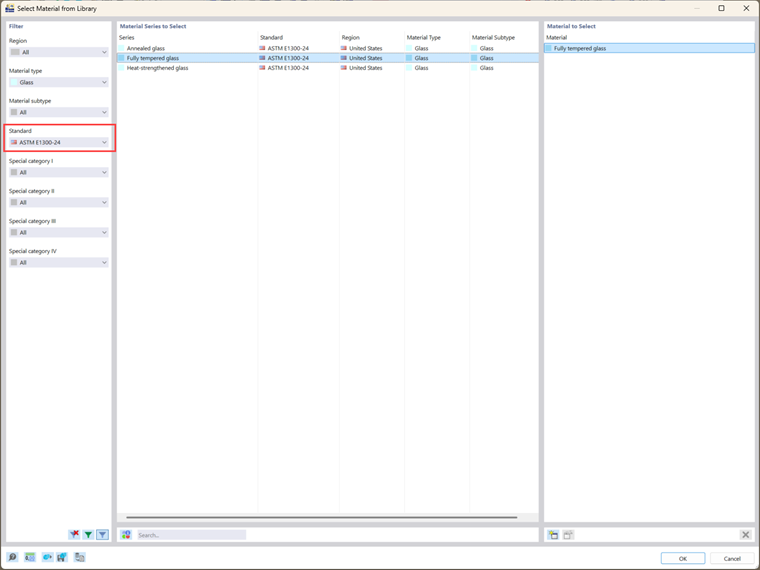
- Material Assignments: RFEM 6’s material library includes materials that adhere to the requirements of ASTM E1300-24, ensuring that the selected glass types meet the strength limits defined by the standard.
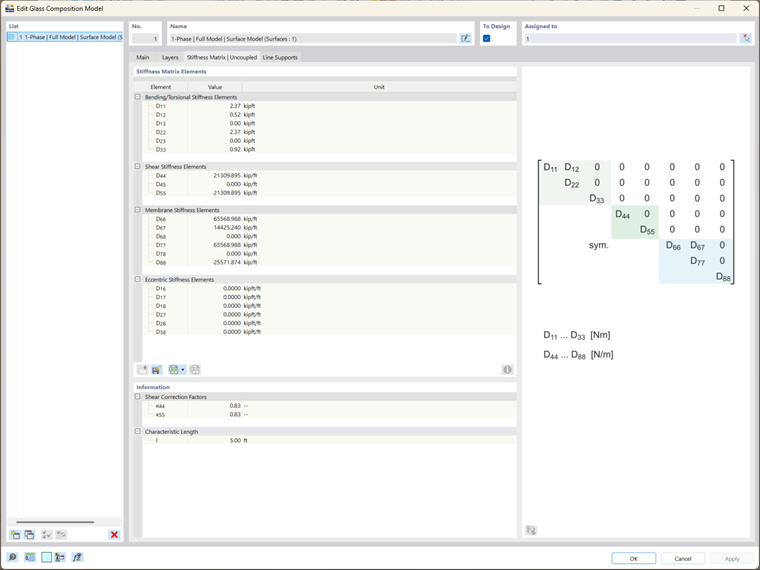
- Stiffness Calculation: For laminated glass, the program uses laminate theory to calculate the overall stiffness of the panel, taking each individual layer into account. The stiffness properties determined in this way and used in further analysis are displayed in the program as shown in the image below.
Loads and Load Cases
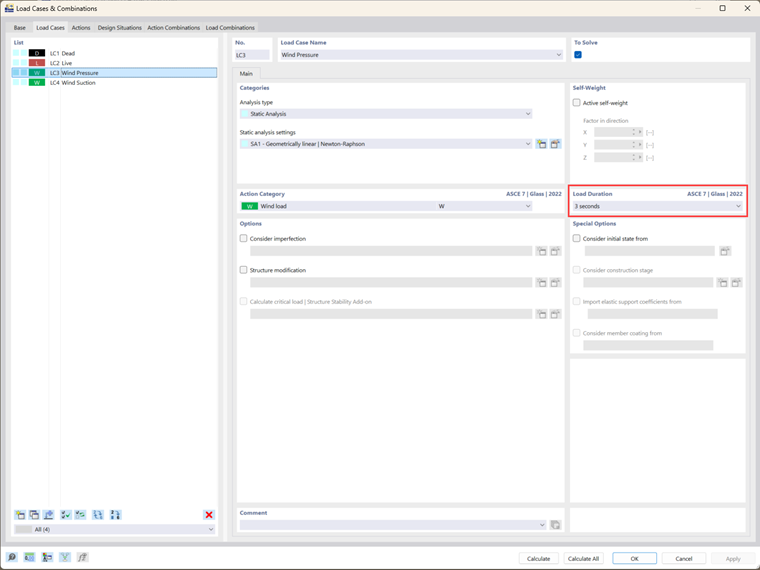
- Load Cases: RFEM 6 automatically generates loads and load combinations that include the required load duration factors for strength analysis, in line with ASCE 7’s provisions for glass structures. This ensures that the glass is evaluated under a variety of load conditions, including wind, dead, and live loads.
- Edge Stress Considerations: If the load combination involves a wind load or any load with a duration of 3 seconds, RFEM 6 automatically includes an edge stress check in accordance with Table X7.1 of ASTM E1300-24.
Design Situations and Load Combinations
The integration of ASTM E1300-24 is most evident in the load combinations and design situations used for both strength and serviceability checks:
- Strength Design: RFEM 6 generates load combinations automatically based on ASCE 7 standards, taking into account the load duration factors essential for glass structures. These combinations are incorporated into ASTM E1300-24’s strength design calculations, ensuring accurate evaluation of tensile stress limits.
- Serviceability Design: The serviceability design situation in RFEM 6 uses IBC Table 1604.3 to check deflections, ensuring that they do not exceed the maximum allowable limits for glass, as per ASTM E1300-24’s guidelines.
Glass Design Configurations: Integrated ASTM E1300-24 Checks
Once the model, materials, and loads are defined, the next step is to check the glass design configurations. RFEM 6 runs a comprehensive calculation that integrates the ASTM E1300-24 design checks:
- Strength and Edge Stress: RFEM 6 checks whether the glass meets the strength requirements by calculating the maximum allowable tensile stress using Tables X6.1 and X6.2 from ASTM E1300-24. If the load combination includes wind load, the program also applies an edge stress check in accordance with Table X7.1.
- Serviceability: RFEM 6 evaluates the deflection limits against IBC and ASTM E1300-24 guidelines, ensuring that the glass panel performs as expected under service loads.
Analyzing Results: Ensuring ASTM E1300-24 Compliance
After completing the calculations, RFEM 6 presents design results that reflect the integration of ASTM E1300-24:
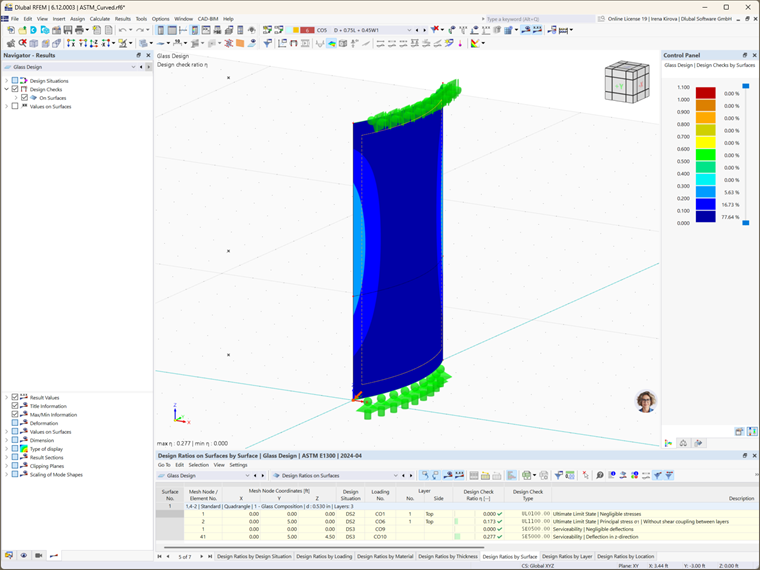
- Design Ratios: The results include design ratios for strength and serviceability, allowing users to evaluate whether the glass panel meets the required performance standards as outlined in ASTM E1300-24. For all design checks, details are available where you can see the comprehensive integration of the standard.
- Stress Distribution: RFEM 6 provides graphical representations of tensile and edge stresses, enabling engineers to visually confirm that the stresses are within the allowable limits defined by the standard.
Conclusion
The integration of ASTM E1300-24 into RFEM 6 equips engineers with a powerful tool for designing glass panels that meet safety, performance, and compliance standards. By automating key design checks, such as tensile and edge stress evaluations, RFEM 6 simplifies the design process, ensuring that all aspects of glass design—from material selection to load combinations and serviceability checks—are fully aligned with ASTM E1300-24. This integration empowers engineers to create reliable, compliant glass structures while improving design efficiency and accuracy.