- Products
- Finite Element Analysis (FEA)
- Add-ons for RFEM 6
- Special Solutions
- Building Model for RFEM 6
Building Model for RFEM 6
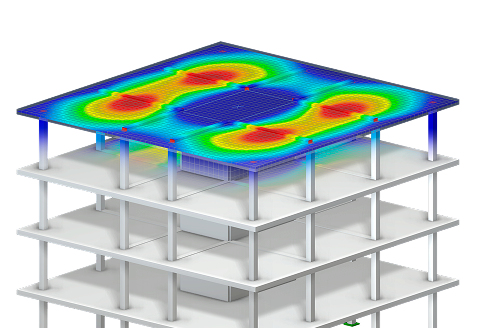
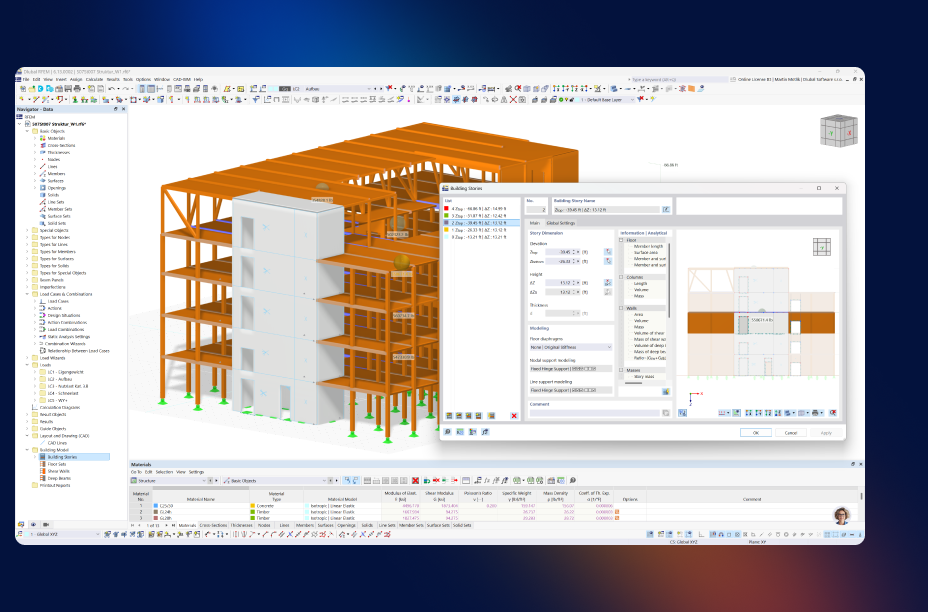
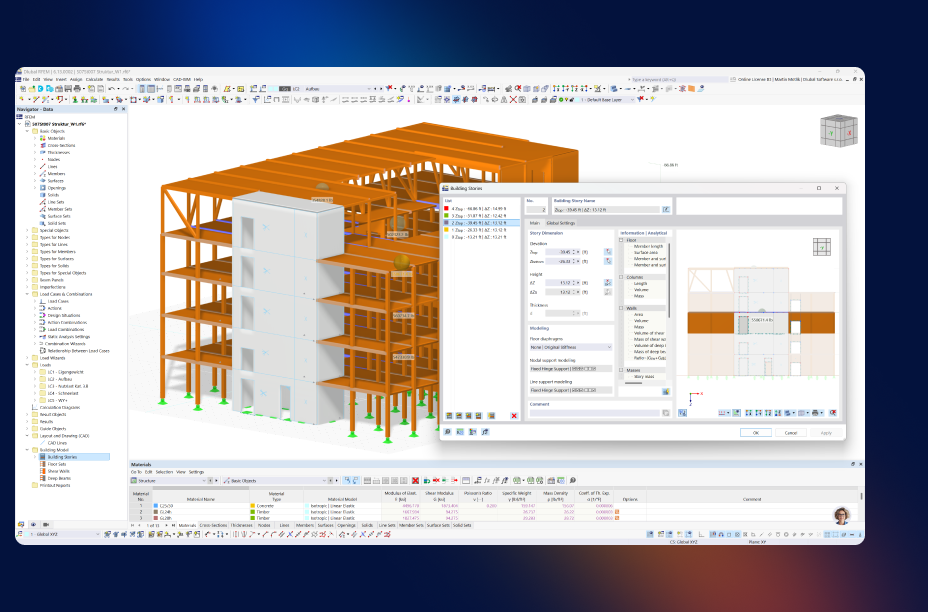
The Building Model add-on allows you to define stories for your building. You can also adjust the stories in many ways afterwards – exactly the way you need. You can perform stiffening calculations, design shear walls, analyze floors as separate 2D structures, determine key parameters for dynamic analysis, and much more.
Efficient Building Modeling with RFEM 6
Using this add-on, you can reduce your building model to the structurally relevant elements. This provides you with a precise and clear display of the supporting structure – ideal for efficient calculations and clear results.
The building model is an essential add-on that is ideally suited for multi-story buildings. Thanks to features, such as the division into slabs and wall design (2D/3D), simple object management (slabs, walls, columns and so on) and intuitive handling, the building model provides comprehensive support for efficient and precise building modeling.
When combined with the Construction Stages Analysis (CSA) add-on, the construction process of structures can be taken into account.
This tool allows for the quick processing of structural data and the effortless implementation of model changes – from simple construction plans to complex structures.
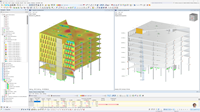
Video: Building Model for Multi-Story Buildings | RFEM 6 by Dlubal Software
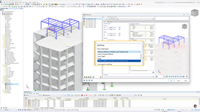
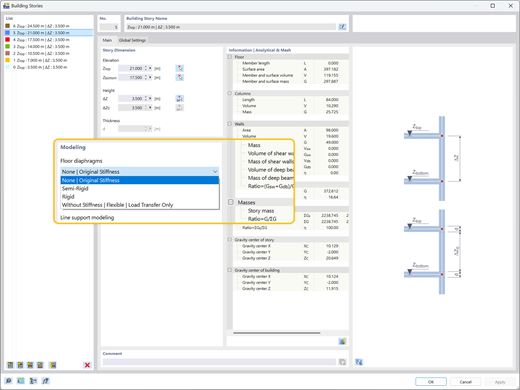
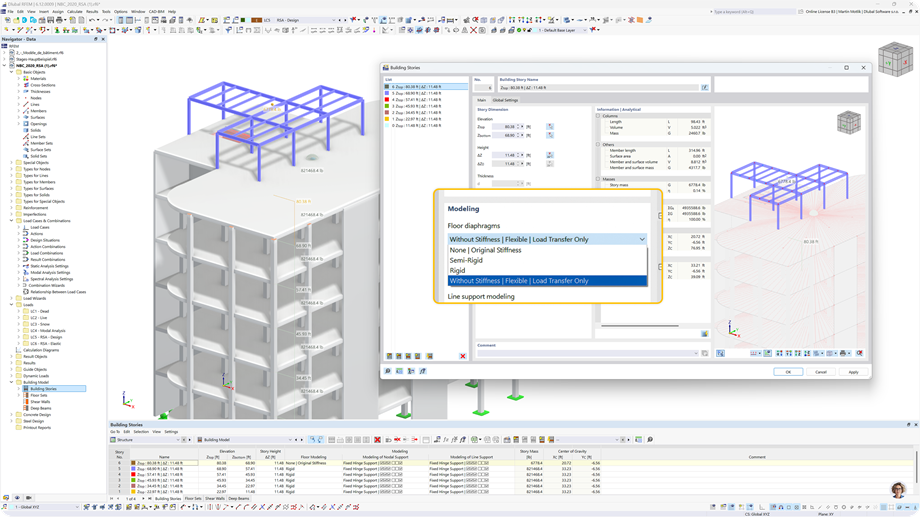
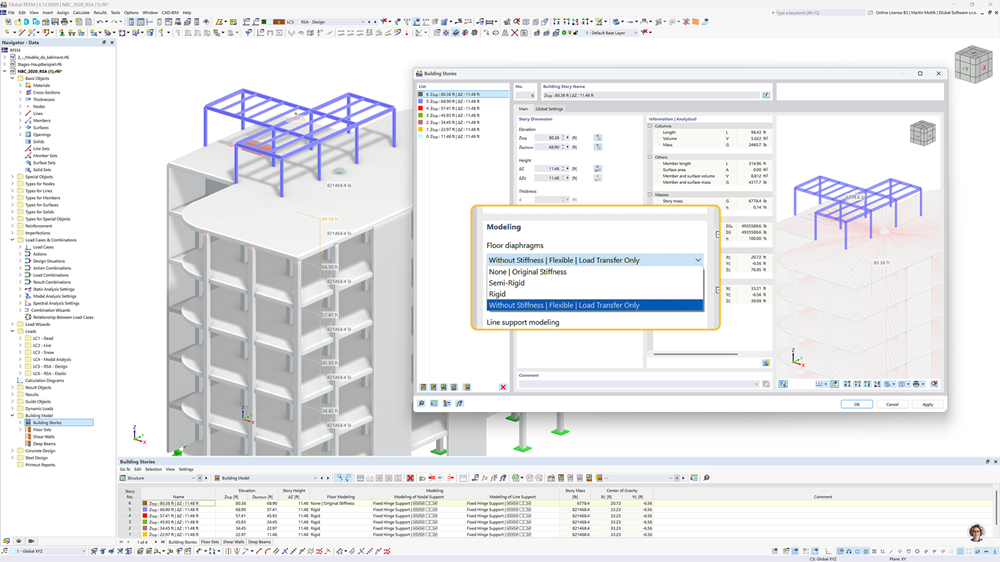
Floor Diaphragms Types Illustration
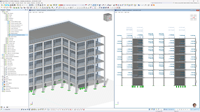
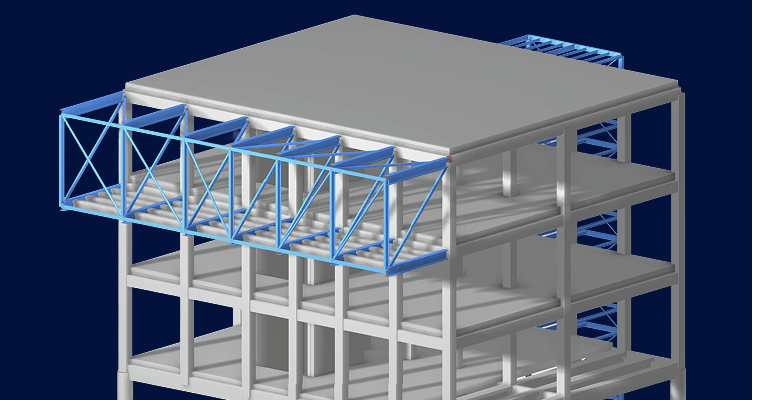
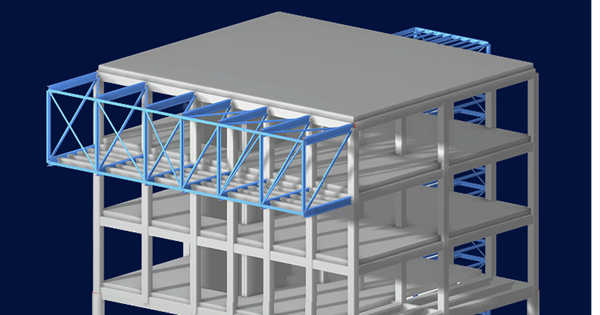
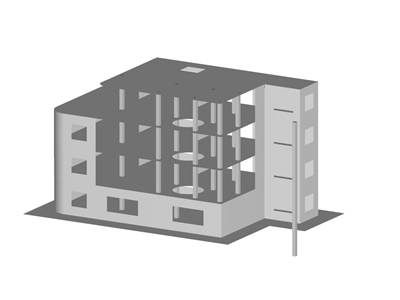
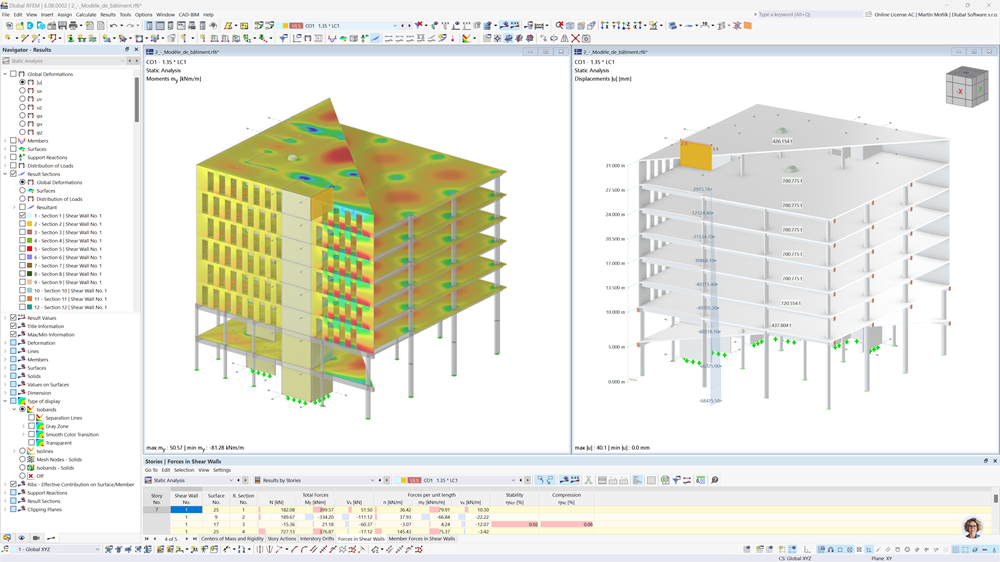
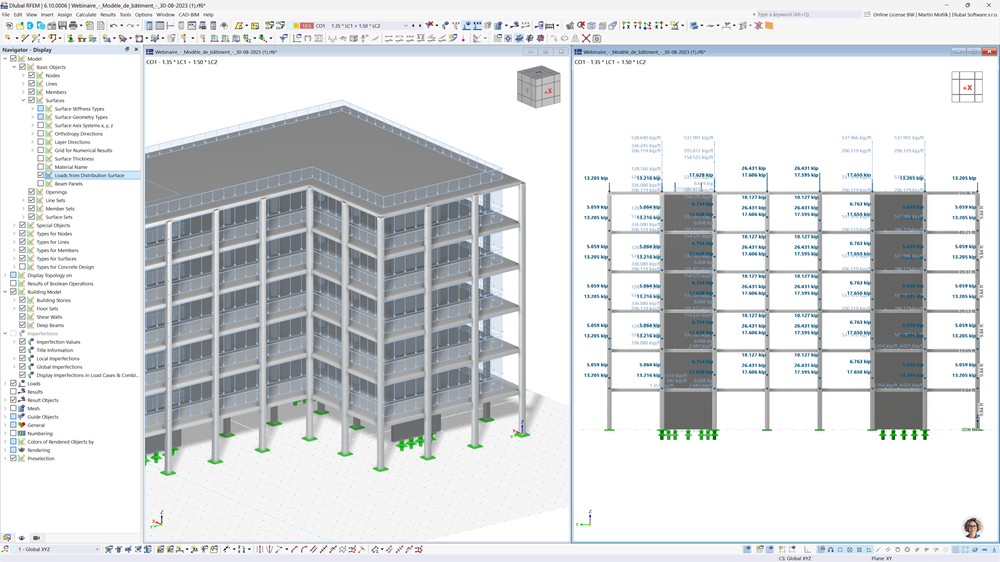
Comparison of Concrete Structure Model Without Load Distribution (Left) and with Load Distribution (Right)
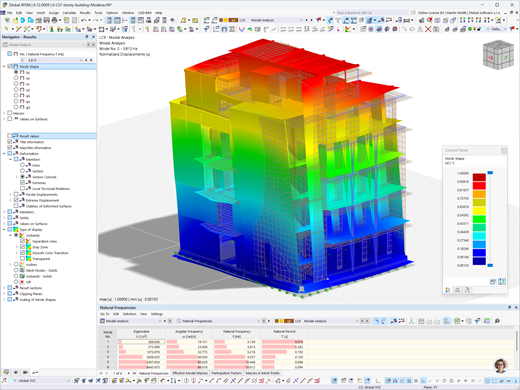
Response Spectrum Sensitivity Coefficient Analysis Visualization
Use Cases
The Building Model add-on organizes your 3D model into defined stories, streamlining the analysis of multi-level structures. It automatically simplifies load distribution and handles specific stiffness settings, enabling precise seismic assessment and global stability checks based on realistic building behavior.
Assign rigid, semi-rigid, or flexible diaphragms to each story independently. Control in-plane and out-of-plane stiffness to accurately model complex floor behaviors without unnecessary calculation effort.
Efficiently calculate lateral stability and stiffness. Ensure horizontal forces from wind or earthquakes are directly absorbed by shear walls, moment frames, or braces, depending on your story modeling.
Verify global stability with automated checks for story shear, displacements, and sensitivity coefficients. Instantly assess inter-story drift to ensure the structure meets serviceability limits.
Automatically identify the center of mass and rigidity for every story. Detect torsional irregularities early and optimize shear wall layouts to safely resist wind and seismic forces.
After calculating a seismic analysis, table results are output for each story level including center of mass, center of rigidity, story shear, and story displacements. This allows for a precise evaluation of the structure’s response to these applied seismic loads. Additional result information such as sensitivity coefficients and story drift indicate if additional structure optimization is required to ensure stability requirements.
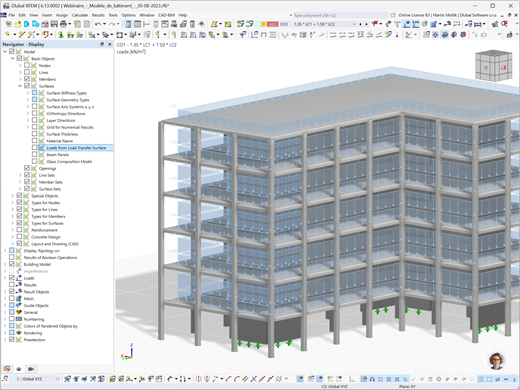
When using rigid or semi-rigid diaphragms with the Building Model add-on, the 3D lateral analysis (walls) is performed independently of the 2D gravity analysis (floors). The add-on automatically identifies the center of mass and, in the case of rigid diaphragms, the center of rigidity for each story. It also determines key parameters such as torsional response, displacement behavior, and the forces acting on each shear wall.
Diaphragms can be assigned to each story independently. Diaphragm types include rigid, semi-rigid, or flexible. Additionally, a "no diaphragm" assignment is also available. When utilizing the offered diaphragm types, the relevant in-plane and out-of-plane stiffness will be used for the lateral and gravity building calculations. Diaphragm modeling provides you with flexibility when modeling complex structural systems without causing unnecessary calculation effort.
Designed with Building Model Add-on for RFEM 6
A real-world project showcasing efficient modeling and analysis of complex multistory structures using the Building Model add-on in RFEM 6.
Laboratory Building in Garching, near Munich
The Building Model add-on played a crucial role in analyzing this impressive timber structure. It enabled the engineers at Lignaconsult to efficiently manage story definitions and verify the stability of multilayer CLT surfaces during the construction phase.
Building Model Analysis Articles
Assessment of Story Drift Under Seismic Loads According to ASCE 7-22
Excessive drift can lead to system instability and damage to non-structural components. This article details the procedure for evaluating interstory drift in RFEM 6 according to ASCE 7-22 standards.
Story Types in Dlubal's Building Model Add-on
Are you focused on dynamic behavior, structural simplification, or secondary elements? Learn how to select the correct story definition for your specific goals and explore the different types available in the Building Model Add-on.
Discover the full potential of Dlubal software with powerful programs like RFEM, RSTAB, RWIND, and RSECTION. Try them for free and see how easy it is to model, analyze, and document even complex structures. Our experts are happy to guide you through a short online demo tailored to your industry.
Frequently Asked Questions
A key advantage of the Building Model add-on is its ability to accurately determine interstory drift, a critical parameter in seismic design. Evaluating story drift is essential for ensuring structural integrity by limiting excessive displacement, which can cause instability or damage to nonstructural components, such as partitions.
With this functionality, engineers can also calculate stability factors and interstory drift sensitivity coefficients, helping to assess whether P-delta effects should be included in the seismic analysis. These effects can then be seamlessly integrated into RFEM 6, along with the Response Spectrum Analysis add-on, for a more thorough and comprehensive evaluation of the building's seismic performance.
Yes. The Building Model add-on supports design checks for both materials. It integrates with standards such as Eurocode 5, NDS, and CSA 086 for timber, as well as Eurocode 2, ACI, and CSA A23.3 for concrete, providing safe and efficient design verification with clear graphical output.
The Building Model and the feature of modeling stories with "Rigid Diaphragm" is not designed for all building types. The function was primarily developed for 3D buildings with 5-10 stories (or more) with a regular or the same floor plan. This means that you should only assign the "Rigid Diaphragm" function to the slabs where the walls and columns are positioned identically in the stories above and below.
Learn more: FAQ | Instability when Using Building Model with "Rigid Diaphragm"
The add-on utilizes defined lateral elements (shear walls) to transfer horizontal loads exclusively. It automatically calculates the center of mass and stiffness for each story, along with torsional and displacement parameters, allowing for a quick and precise evaluation of the building's behavior under lateral loads.
Using line releases or hinges within a defined diaphragm (rigid or semi-rigid) is generally not recommended. Diaphragms assume in-plane continuity, while line releases introduce discontinuity, creating a stiffness conflict that can lead to numerical instability. For accurate mass timber modeling, it is best to omit the diaphragm and model the floor system fully in 3D.
Learn more: FAQ | Best Practices for Mass Timber Line Releases, Line Hinges, and Diaphragms in RFEM 6
Here, you can ask and answer technical questions, engage in meaningful discussions on structural analysis and design, suggest new features, and interact directly with the Dlubal team and fellow users.
Ready to take the next steps with your Dlubal purchase? Use this form to let us know which products interest you. Our sales team will provide you with a no-obligation, customized quote.
Browse our online manuals for the Building Model add-on anytime to boost your work and support your projects.
Explore essential videos focused on the Building Model add-on. These tutorials guide you through practical workflows and help you master key features quickly.
Learn best practices for complex stability analysis and discover advanced tips for optimizing your building designs.
Webshop
Customize your individual program package and find out all the prices online!
Calculate Your Price