


You can define the parameters of multilayer surfaces for both the thicknesses and the materials.
Thicknesses
If the Multilayer Surfaces add-on is activated in the Model Base Data , the Layers and Beam Panel thickness types are also available for selecting the thicknesses of surfaces.

Layers
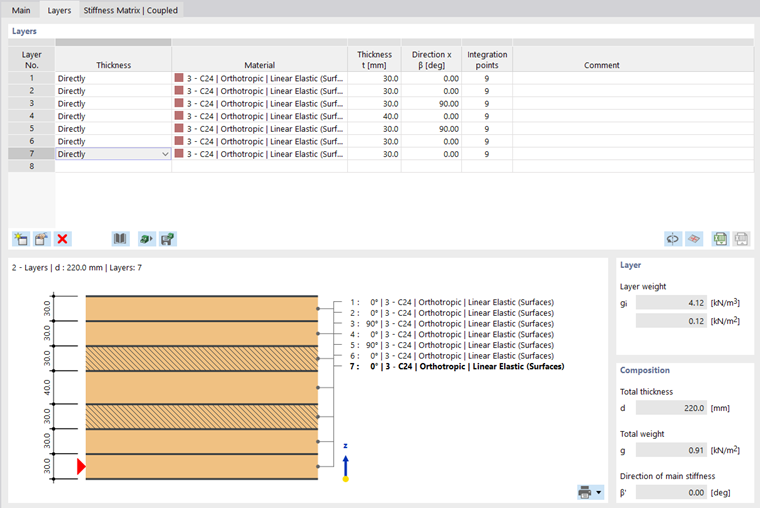
When specifying the "Layers" thickness type, the Layers tab becomes available. Here, you can define the structures of any layers.
Selecting Composition in Library
Click the
 button to access a library of compositions by various manufacturers of cross-laminated timber provided in the program.
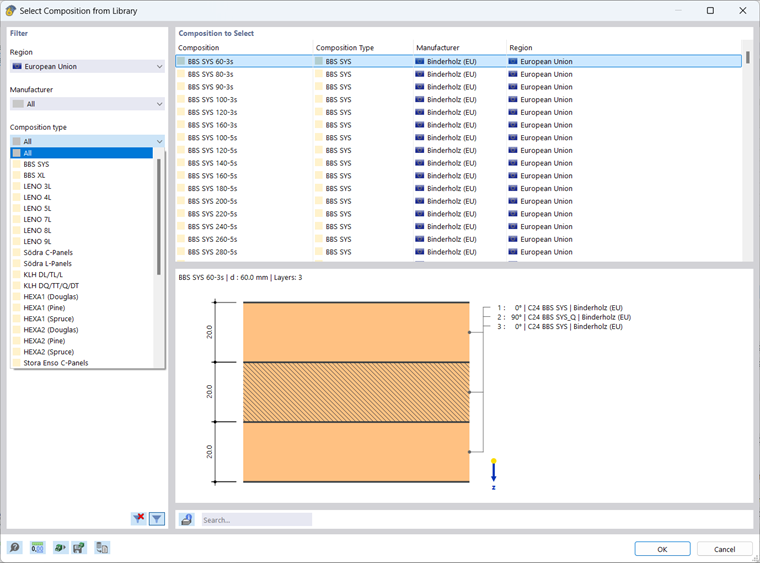
You can use the filter options known from other libraries as well as the search functions to select the relevant type.
Saving Compositions
Manually created layer compositions can be saved in a library. To do this, use this button:
 . Then, enter a name for the template.
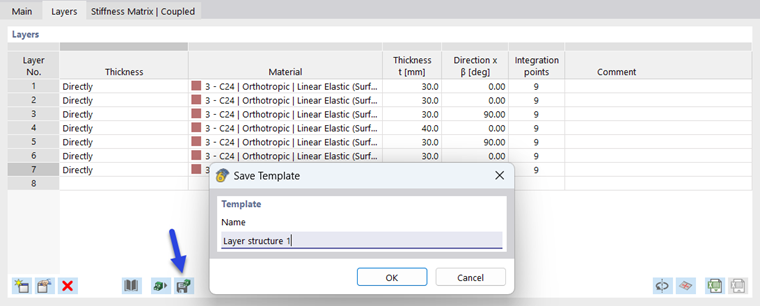
Compositions, including stiffness reductions, are saved locally on the computer. In the standard installation, you can find this file with the name thickness_layers.bin in the directory C:\Users\"username"\AppData\Local\Dlubal\RFEM6_6.xx\configs. You can copy the file to other computers. This way, you only need to create user-defined structures once.
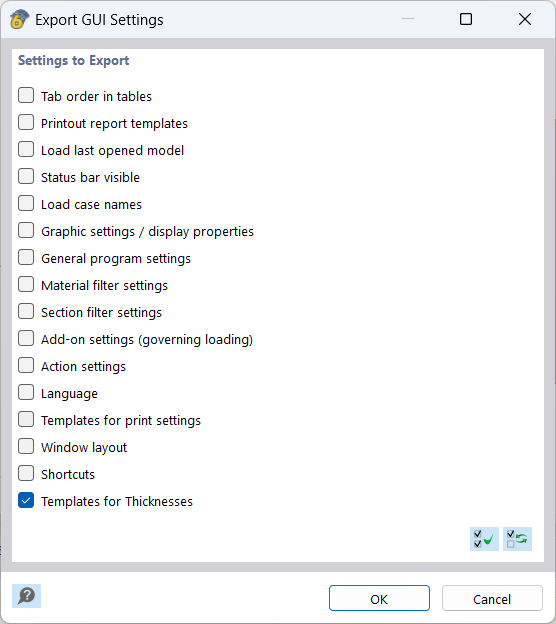
Furthermore, the compositions are also stored in the GUI settings and can be exported from there. This is described in the chapter Adjusting Color and Display Type of Objects of the RFEM manual.
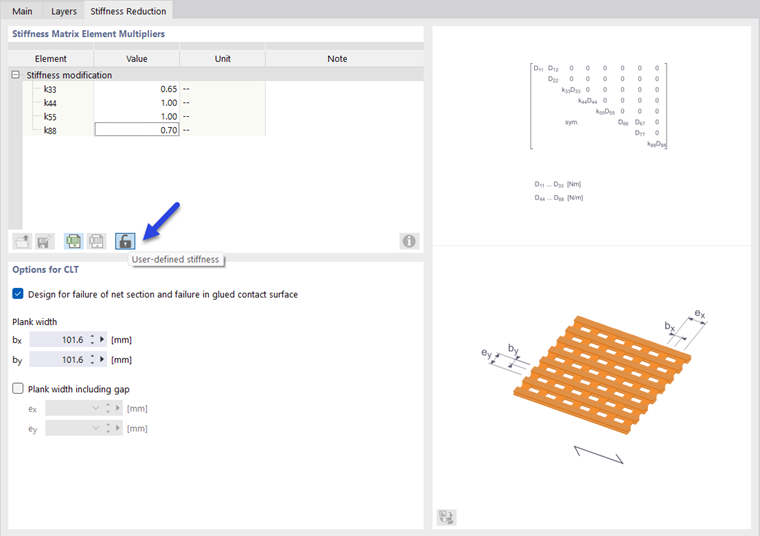
Stiffness Reduction
The option of reducing stiffness is particularly important when calculating cross-laminated timber. This is explained in FAQ 004119 for torsional and shear stiffnesses. The Stiffness Reduction tab becomes available when you select the Stiffness reduction check box in the Main tab (see the section “Options” in the image Selecting "Layer" Thickness Type).
Materials
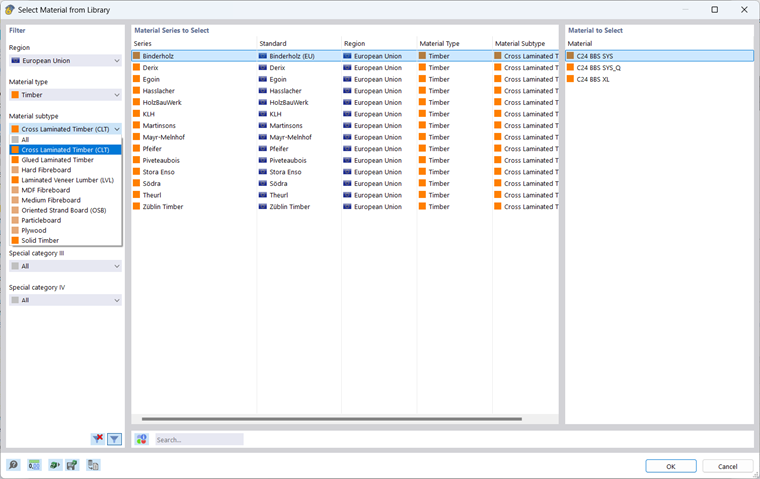
You can select the materials as usual in the Material Library. Special materials are available there for the calculation of cross-laminated timber plates.
The material properties for cross-laminated timber include the strengths that are applied to the extended shear stress analyses, in particular.
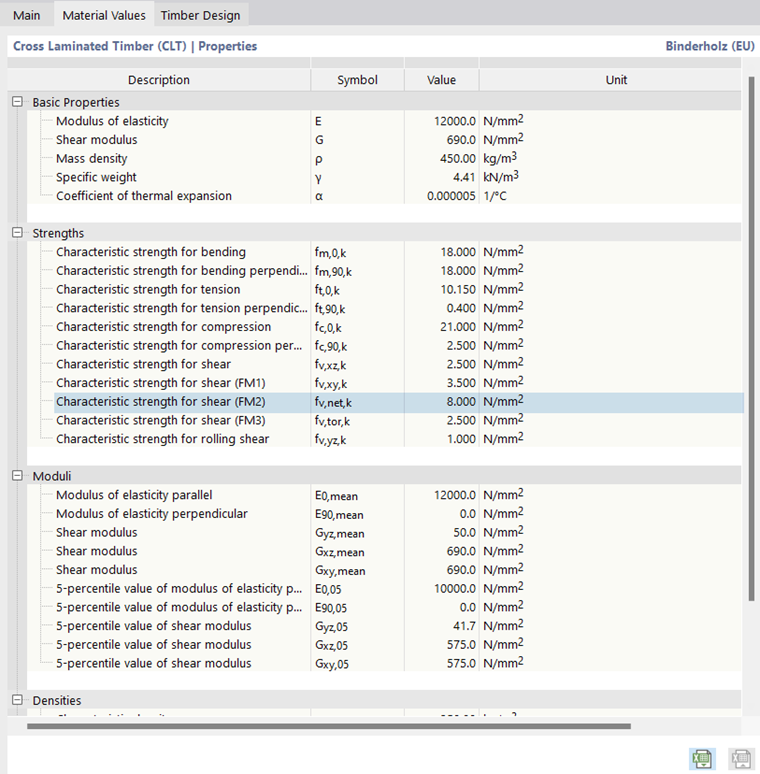
The strengths and stresses are described in the chapter Stresses.