Introduction
Rheological models describe the relationship between the deformation of a body and the load acting on it. For this purpose, the basic properties of elasticity, viscosity, and plasticity are described with idealized mechanical basic bodies: spring, damper, and friction elements. Since a combination of these idealized behaviors usually occurs in reality, they must be coupled, or connected as an analogy to electrical engineering.
Basic Models
Spring Element
The spring element behaves ideally elastically, thus following Hooke's law, which is why it is also called the Hooke element. As is well known, a linear relationship between stress σ and strain ε is assumed here via a constant modulus of elasticity E:
Damper Element
The damper element behaves ideally viscously, like an ideal fluid, also called a Newtonian fluid, and is therefore referred to as the Newton element. It describes the time-delayed irreversible deformation to an acting stress:
Friction Element
The friction element, also called the St. Venant element, behaves ideally plastically. This means that it behaves like an ideal solid body below the yield strength and does not undergo any deformation due to an applied load. Once the yield strength is exceeded, the element deforms irreversibly, thus behaving like an ideal fluid with infinitely low viscosity.
Coupled Models
Basics
By coupling the basic models, a behavior closer to reality can be achieved. If the basic models are connected in series, they all experience the same stress; the strain then results from the sum of the individual strains. Parallel connection produces the opposite effect. That is, the strain of all partial models is the same, and the total stress is obtained by summation. Since viscoelastic behavior is particularly relevant for time-dependent behavior under creep and relaxation, only the coupled models relevant in this regard, consisting of spring and damper elements, will be discussed below.
Kelvin Chain (Generalized Kelvin-Voigt Model)
In the so-called Kelvin chain, Kelvin-Voigt elements are connected in series, optionally with a free spring E0 (instantaneous strain) and an optional free damper η∞ (Newtonian flow). A Kelvin-Voigt element consists here of a spring and a damper element connected in parallel. This is shown schematically in the following figure:
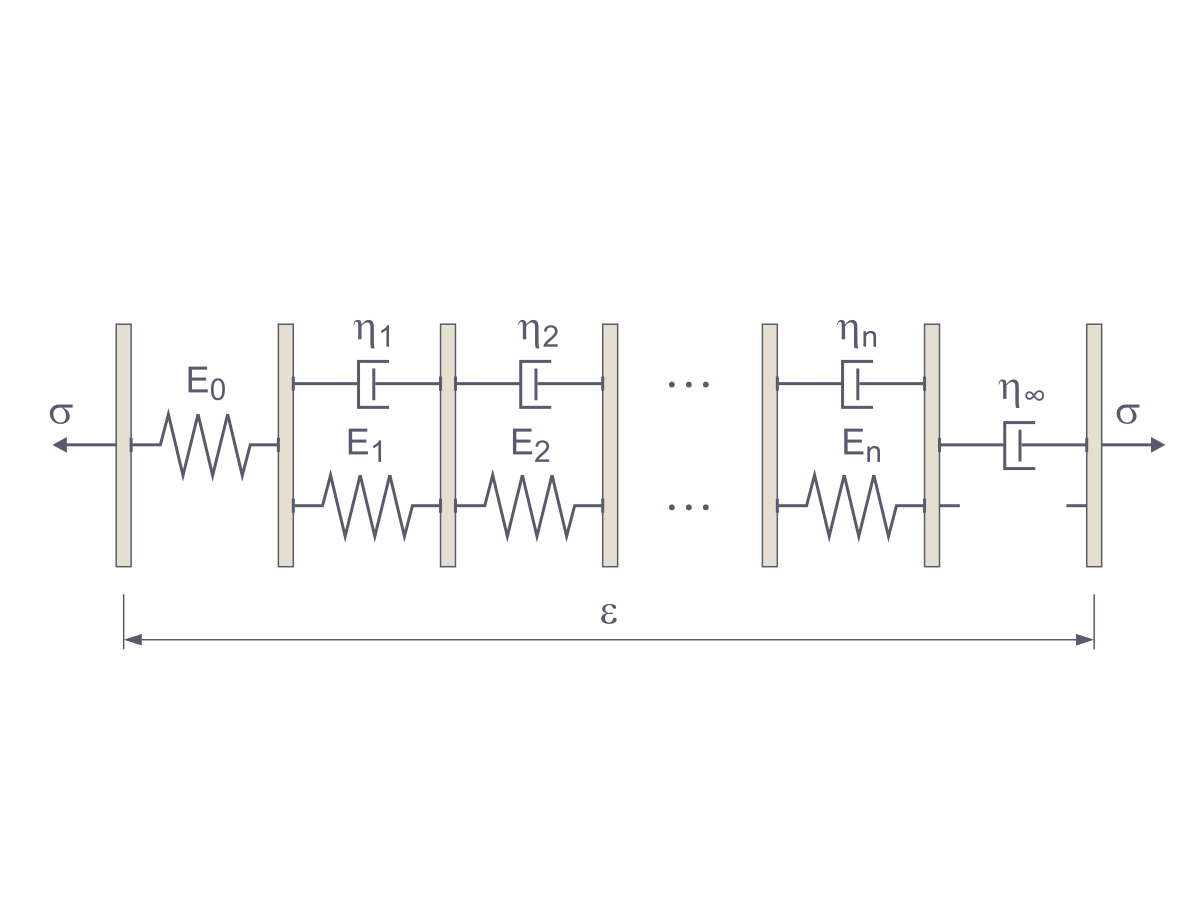
Creep is the primary behavior of the Kelvin chain and it is best suited for this, which is why it will be discussed in more detail below. Kelvin-Voigt behaves comparably to a sponge in oil: the spring wants to expand, the oil brakes it. After unloading, the spring sucks the sponge back. The model provides no instantaneous elastic response and asymptotically approaches a limit strain. The recovery upon removal of the load is time-delayed but complete.
The constitutive equation of a Kelvin-Voigt element and the time-dependent strain over time (creep) under constant stress are shown in the following formula:
|
|
Stress |
|
|
Modulus of elasticity |
|
|
Strain |
|
|
Dynamic viscosity |
|
|
Strain rate |
|
|
Time |
|
|
Initial stress |
|
|
Euler's number |
The total strain results from the superposition of the partial strains according to the following equation:
|
|
Strain |
|
|
Time |
|
|
Stress |
|
|
Modulus of elasticity of a free spring (immediate strain) |
|
|
Current element |
|
|
Number of elements |
|
|
Strain of the current element |
|
|
Dynamic viscosity of the free damper (Newtonian fluid) |
From this, the total creep function can be derived under constant stress and using the constitutive equation:
|
|
Strain |
|
|
Time |
|
|
Stress |
|
|
Modulus of elasticity of the free spring (immediate strain) |
|
|
Current element |
|
|
Number of elements |
|
|
Modulus of elasticity of the current element |
|
|
Euler's number |
|
|
Delay time of the current element |
|
|
Dynamic viscosity of the free damper (Newtonian fluid) |
Maxwell Chain (Generalized Maxwell Model)
In the Maxwell chain, Maxwell elements are connected in parallel, optionally with a free spring E∞ (equilibrium stiffness). A Maxwell element consists here of a spring and a damper element connected in series. This is shown schematically in the following figure:
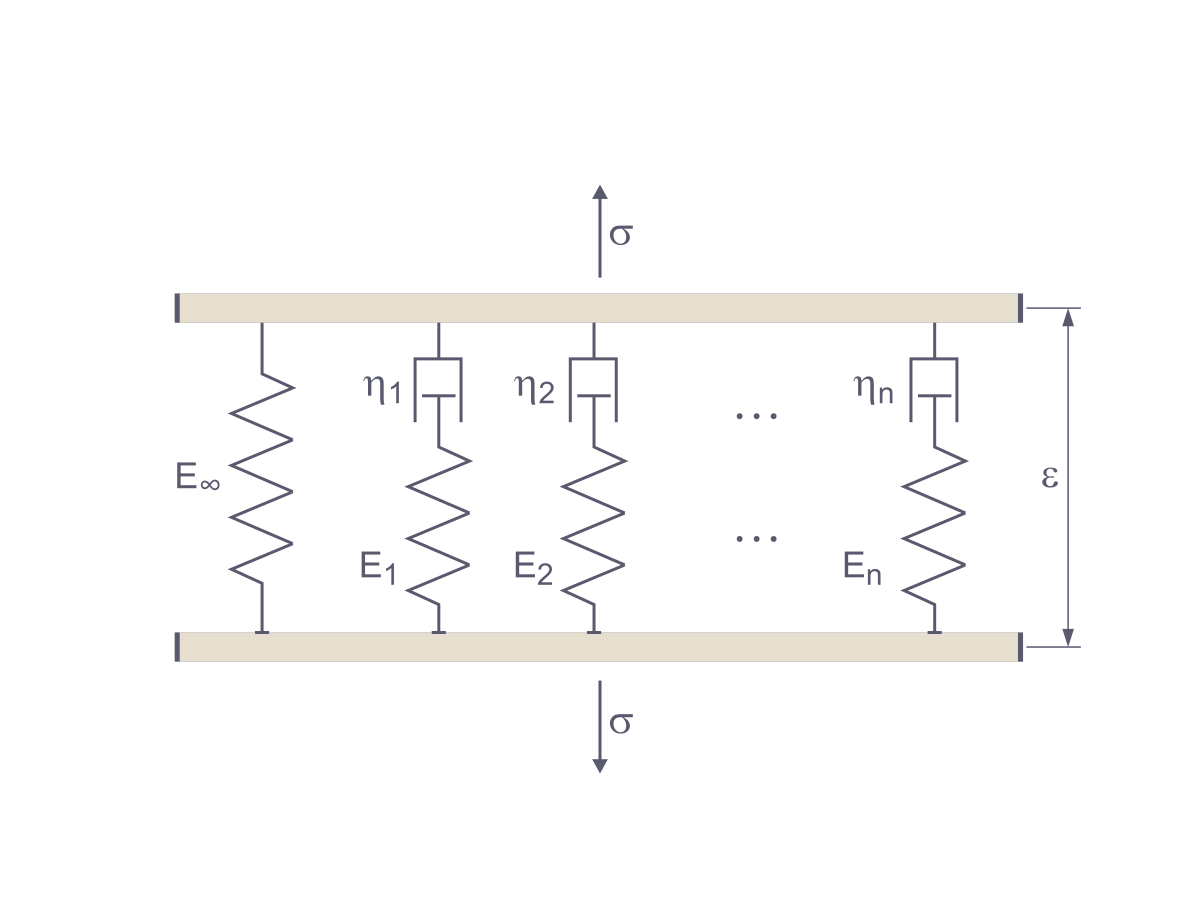
The Maxwell chain is best suited for relaxation. This will therefore be discussed in more detail below. Maxwell behaves comparably to a fluid droplet with memory: under constant strain, it slowly withdraws from the stress. However, the model is only suitable for long-term creep to a limited extent, as the strain increases continuously under permanent load. Upon sudden load application, the spring reacts immediately with a strain; the stress asymptotically approaches zero. Upon removal of the imposed strain, the elastic component springs back immediately, while the strain component of the damper remains.
The constitutive equation of a Maxwell element and the time-dependent stress over time (relaxation) under constant strain are shown in the following formula:
|
|
Strain rate |
|
|
Stress rate |
|
|
Modulus of elasticity |
|
|
Stress |
|
|
Dynamic viscosity |
|
|
Time |
|
|
Initial stress |
|
|
Euler's number |
The total stress results from the superposition of the partial stresses according to the following equation:
|
|
Stress |
|
|
Time |
|
|
Modulus of elasticity of the free spring (equilibrium stiffness) |
|
|
Strain |
|
|
Current element |
|
|
Number of elements |
|
|
Stress of the current element |
From this, the relaxation modulus can be derived under constant strain and using the constitutive equation:
|
|
Stress |
|
|
Time |
|
|
Strain |
|
|
Modulus of elasticity of the free spring (equilibrium stiffness) |
|
|
Current element |
|
|
Number of elements |
|
|
Modulus of elasticity of the current element |
|
|
Euler's number |
|
|
Delay time of the current element |
Extension for Nonlinear Material Behavior
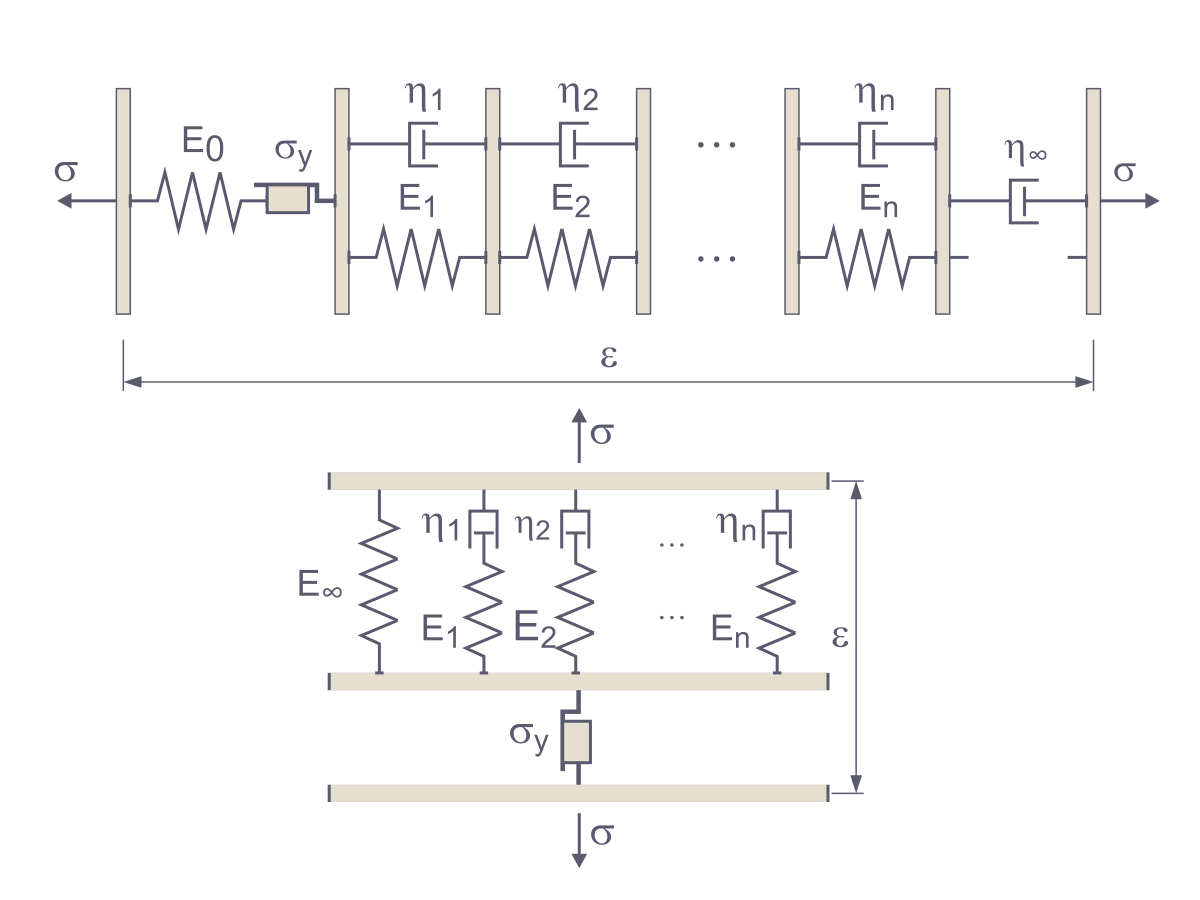
To account for nonlinear material behavior, a friction element is additionally introduced in series in the stress path. This symbolizes the nonlinear material behavior and can represent effects such as plastification or softening due to fracture behavior. Due to the series connection, it experiences the same stress as the rest of the model, and vice versa, and the strain results from the sum of viscoelastic and plastic strain. Thus, a visco-(elasto-)plastic behavior arises. The extension of the presented coupled rheological models (left: Kelvin chain model and right: Maxwell chain model) is shown in the following figure.